
Leaves
Wet leaves can settle into layers and slow water moving towards an outlet.
Rainwater routes · access · clear scope
A channel may need clearing yet still require a careful access decision because of what sits beneath it. For an Edgware property, every requested roof edge is considered alongside additions, canopies, routes and boundaries that actually apply. Accessible agreed gutters can be cleared of routine debris, while repairs, deep downpipe restrictions, underground drainage and specialist access are assessed separately.
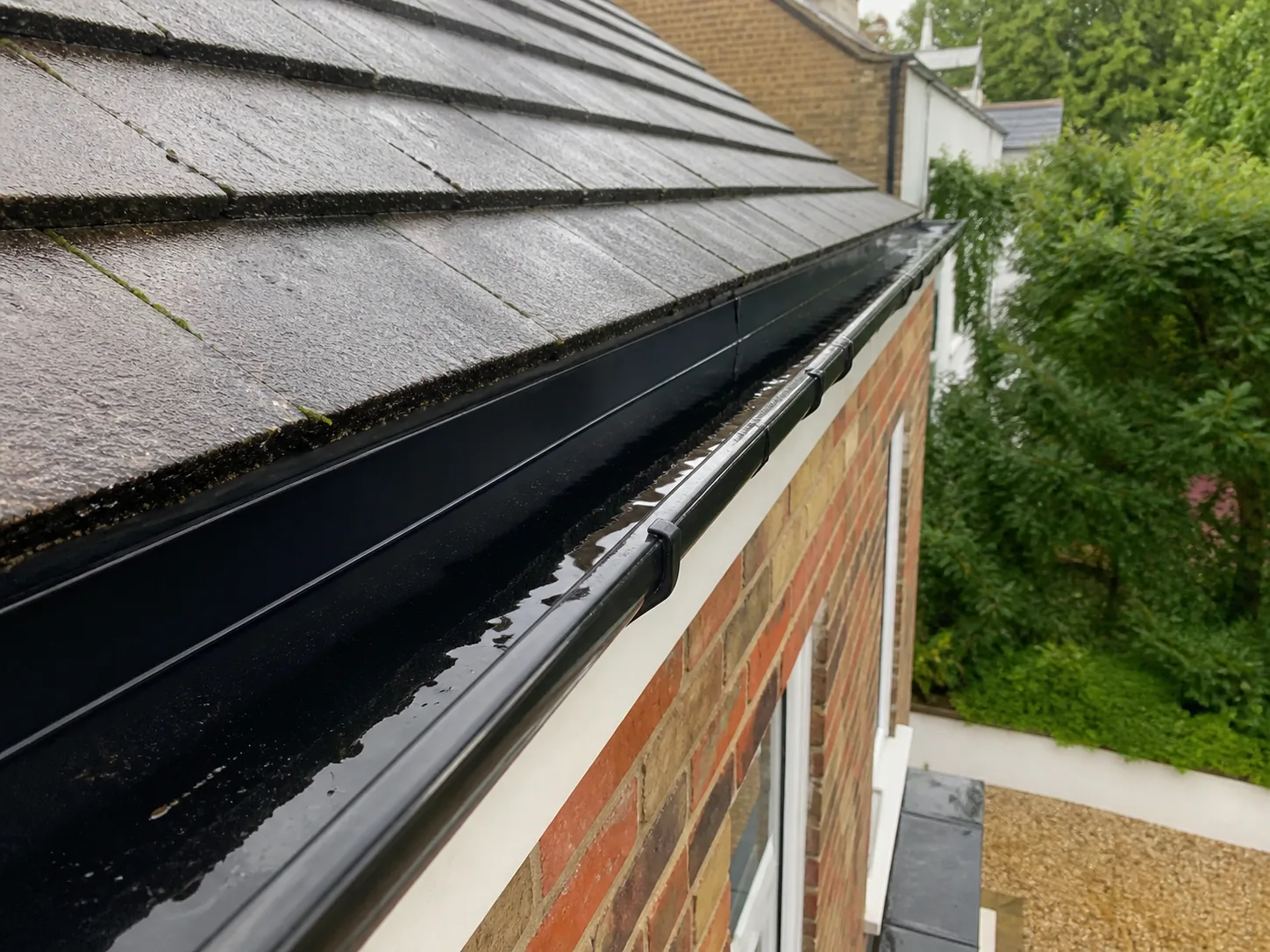
Visible clues
Spillover above a structure, staining at one corner, growth in a channel or water missing an outlet are useful observations to report. They do not prove that debris is the only cause. A split joint, dropped section or hidden pipe restriction may need another response.
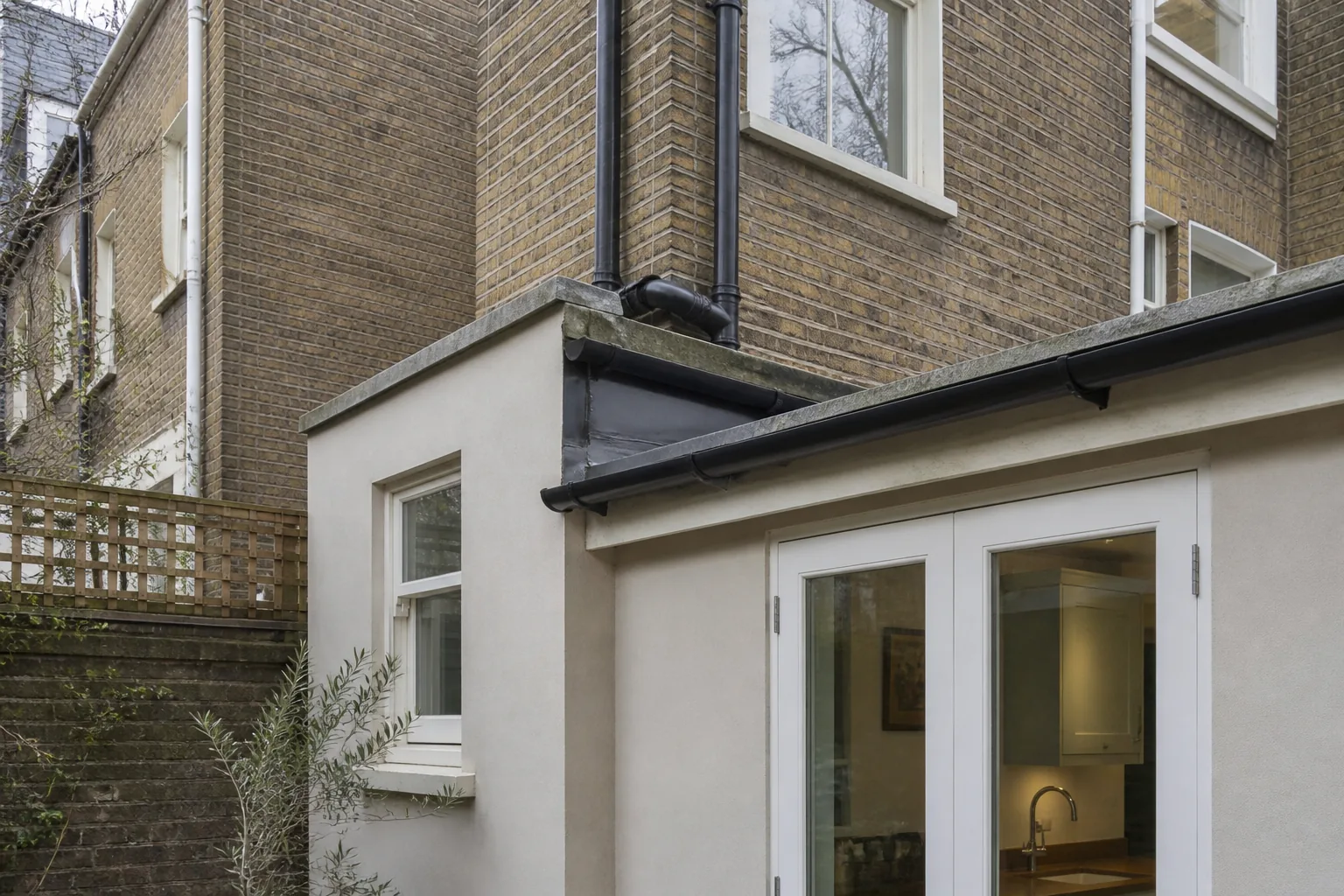
Local property context
An Edgware home may have clear ground below one elevation and a porch, garage, rear addition or narrow boundary below another. These are conditional examples rather than claims about a particular street or property. Wide ground-level views help show the relationship between each roof edge and the surrounding space. The affected channel should also be named by side and level. Looking at those details early helps avoid assuming that access to the front establishes access to every other part of the building.
Once suitable runs are identified, cleaning has a defined purpose: removing loose leaves, moss, silt and routine fragments from the open channel. A reachable outlet mouth can be included when agreed, but the work does not continue by default into a concealed pipe. It also cannot secure a loose bracket, mend a split or correct an uneven fall. If a structure prevents an ordinary approach, that run needs a separate access decision rather than being bundled into the same promise as clearer elevations.
Access is established for each elevation, not for the address as a whole. Structures, narrow routes, shared land, delicate surfaces and changes in ground level may affect the proposed work. A channel is included only when the agreed plan suits its conditions; other arrangements are assessed separately.
| Property situation | Access or gutter consideration |
|---|---|
| Terraced home with a rear addition | The addition may block the usual approach to the original rear eaves, while its own lower channels require separate identification. |
| House with a covered entrance | A canopy can sit beneath the front run or carry another gutter, so its projection and surfaces matter to the access review. |
| Property close to adjoining land | A side edge cannot rely on neighbouring space unless permission and a workable arrangement have been confirmed beforehand. |
| Home with open front and planted rear areas | Different surroundings can produce different access answers even where the channel heights appear similar. |
Structured service guide
| Area | Included task | Kept outside the task |
|---|---|---|
| Accessible named gutter | Remove routine loose deposits | Repair channels, brackets or seals |
| Reachable outlet mouth | Clear entry debris when specified | Clear the concealed downpipe |
| Structure beneath the eaves | Consider it during access planning | No unrelated surface or roof work |
| Underground route | No work within gutter clearance | Separate drainage assessment |
Structured service guide
| Finding | Cleaning consideration | Separate consideration |
|---|---|---|
| Leaves in a reachable channel | Include the run if agreed | Check any visible damage apart |
| Debris above a wide addition | Cleaning need may be present | Access must first be assessed |
| Leak at a joint | Remove nearby build-up if suitable | Repair the fitting if defective |
| Poor flow beyond a clear mouth | No further channel action | Assess pipe or drainage route |
Structured service guide
| Planning detail | Question asked | Quote effect |
|---|---|---|
| Roof edge and level | Which exact channel needs work? | Defines the included run |
| Area immediately below | Is it open, covered or restricted? | Shapes the access decision |
| Route to the elevation | Are gates and passages available? | Confirms practical inclusion |
| Outlet involvement | Is its entrance reachable? | Sets any agreed outlet task |
Structured service guide
| If this feature exists | What must be established | Possible result |
|---|---|---|
| A canopy below the front gutter | Its projection, material and surrounding space | Assess that upper run independently |
| A rear addition beneath old eaves | Whether a suitable approach remains | Include only after review |
| A side edge close to a boundary | Whether authorised space is available | Agree or exclude the elevation |
| A shared passage to the garden | Permission, width and availability | Confirm access before scheduling |
Common causes
Routine debris may sit beneath a thin visible layer, particularly where twigs hold leaves and fine deposits together. Corners and outlet areas can fill before the rest of a run. Clearance is limited to material reachable within the agreed channel, leaving covered routes and fixed defects for separate assessment.
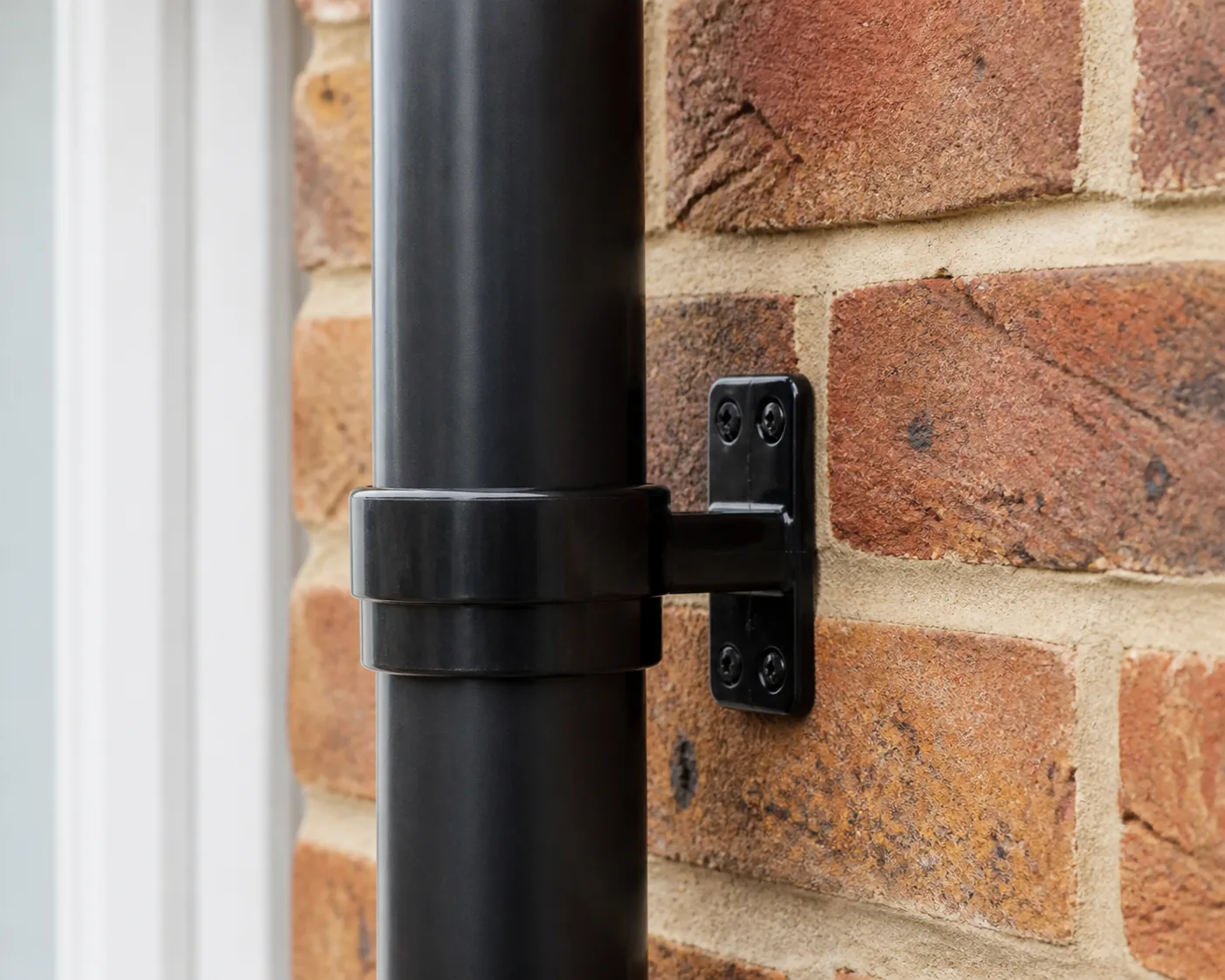
Wet leaves can settle into layers and slow water moving towards an outlet.
Loose roof moss can collect in the channel and hold other material in place.
Small twigs can bridge narrow points and trap lighter debris behind them.
Loose surface material may wash down from the roof during wet weather.
Older material can become dense and reduce the channel available for runoff.
Fine deposits can gather beneath larger debris and close to an outlet.
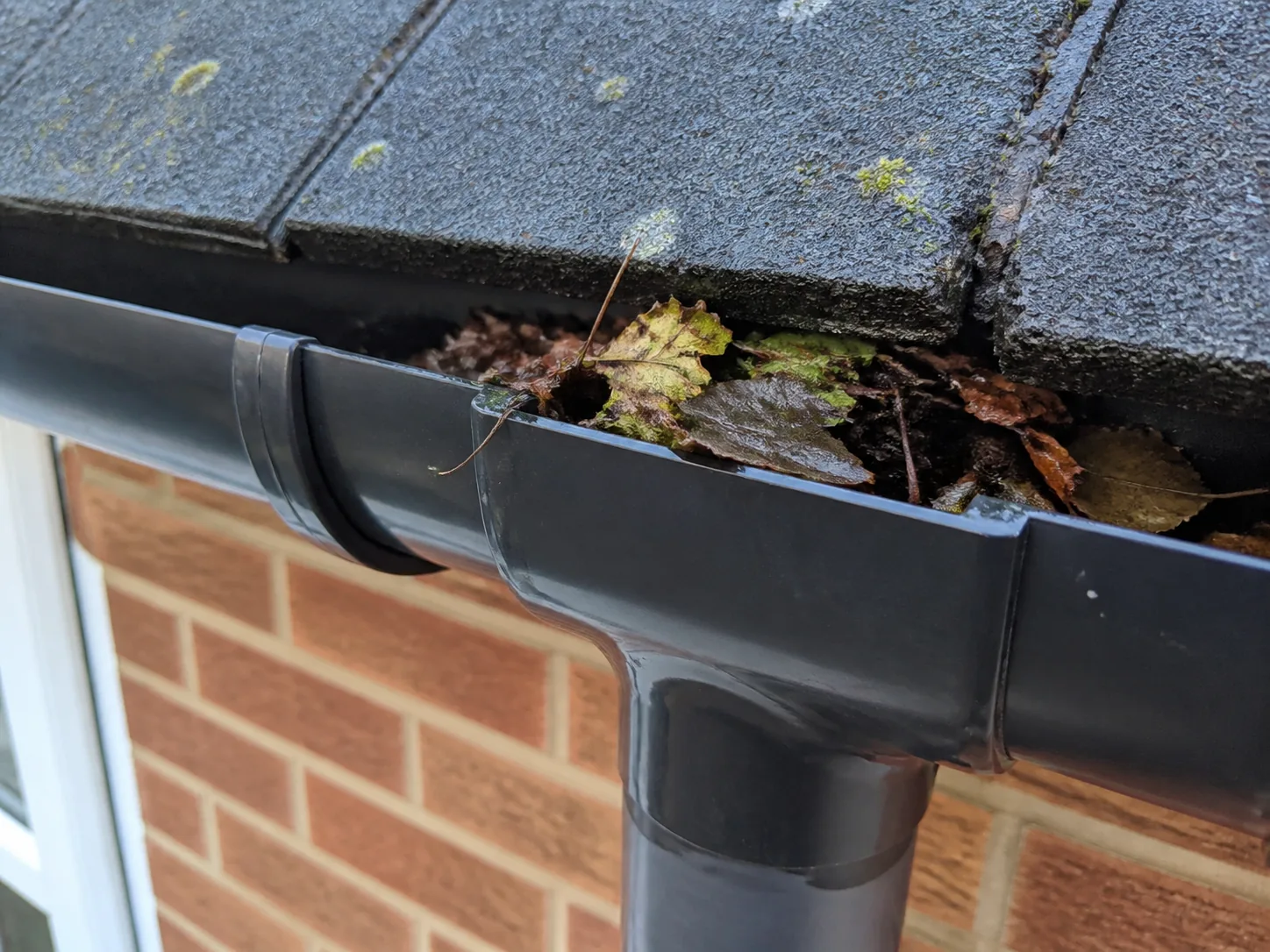
Seasonal context
Leaves can gather quickly after windy days, but damp moss fragments and silt may build gradually in sheltered runs. A structure below can make a recurring problem harder to approach, so review timing and accessibility together. Actual accumulation and overflow history are more useful than a fixed seasonal rule.
Nearby trees, roof moss, gutter shape and exposure can all affect how quickly material accumulates. A visible symptom is more useful than applying one fixed timetable to every address.
Quick answers
No. The route, ground and structures beneath each elevation can differ. Front, side and rear channels are reviewed independently and included only when their own conditions support the plan.
It may be possible after the addition's size, material, projection and surrounding approach are considered. The channel is not promised until that property-specific access review is complete.
Accessible agreed channels can be cleared of loose leaves, moss, silt, twigs and similar deposits. Reachable outlet mouths are attended to only where the quote states their inclusion.
No. Any communal or adjoining route needs permission and practical availability for the proposed time. If access cannot be confirmed, the affected elevation may need a different decision.
No. Removing debris does not secure the bracket or establish the condition of the fascia. The fault requires separate repair consideration and may affect whether cleaning should happen first.
Describe the roof level, addition beneath it and route into the garden. Ground-level views from several safe positions can help show the relationship even when one image cannot.
Edgware service area
Nearby gutter-cleaning pages
Before booking
Accessible agreed channels are cleared of leaves, loose moss, silt and comparable everyday deposits. Reachable outlet entrances may be included when stated. Repairs, concealed downpipes, below-ground drainage and access arrangements beyond the agreed plan remain separate.
Ground space, boundaries, structures and roof levels can change around one building. An open front does not show what is possible at the rear or side. Reviewing elevations separately keeps inaccessible runs from being promised by assumption.
Only after the structure's projection, material and position are considered with the wider surroundings. A conservatory can alter ordinary access, but the exact answer depends on the address. That upper run must be assessed and agreed specifically.
Access from adjoining land requires permission and suitable arrangements before the visit. It cannot be treated as available automatically. Without an authorised approach, that side may need to be omitted or considered under a separate access plan.
No. Removing it can restore space in the open channel, but a deeper pipe restriction, uneven fall or damaged fitting may also contribute. Any symptom that remains after clearance should lead to an assessment of those other possibilities.
Yes, when the opening is accessible, connected to an agreed run and named within the task. Loose material can be removed there. This does not confirm or clear the concealed length of downpipe beneath it.
The roof material, projection, condition and surrounding alternatives all need careful consideration. The gutter above is not included merely because it is visible. It may require another access arrangement or remain outside the cleaning scope.
No. Cracked channels, open joints, loose brackets and displaced sections are physical faults needing separate assessment. Cleaning may still be suitable nearby, but it should not be represented as fixing the component or preventing every future leak.
The reachable mouth can show whether loose surface material is present, but it does not reveal the whole pipe or the underground route beyond. Continuing weak flow requires separate consideration of those concealed sections below.
Share the relevant elevation, roof level, structure or ground below it, and the route around the property. Mention locked gates, narrow spaces, shared areas and boundaries. Safe ground-level photographs can support, but not replace, address-specific assessment.
Discuss the actual roofline
The quote is based on included channel lengths and levels, reachable outlet work and the access conditions beneath each section. Photographs and an accurate route description support early planning. Repairs, investigation inside hidden pipes, underground drainage and any extra access provision are priced only after separate assessment.
