
Leaves
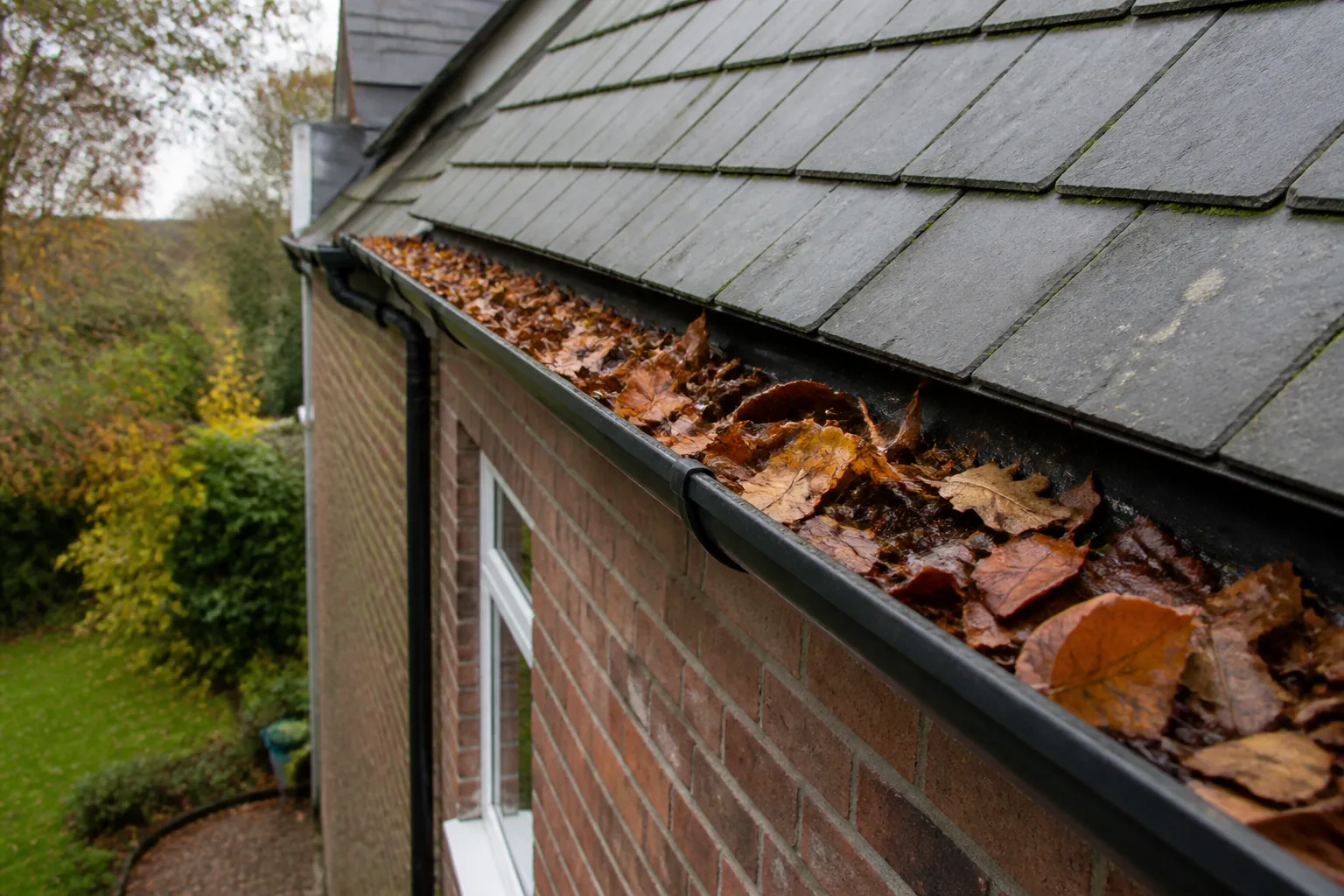
Wet leaves can settle into layers and slow water moving towards an outlet.
Rainwater routes · access · clear scope
When a building is divided, rented or managed, the first question may be who can authorise exterior work rather than what sits in the gutter. Gutter cleaning in Harrow can then be defined around accessible agreed channels, ordinary debris and specified reachable outlets. Repairs, deeper downpipe restrictions, underground drainage and separately assessed access remain outside routine clearance.
Common causes
Ordinary debris can collect along a channel, at a corner or around the point where water enters a downpipe. Dense residue may sit beneath loose leaves and be hard to judge from below. Clearance is limited to agreed accessible areas, including reachable openings only when specified.
Wet leaves can settle into layers and slow water moving towards an outlet.
Loose roof moss can collect in the channel and hold other material in place.
Small twigs can bridge narrow points and trap lighter debris behind them.
Loose surface material may wash down from the roof during wet weather.
Older material can become dense and reduce the channel available for runoff.
Fine deposits can gather beneath larger debris and close to an outlet.
Local property context
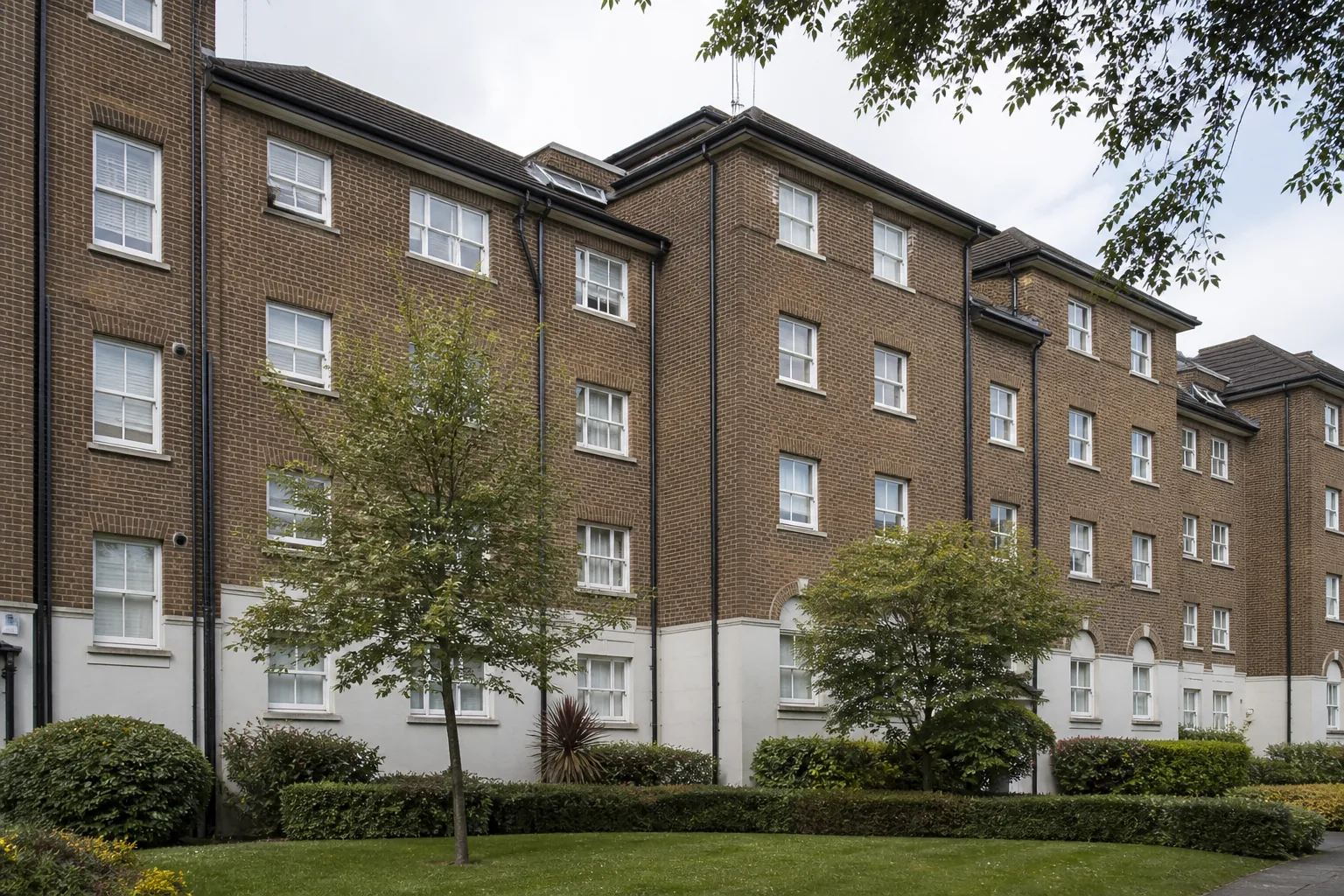
A Harrow address may be occupied by an owner, tenants, several leaseholders or people using shared entrances and outside areas. Where responsibility is divided, permission for exterior maintenance should be established before an appointment. The person arranging the visit also needs to identify the required roof edges and practical access route. Even within one building, a front elevation, side return and enclosed rear area may have different conditions. Confirming who can approve the work and which accessible channels are included makes the arrangement clearer for everyone involved.
Once those details are settled, routine cleaning has a straightforward boundary. It removes loose leaves, moss, silt and comparable debris from the agreed reachable gutter channels. Accessible outlet openings can be dealt with when named in the scope. Work does not automatically extend into a hidden downpipe, shared underground connection or damaged component. If water is escaping because of a failed joint, displaced section or another defect, the responsible party may need to arrange a separate repair assessment. Cleaning and corrective work should not be combined by assumption.
Shared gates, communal gardens, locked side routes and occupancy arrangements may matter alongside the building’s height and roof shape. Extensions or lower roofs can affect one elevation independently. The person booking should confirm permissions and entry, while reachability is based on the specific site conditions.
| Property situation | Access or gutter consideration |
|---|---|
| Owner-occupied semi-detached house | Side and rear routes may still differ, particularly where an addition or boundary narrows access. |
| Rented single household home | The occupier and landlord may need to confirm who arranges exterior maintenance and entry. |
| House converted into flats | Shared rainwater goods can require permission from the responsible owner or managing party. |
| Purpose-built residential block | Communal access, exterior responsibility and the relevant gutter sections must be established in advance. |
Structured service guide
| Element | Status in routine cleaning |
|---|---|
| Authorised accessible channel | Included when named |
| Loose organic build-up | Removed from that channel |
| Reachable outlet opening | Included by agreement |
| Internal downpipe restriction | Separate assessment |
| Damaged or displaced fitting | Separate repair decision |
Structured service guide
| Finding | Next category |
|---|---|
| Silt lining an accessible run | Routine clearance |
| Loose moss covering the outlet | Routine clearance if included |
| Bracket detached from its fixing | Repair assessment |
| Connector visibly separated | Repair assessment |
| Channel section cracked | Repair assessment |
Structured service guide
| Consideration | Reason |
|---|---|
| Authorised roof edges | Sets the permitted scope |
| Length and number of channels | Sets the cleaning quantity |
| Building levels and additions | Influences reachability |
| Communal entry requirements | Affects appointment arrangements |
| Outlet openings requested | Confirms included attention |
Structured service guide
| If this situation applies | Confirm before booking |
|---|---|
| If several flats share the roofline | Who authorises exterior work |
| If the required route is communal | How entry will be arranged |
| If only one elevation is approved | Which exact channel is included |
| If a defect is found | Who can decide on separate repair assessment |
A clear service sequence
Seasonal context
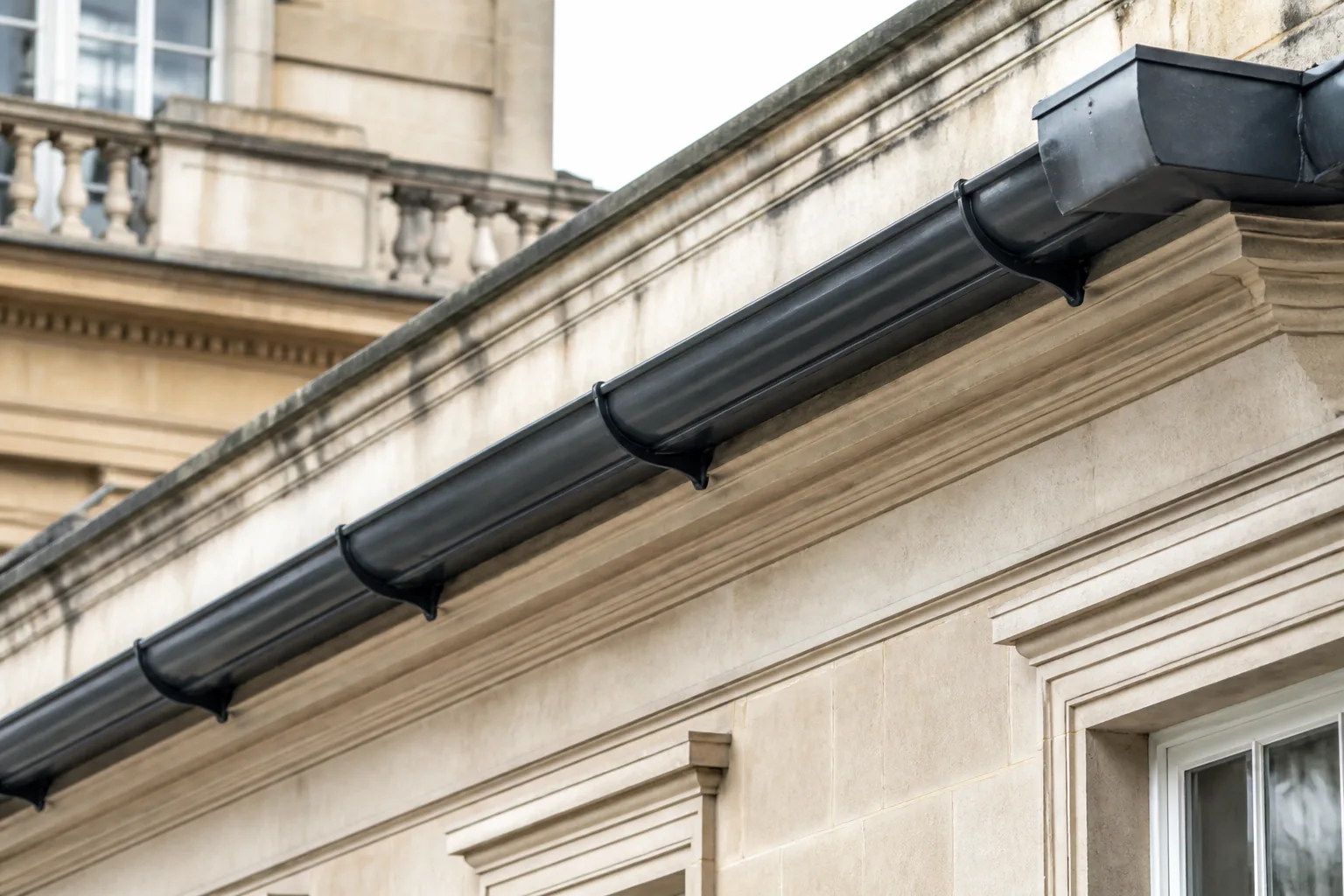
Responsibility for maintenance can be easy to overlook when several people use a building. Leaves may build quickly in autumn, although moss and fine deposits can arrive at other times. A sensible check follows visible symptoms, past accumulation and the arrangements for the particular exterior rather than a blanket schedule.
Nearby trees, roof moss, gutter shape and exposure can all affect how quickly material accumulates. A visible symptom is more useful than applying one fixed timetable to every address.
Quick answers
The responsible party depends on the ownership and management arrangements. An occupier should check with the landlord, freeholder or manager as appropriate before authorising exterior work or promising shared access.
Possibly, but authority should be confirmed rather than assumed. Shared exterior elements may fall under a landlord, freeholder, management company or collective arrangement, depending on the building.
Accessible loose leaves, moss, silt and similar ordinary material can be removed from the channels agreed for the visit. Reachable outlet openings may also be included when specified beforehand.
Not automatically. Material at an included reachable outlet can be addressed, but restrictions deeper inside downpipes and problems below ground require separate assessment and a suitably defined service.
It helps ensure the requested scope is authorised and that entry to shared or restricted areas can be arranged. It also avoids uncertainty if a separate repair is later recommended.
Yes, provided the run is accessible and clearly named in the agreement. The limitation should be understood because other connected or neighbouring channels may continue to hold debris.
Harrow service area
Nearby gutter-cleaning pages
Before booking
The tenancy and maintenance arrangements determine who can approve exterior work. A tenant may need to contact the landlord or agent, especially when access affects shared areas or when any repair could follow the cleaning visit.
The agreed clean covers loose build-up in reachable named channels and, where specified, accessible outlet openings. Resealing joints, replacing components, adjusting alignment and refixing supports are corrective tasks that require a separate decision and approval.
The route needed for the requested elevation should be identified and agreed with the relevant people beforehand. Access through a private or communal area cannot be presumed simply because the gutter serves the same building.
No. Removing leaves from a reachable outlet opening deals only with material at that point. A deeper obstruction may remain within the vertical pipe and needs its own assessment before any further work is proposed.
Water may escape at a corner, joint or elevation visible from only part of the building. Each observation can help locate the issue, but it does not by itself distinguish debris from damage or a concealed restriction.
It can direct water towards a shared entrance, wall or ground area, depending on the layout. That consequence does not identify the cause, so the relevant channel and wider rainwater route still need appropriate consideration.
Provide the building type, requested elevations, roof levels, access route, structures below the channels and visible debris or overflow. Also explain any shared responsibility so the authorised cleaning boundary is completely clear from the outset.
No. Debris can be removed from the surrounding accessible channel if agreed, but securing or replacing an end cap is repair work. It should be assessed and authorised separately by the responsible person for the property.
The responsible parties can use previous accumulation, visible symptoms and the building’s management arrangements to decide when another check is sensible. One rigid interval may not suit every elevation or shared exterior responsibility at the address.
That elevation may need to remain outside the agreed work until suitable authorisation and access exist. Other reachable sections can still be discussed, provided the partial nature and possible limitations are understood clearly by everyone beforehand.
Discuss the actual roofline
The quote depends on the authorised scope and the property: requested channel lengths, number of roof levels, accessible elevations, accumulation and any agreed outlet attention. Extra coordination or a suspected fault should be identified early, but repairs, deep pipe clearance and special access are assessed separately.
