
Leaves
Wet leaves can settle into layers and slow water moving towards an outlet.
Rainwater routes · access · clear scope
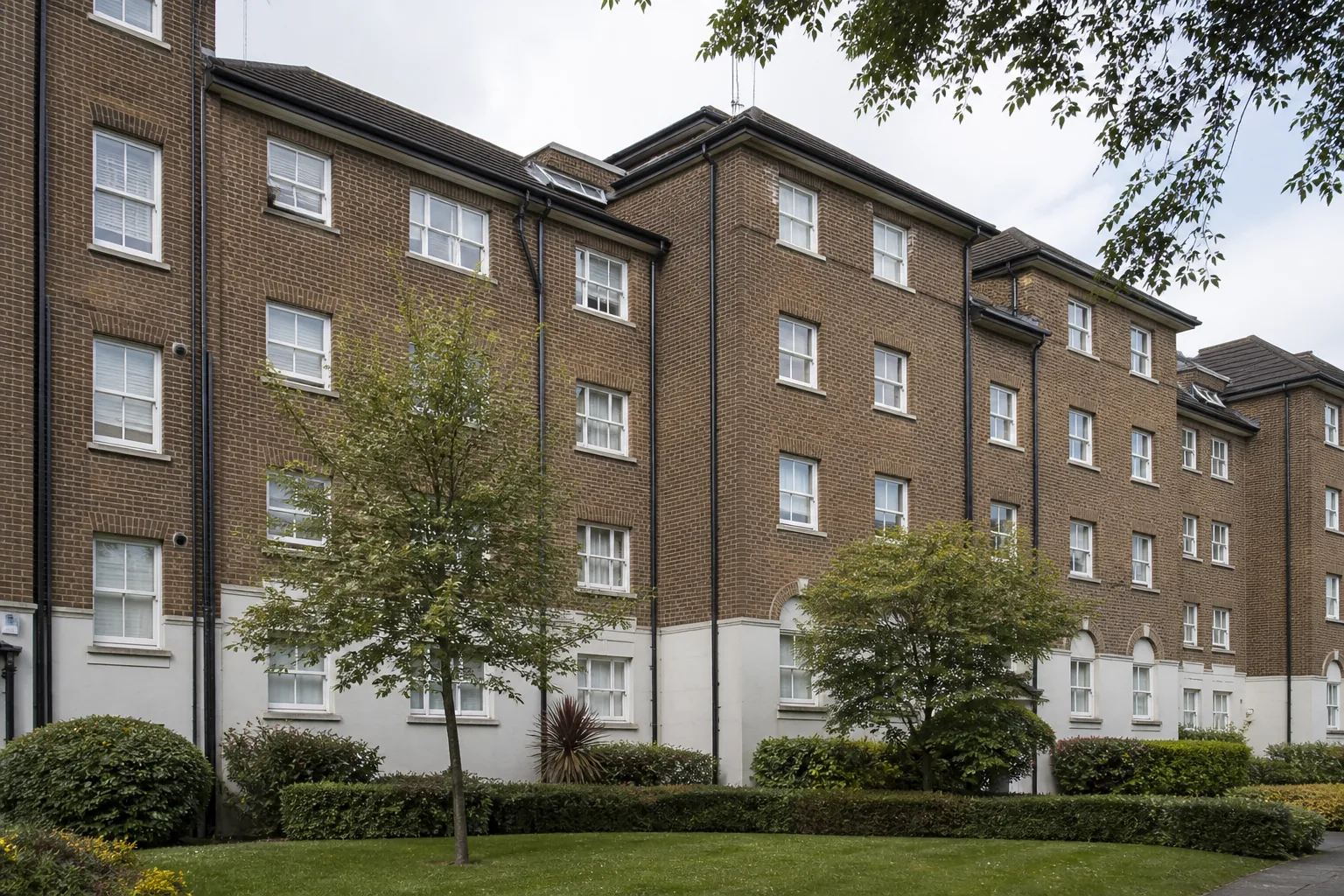
A spill during rain tells you where to look, but not always what caused it. Gutter cleaning in Hampton removes leaves, loose moss, silt and routine debris from the accessible channels agreed for the visit. Reachable outlet openings can be included when specified. Failed joints, concealed downpipe restrictions, underground drainage and sections needing specialist access require separate assessment.
Structured service guide
| Element | Within an agreed clean | Different requirement |
|---|---|---|
| Selected accessible channel | Remove leaves, loose moss and silt | Work on an inaccessible section |
| Reachable outlet opening | Lift loose deposits when specified | Open a concealed pipe restriction |
| Gutter fitting | Clear material beside it | Reseal, realign or replace it |
| Drain below ground | Not part of channel cleaning | Separate drainage assessment |
Structured service guide
| Observation | Possible cleaning role | When another response may apply |
|---|---|---|
| Leaves banked at an outlet | Clear the accessible pocket | Poor flow continues deeper down |
| Drip directly under a union | Remove nearby debris | Seal or fitting remains faulty |
| Water held in a clear channel | Confirm loose matter is absent | Fall or supports need review |
| Overflow from one corner | Clear that agreed section | Capacity or component issue persists |
Structured service guide
| Information | Why it matters |
|---|---|
| Number and length of requested runs | Sets the extent of channel clearance |
| Separate roof heights | Changes the access review for each section |
| Structures or obstacles below | May limit approach to a particular edge |
| Volume and condition of build-up | Affects the work involved |
Structured service guide
| If the address has | Confirm before booking |
|---|---|
| A rear extension | Whether both its lower run and the channel above are required |
| A corner outlet | Which connected edges show overflow or deposits |
| A detached garage | Whether its gutters form part of the request |
| A shared access route | Who can provide permission and entry |
Common causes
Material does not need to fill an entire channel to affect flow. Leaves can form a small dam at a corner, moss may trap grit, and settled silt can reduce the available depth. Clearance applies where those deposits lie within an accessible, selected run.

Wet leaves can settle into layers and slow water moving towards an outlet.
Loose roof moss can collect in the channel and hold other material in place.
Small twigs can bridge narrow points and trap lighter debris behind them.
Loose surface material may wash down from the roof during wet weather.
Older material can become dense and reduce the channel available for runoff.
Fine deposits can gather beneath larger debris and close to an outlet.
Local property context
A Hampton property may have a straightforward front channel but a rear roof edge interrupted by an addition, a corner or a change in level. Some addresses may also have a porch or garage run that behaves independently. These are details to confirm, not assumptions about the neighbourhood. Note where water crosses the rim, whether it happens near an outlet or midway along a section, and which part of the building is affected. This description helps define the requested work and avoids including unseen or unrelated roof edges by default.
The same visible spill can lead to different next steps. A cluster of leaves around a reachable outlet may be resolved by clearing the agreed channel, while water escaping beneath a cracked union points towards repair. If the outlet mouth is open but discharge remains poor, the restriction may sit deeper inside the downpipe or drainage below. Routine cleaning does not establish that concealed pipework is clear. Separating these possibilities keeps debris removal useful without presenting it as a remedy for failed fittings, unsuitable falls or hidden obstructions.
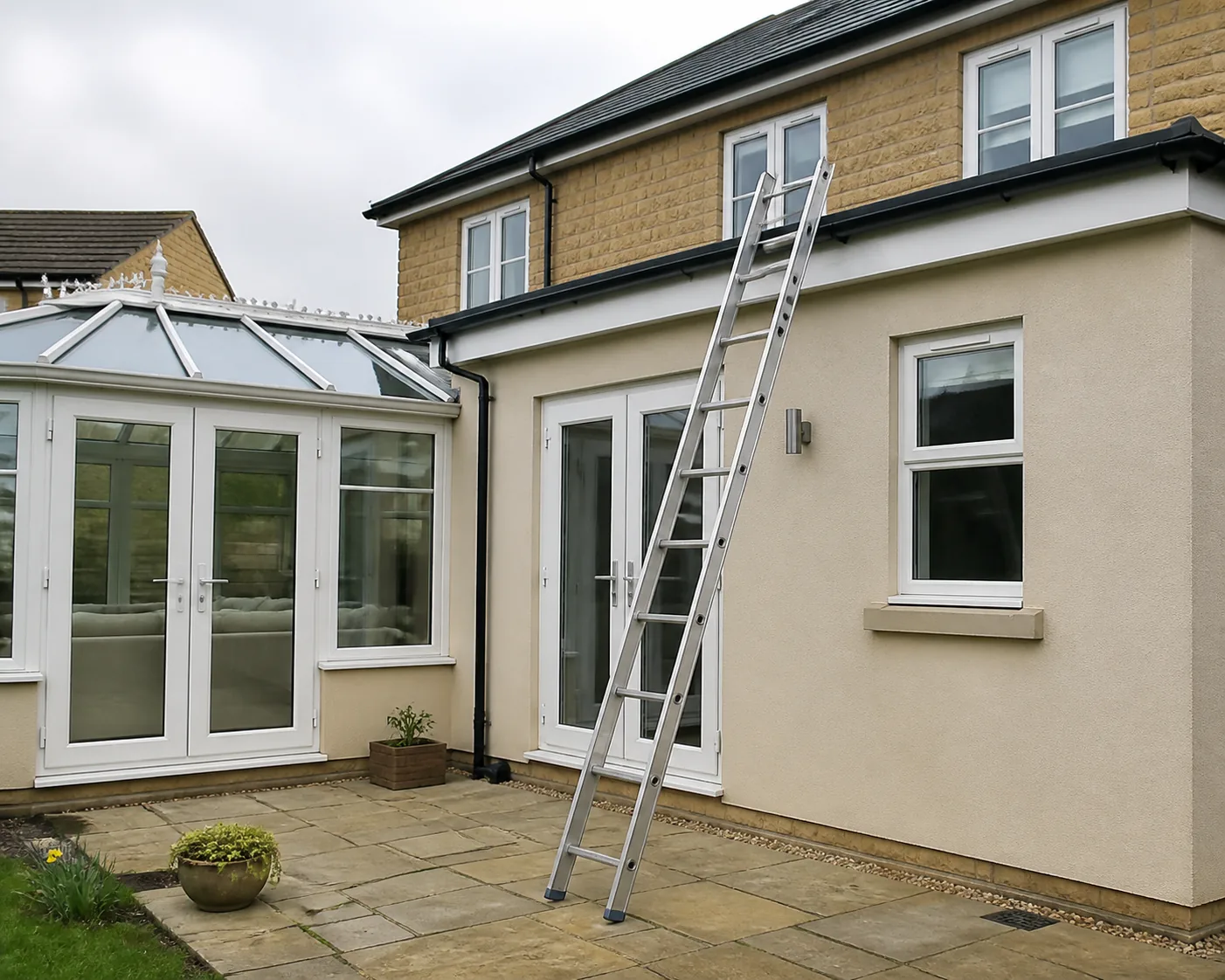
Reach can vary around the same home. Extensions, walls, narrow side routes, conservatories, changes in ground level and neighbouring space may affect individual elevations. The actual address is reviewed before those sections are accepted, and specialist access is not included by assumption.
| Property situation | Access or gutter consideration |
|---|---|
| Home with a rear addition | The lower addition may have its own channel and may also affect access to the original roof edge above. |
| House with a corner outlet | Debris can gather at the change of direction, so the affected run and reachable opening should both be identified. |
| Property with a detached garage | Garage roof edges are separate from the house scope and need to be requested expressly. |
| Shared or managed building | Responsibility, permission and access to communal elevations should be settled before a visit is arranged. |
Seasonal context
Autumn leaves are only one source of accumulation. Loose moss, seeds and fine deposits can reach a roof edge at other times, and sheltered corners may collect them faster. The most useful schedule follows conditions at the property and any repeated flow problem.
Nearby trees, roof moss, gutter shape and exposure can all affect how quickly material accumulates. A visible symptom is more useful than applying one fixed timetable to every address.
Quick answers
Yes. State the elevation, the nearest corner or outlet, and whether the problem appears only during rain. Those observations help identify the relevant run without assuming that every channel needs cleaning.
Leaves, loose moss, silt, seeds and similar ordinary deposits can be removed from accessible agreed channels. Fixed material, unusual waste or possible contamination should be discussed rather than treated as standard contents.
No. Loose material at an accessible outlet mouth may be cleared where agreed, but bends and concealed sections farther down the pipe need a different assessment if flow still appears restricted.
Yes, provided that run can be accessed and is clearly identified in the agreement. Front, rear, side, porch and garage sections do not have to be bundled into a whole-property service.
Cleaning may remove backed-up material beside the connection, but it cannot restore a split, failed seal or displaced fitting. Any continuing leak from the component requires separate repair consideration.
Name the required elevations, roof levels, additions and separate structures, then mention restricted routes and visible build-up. Explain any suspected fault so debris clearance is not confused with repair or drainage work.
A clear service sequence
Hampton service area
Nearby gutter-cleaning pages
Before booking
Only the requested channels that are found accessible and included in the agreed scope are covered. A visible front roof edge does not confirm that rear, side, upper or garage runs can be approached, so each required section should be named.
Leaves, moss and silt can gather around the opening and slow discharge, even when much of the channel looks clear. Removing reachable build-up may help, although continued backing up can indicate a restriction farther inside the rainwater route.
Standing water can relate to alignment, support or another physical issue rather than remaining loose material. It should be considered as a separate repair concern. Routine cleaning is limited to accessible deposits and does not alter the gutter fall.
No. Marks can follow repeated overflow, a faulty joint, a roof detail or an older event. Current behaviour during rainfall and the condition of the nearby channel help distinguish likely build-up from a fault requiring another response.
It can be considered, but the structure below may change whether that roof edge is accessible. Mention the conservatory and the precise run when enquiring. If a different access arrangement is needed, that requirement is assessed outside routine assumptions.
Growth shows that material and moisture have remained in that part of the channel, but it says little about other runs or concealed pipes. The affected accessible section can be cleared without claiming that the whole rainwater system is restricted.
Yes. A porch has its own short roof edge and outlet arrangement, even though it forms part of the house. Listing it prevents uncertainty about whether the lower channel is included alongside any main roof runs requested.
Permission and a usable route need to be arranged before that elevation can be accepted. The section should not be promised from photographs or street-level visibility alone. Any unresolved access issue may leave it outside the completed clean.
There is no dependable timetable for every address. Nearby planting, roof condition, exposure and earlier accumulation can all affect the interval. Review known collection points and rainwater movement, then plan attention around the property’s actual pattern.
No. The service concerns agreed accessible gutter channels and, where included, reachable outlet openings. A problem in a buried drain sits beyond that boundary and needs its own investigation rather than being added to routine roof-edge clearance.
Discuss the actual roofline
A quotation depends on the channel runs requested, their heights, the route to each elevation and the amount of build-up present. Lower porch or garage gutters add work only when named. Component repairs, deeper pipe clearance and underground drainage remain separate services.
