
Leaves
Wet leaves can settle into layers and slow water moving towards an outlet.
Rainwater routes · access · clear scope
Two visible gutters can require very different access decisions. Gutter cleaning in Maidenhead covers routine leaves, loose moss and silt in the specific channels agreed as accessible. Reachable outlet mouths may be cleared when included. Lower roofs, extensions, boundaries and ground conditions are considered before scope, while repairs, concealed downpipe obstructions and underground drainage remain separate.
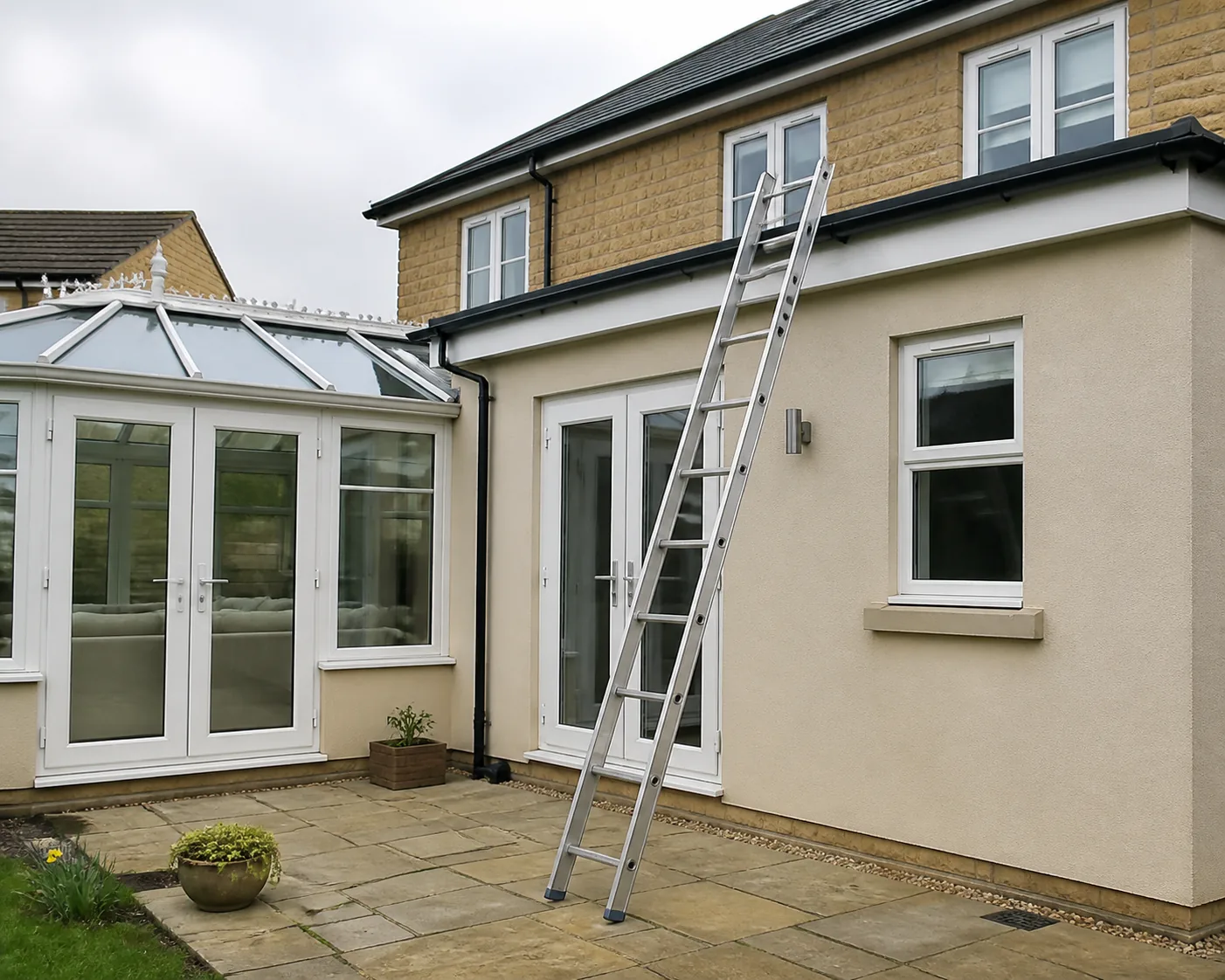
Visible clues
Material visible above the rim, overflow during rain, damp growth and slow movement towards an outlet can justify a clean. A displaced joint, split section or pool remaining in an empty channel points towards a separate repair or installation concern.

Local property context
A Maidenhead home may look straightforward from the street while the rear includes an addition, enclosed garden, changing ground or limited side route. These conditions cannot be inferred from the town or property type. Describe the front, rear and side runs wanted, then note porches, garages and other separate rooflines. Explain which gates or passages lead to them and whether access crosses shared space. The final agreement should reflect the conditions at the address, because visibility alone does not establish that a channel can be reached.
Suitable access still needs a precise cleaning boundary. Ordinary work removes leaves, loose moss, silt and comparable deposits from the included channels, and may uncover a reachable outlet entrance where agreed. It does not continue down a hidden pipe or into a drain. Nor can clearance seal a joint, correct a sag or restore a cracked section. If water behaviour suggests both debris and damage, those needs should be described separately so a routine clean is not expected to solve a component fault.
A route is assessed at the actual elevation, not assumed from another side of the house. Extensions, conservatories, walls, narrow gaps, soft or sloping ground and detached buildings can all change the situation. Mention permissions and locked access points before booking.
| Property situation | Access or gutter consideration |
|---|---|
| Semi-detached homes with side routes | Gate width, boundaries and permission can affect access to rear and side channels. |
| Properties with integral garages | The garage-level run and main roof should be listed as separate sections where applicable. |
| Homes with broad rear additions | The addition may have its own gutter while changing the approach to the upper elevation. |
| Converted or communal buildings | Responsibility for the requested channel and any shared route should be settled first. |
Structured service guide
| Requested area | Useful information | Decision |
|---|---|---|
| Street-facing run | Ground and space below | Include if accessible and agreed |
| Rear run above an addition | Depth and surrounding route | Assess separately |
| Garage channel | Building position and required sides | Name explicitly |
Structured service guide
| Condition | Routine clean | Other work |
|---|---|---|
| Loose leaves and moss | Remove from accessible channel | Usually none if flow returns |
| Split or leaking fitting | Clear surrounding debris | Repair the component |
| Sagging empty run | No corrective effect | Review fall and supports |
Structured service guide
| Consideration | Reason |
|---|---|
| Total named channel length | Defines the requested task |
| Independent roof levels | May require distinct access decisions |
| Restricted approaches | Can exclude a visible run |
| Quantity and density of debris | Affects clearing work |
Structured service guide
| Part | Within agreed cleaning | Outside it |
|---|---|---|
| Accessible gutter | Routine loose deposits | Repairs and alignment |
| Reachable outlet mouth | Loose matter when included | Deeper pipe restriction |
| Underground drain | Nothing | Drainage investigation |
Common causes
Wind can carry leaves and small fragments into a channel that appears open from below. Once caught behind an outlet lip or bend, they trap finer sediment and hold moisture. Accessible routine build-up can be removed from the named runs under the cleaning agreement.
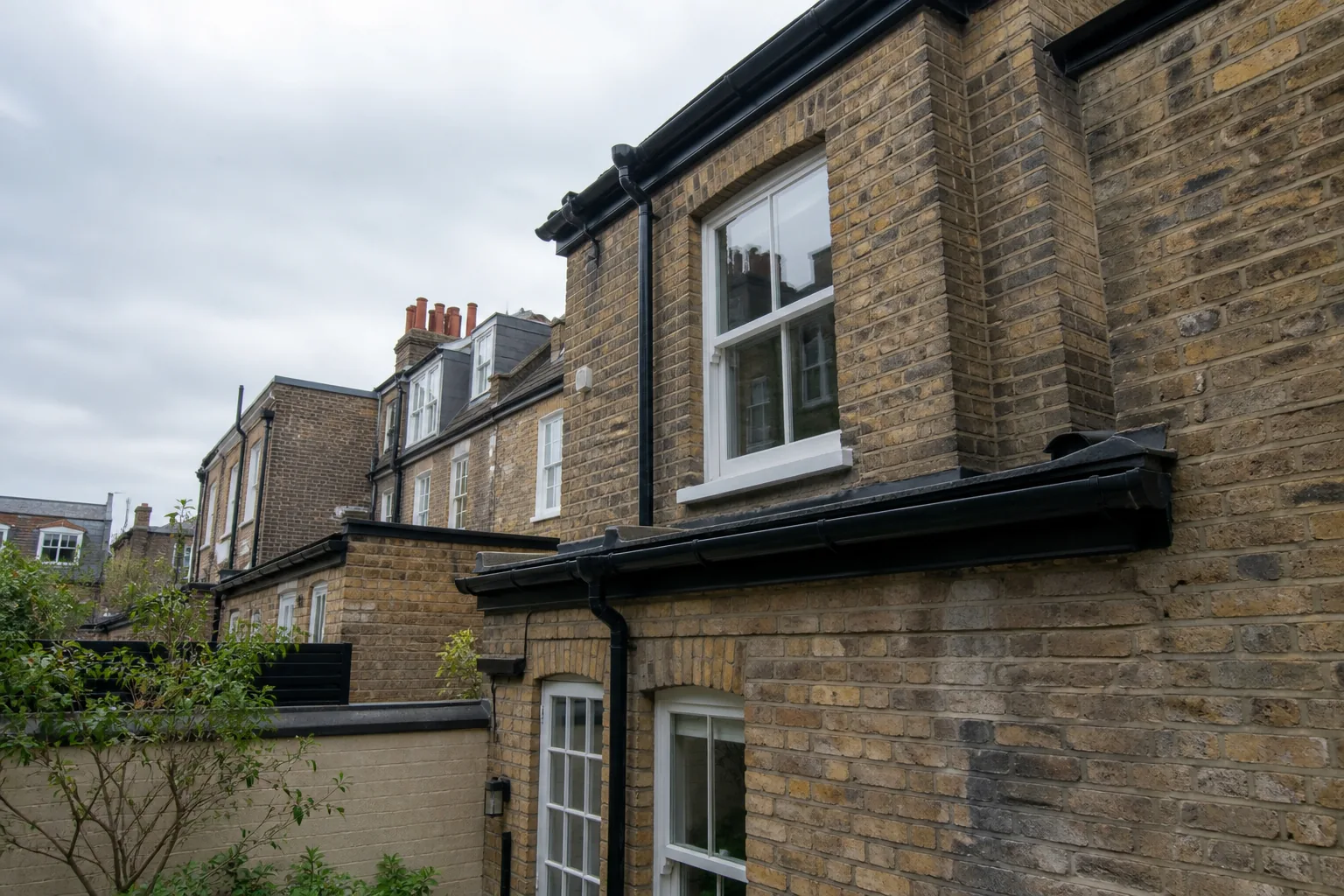
Wet leaves can settle into layers and slow water moving towards an outlet.
Loose roof moss can collect in the channel and hold other material in place.
Small twigs can bridge narrow points and trap lighter debris behind them.
Loose surface material may wash down from the roof during wet weather.
Older material can become dense and reduce the channel available for runoff.
Fine deposits can gather beneath larger debris and close to an outlet.
Seasonal context
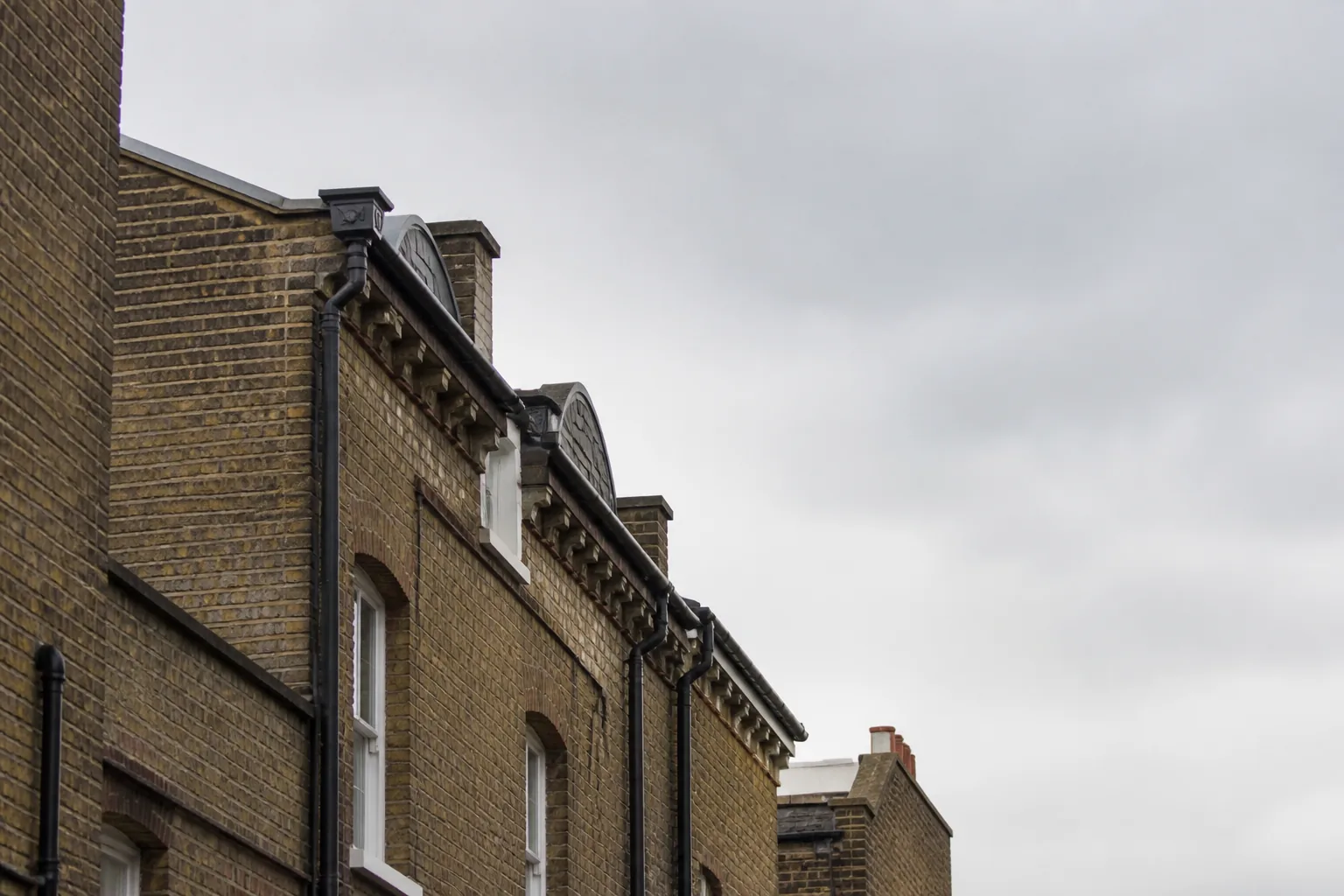
Leaves can arrive quickly during windy autumn weather, while moss pieces, seeds and grit may gather more gradually. Different sides of the same building can collect at different rates. Base timing on visible deposits, known catch points and actual rainwater behaviour.
Nearby trees, roof moss, gutter shape and exposure can all affect how quickly material accumulates. A visible symptom is more useful than applying one fixed timetable to every address.
Quick answers
It depends on the actual route, space, ground and obstacles around each requested elevation. A view from the street or garden can help explain the layout but cannot guarantee inclusion.
Accessible agreed runs can have leaves, loose moss, silt and routine debris removed. Reachable outlet entrances are dealt with only when specified, while concealed pipework stays outside scope.
Yes, when the relevant garage sides are named and their access is suitable. A garage is a separate structure or level and is not implied by a request for the house.
No. A safe ground-level image can show additions, levels and visible obstacles, but may miss space around corners or boundary conditions. The actual setting determines the final access decision.
Cleaning removes routine contents; repairs alter or restore components. Keeping them separate prevents a cracked section, failed seal or poor alignment from being treated as though more debris removal will fix it.
Requested length, number of levels, surrounding access and the volume or density of material all matter. Hidden drainage concerns and any different access arrangement do not belong in routine cleaning.
Maidenhead service area
Nearby gutter-cleaning pages
Before booking
Repairs, alignment changes, inaccessible or unrequested channels, restrictions inside downpipes and underground drains fall outside ordinary cleaning. The visit covers routine debris in agreed accessible runs and, if stated, loose material at reachable outlet mouths.
No. Ground level, available width, additions, planting and boundary arrangements may differ between elevations. Each requested side must be considered in its own surroundings, even when the gutters appear to be at the same building height.
Its inclusion depends on the actual position and suitable access under the agreement. The lower roof is not automatically an approach. Describe the addition's depth and both rooflines so the circumstances can be reviewed separately.
A guard may change both access to the channel and the way material gathers above or beneath it. State where guards are fitted and what type they appear to be. Ordinary inclusion should not be assumed.
It may reduce backing up if debris is also present, but it cannot seal the crack. Water can continue escaping through damaged material once the channel is open, so the corner needs a separately agreed repair.
No. A restriction may sit farther down, at a bend or where the pipe meets below-ground drainage. Cleaning an agreed reachable entrance does not confirm the condition of that concealed route or include its investigation.
They can be considered only when the relevant permission is in place and the route is available as agreed. Identify the elevation that depends on shared space. If access changes, that run may need to be omitted.
Silt can form a continuous shallow layer, reducing channel depth and holding moisture without looking dramatic from below. Removing accessible deposits is part of routine cleaning, but recurring sediment does not by itself identify its source.
Use the property's own accumulation pattern. Watch channels near known catch points and note overflow or retained water after rain. Planting, shelter and roof condition may influence different elevations, so no universal interval applies.
No. Once routine material is removed, water may still remain where the channel or supports do not direct it towards an outlet. Correcting fall requires component work and should be assessed separately from routine clearance.
Discuss the actual roofline
The quotation reflects the total requested roofline, separate heights, surrounding constraints and the kind of accumulation found. Several isolated short runs may differ from one continuous channel. Any component repair, specialist access requirement or concealed pipe investigation needs its own assessment.
