
What can a routine clean remove?
It can remove leaves, loose moss, silt, seeds and similar debris from the accessible channels named in the agreement. It does not alter damaged parts or investigate concealed pipework.
Rainwater routes · access · clear scope
A sound cleaning request identifies both the affected gutter and the route around the building. Gutter cleaning in Oxted clears leaves, loose moss and silt from agreed channels that are accessible under the planned visit. Reachable outlet mouths can be included where specified. Repairs, hidden downpipe blockages, underground drainage and areas requiring another access solution stay outside ordinary clearance.
Local property context
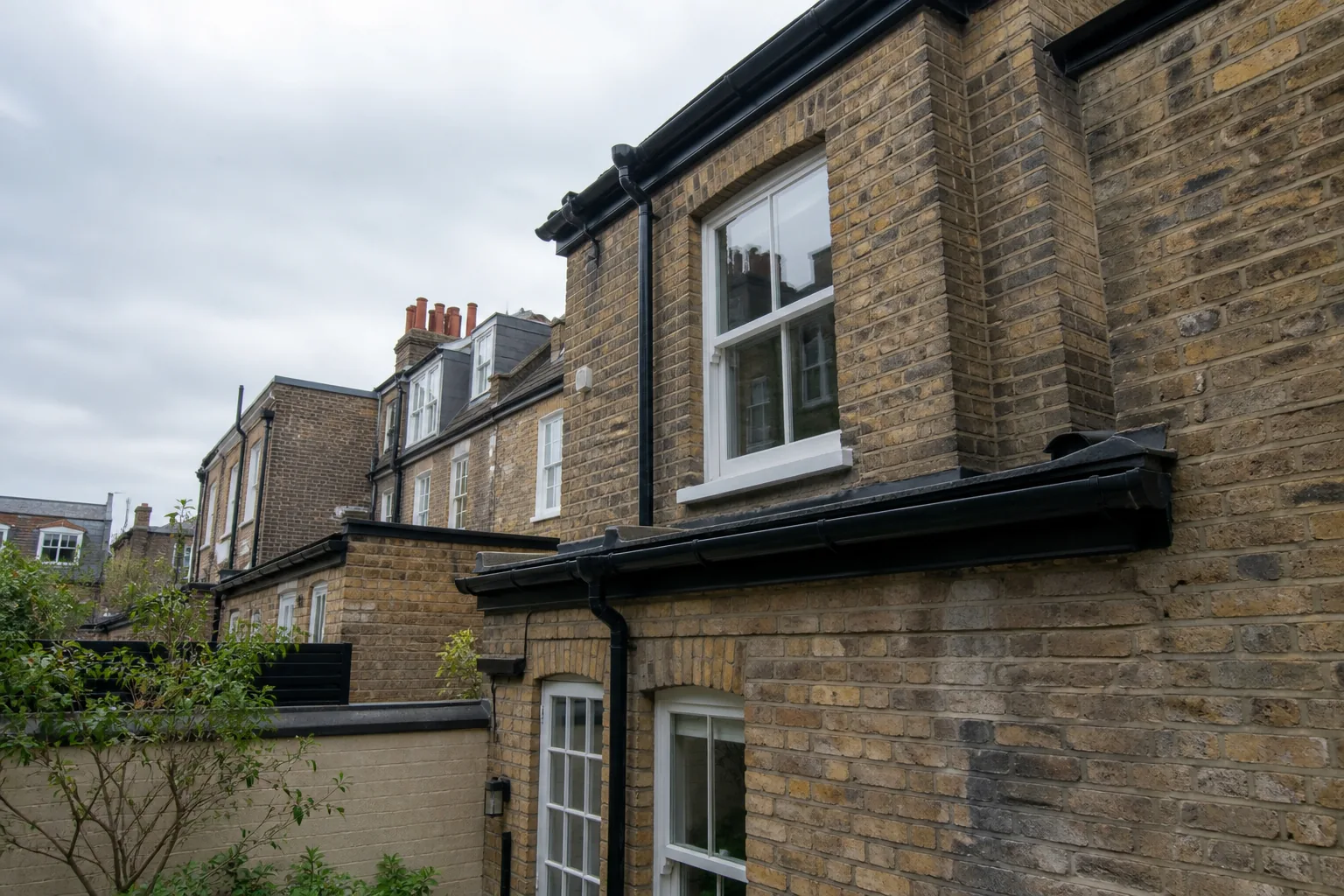
An Oxted home could have a single upper roofline, several lower channels or a mixture around extensions and separate structures. The description of the actual address is more useful than the property label. Identify the elevations where debris or overflow appears, then add any porch, bay, garage or outbuilding that should be considered. Mention walls, planting, narrow routes and different ground levels. These details establish which visible runs may be accessible and prevent unrequested sections from being folded into an unclear whole-house promise.
It also helps to separate the place where water escapes from the place where a restriction may sit. Overflow beside an outlet can accompany leaves packed at its mouth, but a slow downpipe or failed connection may be responsible further on. A long spill can reflect silt distributed across the channel, while local dripping may indicate a joint defect. The agreed clean removes ordinary loose contents from reachable runs. It cannot reveal every hidden cause, correct installation faults or extend into underground drainage.
Every roof edge has its own surroundings. A driveway-facing run may be open while rear additions, close boundaries, steps or a separate building affect another. Tell us about shared approaches and permission requirements, and ensure agreed gates and routes are available for the visit.
| Property situation | Access or gutter consideration |
|---|---|
| Detached homes with several elevations | Each side can differ in debris, ground level and surrounding access. |
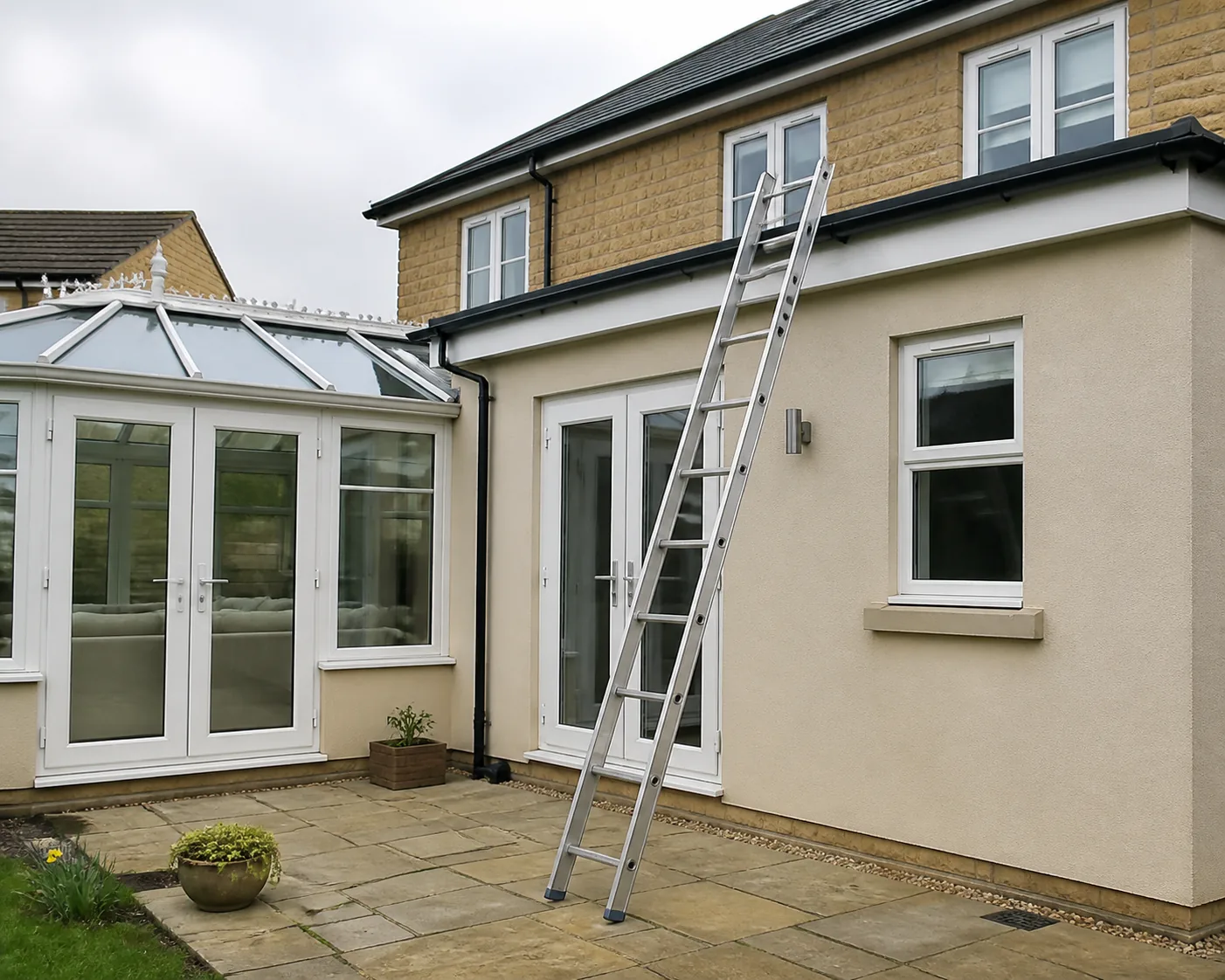
| Houses with rear additions | The newer lower channel and original upper run may need separate access decisions. |
| Homes with garden outbuildings | Outbuilding gutters require an explicit request and do not follow automatically from house clearance. |
| Properties with shared boundaries | Any route across adjoining space needs permission and a clearly agreed purpose. |
Visible clues
Look for retained greenery, sediment along the bottom, overflow in moderate rain or one outlet area that stays wet. Water from a seam, a bowed section or a clear channel that still pools may need repair attention rather than further debris removal.
Structured service guide
| System area | Ordinary clean | Different service |
|---|---|---|
| Accessible selected gutter | Take out loose routine debris | Restore damaged components |
| Reachable outlet mouth | Clear the entrance if agreed | Trace a hidden obstruction |
| Pipe below ground | Outside the visit | Drainage assessment |
Structured service guide
| Finding | Useful clearance | Possible follow-on |
|---|---|---|
| Leaves and silt near an outlet | Remove the reachable material | Review flow afterwards |
| Split along a gutter section | Clear accessible contents | Repair or replace the section |
| Standing water without debris | No further cleaning benefit | Assess fall and brackets |
Structured service guide
| What is considered | Why it matters |
|---|---|
| Requested roofline extent | Sets the work boundary |
| Number of distinct levels | Separates access requirements |
| Restricted ground or approaches | May affect reachable sections |
| Character of accumulation | Loose leaves differ from dense silt |
Structured service guide
| If present at the address | Detail to provide |
|---|---|
| Several open elevations | Which sides actually need clearing |
| Rear extension | Its own gutter and the upper access issue |
| Garden outbuilding | The specific roof edges requested |
| Adjoining-land route | Permission for the intended access |
A clear service sequence
Quick answers
It can remove leaves, loose moss, silt, seeds and similar debris from the accessible channels named in the agreement. It does not alter damaged parts or investigate concealed pipework.
Only the sides and smaller rooflines specifically requested, assessed as accessible and then agreed are covered. Connected channels elsewhere do not become part of the work by default.
Yes, loose material may be removed at a reachable opening when that point is included. The condition of the downpipe below cannot be confirmed through channel cleaning alone.
No. It may stop debris-related backup around a sound joint, but a perished seal, crack or loose connection needs repair. Cleaning does not restore the fitting.
Yes. Its roofline, access and outlet are independent considerations. Include the structure and relevant sides in the enquiry if you want those gutters assessed for the same visit.
The requested channel length, separate levels, surrounding access and quantity or density of material all contribute. Repairs and concealed drainage concerns should have their own assessment.

Seasonal context
Gutters can receive material in different ways across the year. Leaves may arrive suddenly, while seeds, moss and dust settle little by little. Review the sections that have previously held water after wet or windy periods, using their condition to guide the next check.
Nearby trees, roof moss, gutter shape and exposure can all affect how quickly material accumulates. A visible symptom is more useful than applying one fixed timetable to every address.
Oxted service area
Nearby gutter-cleaning pages
Before booking
Repairs, realignment, internal downpipe obstructions, underground drains and inaccessible or unnamed runs fall beyond routine cleaning. The normal task concerns everyday debris in agreed accessible channels and, when specifically included, loose material at a reachable outlet entrance.
Loose moss can occupy space and catch leaves or grit, especially where water slows near a corner or outlet. The resulting mixture may cause overflow, although a fitting fault or concealed restriction can create the same visible effect.
The channel may have an unsuitable fall, movement at its supports or an outlet positioned above the lowest point. These are installation or repair concerns. Removing more material cannot correct persistent standing water when the run is already open.
Only when the actual layout provides suitable access under the agreement. A lower roof should not be assumed to create a route. Explain the extension's position and the upper section required so their circumstances can be assessed separately.
Once the channel and any agreed reachable opening are clear, resistance may sit farther down the pipe or beneath ground. Those hidden areas are not covered by routine clearance and need a separately scoped downpipe or drainage investigation.
Yes. Short lower gutters can collect their own debris and use separate outlets. Naming them avoids doubt about the scope. Their size and position do not make them automatic additions to work on the main roofline.
Where trees are present, leaves and seeds may influence accumulation, but wind, shelter and roof shape determine where material settles. Observe each run rather than applying a fixed schedule based only on planting near the property.
It can provide useful context about levels, additions and visible obstacles, particularly when taken safely from the ground. It may not reveal space around corners or boundary conditions, so final inclusion still depends on the actual access.
A channel may be reachable only through communal or neighbouring land. Permission and route availability cannot be assumed. Confirming them before booking reduces the risk that the affected elevation has to be left outside the visit.
The accessible debris around it may be removed if safe and agreed, but the crack itself requires repair. Clearance neither seals the damage nor confirms that surrounding components are sound. Describe known defects when arranging the work.
Discuss the actual roofline
Likely cost follows the work requested: channel extent, number of levels, access around each elevation and amount of loose or compacted debris. One awkward short run may differ from a longer open one. Component work and investigation beyond outlet mouths are priced separately.
