
Leaves
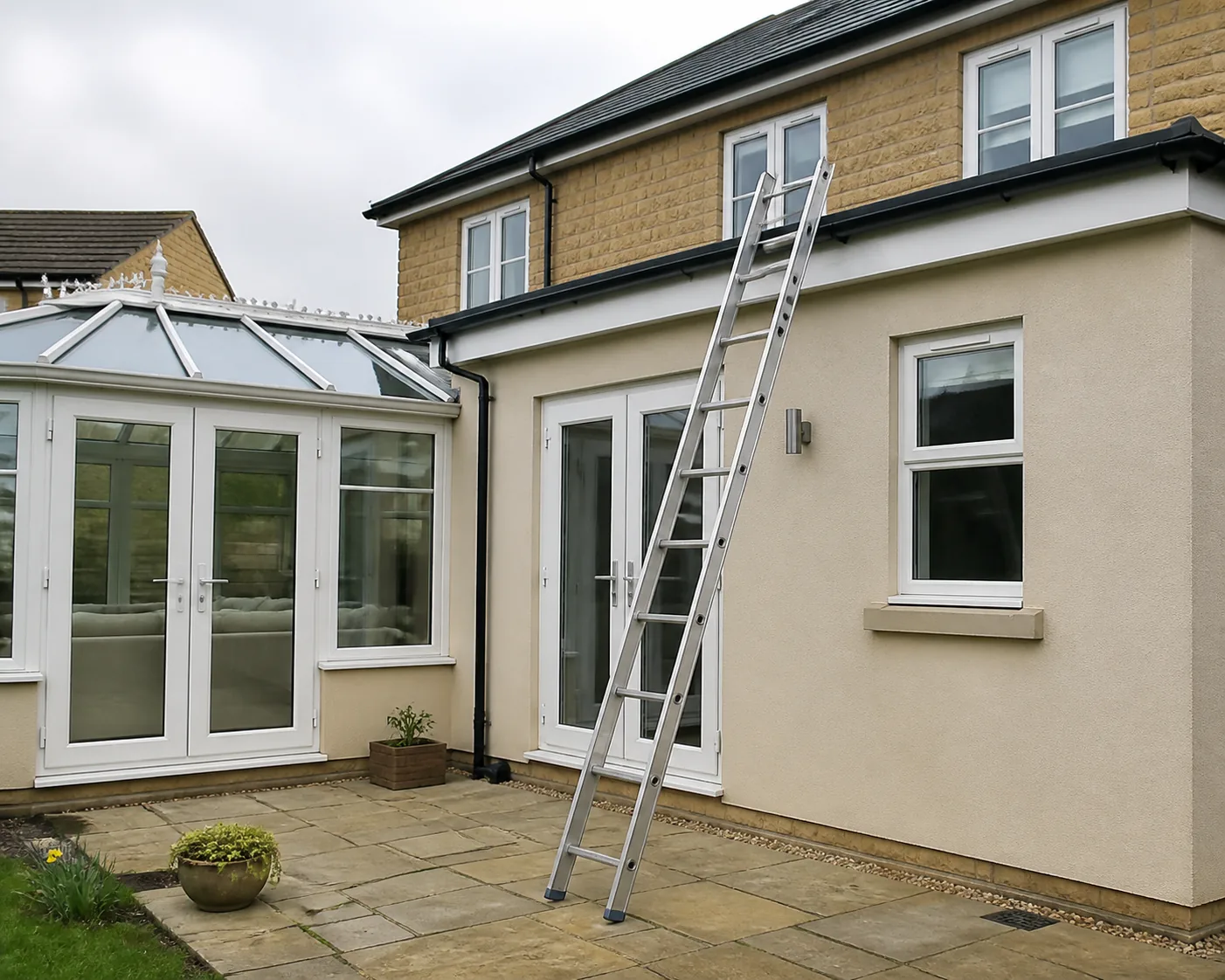
Wet leaves can settle into layers and slow water moving towards an outlet.
Rainwater routes · access · clear scope
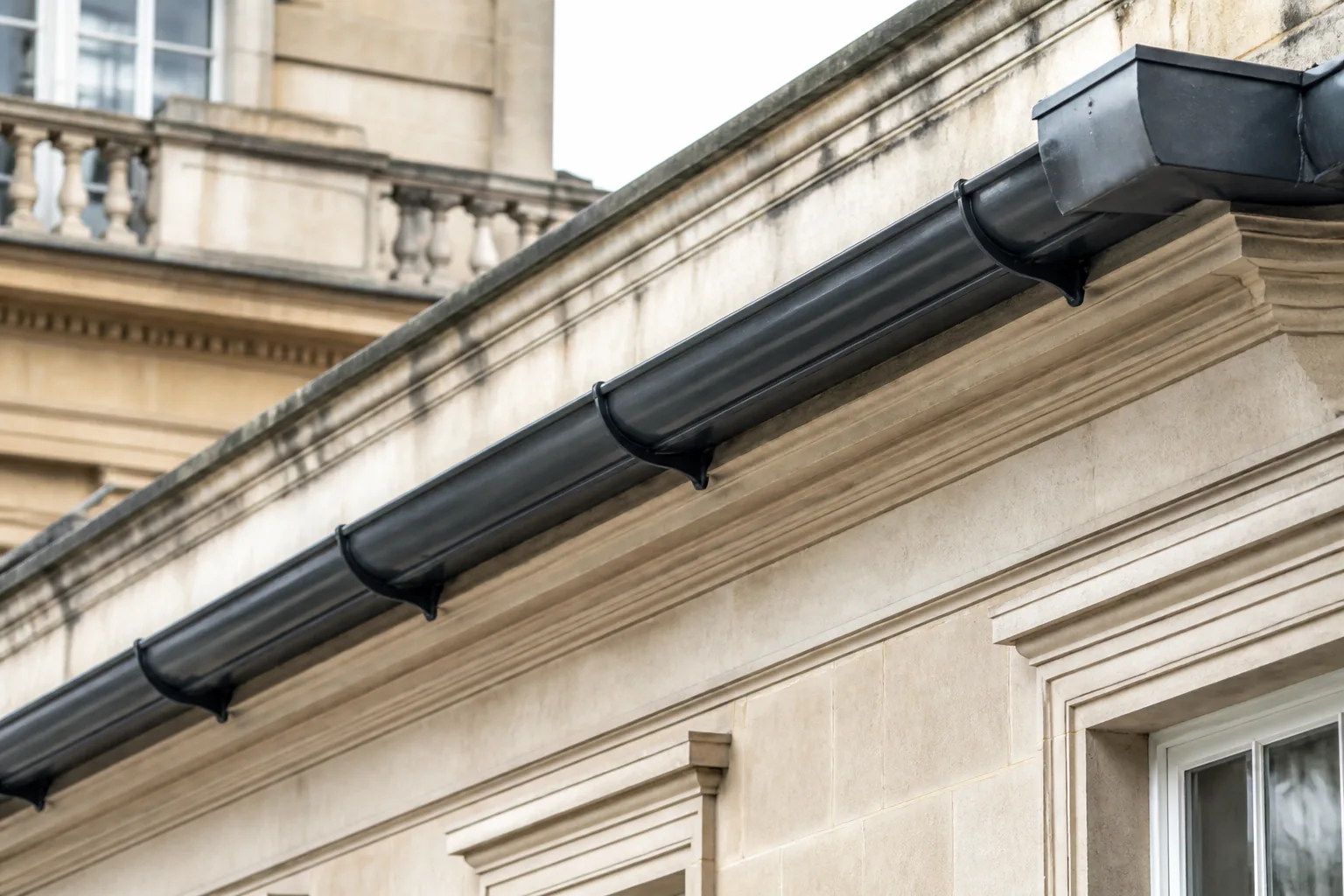
A useful gutter request identifies more than the front or back of a building. For a Reigate property, naming the roof level, nearest corner and a fixed feature can distinguish one channel from another. Cleaning covers ordinary loose deposits within the accessible sections agreed, while failed parts, enclosed pipe restrictions and drains beneath ground require their own assessment.
Structured service guide
| Description element | Example purpose | What it avoids |
|---|---|---|
| Building part | House, garage, porch or addition | Confusing separate structures |
| Facing side | Front, rear or named side | Assuming every elevation |
| Roof level | Upper eaves or lower projection | Missing a stacked channel |
| Nearby feature | Gate, bay or doorway below | Ambiguous left and right labels |
Structured service guide
| Condition | Channel-cleaning role | Separate consideration |
|---|---|---|
| Loose leaves around a corner | Remove them from the selected run | None unless symptoms continue |
| Cracked stop end | Clear nearby deposits if requested | Repair the failed end piece |
| Open mouth covered by silt | Attend to the reachable opening | Investigate any deeper restriction |
| Empty length sitting out of line | No deposit removal required | Assess alignment or supports |
Structured service guide
| Detail | Quotation value |
|---|---|
| Count of separate roof edges | Sets the intended extent |
| Upper and lower labels | Shows distinct working positions |
| Obstacles beneath named sections | Highlights where approach may differ |
| Limits set by ownership | Keeps neighbouring exterior outside scope |
Structured service guide
| If present | Describe it this way |
|---|---|
| Bay below main eaves | List bay and upper front separately |
| Addition beneath an older roof | Name both levels only when both are wanted |
| Garage joined to the house | Specify its selected edges independently |
| Shared continuation | End the request at the authorised boundary |
Common causes
A ridge of leaves at one corner may be obvious, whereas fine sediment can occupy a longer stretch without showing above the rim. Both are ordinary loose deposits when they lie inside an agreed accessible channel. Their position does not establish the condition of the enclosed pipe below.
Wet leaves can settle into layers and slow water moving towards an outlet.
Loose roof moss can collect in the channel and hold other material in place.
Small twigs can bridge narrow points and trap lighter debris behind them.
Loose surface material may wash down from the roof during wet weather.
Older material can become dense and reduce the channel available for runoff.
Fine deposits can gather beneath larger debris and close to an outlet.
Local property context
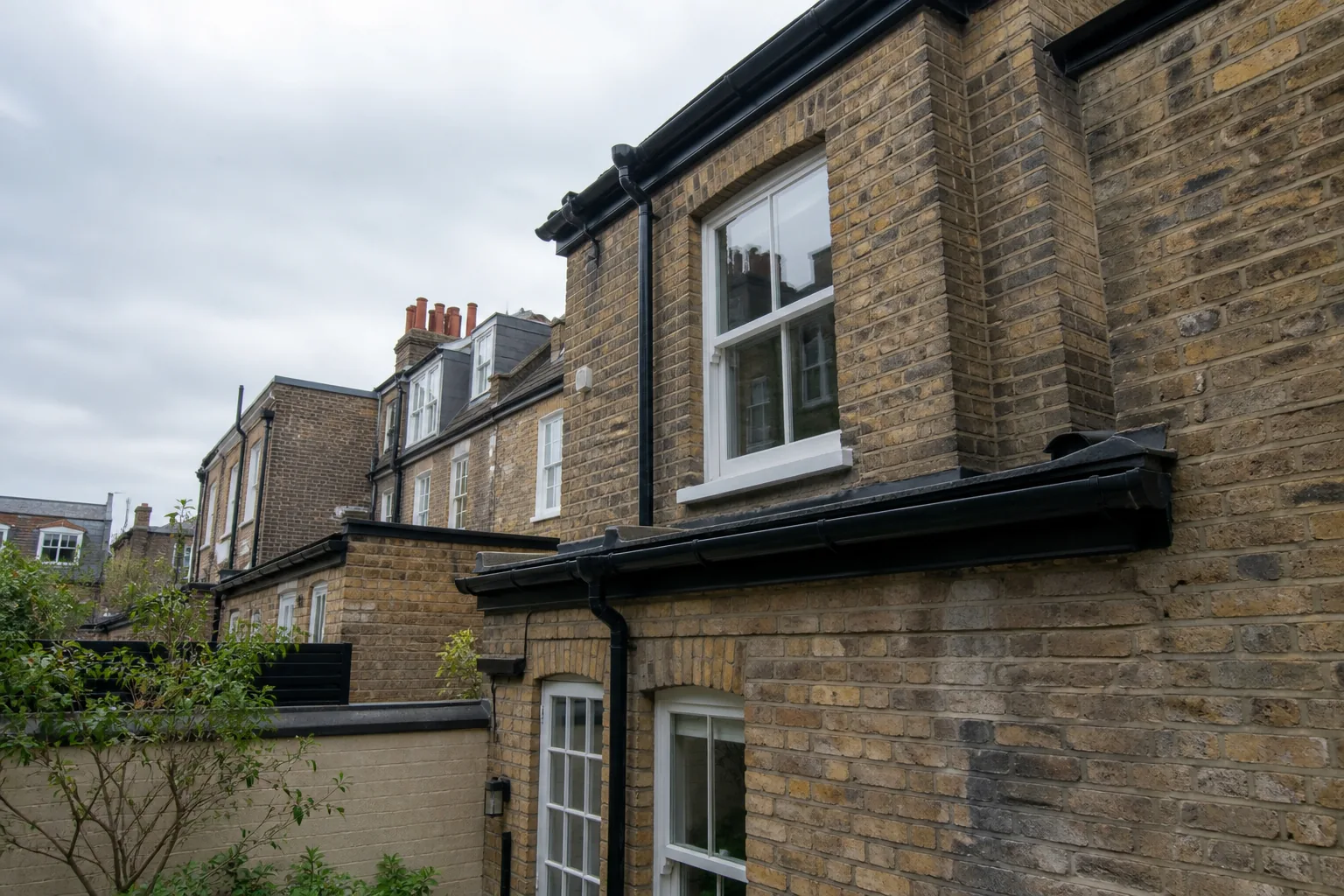
Some Reigate addresses may combine main eaves, a projecting bay, a porch and a later rear addition. Saying that the rear gutter needs attention could therefore describe two or three different roof edges. A clearer enquiry uses simple landmarks: upper rear above the kitchen, lower side beside the gate, or short front section over the bay. Those descriptions do not decide access in advance, but they help establish which channels are wanted and prevent a small separate run from being overlooked.
The same approach helps when only one place has spilled during rain. The observed corner can be named without declaring that the outlet is blocked or that the whole elevation requires work. If another roof edge is also wanted for routine maintenance, list it independently. The final scope then follows the sections that can be approached at the actual property. Broken joints, displaced lengths and restrictions beyond an exposed opening remain separate even when they sit beside a channel chosen for cleaning.
A label such as upper front describes position, not reachability. Lower roofs, glazed additions, changing ground, narrow passages and boundaries may affect the approach to that section. Each requested channel is confirmed against conditions at the address, and an unsuitable run can remain outside the agreed visit.
| Property situation | Access or gutter consideration |
|---|---|
| House with a projecting bay | Identify the short bay channel separately from the main front eaves above it. |
| Home with staggered rear roofs | Use upper and lower descriptions so the required channels cannot be confused. |
| Corner property | Name road-facing and side-facing elevations without assuming their access is identical. |
| Converted building | Confirm which exterior sections can be authorised and how shared areas may be entered. |
Seasonal context
The most sheltered channel may retain damp leaf fragments while a more open edge gathers wind-blown grit. Such differences can change through the year and across one building. Future attention should reflect what is actually found in each named section, not a uniform interval applied to every roof edge.
Nearby trees, roof moss, gutter shape and exposure can all affect how quickly material accumulates. A visible symptom is more useful than applying one fixed timetable to every address.
Quick answers
Add the roof level and a fixed feature beneath each one, such as upper rear above the kitchen and lower rear over the addition. The written scope should still name both sections.
Yes, if the symptom is limited to one end. A corner, stop end or nearby outlet helps locate the concern without claiming that the visible point is necessarily its cause.
Only if that lower channel is requested and accepted. A bay can form an independent roof edge below the main eaves, so treating it separately makes the intended work clear.
Describe the roof edge and where overflow appears. There is no need to guess the hidden arrangement. Any exposed opening is included only when reachable and agreed.
A single side can form the entire cleaning scope when clearly identified and suitable to approach. Other elevations are not cleared merely because they belong to the same building.
Numbered images can reduce ambiguity with several levels. They assist discussion but cannot show every obstacle or boundary, so inclusion still depends on the agreed description and site conditions.
A clear service sequence
Reigate service area
Nearby gutter-cleaning pages
Before booking
Combine the building part, elevation, roof level and a nearby fixed feature. A short lower side channel above a garage door is clearer than saying the gutter on the right. This wording defines the requested area without assumptions about access or cause.
A porch has its own edge and may discharge separately from the eaves above. It could hold a different amount of material and involve another approach. Listing it ensures the quotation reflects the channel wanted rather than every front-facing section.
No. It is a useful landmark, but water may travel along a rim or escape away from accumulated material. Name the observed point and containing channel. Cause, accessibility and any separate repair still need consideration.
Leaves, loose moss, seeds, small twigs, grit and silt can be removed from selected accessible guttering. Fixed roof material, damaged rainwater goods, unusual objects and obstructions inside concealed routes do not become routine cleaning through proximity.
It means the exposed mouth serving a chosen channel can be attended to where access permits and the scope states it. It does not extend through bends, along an enclosed downpipe or into its underground connection.
Mention the change rather than using one height label. Sloping ground, stepped buildings and adjoining roof forms can alter conditions along one side. The suitable portion can then be agreed precisely, with any excluded length made clear.
No. A channel may continue towards another property or connect around a corner, but ownership, authority and access can change. State the boundary you can authorise so work is not assumed beyond the relevant exterior.
Removing nearby deposits may reduce backing up, yet it cannot reseal a seam or restore a distorted fitting. If dripping continues from a clear junction, or separation is visible, the physical fault needs distinct repair assessment.
Combined length is only one consideration. Separate levels, corners, outlets and approaches can make each a distinct task. Supplying a simple list allows the requested extent to be assessed more accurately than a bedroom count.
Use previous accumulation, nearby vegetation, recurring symptoms and the last clearance findings. A sheltered lower channel may behave differently from open upper eaves, so section-specific observations are more useful than one fixed calendar rule for the whole property.
Discuss the actual roofline
A Reigate quotation is easier to assess when the enquiry lists each channel by elevation, level and approximate extent. Several short roof edges can differ from one continuous eaves run because each may have its own approach. Fault investigation, concealed pipework and drainage below ground are considered separately.
