
Leaves
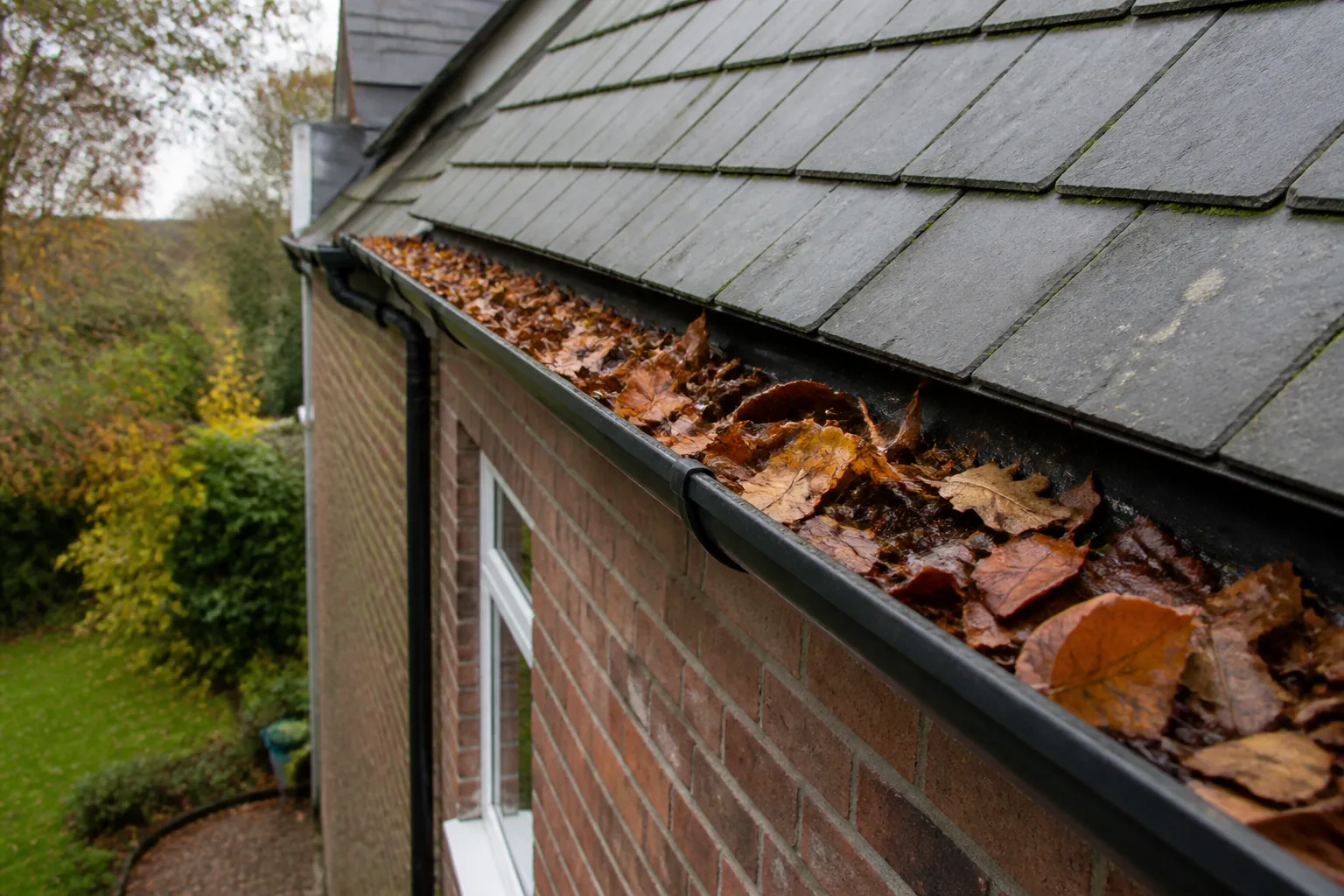
Wet leaves can settle into layers and slow water moving towards an outlet.
Rainwater routes · access · clear scope
A useful gutter clean starts with the sections that actually need attention. For Stanmore properties, the agreed service covers accessible channels containing leaves, moss, silt and ordinary debris, together with reachable outlets where included. Building height, additions and surrounding space help set the scope. Broken fittings, hidden pipe obstructions, underground drainage and any specialist access are considered separately.
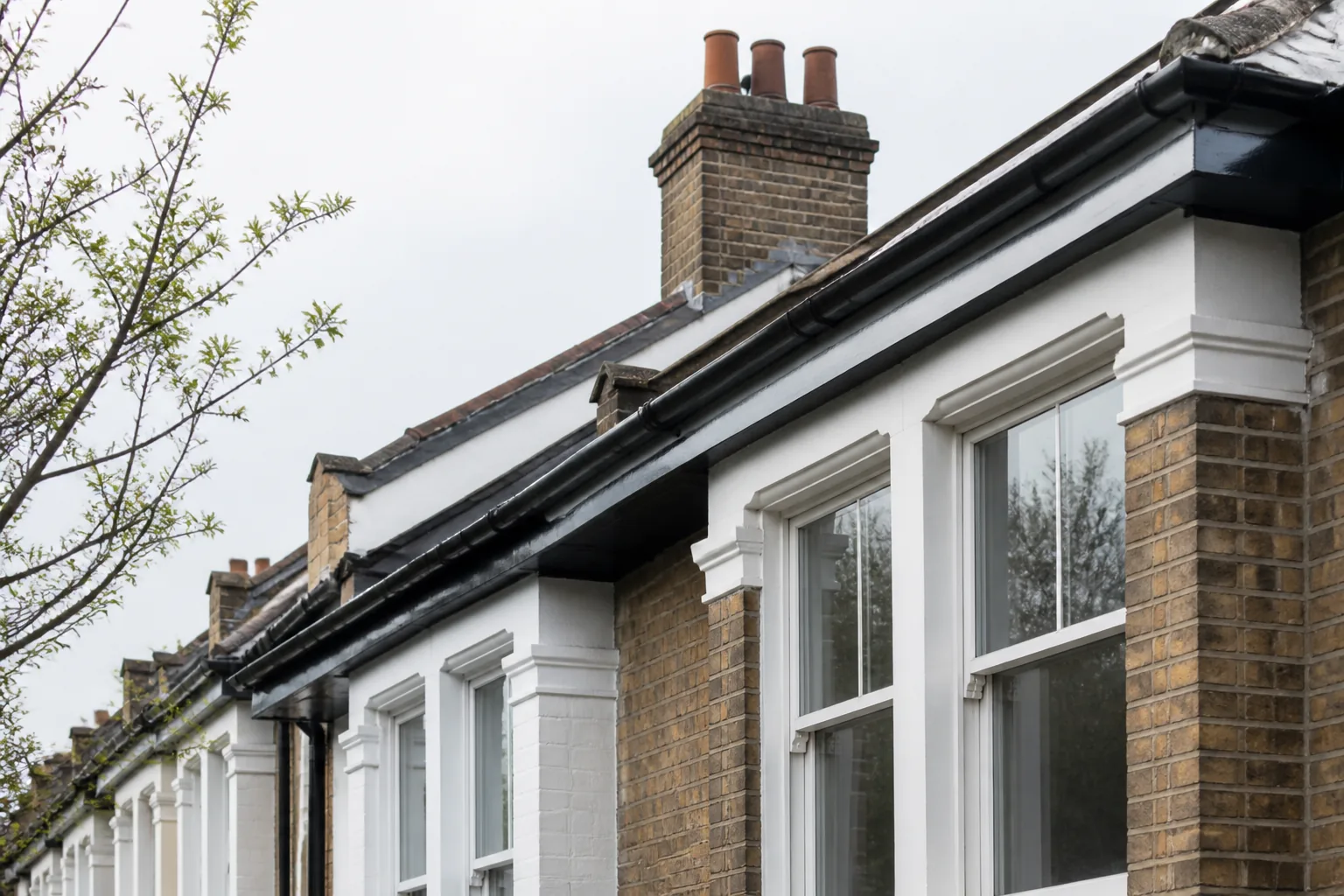
Seasonal context
Autumn leaf fall is an obvious prompt, although roof moss, seeds and fine wind-blown deposits can arrive at other times. Sheltered corners may collect material differently from exposed runs. Let visible build-up and earlier water behaviour guide checks rather than applying one calendar interval everywhere.
Nearby trees, roof moss, gutter shape and exposure can all affect how quickly material accumulates. A visible symptom is more useful than applying one fixed timetable to every address.
Common causes
Small accumulations can matter when they settle at a corner or outlet. Wet leaves may hold silt and moss together, reducing the available route for rainwater. The routine task is to remove that accessible material, not to confirm that concealed pipework is clear.
Wet leaves can settle into layers and slow water moving towards an outlet.
Loose roof moss can collect in the channel and hold other material in place.
Small twigs can bridge narrow points and trap lighter debris behind them.
Loose surface material may wash down from the roof during wet weather.
Older material can become dense and reduce the channel available for runoff.
Fine deposits can gather beneath larger debris and close to an outlet.
Local property context
A home in Stanmore may present a simple front roof edge while its rear or side channels have quite different surroundings. An extension could sit below one run, a passage may be narrow, or a change in ground level might alter how the elevation is assessed. None of those features should be presumed from the area alone. When enquiring, identify the side where water spills or debris is visible, mention lower roofs and separate structures, and explain whether gates or shared areas affect the approach. That gives the requested work a practical boundary.
The position of a symptom helps separate clearance from another problem. Leaves banked around an outlet can prevent water leaving an otherwise open channel. A drip directly beneath a join may instead indicate a fitting that needs repair, while poor discharge below a clear outlet can point farther down the system. Routine cleaning removes accessible loose material from agreed channels and reachable outlet openings where specified. It does not reseal joints, adjust gutter falls, open concealed downpipes or investigate drains beneath the ground. Each different cause needs its own response.
The front, side and rear of one property may not offer equivalent access. Height, roof changes, extensions, walls, planted areas and shared approaches all influence what can be reached. Requested runs are assessed individually, and specialist access is never assumed within an ordinary clean.
| Property situation | Access or gutter consideration |
|---|---|
| Home with a side passage | Gate width, stored items and permission may affect the run that can be approached from that side. |
| House with several roof heights | Each level should be named because access and accumulation may differ between them. |
| Property with a rear addition | The addition could have its own channel while limiting reach to the original roof edge above. |
| Converted or managed residence | Responsibility for shared gutters and authority to arrange access should be confirmed first. |
A clear service sequence
Structured service guide
| Part | Routine action | Separate matter |
|---|---|---|
| Named accessible channel | Remove ordinary loose contents | Alter or replace components |
| Reachable outlet opening | Clear loose material when included | Investigate the full pipe |
| Drain below ground | Outside the cleaning scope | Drainage assessment |
Structured service guide
| Observed condition | Cleaning role | What else may apply |
|---|---|---|
| Leaves and silt at a corner | Lift accessible build-up | No further action if flow is restored |
| Water through a cracked union | Clear adjacent channel | Repair assessment |
| Open channel holding water | Remove any remaining debris | Review fall or supports |
Structured service guide
| Detail | Why it changes the work |
|---|---|
| Requested elevations | Defines total extent |
| Separate roof levels | Changes the access review |
| Additions, walls or narrow routes | May restrict particular runs |
| Amount and density of debris | Affects clearing effort |
Structured service guide
| If the address has | Confirm before booking |
|---|---|
| A rear addition | Whether the original run above can be reached |
| A shared passage | Whether access and permission are arranged |
| A detached garage | Which of its roof edges are required |
| Several upper levels | Which individual channels show a problem |
Quick answers
Only the accessible channels identified in the agreement are included. Front, rear, side, porch and outbuilding runs should be named separately so the intended extent is clear before work begins.
Leaves, loose moss, silt, seeds and similar ordinary debris can be removed from included channels. Unusual objects, hardened material or contamination may call for a separate discussion.
A reachable outlet opening can be included when agreed, but that does not extend to an obstruction concealed farther inside the downpipe or within underground drainage.
Different elevations can have different heights, obstacles and debris levels. Naming the problem area makes the enquiry more accurate and avoids assuming that every roof edge has the same conditions.
Repairs are not part of routine debris removal. A cracked union, loose bracket or displaced section needs separate assessment, even when the nearby channel also requires clearing.
Provide the required elevations, approximate levels, visible additions, access restrictions and type of build-up. Mention any suspected leak or pipe problem so it is not mistaken for ordinary cleaning.
Stanmore service area
Nearby gutter-cleaning pages
Before booking
Not unless every relevant run has been requested, found accessible and included in the agreement. A straightforward front elevation does not establish that rear, side, garage or upper channels can also be reached. The scope should identify them individually.
Yes. A damaged connection, unsuitable fall, inadequate capacity or obstruction deeper in the rainwater route may still cause trouble. Cleaning deals with material in accessible channels; continued overflow should prompt an assessment of the remaining possible causes.
Moss can form a dense pocket that slows water entering the outlet, particularly when it traps smaller particles. Clearing reachable build-up may restore the opening, but it does not prove that the hidden length of downpipe is unrestricted.
Yes. A separate garage has its own roof edge, height and access conditions, so it is not included merely because the house gutters are requested. Identify the structure and the sides needing attention when asking for a quotation.
Roof condition, nearby planting, shelter and wind exposure may vary around a property. These factors can move debris towards one channel without affecting another equally. The visible contents and previous overflow at each run are the most useful guides.
If backed-up water is escaping through an otherwise sound join, removing the restriction may help. A failed seal, crack or displaced connection still requires repair, however. Cleaning should not be presented as a way to restore damaged components.
That section remains outside the routine cleaning completed at the visit. The reason should be made clear and any different access requirement considered separately. Visibility from the ground does not guarantee that a run can be included.
Only loose material at a reachable outlet opening may be removed where agreed. The concealed interior of a downpipe, its bends and connections below ground are outside ordinary channel cleaning and need their own assessment if restricted.
There is no reliable area-wide timetable. The rate of return depends on roof condition, planting, wind and previous accumulation. Watch known collection points and rainwater flow, then arrange a check when the property shows a reason for one.
No. Repeated overflow may leave staining, but a faulty join, roof detail, plumbing issue or earlier event could produce a similar mark. Current water behaviour and the condition of the nearby gutter need to be considered together.
Discuss the actual roofline
Cost reflects the selected channel lengths, their levels, access at each elevation and the quantity of material to remove. A porch or outbuilding adds scope only if named. Repairs, hidden blockages and below-ground drainage should be quoted as different work if they need attention.
