
Leaves
Wet leaves can settle into layers and slow water moving towards an outlet.
Rainwater routes · access · clear scope
When a gutter spills, the affected roof edge and the water’s exit point both matter. Gutter cleaning in Twickenham clears leaves, moss, silt and everyday build-up from accessible channels agreed beforehand. Reachable outlets are covered only where arranged. Property features are reviewed individually, while leaking components, concealed downpipes, underground drainage and specialist access remain separate from the standard visit.
Common causes
Leaves can bridge an outlet and capture smaller moss fragments, while fine silt may spread along the channel beneath them. Removing both from an included accessible run restores open space for rainwater. It does not test the unseen route after the outlet.
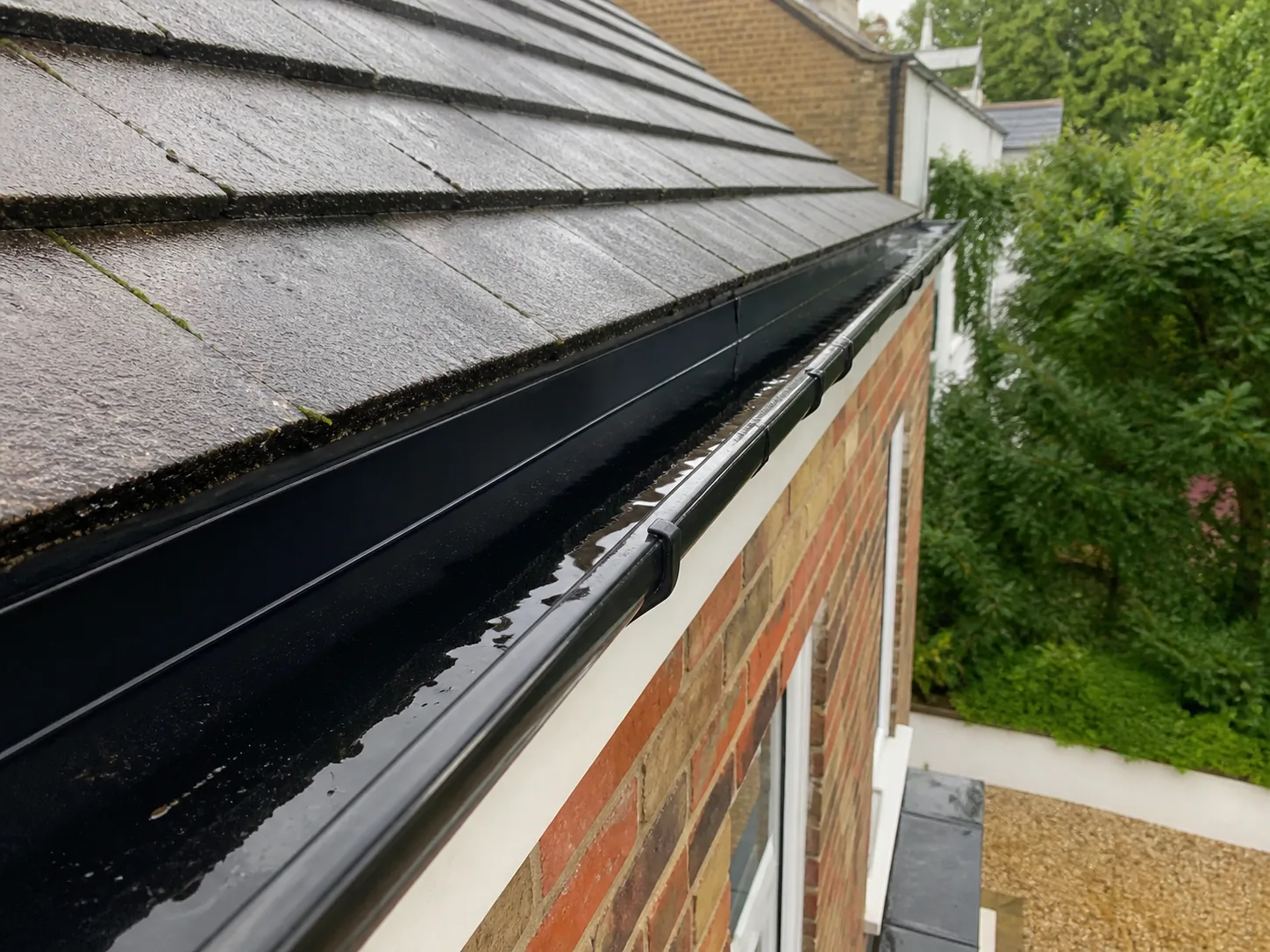
Wet leaves can settle into layers and slow water moving towards an outlet.
Loose roof moss can collect in the channel and hold other material in place.
Small twigs can bridge narrow points and trap lighter debris behind them.
Loose surface material may wash down from the roof during wet weather.
Older material can become dense and reduce the channel available for runoff.
Fine deposits can gather beneath larger debris and close to an outlet.
Local property context
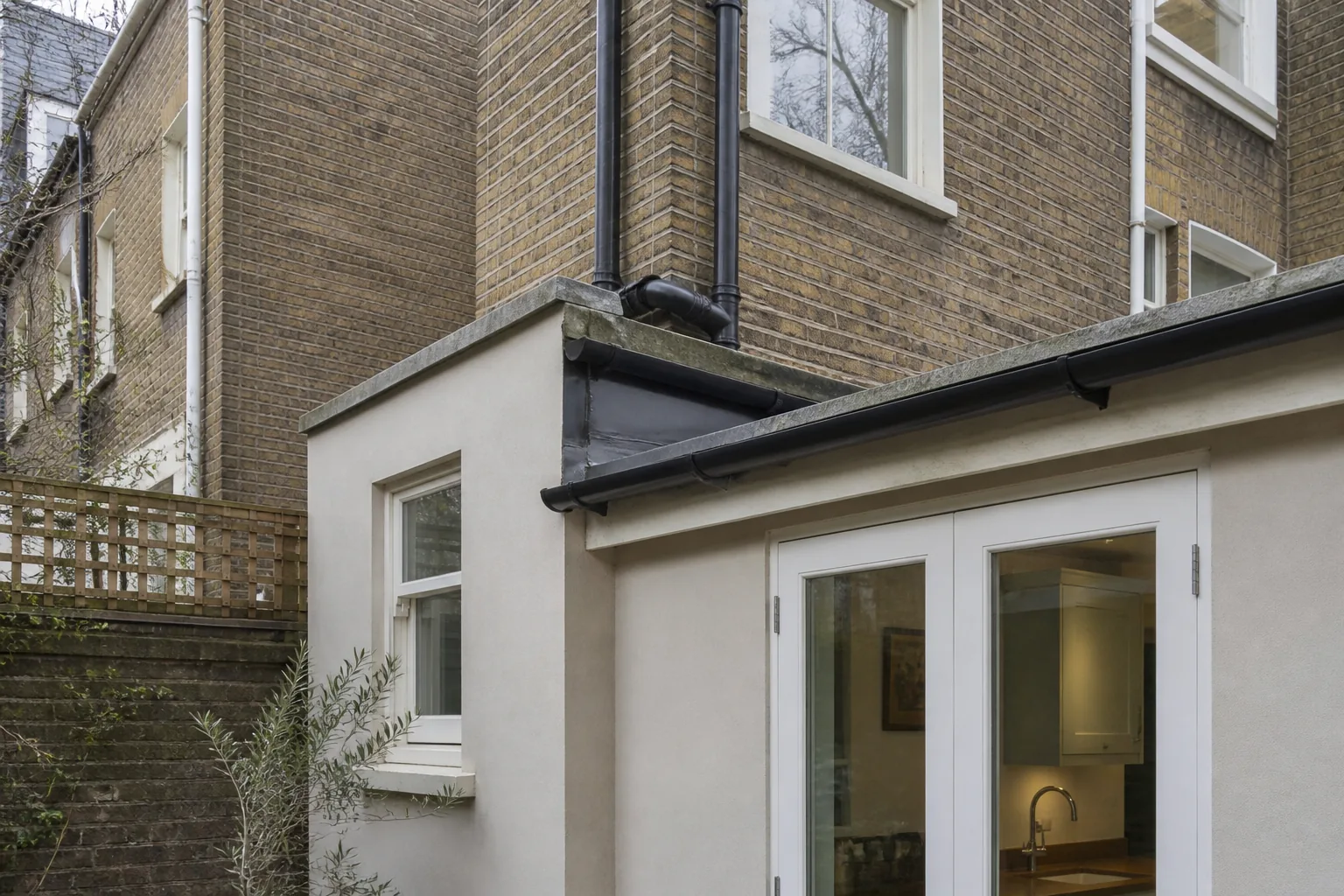
At a Twickenham address, the channel causing concern may sit above a rear addition, beside a boundary or on a different level from the main frontage. Some homes could also have short gutters over a porch, bay or garage. The actual arrangement determines what is practical; the location name does not. Note where the spill occurs, which lower structures sit nearby and how the relevant side is approached. If a passage or neighbouring area is involved, confirm permission in advance. This helps turn a broad request into a clear set of roof edges.
Watching what happens during rainfall can narrow the question without providing a diagnosis. Water crossing the rim along a broad section may accompany widespread build-up. A concentrated spill beside the outlet might result from a local plug or resistance below it. Dripping from the underside of a clear channel can suggest a defective joint. The cleaning service removes accessible routine contents in selected gutters and reachable outlet debris where agreed. Repairing components, clearing hidden downpipe sections and working on underground connections are separate tasks if the symptoms point beyond the channel.
Extensions, conservatories, boundary walls, narrow routes, garden structures and changes between roof levels may affect individual sections. Describe these features for the requested elevation. Where an ordinary approach is unsuitable, the channel stays outside scope unless different access is assessed separately.
| Property situation | Access or gutter consideration |
|---|---|
| Terrace with rear access | The approach and boundary of any continuous channel should be agreed before work. |
| Semi-detached home with an addition | The side route may be open while the addition affects the upper rear run. |
| House with a conservatory | Its position beneath the eaves may restrict the channel above and should be described early. |
| Flat or converted property | Ownership, consent and access for shared rainwater goods require confirmation. |
Structured service guide
| Location in the route | Routine scope | Limit |
|---|---|---|
| Agreed accessible gutter | Remove leaves, moss and silt | No component repair |
| Reachable outlet | Remove loose debris if arranged | No full-pipe clearance |
| Concealed downpipe | Not included | Separate assessment |
| Underground connection | Not included | Drainage enquiry |
Structured service guide
| What can be seen | Clearance action | Possible additional need |
|---|---|---|
| Moss bridging an outlet | Remove reachable material | Assess below if discharge stays poor |
| Gap at a union | Clear the channel nearby | Repair the connection |
| Water standing in a clear run | Check for remaining deposits | Review alignment |
Structured service guide
| Factor | Why it matters |
|---|---|
| Total named roof edges | Defines the clearing area |
| Height changes | Affects individual access |
| Structures below gutters | May restrict reach |
| Depth and type of build-up | Influences work involved |
| Separate garages or porches | Add scope when requested |
Structured service guide
| If applicable | Useful detail |
|---|---|
| A conservatory | Which gutter lies above it? |
| A shared rear passage | Is entry authorised and available? |
| A continuous terrace roof edge | What are the agreed limits? |
| A detached structure | Which sides need clearance? |
A clear service sequence
Seasonal context
Heavy leaf fall can fill a known catch point quickly, whereas moss and sediment often build more gradually. Wind direction and shelter may also make one elevation behave differently. Review the home after periods that move debris and use its own history to judge timing.
Nearby trees, roof moss, gutter shape and exposure can all affect how quickly material accumulates. A visible symptom is more useful than applying one fixed timetable to every address.
Quick answers
Yes, a limited set of runs can be agreed when their extent and access are clear. Other elevations will not be included merely because they belong to the same building.
Loose debris at a reachable outlet opening may be removed when included. The work does not confirm or clear the full downpipe, bends beneath it or drainage underground.
No. A mark may relate to an earlier spill, a leaking fitting or another water source. Current rainfall behaviour and the channel condition help show whether cleaning is relevant.
Yes. A conservatory beneath an upper channel may change what can be reached within an ordinary visit. Its position should be described so the affected run can be assessed properly.
Accessible debris may still be removed, but the sag itself is a component or alignment concern. Correcting it is repair work and requires assessment outside routine clearance.
Each structure adds its own channel length, height, outlet and approach. Naming it ensures the quotation covers the intended work rather than assuming every lower roof edge is included.
Twickenham service area
Nearby gutter-cleaning pages
Before booking
It involves removing everyday loose contents from the accessible gutter runs agreed for the visit. Reachable outlets can be included where stated. Repairs, hidden downpipe obstructions, underground drainage and unagreed roof edges remain outside routine cleaning.
Connected runs may feed towards a shared exit, so debris at that point can influence water nearby. The actual layout must be understood at the property. Clearing the reachable opening does not establish that the pipe beneath is also clear.
Material may reduce capacity across the channel, or the gutter could hold water because of its fall or supports. Rainfall volume and roof discharge may also matter. Clearing addresses accessible debris but cannot correct a defective arrangement.
No. It is a separate run and should be named if it needs attention. The extension may also affect access to the original gutter above, so both levels and the surrounding route should be explained before booking.
Accessible growth rooted in ordinary loose gutter contents may be removed as part of clearing that agreed run. Its presence can indicate retained moisture and debris, but it does not establish the condition of concealed pipework or fittings.
Permission should be arranged before the visit, and the route must be available. If consent or entry is missing, the dependent channel cannot be assumed within the completed work. Another arrangement may need to be considered separately.
No. It removes one common restriction, but a broken fitting, poor fall, insufficient capacity or a blockage farther down may remain. If water still escapes from a clear channel, the next assessment should address those alternatives.
Different elevations may have different heights, roof levels and obstacles, changing the extent that can be included. The quotation reflects the agreed reachable work. Any requirement for specialist access is assessed independently rather than automatically added.
Guards can alter both the way material accumulates and access to the channel beneath. Mention any fitted covers when enquiring. Their presence does not guarantee clear gutters, and the suitable scope must be considered for the installation.
Check after known leaf accumulation, visible plant growth or a return of overflow. Roof moss, wind and shelter can change the interval substantially between homes and even elevations. The property’s actual condition is more useful than a universal schedule.
Discuss the actual roofline
The quotation depends on how many runs are requested, their length and height, access around the building and the amount of settled material. Lower additions or detached structures are counted only when included. Defects and concealed obstructions are considered as separate work.
