
Leaves
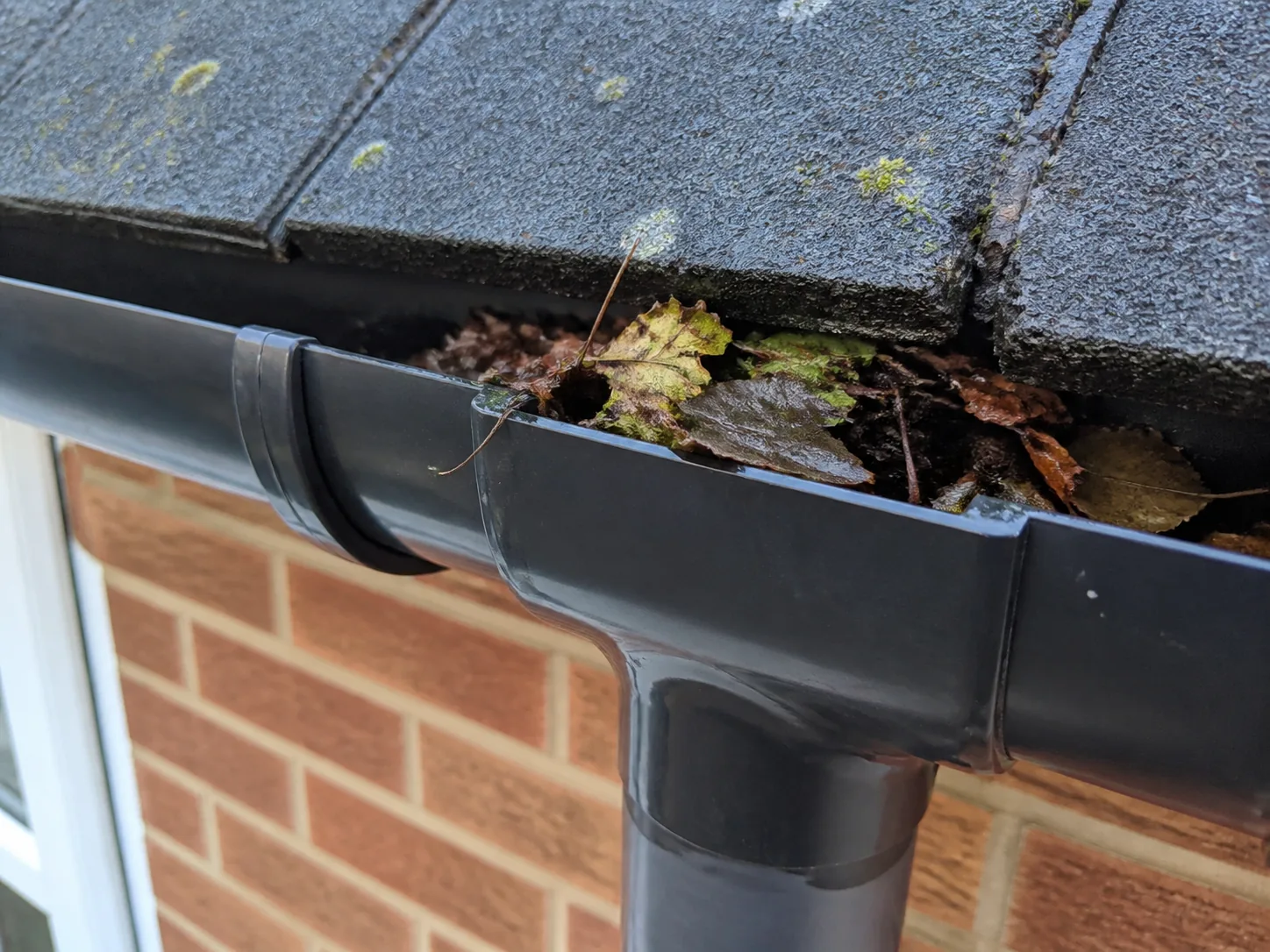
Wet leaves can settle into layers and slow water moving towards an outlet.
Rainwater routes · access · clear scope
When gutters begin to hold leaves, moss or silt, a straightforward clean can help rainwater reach the outlets again. Our Windsor service focuses on accessible, agreed gutter channels and any reachable outlets included in the visit. Access constraints, suspected faults and deeper downpipe problems are considered separately, so you know what the cleaning visit is intended to cover.
Common causes
Gutter debris often builds gradually rather than appearing as one solid plug. Wet leaves can trap moss and fine silt, reducing the route towards an outlet. Clearing the accessible run can restore space for water, while any obstruction beyond the agreed reachable area may need a separate assessment.

Wet leaves can settle into layers and slow water moving towards an outlet.
Loose roof moss can collect in the channel and hold other material in place.
Small twigs can bridge narrow points and trap lighter debris behind them.
Loose surface material may wash down from the roof during wet weather.
Older material can become dense and reduce the channel available for runoff.
Fine deposits can gather beneath larger debris and close to an outlet.
Local property context
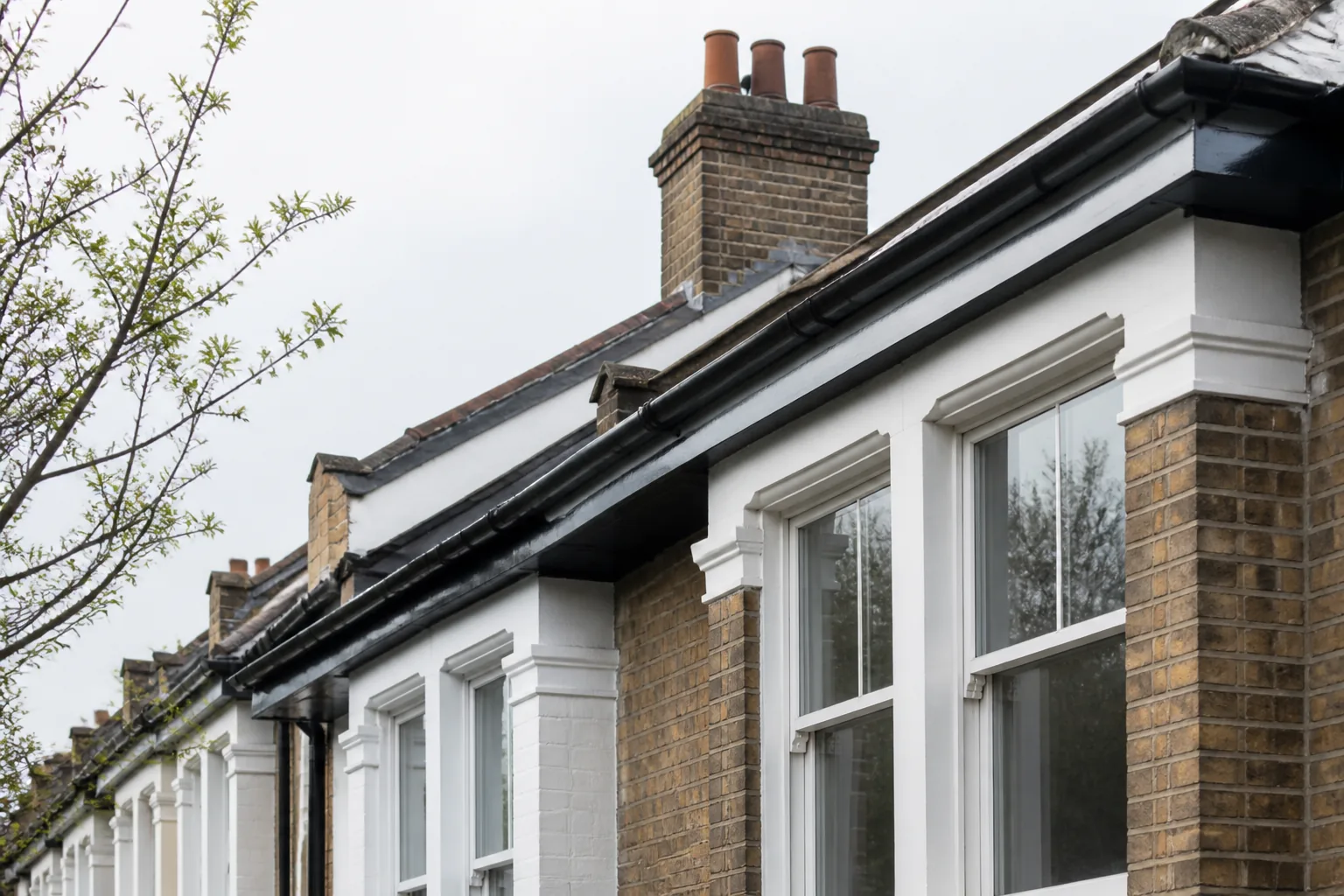
Homes in Windsor may differ in height, roofline shape, extensions and the amount of planting nearby. Those details can change how much debris collects and whether every gutter run can be reached safely. Before work begins, the actual address and the agreed areas matter more than a broad property label. A simple house with open access may need a different approach from a converted building, a home above a conservatory or a property with several roof levels.
The useful starting point is what you have noticed: overflow during rain, plants appearing in a channel, staining near a joint or water missing the outlet. Cleaning deals with leaves, moss, silt and similar material in reachable channels. It does not automatically resolve a failed joint, an incorrectly aligned run, a blocked underground drain or an obstruction deep inside a downpipe. If the symptoms suggest another cause, that issue can be assessed on its own merits.
Access depends on the individual building rather than the town name. Rear additions, narrow side routes, shared boundaries, fragile surfaces and several roof levels may all affect what can be reached. Describe these features when enquiring so the proposed scope can be matched to the property.
| Property situation | Access or gutter consideration |
|---|---|
| Terraced or closely spaced homes | Side access may be limited, and front and rear runs can require separate consideration. |
| Detached houses | Longer rooflines, garages and several elevations may increase the agreed cleaning area. |
| Homes with rear additions | Conservatories or extensions may restrict access to the original rear gutter. |
| Converted or shared buildings | Responsibility, permission and the exact communal sections should be established before booking. |
Structured service guide
| Area | Routine cleaning | Separate consideration |
|---|---|---|
| Accessible gutter channel | Leaves, moss and silt | Damage or poor alignment |
| Reachable outlet | Loose debris when agreed | Obstruction further down |
| Underground drainage | Not included | Drainage assessment |
Structured service guide
| Observation | Cleaning may help when | Another service may be needed when |
|---|---|---|
| Overflow | Debris restricts the channel | The run is damaged or misaligned |
| Dripping joint | Backed-up water reaches a sound joint | The seal or fitting has failed |
| Standing water | Loose material blocks the outlet | The channel fall is unsuitable |
Structured service guide
| Factor | Why it matters |
|---|---|
| Building height | Changes access requirements |
| Total gutter length | Changes the agreed cleaning area |
| Extensions and obstacles | May prevent some sections being reached |
| Debris level | Affects the amount of clearing required |
Structured service guide
| If the property has | Then consider |
|---|---|
| A rear conservatory | Whether the gutter beyond it is reachable |
| Several roof levels | Which runs form the agreed scope |
| A shared side passage | Permission and visit-day access |
| A separate garage | Whether its channels are included |
A clear service sequence
Seasonal context
There is no single month that suits every property. Nearby trees may make an autumn check useful, while sheltered roof sections can collect moss and silt at other times. The practical cue is the condition of the channels and how water behaves during rainfall, not a fixed calendar rule.
Nearby trees, roof moss, gutter shape and exposure can all affect how quickly material accumulates. A visible symptom is more useful than applying one fixed timetable to every address.
Quick answers
The agreed accessible gutter channels are cleared of leaves, moss, silt and similar routine debris. Reachable outlets can be included when agreed, while repairs, deeper downpipe work and underground drainage sit outside routine cleaning.
No. Cleaning may resolve overflow caused by debris in reachable channels, but water can also spill because of damaged joints, poor falls, restricted downpipes, roof issues or underground drainage problems.
Not necessarily. Visible plants, a channel holding water or a slow outlet can justify an earlier look. The condition of your roofline is a better guide than waiting for a severe overflow.
It may. A conservatory can restrict access to a rear run even when that gutter looks close from the ground. Mention its position and size so reach can be considered before the scope is agreed.
A reachable outlet may be cleared when it forms part of the agreement. A blockage deeper inside a downpipe is different from channel cleaning and may require separate investigation and a revised plan.
Frequency varies with nearby planting, roof condition, gutter shape and past build-up. Some homes benefit from regular checks, while others remain clear longer; visible debris and rainwater behaviour provide useful cues.
Windsor service area
Nearby gutter-cleaning pages
Before booking
Share the property type, approximate number of storeys, which elevations need attention and anything that may limit access. Mention extensions, conservatories, narrow passages and known overflow points. Suitable photographs can add context, although the final agreement still depends on the actual property.
Removing debris can stop water backing up around a sound joint, but it cannot mend a failed seal, crack or loose connection. If a joint continues to drip once the channel is clear, repair should be considered separately rather than extending the cleaning description.
Routine cleaning covers common loose material such as leaves, moss, silt and small organic build-up within agreed accessible channels. Hard obstructions, nesting concerns, building materials or anything beyond safe reach may change the task and should be discussed before further work.
That depends on the particular layout and whether the run can be accessed without relying on the extension surface. The position, depth and roof type all matter. Describe or show the arrangement first so that inaccessible sections are not assumed to be included.
A small amount can remain because of the gutter shape, but persistent pooling may indicate alignment, support or outlet issues. Cleaning removes material; it does not alter the fall of a channel. Ongoing standing water therefore calls for a separate assessment.
It can be a useful maintenance task when accessible channels visibly contain debris. However, cleaning should not be treated as confirmation that the whole rainwater system is fault-free. Any leaks, damaged sections or drainage concerns should be addressed through the appropriate separate service.
Trees near a property may increase leaf or seed build-up, although wind direction and roof shape also influence where material settles. Ownership of the tree does not change the immediate question: inspect your accessible gutters and arrange cleaning when debris restricts the route.
A limited symptom may support a focused visit, provided the required section and its access are clear. It is still worth checking whether the spill comes from channel debris, a local outlet restriction, a damaged fitting or water arriving from elsewhere on the roof.
That depends on access, security and how the scope has been arranged. If a gate must be opened, areas need identifying or shared access requires coordination, someone may need to attend. Agree practical details before the visit rather than assuming entry is available.
The inaccessible section should remain outside the cleaning scope unless another suitable arrangement is made. Work should not be described as complete for areas that could not be reached. The constraint and possible next step can then be considered clearly and separately.
Discuss the actual roofline
The likely cost depends on the amount of guttering, building height, debris level, access and whether separate areas require different consideration. A clear description or suitable photographs can help with an initial discussion, but the actual scope must reflect the address and the agreed work.
