
CANARY WHARF · MANAGED ACCESS, MEASURED TEXTILES
Rug Cleaning Planned for Canary Wharf Apartments
A tower address changes the journey, not the identity of the rug. We record the textile, its visible changes and the surface beneath it; concierge rules, lift slots and loading restrictions then shape a workable visit.
- Show the complete rug in daylight, especially sheen beside full-height windows
- Measure both directions and note furniture that prevents rolling
- Photograph labels, corners, backing and each drink spill separately
- Confirm reception clearance, service-lift dimensions and loading windows
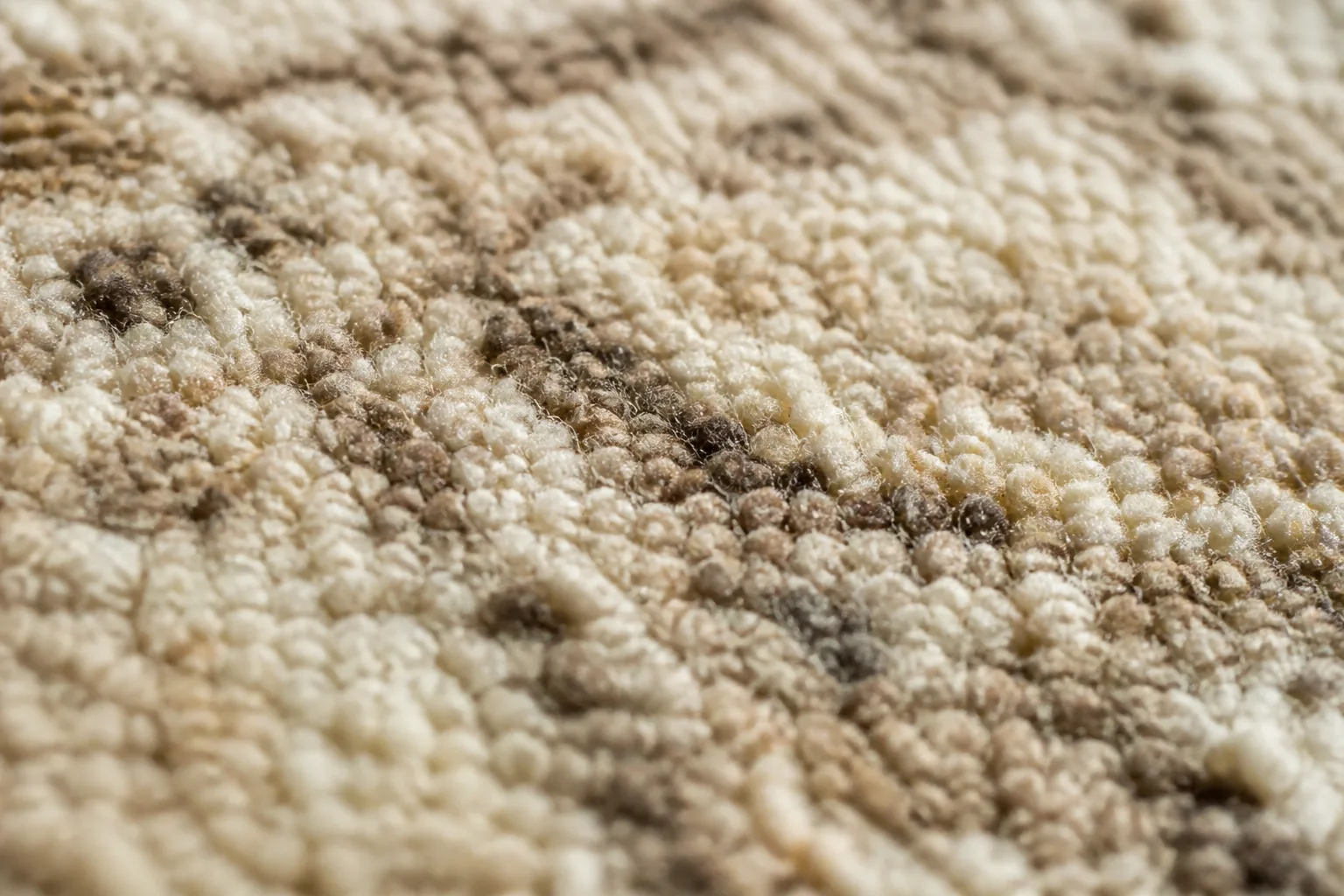
ASSEMBLE THE EVIDENCE
Turn scattered observations into one useful record
Select only what you know. An unanswered fibre question is safer than a confident guess; these choices organise a conversation rather than prescribe treatment.
A TOWER-SPECIFIC WORKING PLAN
Separate rug evidence from building restrictions
Strong daylight can exaggerate pile reversal while polished stone reflects colour into photographs. One view from each direction, a reverse image and a neutral close-up give better evidence. Access notes stay separate so a porter’s rule is never mistaken for a textile limitation.
A plausible apartment case. A 2.4 by 1.7 metre rug sits beneath a coffee table near south-facing glass. The pale sweep changes as the viewer crosses the room, but one circular mark does not. Pile orientation and the spill therefore need different questions.
The arrival constraint. Reception permits contractors after 10:00, the goods lift needs a reservation, and the bay allows twenty minutes. This affects timing and equipment movement without proving whether the dye is stable.
Canary Wharf apartment dossier
Identity. Copy the composition label exactly; photograph unclear abbreviations.
Scale. Record widest and longest points rather than exposed floor area.
Direction. Photograph towards the window and back from it.
Incident. State a drink’s age, ingredients and products already applied.
Edges. Include bindings where chair feet or robot vacuums pass.
Reverse. Show adhesive, repairs or construction concealed by the face.
Underfoot. Name the floor and photograph any separate pad.
Movability. List objects that can be cleared and those requiring agreement.
Reception. Give contractor check-in requirements and contact point.
Vertical route. Confirm lift car size and steps from bay to apartment.
Timing. Share delivery restrictions before asking for a slot.
Outcome. Discuss soil, marks, odour and physical wear independently.
Drying. Identify a ventilated position that can remain undisturbed.
Unknowns. Do not invent dye, fibre or product history.
Price. Size, build, condition and access effort meet in the quote.
Return. Placement follows the observed response, not a universal clock.
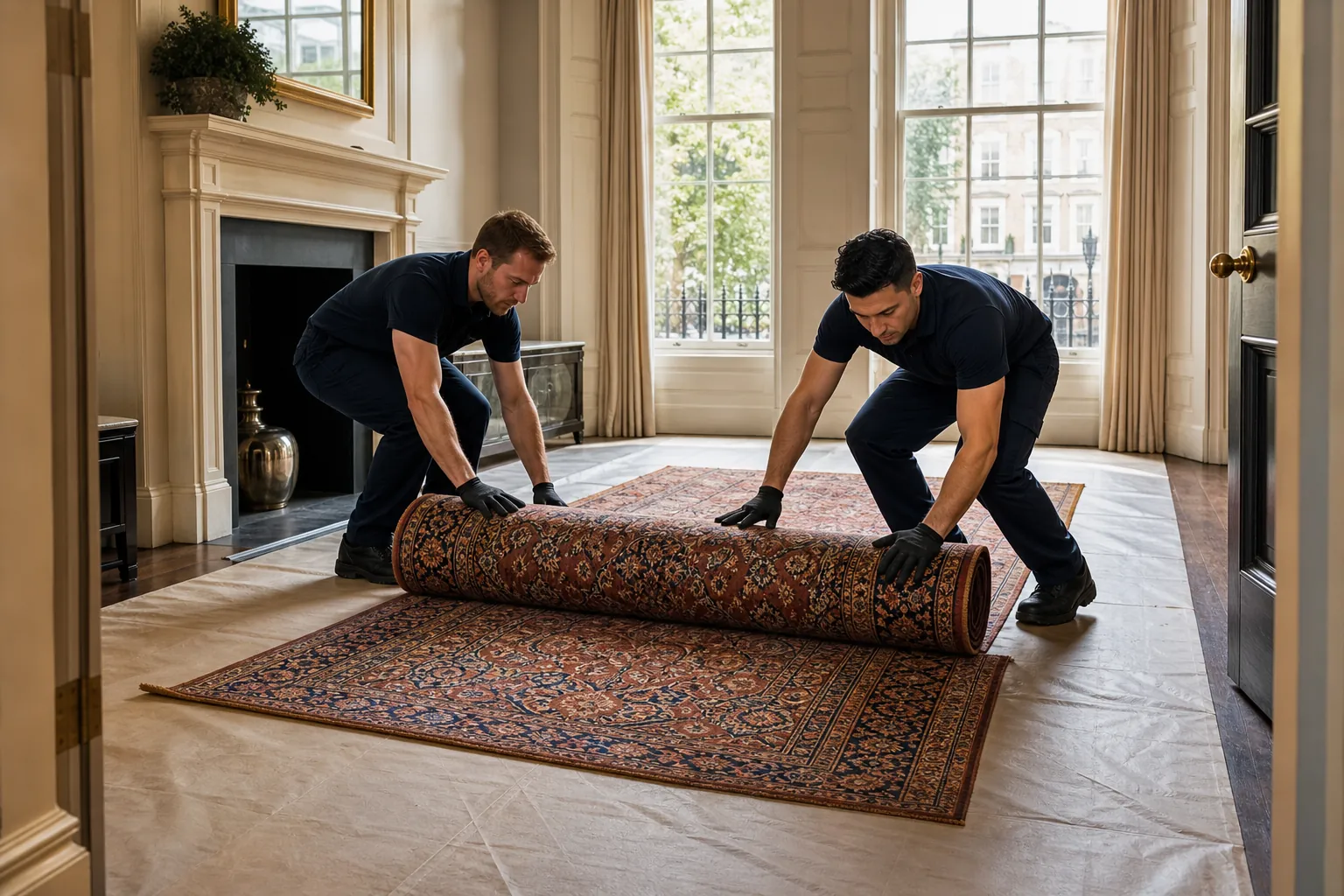
SHEEN OR SOILING?
Directional pictures prevent the wrong conclusion
Viscose and other lustrous piles can look light from one viewpoint and dark from another. Loose dirt, crushing, liquid change and dye loss behave differently, so opposing-angle photographs preserve the distinction.
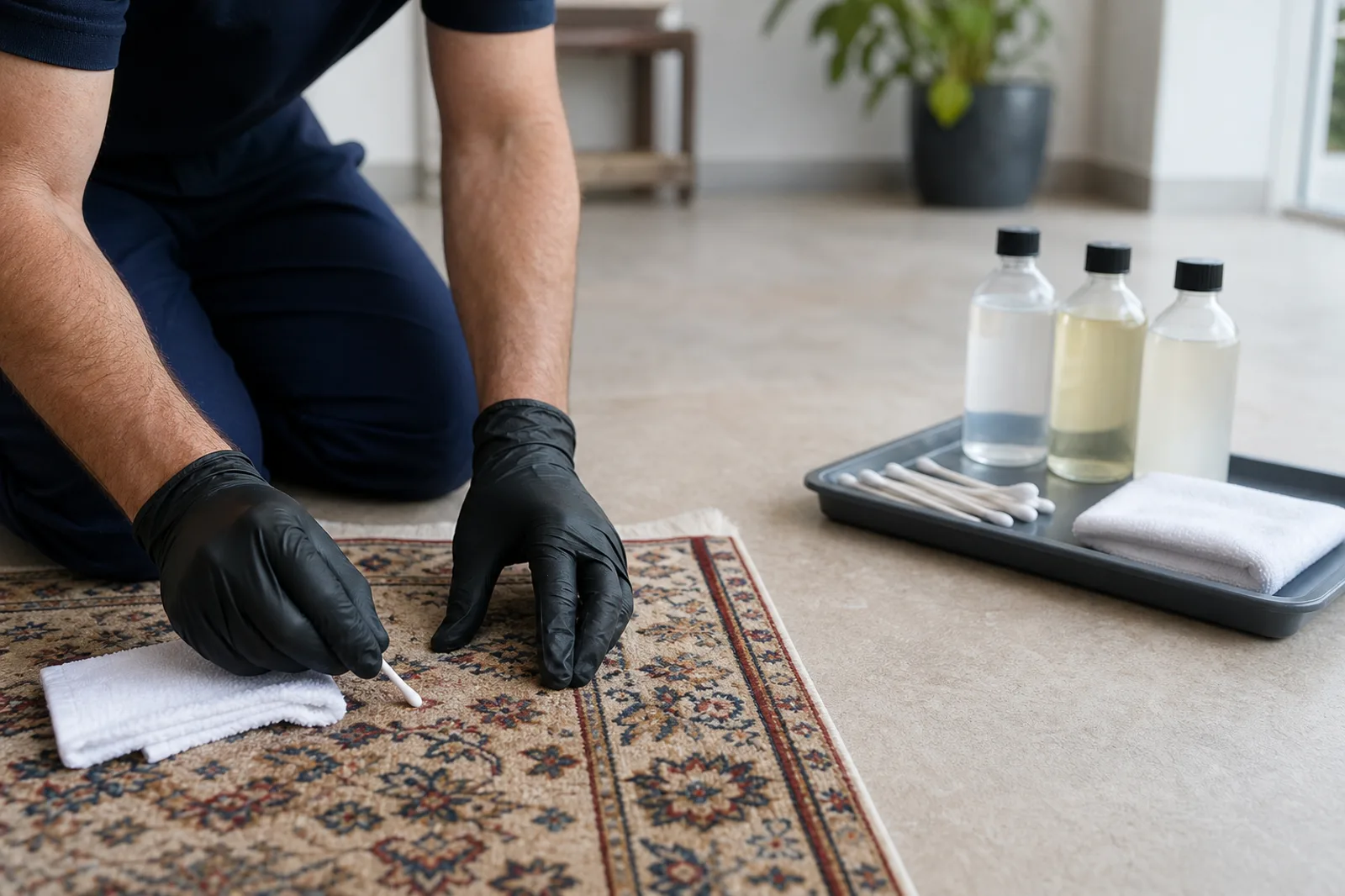
SPILL DEPTH
A small ring can have a larger history
Tell us whether liquid was blotted, reached a pad or met a household product. Residue below the visible pile can change both method and realistic improvement.
- Orient face and reverse photographs alike
- Keep product names and approximate quantities
- Check the supporting surface independently
- Avoid another trial before review
QUOTE PACK FOR A MANAGED BUILDING
Send one complete message instead of a trail of guesses
A concise pack lets textile review and arrival planning happen together.
- Postcode and building name
- Exact length and width
- Full face views from two directions
- Reverse, label and edge images
- Close view of each concern
- Known composition and build
- Previous products or professional work
- Furniture and drying-space notes
- Concierge, lift and loading instructions
Decisions before a slot is offered
Can reception restrictions wait?
Please include them initially because they can alter staffing, arrival and equipment movement.
Does glazing prove permanent fading?
No. Pile direction, residue and wear can resemble colour loss in a single image.
Will the item stay in the flat?
The agreed route depends on material, construction, condition and access.
Can furniture return immediately?
Only when item-specific handover guidance says the textile is ready.
FROM LOBBY TO HANDOVER
Seven controlled decisions
Building coordination and textile evidence travel together without substituting for one another.
- 01
Authorise
Confirm bay, reception and service lift
- 02
Orient
View pile with and against daylight
- 03
Inspect
Read labels, reverse, edges and repairs
- 04
Test
Check relevant fibre and colour responses
- 05
Work
Follow the supported scope
- 06
Review
Compare spill, traffic line and clear field
- 07
Release
Give placement guidance for this room
MEASURED PRICE REFERENCES
Area opens the calculation; complexity completes it
These are size landmarks. Construction, delicate finishes, condition and managed-building access are considered when scope is confirmed.
FOUR TECHNICAL QUESTIONS
What apartment photographs cannot prove
Compatibility still turns on material, colour, foundation and vulnerable details.
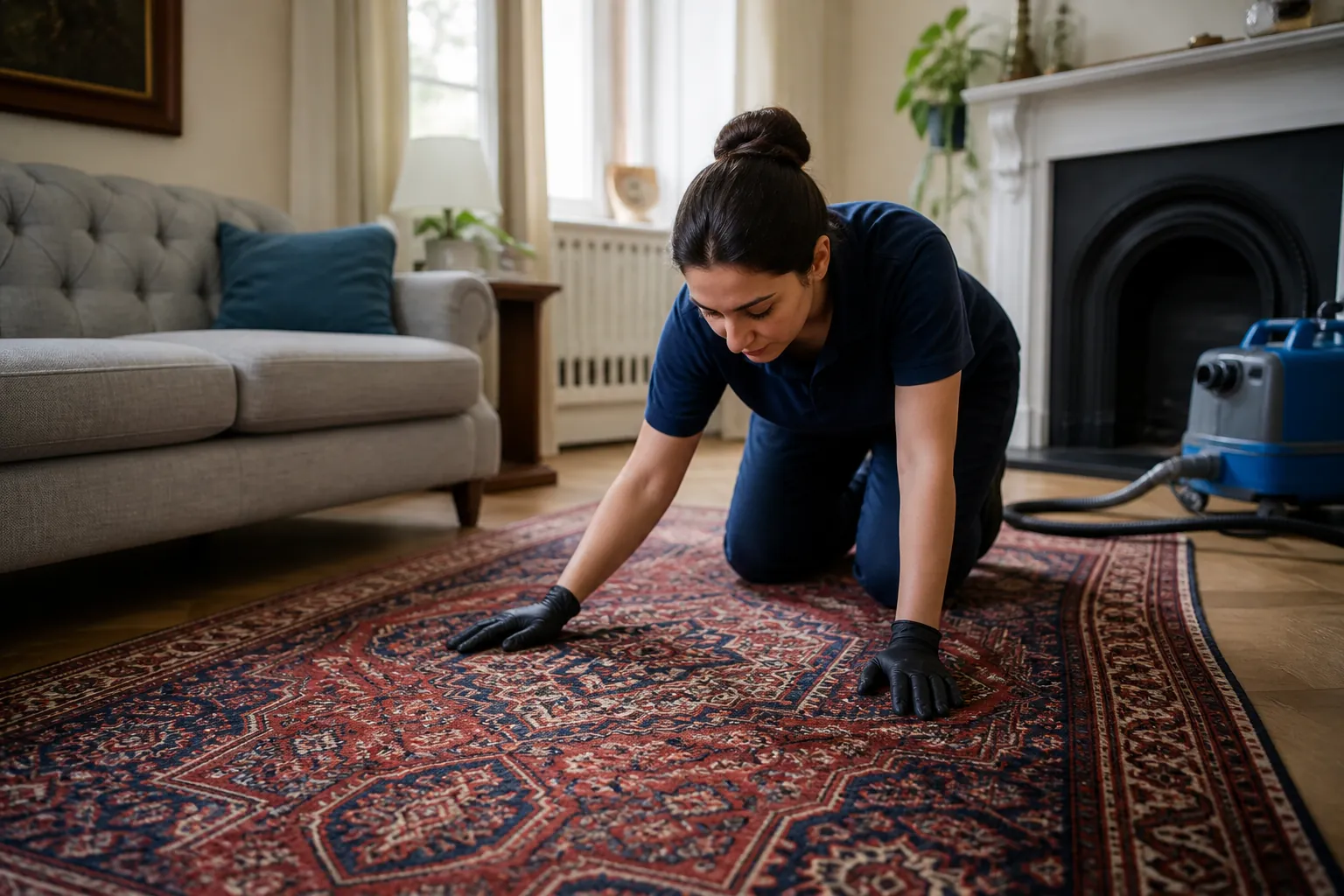
How readily will it absorb?
Wool, viscose and blends require different caution.
Will contrast remain stable?
Motifs and faded zones need independent checks.
What holds the face?
Knots, woven structures and adhesive change boundaries.
Where is it vulnerable?
Binding, fringe, repairs and worn corners come first.
CANARY WHARF QUESTIONS
Answers for a tower-apartment enquiry
What belongs in the opening photograph?
The whole rug, surrounding floor, nearby furniture and daylight context.
Why photograph from two sides?
Direction alters lustrous pile, helping separate sheen from a local mark.
Must I identify the fibre?
No. Show the label and say unknown rather than guessing by appearance.
Which building facts are essential?
Registration, permitted hours, bay rules, lift size and reception route.
Can a drink ring be guaranteed away?
No. Ingredients, age, products and fibre change must be assessed.
Is the stone floor included?
Not automatically; only expressly agreed services enter the scope.
How long will drying take?
Composition, construction, process, ventilation and room conditions decide.
Should I roll it before arrival?
Leave it unless advised; weak edges and furniture may require a planned lift.
Can another service share the minimum?
Potentially, when eligible same-address work joins one confirmed booking.
What does £68 mean?
It is the current visit-minimum guide, not a fixed total for every rug.
READY FOR RECEPTION
Make the textile record as clear as the access plan
Send measurements, directional pictures and building instructions for an assessment-led quotation.
