
HAMPTON · FROM RIVERSIDE DOORWAY TO RUG EDGE
Hampton Rug Cleaning Planned for the Way Your Home Is Used
Rainy walks, garden doors and busy hallways leave a recognisable mix of fine grit and damp footprints. We begin by tracing how the rug is used, where it sits and what has happened to it—not by assigning a treatment from its postcode.
- Photograph the route from the garden or entrance to the rug
- Give the woven area dimensions, then measure tassels on their own
- Point out tide marks, gritty lanes, curled corners or sun-faded sections
- Tell us whether gates, resident parking or narrow stairs affect collection

A QUICK INVENTORY, NOT A HOME TEST
Tell us what you can see without forcing an answer
“Unknown” is useful information. The buttons simply help us request the right photographs.
WHAT THE LABEL CANNOT SETTLE
Two wool rugs can behave very differently
Spinning, dye, foundation, adhesive and previous cleaning all affect the choices. The assessor reads those layers together.
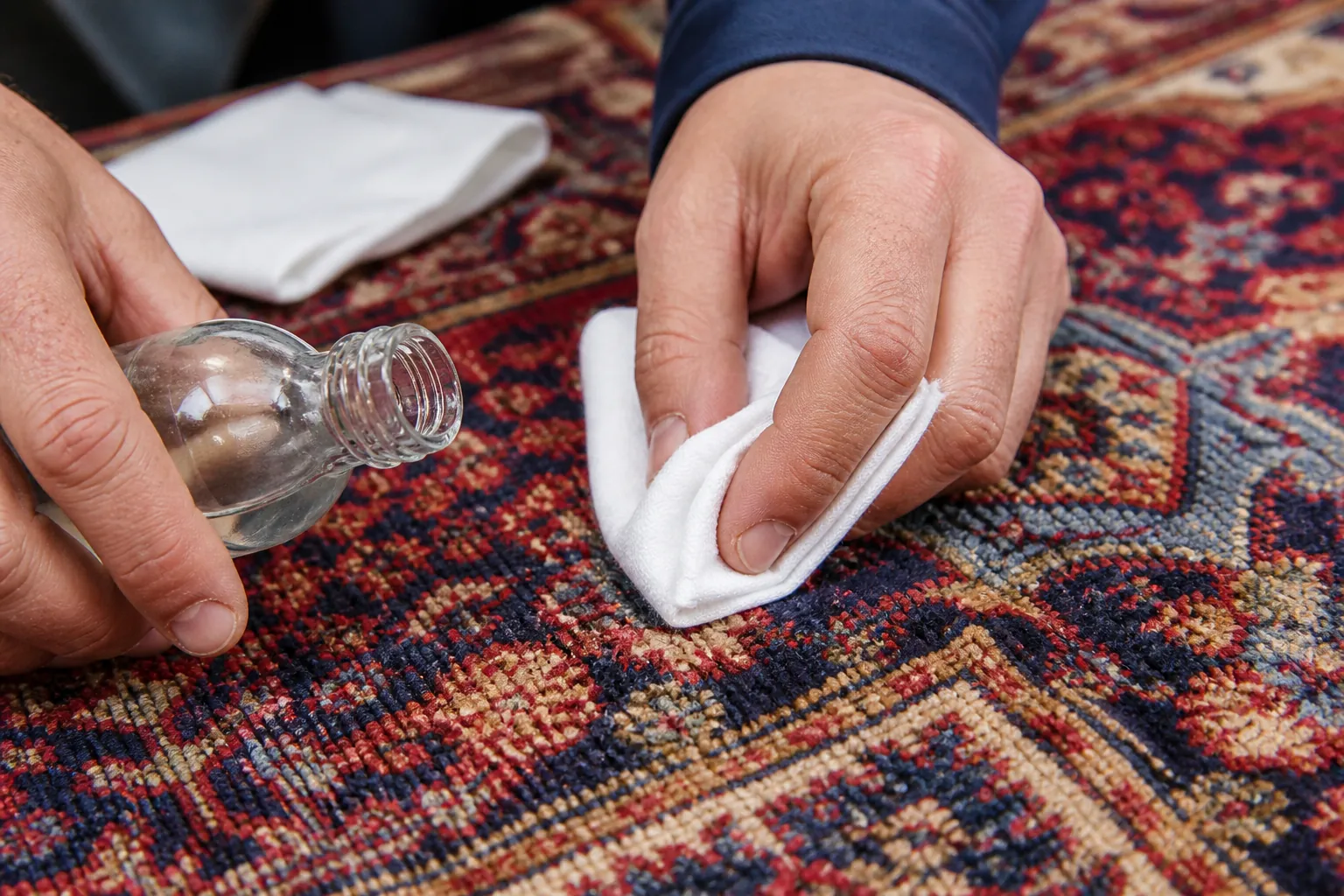
Pile and twist
These influence particle release and grooming.
Border against field
Adjacent shades may not share the same tolerance.
Foundation and coating
The reverse can reveal stiffness, cracking or repairs.
Corners and ends
Loose binding or distorted tassels change handling.
HAMPTON · THE HOUSE AROUND THE TEXTILE
A garden entrance can explain the pattern of soil
In one Hampton terrace, a runner links the rear door with the kitchen and stairs. Its outer end receives damp footwear while the inner end sits beneath a console. That uneven use, the timber below and the tight turn at the landing all belong in the plan.
Follow the footprints. A doorway-level photograph can show where water and grit arrive. A view from the opposite end then records furniture, heating and the available route for lifting the runner without dragging it.
If a muddy patch was blotted or sprayed, name the product if possible. If nothing is known because the rug came with the property, say that plainly; uncertainty is safer than an invented history.
A doorway-runner field note
Orientation: Mark which short end faces outdoors so photographs retain direction.
Footfall: Say whether shoes, pets or a pushchair regularly cross the weave.
Weather: Distinguish occasional rain spots from a recurring damp margin.
Dimensions: Measure the woven rectangle and any end treatment separately.
Texture: Photograph flattened pile with light falling across it, not straight down.
Palette: Include the strongest border colour and the pale central field.
Corners: Show curling, splitting or anti-slip tape without pulling it away.
Reverse: Capture the underside only where the item can be lifted safely.
Floor: Identify sealed wood, tile or another finish beneath the route.
Remedies: List blotting agents, powders and hired-machine attempts.
Smell: Explain when it is noticeable—after rain, near heat or all the time.
Heat: Flag radiators and underfloor heating close to the textile.
Clearance: Give the narrowest doorway rather than the room width.
Timing: Mention school runs or deliveries that keep the hall in use.
Priority: Choose the one change that matters most instead of promising every mark.
Boundary: Abrasion and fading remain material change, even when loose soil is reduced.
FROM HALLWAY SNAPSHOT TO HANDOVER
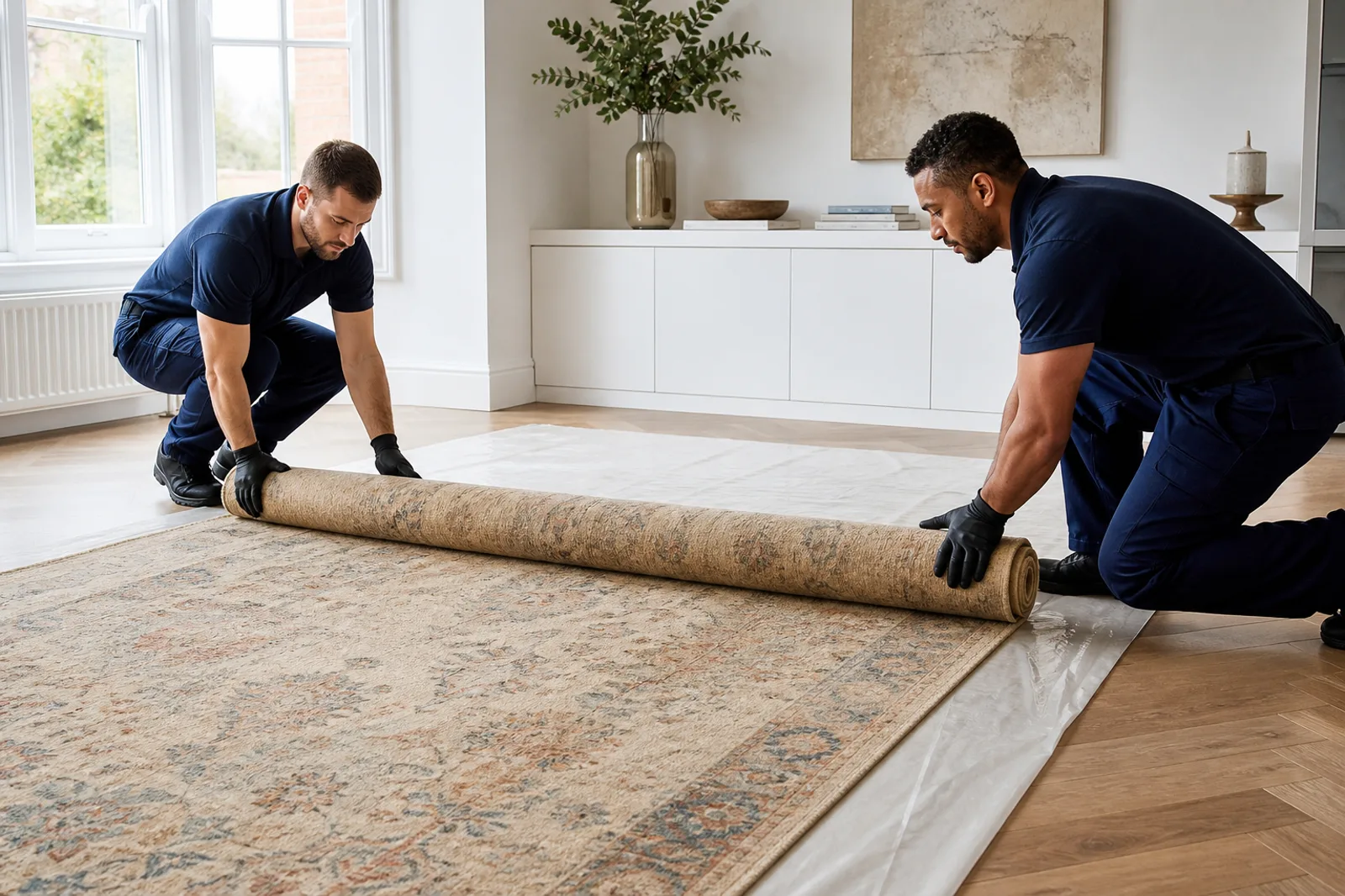
The visit follows the rug rather than a fixed recipe
The order adapts when a corner is weak, colours are uncertain or the route cannot be cleared.
-
01
Orient
Mark the outdoor end and locate every concern
-
02
Read the build
Look at yarn, border, underside and end finish
-
03
Release grit
Target compatible dry-particle removal first
-
04
Treat by zone
Respect the differences between doorway and inner field
-
05
Protect shape
Control wetting around corners and foundation
-
06
Compare
Revisit the mapped lanes in consistent light
-
07
Reset the hallway
Agree when use, underlay and furniture may resume
A MEASURED STARTING POINT
Size sets the band; the actual brief sets the quote
A simple runner and a fragile, repaired rug of equal area do not create identical work. Condition, handling and access are priced after review.
MAKE THE FIRST MESSAGE COUNT
Nine useful details for a hallway rug
A short, factual note lets us see the relationship between the textile, the doorway and the problem area.
- Street area and property type
- Woven length, width and separate tassel depth
- View from the outside-facing end
- Side-lit image of flattened or gritty sections
- Manufacturer label, if one exists
- Photographs of lifting corners and bindings
- Anything used on wet or muddy marks
- Floor finish, heating and fixed obstacles
- Gate, passage and parking information
Questions Hampton households often raise
Should I roll the runner before taking photos?
No. Leave it in context for the full view, then lift only an accessible corner for the reverse.
Does a dark lane mean the whole rug needs the same work?
Not necessarily. The entrance zone can carry different soil and wear from the sheltered end.
Can it go straight back by the door?
Placement waits until the handover conditions are met, particularly in a cool or humid hall.
Do parking restrictions affect the quote?
They can affect how the appointment is organised, so share resident bays and loading times early.
HAMPTON DOORWAY-RUG QUESTIONS
Clear answers for a rug exposed to everyday traffic
How do I show where outdoor soil enters?
Take one photograph facing in from the relevant door and another from the room back toward the threshold.
Should tassels be included in the square-metre measurement?
Give the woven dimensions first and state tassel depth separately so the record is unambiguous.
Can flattened pile be restored by cleaning?
Loose matter may improve, but crushed or abraded yarn is physical change and may remain visible.
Why ask about the timber or tile underneath?
The floor finish affects protection, lifting and the plan for returning the rug to position.
What should I do with a fresh muddy footprint?
Let loose mud dry where appropriate, avoid scrubbing, and ask for guidance before adding detergent.
Why does the smell seem stronger after rain?
Humidity can make an existing source more noticeable; tell us when the change occurs and where it is strongest.
Can a console remain on the runner?
Photograph it and give its approximate weight. Moving and return arrangements are agreed rather than assumed.
Will an open garden door speed drying?
Outdoor humidity and temperature matter, so ventilation advice is based on the conditions on the day.
Why might two runners of the same length cost differently?
Width, fibre, construction, edge condition, soiling and access can all change the confirmed scope.
Can another compatible task help meet the £68 minimum?
Potentially, but both tasks must be described and accepted as one eligible appointment before booking.
READY WHEN THE HALLWAY STORY IS CLEAR
Send the runner, the doorway and the priority patch
A few well-framed photographs are more helpful than a confident guess about the fibre.
