
SURBITON · MAKE THE ROOM USABLE AGAIN
Rug Cleaning for Lived-in Surbiton Rooms
A rug beneath the family sofa collects more than soil: chair movement, play, sunlight and daily shortcuts all leave a pattern. Our Surbiton brief starts with how the room is used, then focuses on the two marks and rippling that prompted the enquiry.
- Take one photograph from the doorway at the room’s busiest time
- Measure the visible field and the section tucked under furniture
- Show both marks beside an unaffected area for comparison
- Tell us which furniture can move and what must remain
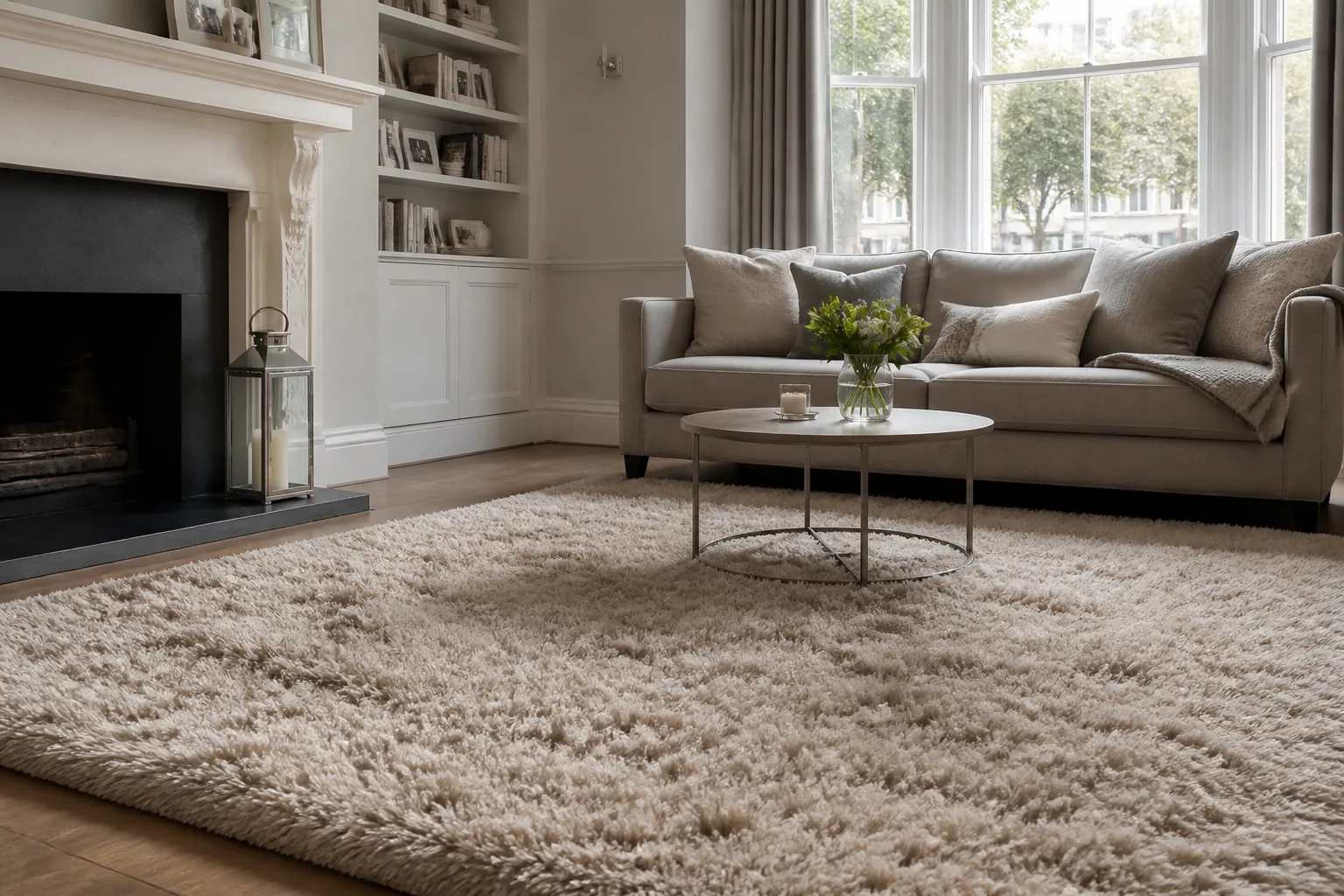
THE FAMILY-ROOM VIEW
Furniture footprints explain more than a close-up
In a Surbiton family room, the sofa fixes one edge while foot traffic bends around a coffee table. The two marks may sit in different use zones, and the ripple may reflect movement rather than contamination. Recording that pattern gives each concern the right context.
A weekday-room example. The doorway view captures play space, seating and the route to the kitchen. A second image taken after loose items are cleared shows which furniture feet pin the rug and where the surface has migrated.
Photograph each mark with a coin or ruler for scale, but do not scrub it for the picture. Note whether the appearance changes when the pile is brushed in another direction; that observation can distinguish distortion from deposited matter.
Surbiton family-room notes
Watch the room before clearing it. The normal route from hall to sofa reveals where shoes turn, children pause and the rug experiences repeated directional pressure.
Give each mark a name. Call them doorway and sofa marks, for example, then keep their photographs and histories separate throughout the enquiry.
Use consistent light. Photograph both concerns from the same angle without flash, followed by a second set taken across the pile direction.
Capture the ripple in profile. A low side view with a ruler nearby communicates height and direction better than a top-down image.
Do not pull the textile square. The undisturbed wave, skew and furniture overlap are valuable evidence about how the rug behaves in daily use.
Map the sofa feet. Mark which legs rest on the field, which touch the border and whether castors or pads are present beneath them.
Measure what is hidden. Add the visible field to the estimated continuation beneath furniture, stating clearly where direct measurement was impossible.
Describe recent changes. Mention a rearranged room, replacement sofa, moved coffee table or new underlay that preceded the ripple.
List earlier spot work. Include wipes, washing-up liquid, stain spray, steam devices or repeated blotting, even when no residue is visible now.
Reserve a quiet period. Offer a window when toys can be removed, pets kept elsewhere and the main family route diverted.
Choose a comparison area. An unaffected patch near the same colour and pile direction helps distinguish local change from the rug’s normal appearance.
Notice daylight. Record whether the window-facing portion is paler, because gradual fading should not be confused with a cleanable patch.
Check below both marks. Lower-side views may show transfer, but a clean reverse does not automatically rule out change within the pile.
Agree furniture responsibilities. State what the household can safely remove and leave large, fragile or electrically connected pieces for discussion.
Plan staged reopening. The final instruction may allow careful foot traffic before heavy furniture returns, depending on the actual rug and room.
Keep outcomes separate. Soil removal, mark improvement, texture correction and ripple reduction are not interchangeable promises.
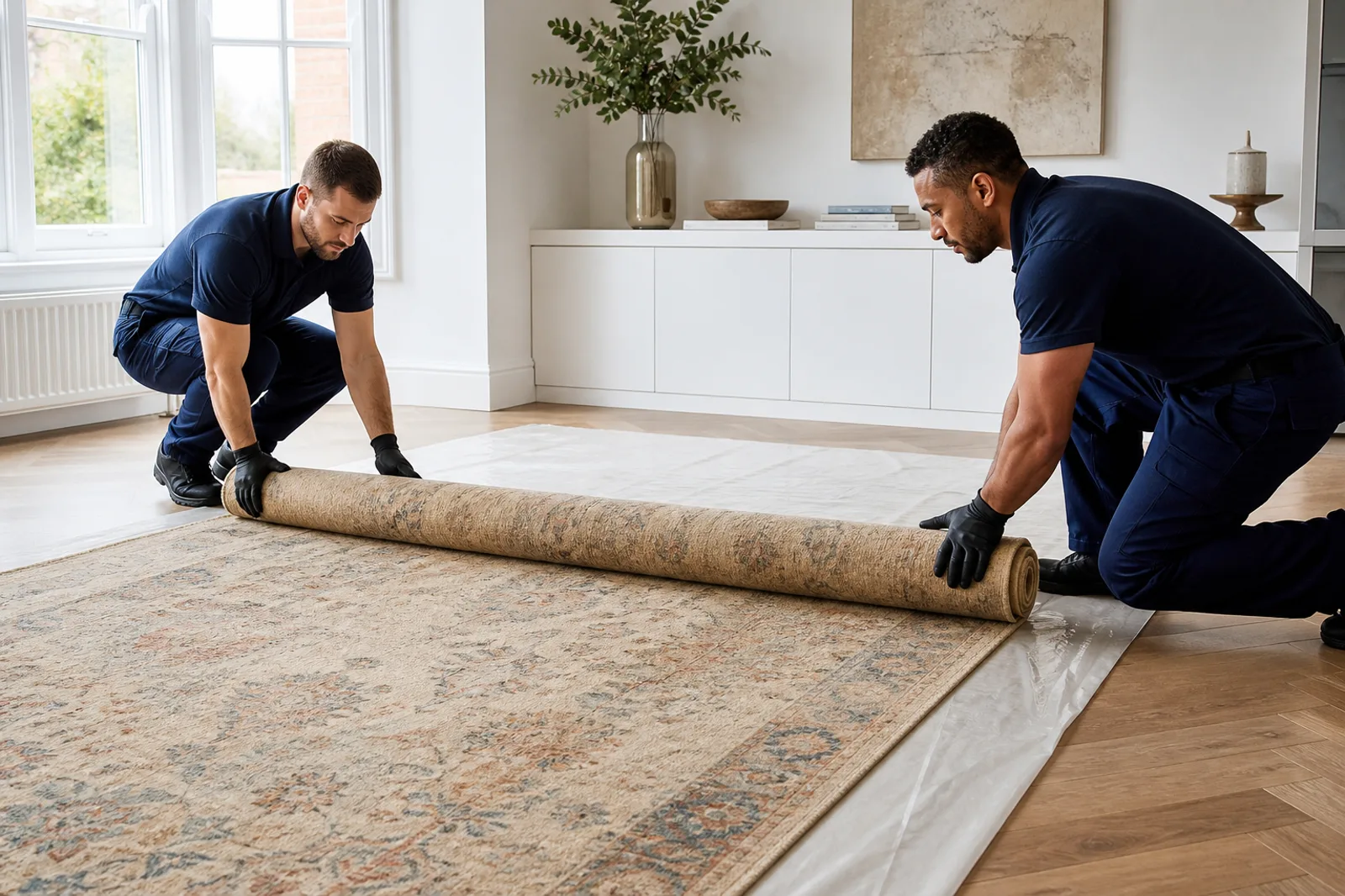
HOW DAILY USE CHANGES THE VIEW
Four room clues help interpret the surface
A rug changes where people turn, sit and place furniture. Those patterns help distinguish use-related texture from isolated incidents.
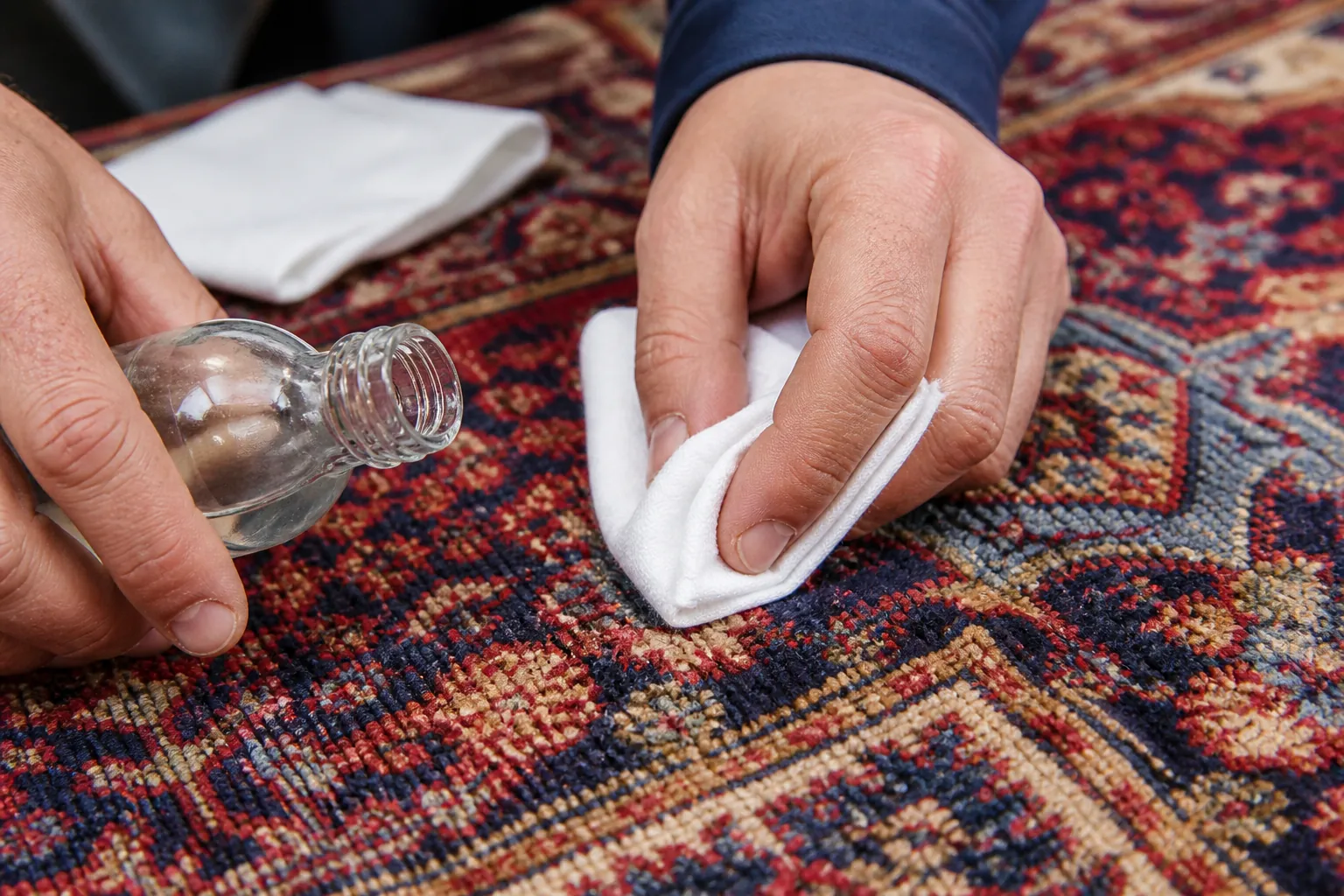
Material response
Fibre behaviour helps exclude unsuitable options.
Dye stability
Testing informs risk around contrasting or altered shades.
Pile and foundation
Assembly affects soil release, moisture and finishing.
Fringe, backing and repairs
Vulnerable points enter the record before handling.
COMPARE BEFORE TREATING
Two marks do not necessarily tell one story
The mark beside a seat may collect body oils; the one near a doorway may hold tracked particles. Photographing each against the same unaffected section keeps their separate locations and appearances clear.
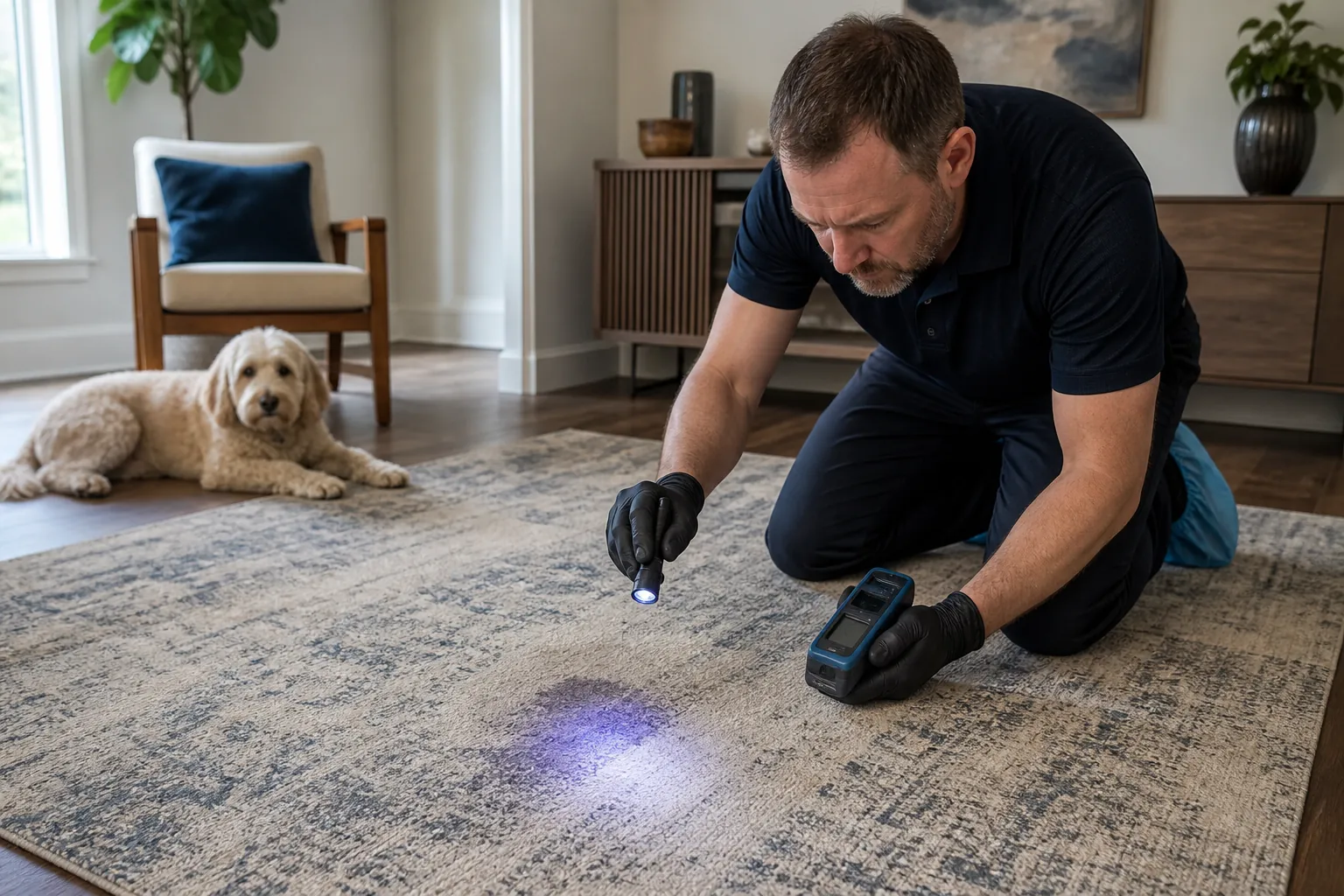
RIPPLING AND ROOM LAYOUT
Do not stretch the rug flat for the photograph
A wave near the sofa can relate to furniture drag, pad movement, dimensional change or the way the rug was laid. Show the profile from floor height and state whether it changes when the sofa foot is carefully released.
- When the ripple first appeared
- Direction and length of the raised section
- Recent furniture moves or room rearrangement
- No flattening promise without identifying the cause
THE SURBITON ROOM RESET
Seven stages arranged around household use
The sequence keeps each mark separate, protects the room schedule and avoids treating a structural ripple as ordinary soil.
- 01
Map
Record dimensions, wear, repairs and priority areas
- 02
Examine
Review yarn, dye, pile, backing and edges
- 03
Reduce particles
Remove compatible accessible dry matter
- 04
Address the brief
Work within the limits identified by assessment
- 05
Control moisture
Support the chosen route and rug construction
- 06
Inspect
Review field, colour, fringe and finish
- 07
Handover
Explain drying, placement and furniture return
SORT THE ROOM OBSERVATIONS
Choose what best describes everyday use
The selector builds a room note and leaves uncertain material details open.
PREPARE A SURBITON ROOM SUMMARY
Put the household routine beside the rug evidence
Tell us when the room is needed, what can move and how the two marks differ. That gives the quotation a practical setting.
- Surbiton postcode and contact preference
- Maximum rug length
- Maximum rug width
- Complete room-context photograph
- Close views of two local marks and rippling near the sofa
- Label, reverse, fringe and repairs
- Previous product or cleaning history
- Floor below and furniture position
- Parking, entrance, stairs or lift details
Before arranging a Surbiton visit
Can the label settle every question?
It is useful evidence, but the visible construction and current condition still need review.
Is every discoloured patch a stain?
No. Dye change, abrasion and pile distortion can remain after removable matter is gone.
Can drying be promised in advance?
No. Fibre, pile, backing, selected route, temperature and airflow all contribute.
When should furniture go back?
Return heavy items only when the rug-specific handover permits it.
SURBITON MEASUREMENT BANDS
Visible size begins the estimate
The portion beneath furniture, separate mark work, ripple assessment and room access can refine the confirmed scope.
QUESTIONS FROM BUSY SURBITON HOMES
Clear answers about marks, movement and room return
Why photograph the room while it is still in use?
The normal arrangement reveals traffic lanes, trapped edges and the furniture that shapes the rug surface.
Should both marks be described together?
No. Give each one a location, age, appearance and history because their causes may be unrelated.
What does a floor-height picture show?
It records the direction and height of rippling more clearly than a photograph taken from above.
Can I move the sofa to flatten the rug?
First capture the untouched layout. Tell us if a foot can be safely released without dragging the textile.
Is the darker patch definitely deposited dirt?
Not always. Directional pile, pressure and lighting can change tone, so compare it from more than one angle.
Which measurement matters beneath furniture?
Provide the full estimated field as well as the visible portion; explain where the sofa prevents direct measurement.
How should a family prepare the room?
Clear toys and loose objects, keep a safe route open and agree when children or pets can stay elsewhere.
Will the ripple disappear after cleaning?
That cannot be assumed. Movement, stretching, backing response and furniture pressure must be considered separately.
When is the room ready for normal use?
The handover will cover foot traffic and staged furniture return for this rug and its surrounding conditions.
What does the £68 figure represent?
It is the eligible booking minimum, while the four size values remain starting guides subject to the agreed work.
MAKE THE SURBITON ROOM PLAN VISIBLE
Share both marks, the furniture footprint and your quiet window
We will turn that practical record into the next conversation.
