
PADDINGTON RUGS · PLANNED AROUND APARTMENT ACCESS
Rug Cleaning in Paddington for Busy Apartment Homes
A rug beside the sofa sees pram wheels, hurried breakfasts and daily shortcuts across the room. Show us where those stories appear, then add the building arrangements that determine how the rug can leave and return.
- Photograph the rug from a doorway so all four edges are visible
- Mark the drink spill separately from the darker pushchair route
- Check whether a label, backing seam or previous repair can be seen
- Share loading-bay hours, lift rules and the laminate floor finish
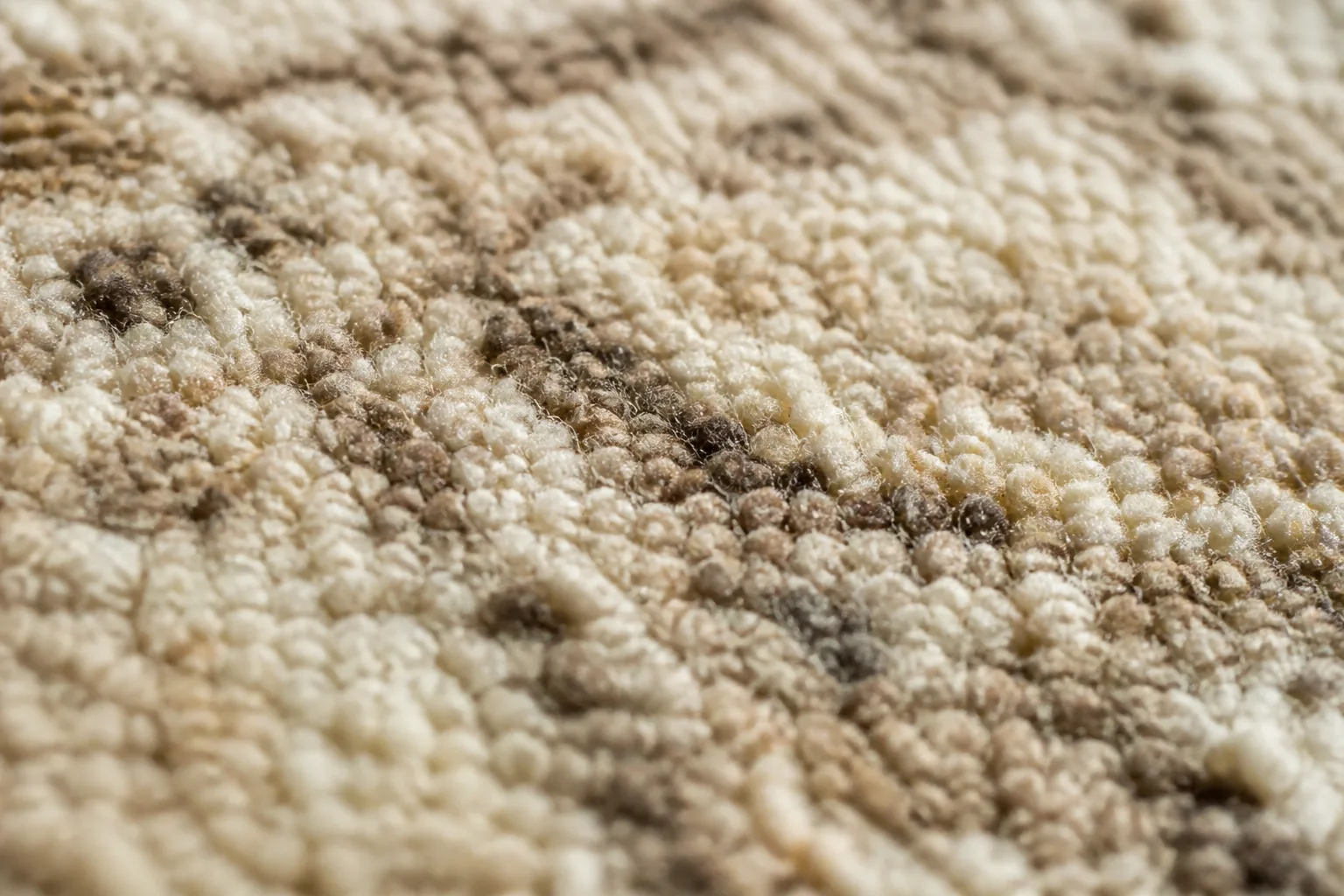
SORT THE EVIDENCE
Build a useful record before the appointment
Choose the descriptions you can support. They guide the first conversation without deciding a treatment remotely.
FROM FRONT DOOR TO LIVING ROOM
The route through the building is part of the job
Paddington flats often turn a simple textile enquiry into a short logistics exercise. A booked loading space, protected communal lift and narrow hallway may matter as much as the rug’s dimensions when safe handling is planned.
Example: a family-room rug near the canal. A wide photograph shows a polypropylene rug partly held by the sofa. Two closer images identify a sticky drink patch and the grey trail left by pushchair wheels.
The customer also confirms the service-lift window and asks that nothing damp rests on the laminate. With those facts recorded, collection, inspection and return can be discussed without improvising in reception.
A Paddington handover sheet
Doorway photograph: Records the rug’s position, furniture overlap and usable space.
Priority map: Labels the pushchair lane and drink spill as two different observations.
Known material: Polypropylene is reported from the label rather than guessed from appearance.
Back view: Shows the foundation, attached label and any local repair.
Edge check: Notes curled corners, worn binding or loose fringe before lifting.
Product history: Lists wipes, sprays or rental equipment previously used on the mark.
Building booking: Gives the authorised loading period and lift-protection requirement.
Carrying route: Flags door closers, turns, steps and reception procedures.
Floor care: Keeps the laminate dry and prevents grit being trapped on return.
Furniture plan: States which sofa feet can be released and who will do so.
Colour record: Captures faded or shaded areas that cleaning may not alter.
Wear record: Distinguishes compressed traffic lanes from surface deposits.
Drying location: Confirms a suitable undisturbed area and available ventilation.
Quote boundary: Separates the main clean from repairs or specialist additions.
Return check: Reviews position, edges and safe furniture timing.
Expectation: The final plan follows inspection, not a conclusion drawn from photographs.
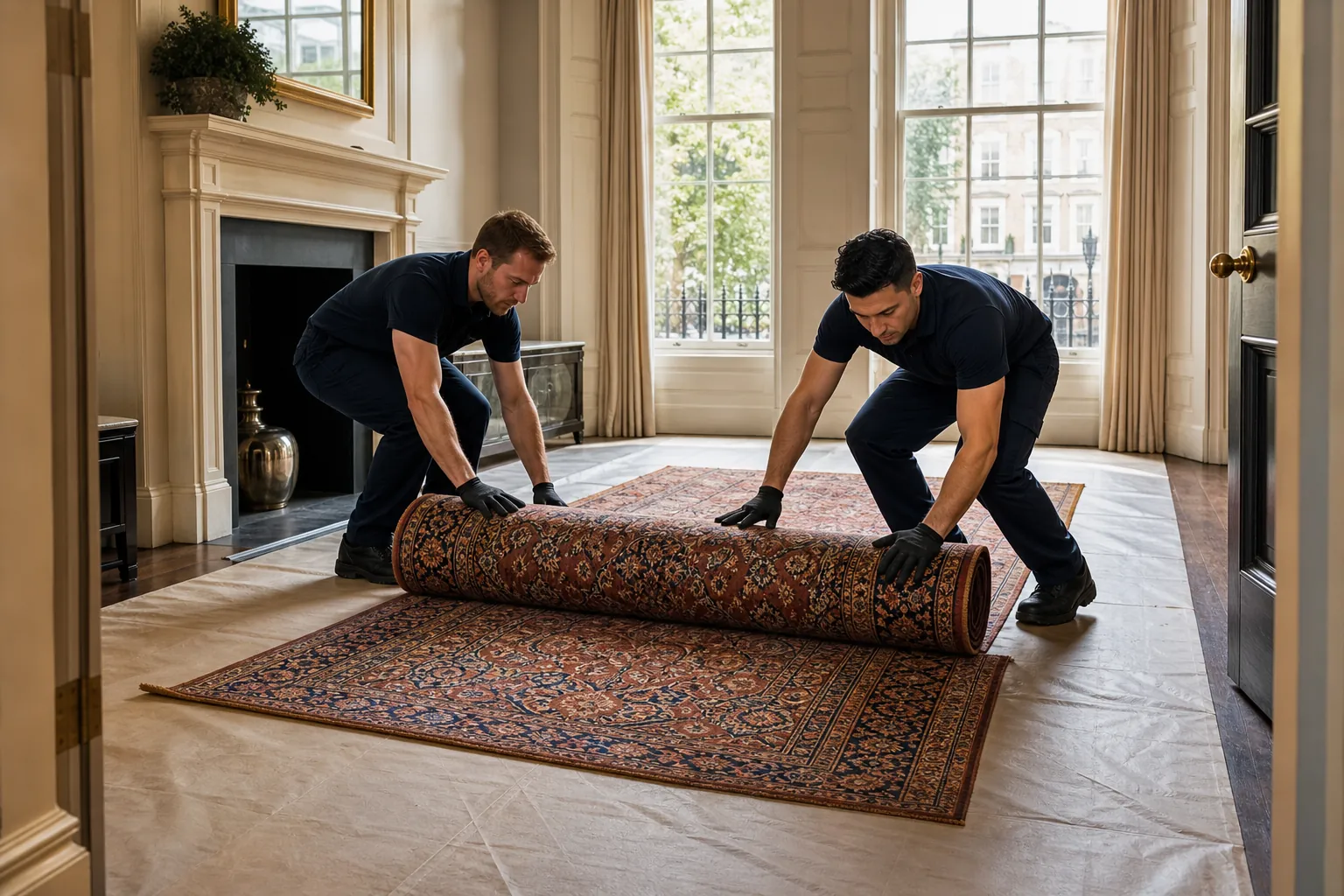
READ THE TRAFFIC PATH
Dark tracks may contain both soil and wear
Pram wheels bring fine outdoor particles into the room, while repeated footfall can also flatten the pile. Inspection separates recoverable residue from lasting surface change.
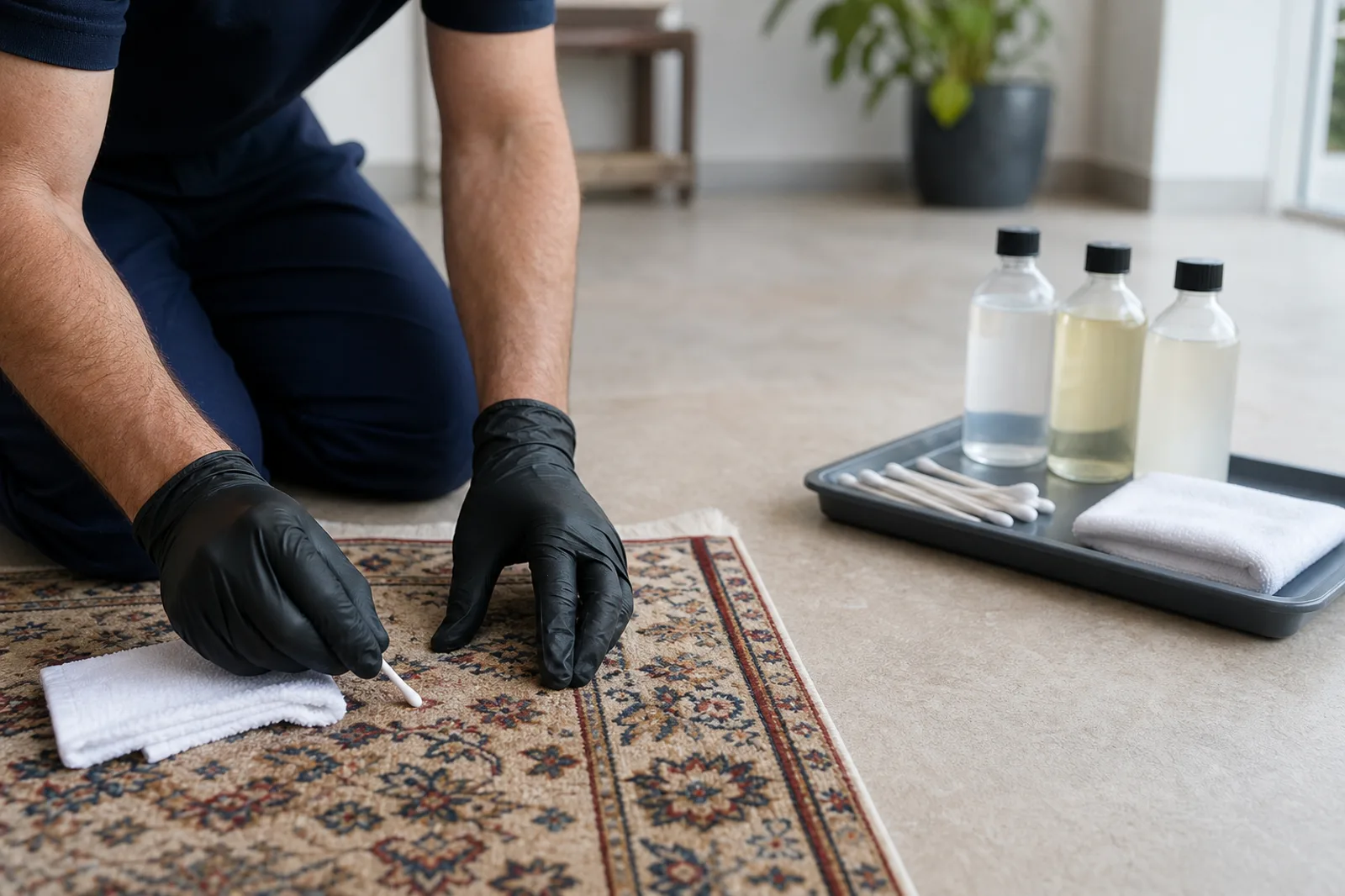
FOLLOW THE SPILL
A sweet drink can leave more than a visible ring
Tell us when it happened, what was used afterwards and whether it reached the reverse. Sticky residue, dye disturbance and odour require different questions.
- Locate the centre and outer edge of the spill
- Photograph it in daylight without adding another product
- Check the backing and laminate for signs of transfer
- Keep removal expectations open until the fibres are examined
READY FOR A QUOTE
Nine details prevent a vague estimate
- Paddington address and building contact
- Longest length and width
- Full rug-in-room photograph
- Separate views of the wheel track and spill
- Readable label or packaging information
- Reverse, binding and fringe photographs
- Previous cleaning or spot-product notes
- Laminate and furniture arrangement
- Loading-bay and lift booking window
Fast answers before you book
Must the rug be moved first?
No. Leave it positioned for the room photograph and discuss furniture before lifting anything heavy.
Can wheel marks be priced from one image?
An image shows location and scale, but it cannot distinguish every deposit from abrasion or pile compression.
Why ask about the lift?
Its size, booking rules and protective covering affect collection timing and the safe carrying arrangement.
Should I treat the drink patch tonight?
Avoid experimenting with another chemical. Record what has already happened and seek item-specific advice.
A CONTROLLED SEQUENCE
Each decision earns the next one
The route adapts to the actual rug, the two priority areas and the conditions available for drying. A calendar promise cannot replace those checks.
- 01
Map
Photograph dimensions, traffic routes and existing defects.
- 02
Read
Compare the label with construction and backing clues.
- 03
Test
Check relevant colour or material response where appropriate.
- 04
Prepare
Release suitable loose matter before wet work is considered.
- 05
Address
Work within the chosen method and agreed priority areas.
- 06
Stabilise
Manage moisture, pile direction, borders and edges.
- 07
Return
Explain ventilation, laminate protection and furniture timing.
PUBLISHED SIZE GUIDES
Measure first, then qualify the scope
Area places the rug in an initial band. The quotation is completed only after construction, condition, access and any requested additions have been considered.
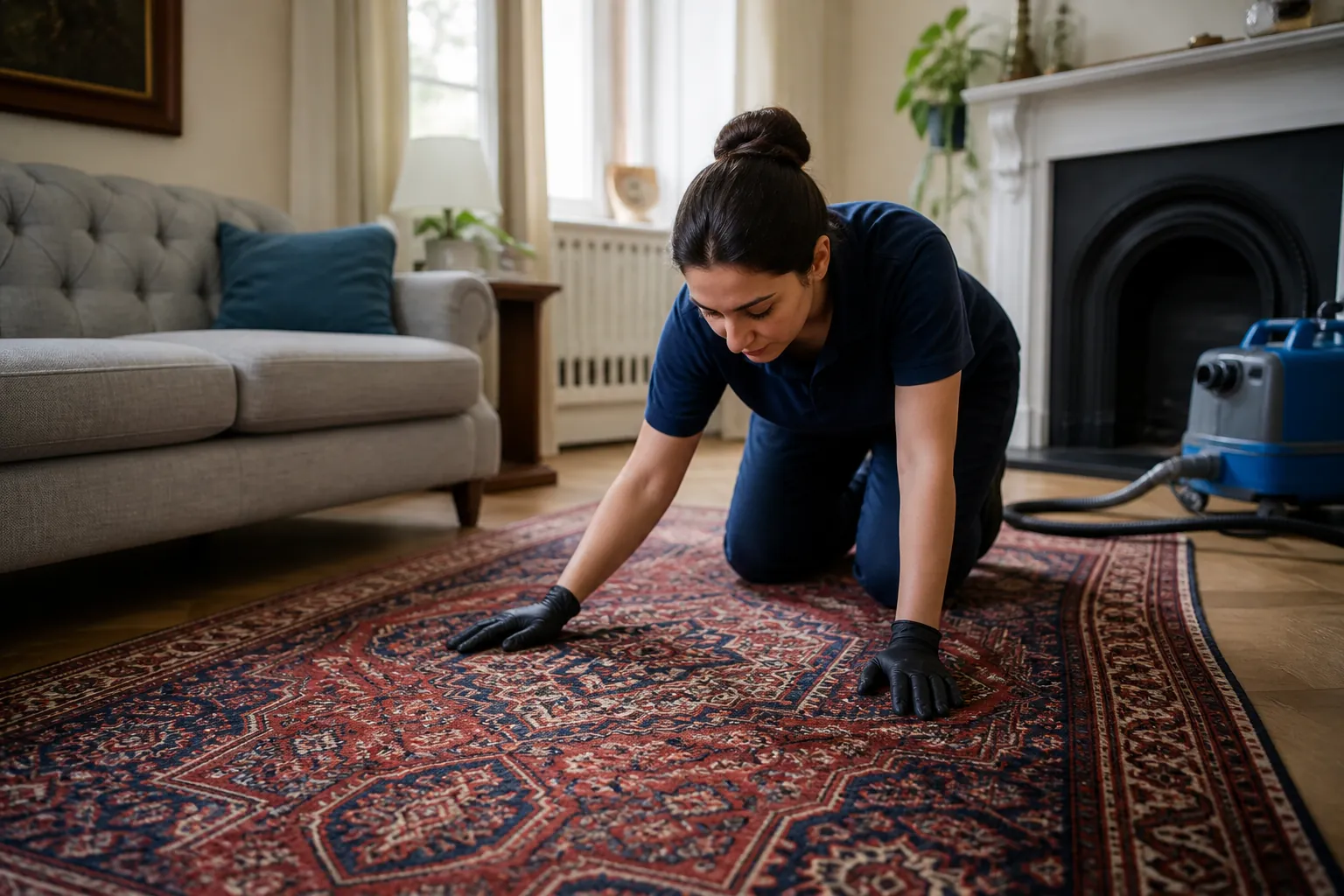
WHY THE BACK MATTERS
The visible pile is only half the evidence
Backing, foundation and edge assembly affect lifting, moisture behaviour and finishing. Photograph what is accessible; do not pull at a weak corner to reveal more.
Pile behaviour
Traffic can alter direction, sheen and apparent colour.
Structural support
Construction determines how the face and reverse work together.
Dye response
Contrasting areas may call for testing and tighter control.
Binding, fringe and repairs
Existing weakness is recorded before carrying or cleaning begins.
PADDINGTON BOOKING QUESTIONS
What apartment customers usually need to know
Which photographs are most helpful?
Send one full view, one image of each concern, and clear shots of the label, reverse and edges where safely reachable.
Do pushchair tracks always wash out?
No. Loose material may sit alongside abrasion, compressed pile or colour change, so the result depends on inspection.
What should I report about a drink spill?
Give its age, ingredients if known, products already applied, current feel or smell, and whether it reached the backing.
Can staff arrange the loading bay for me?
Building reservations usually remain the resident’s responsibility. Send the confirmed time and reception instructions with the booking.
Why identify laminate under the rug?
The floor finish informs lifting, temporary protection and return precautions; it does not select the textile method.
Is a polypropylene label enough to approve treatment?
It is a valuable clue, but construction, dyes, condition and previous products still need to be considered together.
May I move the sofa before the visit?
Small safe items can be cleared, but discuss heavy furniture and any feet resting on the rug rather than taking risks.
Will an old odour be included automatically?
No. Odour location, source, depth and realistic objective must be scoped separately from general rug cleaning.
How soon can the rug return to use?
That depends on the selected work, pile, backing, ventilation and measured drying progress; follow the handover advice.
How are the displayed prices used?
Measurements establish a guide band. The confirmed figure also reflects the item’s build, condition, access and agreed extras.
START WITH THE ROOM VIEW
