
PUTNEY · FROM RIVER-FACING FLAT TO TREATMENT PLAN
Putney Rug Cleaning for Riverside Homes
Putney rooms can shift from dry central heating to damp air near the Thames. Before a method is proposed, we record how the rug is made, where it sits, what has touched it and how it can be moved without folding a weakened edge.
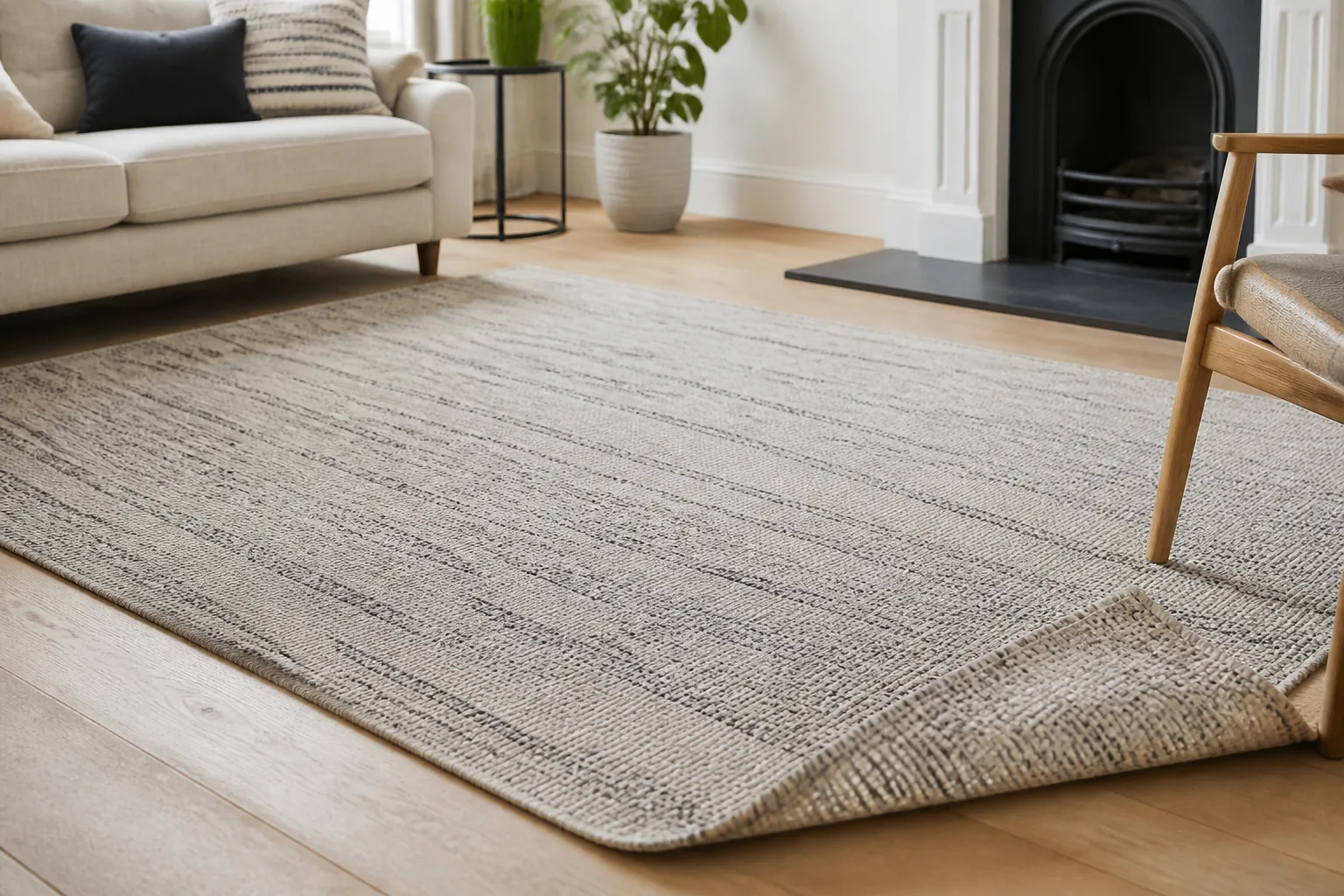
- Take one doorway photograph showing the rug, furniture and windows
- Give the woven dimensions, then measure tassels on their own
- Turn back one safe corner to reveal the foundation and any repair
- Mention mansion-block corridors, basement steps or controlled parking
BUILD A FACTUAL RUG RECORD
Record what you can see without guessing the fibre
These observations prepare the conversation. Testing and inspection still decide what is appropriate.
RIVER AIR · ACCESS · PROTECTED SPACE
Plan the journey before lifting the rug
In a Putney townhouse, a rug may travel past a narrow landing, polished timber and a shared entrance before it reaches a workable area. Note the tightest turn, the surface below and whether river-facing windows provide useful ventilation or bring humid air.
A useful Putney record. Start at the doorway, then photograph the altered colour beside the repair with an unaffected section in the same frame. If the corner lifts without strain, add a reverse view so the old work can be understood from both sides.
Write down every spot bottle or home extraction attempt, including approximate dates. If the rug came with the property and its history is unavailable, that absence is valuable information in its own right.
A Putney room-to-rug dossier
Item: Distinguish the loose rug from the fitted floor around it.
Scale: Measure the woven body at its furthest points.
Concern: Pinpoint the repaired zone and compare its colour with the field.
Fibre: Photograph manufacturer information; do not infer missing fibre data.
Colour: Show dark outlines beside pale motifs where transfer would be visible.
Build: Construction determines whether rolling, lifting or moisture needs restraint.
Edge: Capture each end separately, including missing tassels and edge distortion.
Reverse: Look for stitched patches, adhesive, tide marks or floor contact.
History: List brand, dilution and rinsing when remembered.
Odour: Describe whether the smell changes with warm or humid weather.
Access: Explain the path from room to vehicle without omitting shared areas.
Surface: Say whether timber finish, stone or underlay needs protection.
Drying: Report usable floor area, window position and current airflow.
Return: Plan temporary placement for tables and chair legs.
Scope: Treat appearance, smell and structural weakness as different questions.
Expectation: A washed-out dye or abraded yarn cannot be reconstructed by cleaning.

READING A COLOUR SHIFT
Compare the repaired area with the untouched field
A darker halo can come from residue, pile direction or migrated dye; a lighter patch may be abrasion or lost colour. Side light, reverse inspection and comparison with an unaffected motif help identify which questions need testing.
HUMIDITY, ODOUR AND THE FLOOR BELOW
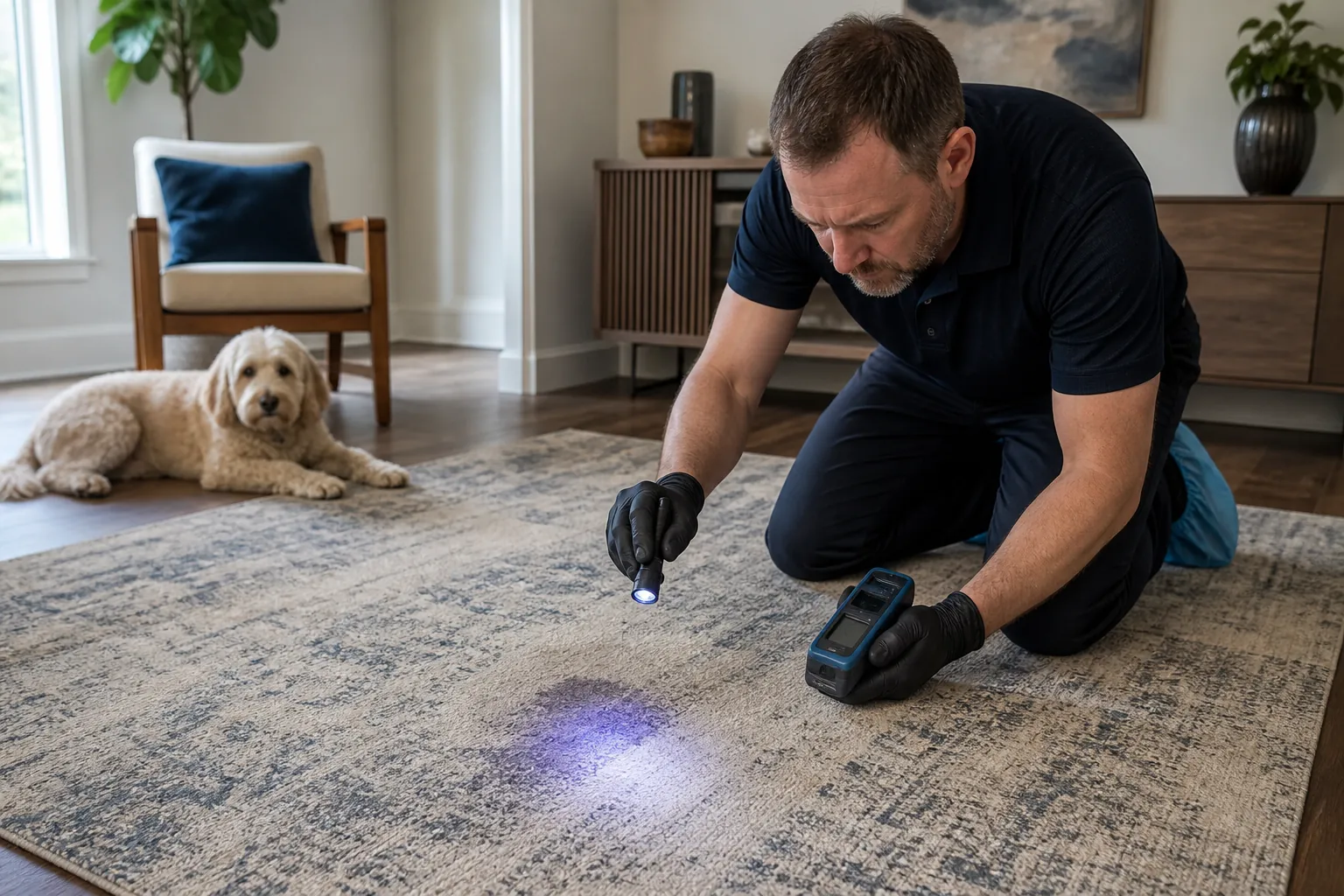
A smell that returns in damp weather may sit deeper than the pile
Tell us whether the concern strengthens after closed windows or wet weather, and whether a spill reached underlay or timber. Do not perfume the area immediately before the visit; its untreated pattern can aid assessment.
- Source and approximate date
- Area affected above and below
- Products, rinsing or extraction used
- No complete-removal promise before review
FIBRE · DYE · BUILD
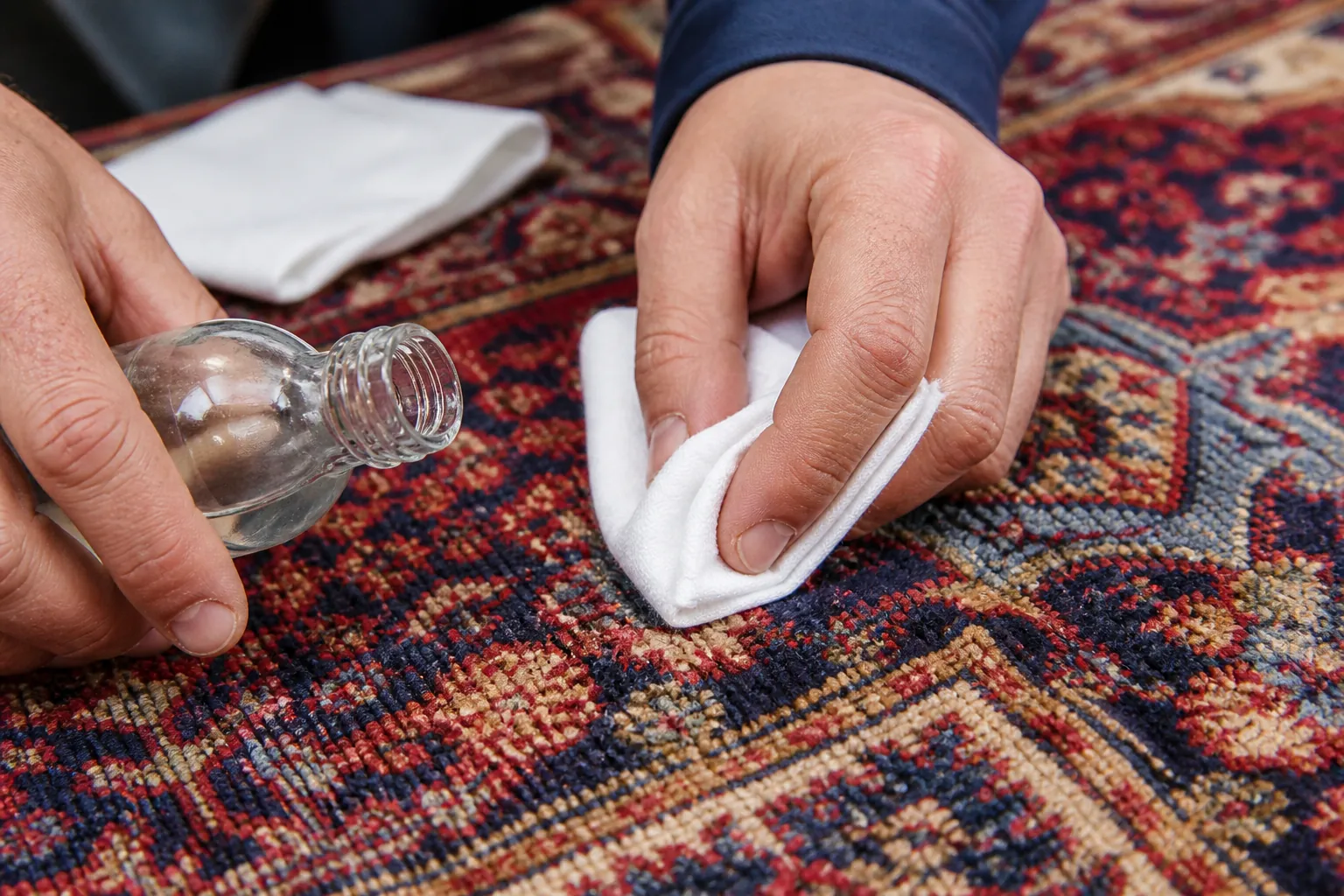
Construction tells more than a fibre label alone
Yarn response, knot or tuft security, old stitching and backing condition each impose a different handling limit.
Material response
Shows how quickly liquid may travel through the face.
Colour behaviour
A discreet check explores movement between adjacent tones.
Structural limits
The internal build governs support and extraction choices.
Edges and repairs
Repaired edges are mapped before the rug is disturbed.
A PUTNEY HANDLING SEQUENCE
Move from room evidence to a defensible method
The order protects weak repairs while connecting indoor climate, textile behaviour and the reported concern.
- 01
Map
Draw a simple map of the room and rug
- 02
Check
Compare face, edge, reverse and repaired section
- 03
Reduce particles
Lift loose particles before introducing liquid
- 04
Work selectively
Treat only where the textile record supports it
- 05
Manage moisture
Balance extraction with construction and humidity
- 06
Inspect again
Recheck colour boundaries and the old repair
- 07
Explain return
Agree a protected return position
PUTNEY SIZE REFERENCES
Measurements open the quote; complexity completes it
The confirmed figure reflects the woven area together with dye risk, repair protection, carrying route and any separately agreed odour work.
PREPARE THE ENQUIRY
Send the details that cannot be read from one close-up
Pair the overall room scene with exact dimensions, reverse evidence and a plain account of what happened.
- Putney postcode
- Maximum length and width
- Complete rug photograph
- Close view of colour variation beside a repair
- Label and reverse
- Fringe and repair details
- Earlier products
- Floor and furniture position
- Entrance and carrying route
Putney questions worth settling early
Can a photo identify the fibre?
It can guide questions, but material and dye response may still need checking.
Is every patch removable?
No. Some patches are colour or fibre changes rather than soil.
Is drying time fixed?
No; construction, moisture, airflow and room conditions determine advice.
When can furniture return?
Follow the handover for this rug rather than a generic timetable.
PUTNEY RUG FAQ
Answers for riverside homes and repaired rugs
What belongs in a Putney quote request?
Postcode, dimensions, a complete view, close photographs, access and known treatment history.
Can delicate patterned rug be assessed from images alone?
Images are useful evidence, but fibre, dyes and hidden construction may still require checks.
Will colour variation beside a repair definitely disappear?
No. Removable residue, dye alteration and physical wear must first be distinguished.
Why include the reverse?
It may reveal the label, foundation, repairs, backing faults or transferred contamination.
Should I apply another spot product?
Avoid adding chemistry before review and report anything already used.
How is deeper odour considered?
Source, age, pile, backing and the floor below all matter.
May heavy furniture return straight away?
Wait for item-specific handover advice.
What changes drying in a Putney home?
Fibre, pile, backing, route, temperature, airflow and available space.
Are square metres the only price factor?
No; construction, condition, access and agreed extras can qualify the guide band.
How does the £68 minimum apply?
It is the eligible visit minimum; compatible work may contribute after scope confirmation.
START A PUTNEY RUG BRIEF
Turn room evidence into a practical Putney plan
A measured, honest brief lets us discuss the rug without making promises from a photograph.
