
HERNE HILL · LOOK CLOSELY BEFORE WORK BEGINS
Rug Stain and Odour Assessment in Herne Hill
From slim hallway runners to broad rugs beneath dining tables, every movable textile arrives with its own history. Tell us where the problem sits, what has touched it and how the piece can leave the room. That practical picture is more valuable than a guess based on one close-up.
- Photograph the complete outline in even daylight
- Measure the furthest points, including tassels separately
- Mention pets, spills, fading and previous home remedies
- Explain narrow turns, shared doors and local parking limits
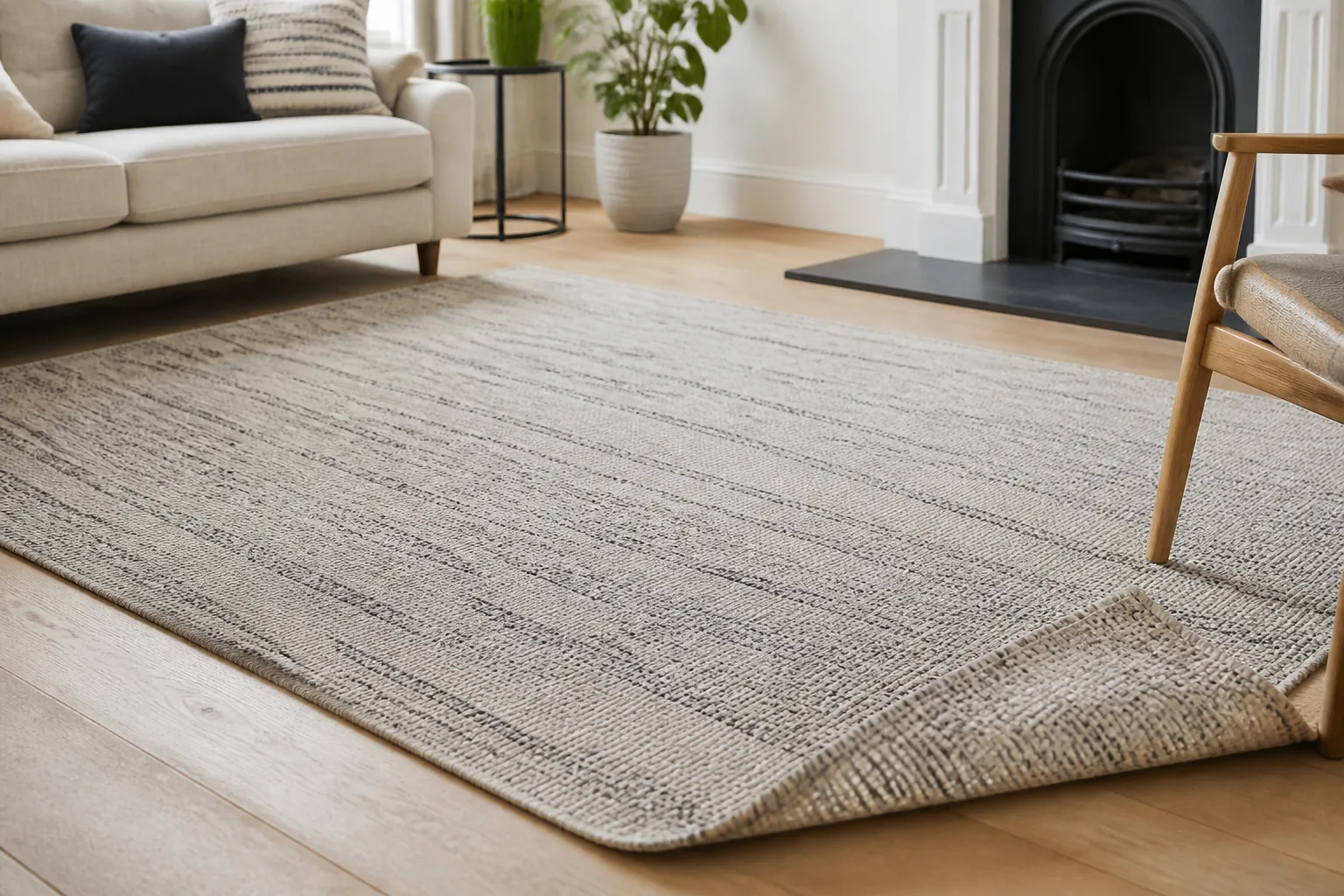
BUILD A USEFUL FIRST DESCRIPTION
Choose what you recognise and leave uncertainty visible
These answers form an intake note for the technician, rather than a remote diagnosis.
RAILTON ROAD FLATS AND PERIOD TERRACES
The journey out of the room matters
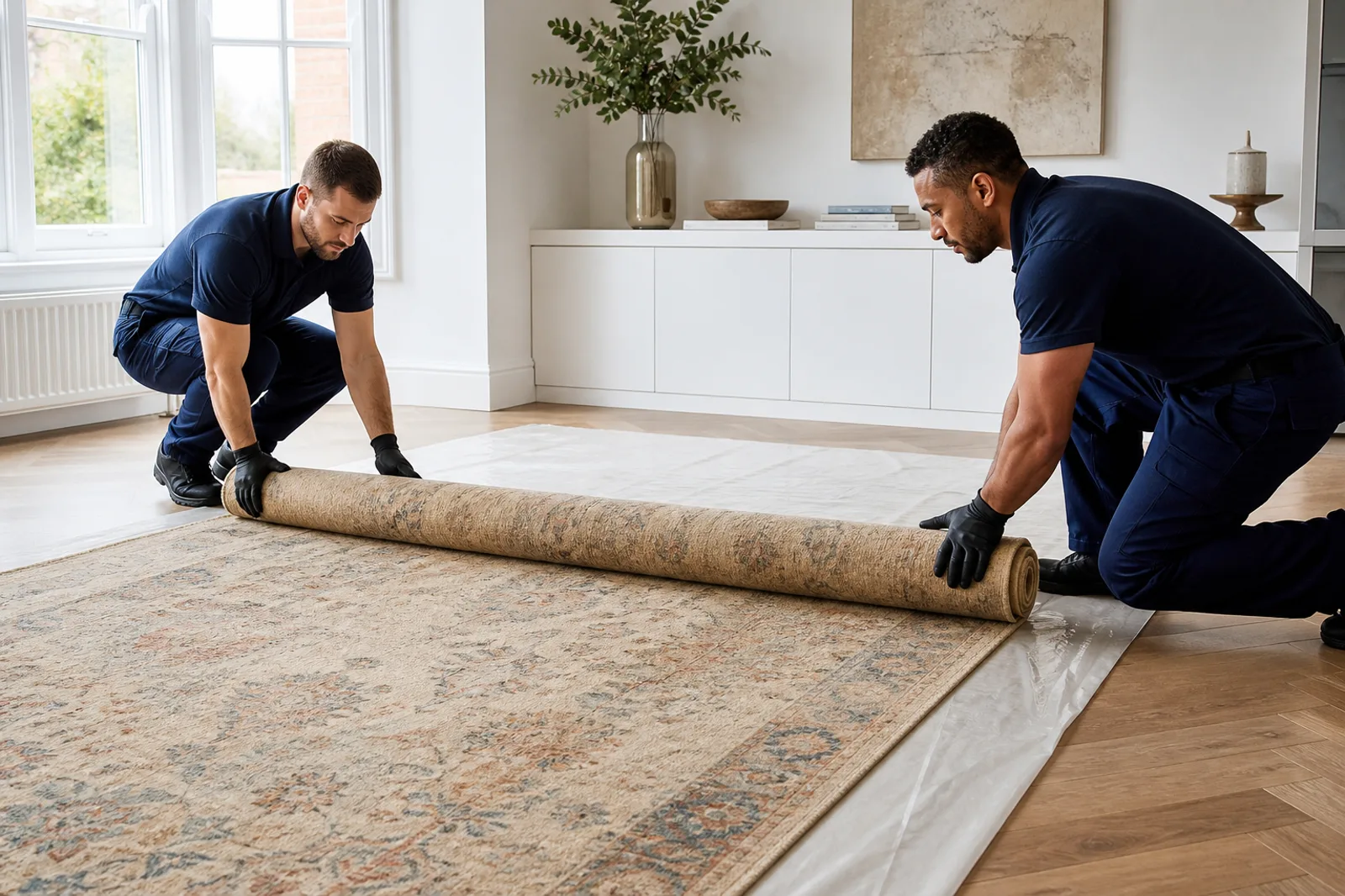
A rug caught beneath a table needs space to be rolled. In a converted house, an angled landing or communal doorway can determine how it is carried. Share those details before arrival so nobody has to improvise around furniture or polished floors.
Photograph in sequence. Start far enough back to include every edge. Follow with the affected area, corners, fringe, label and underside.
If household chemistry has touched the fibres, keep the container or photograph its label. The product and time since use may alter the next safe step.
A practical Herne Hill handover note
Identity: Runner, kilim, tufted rug or uncertain.
Footprint: Widest and longest points.
Concern: Mark the traffic-side edge on a complete view.
Timing: Say when the change first appeared.
Fibre clue: Photograph labels without assuming certainty.
Colour: Highlight dark borders and sun-faded sections.
Texture: Show crushed pile, loops or hardened deposits.
Perimeter: Include curling corners and tasselled ends.
Reverse: Capture seams, patches and factory marks.
Products: List every wipe, spray or powder applied.
Smell: Note where and when it becomes strongest.
Furniture: Explain what blocks rolling.
Exit: Describe halls and street stopping.
Return: Prepare a clean, dry placement area.
Priority: Separate appearance, smell and damage.
Limits: Abrasion and lost dye may be permanent.
READING AN UNEVEN PATCH
A pale area is not automatically a stain
Shifted pile, sun change, abraded yarn and sticky residue can look alike from one angle. Opposing views and an underside check help distinguish contamination from altered textile.
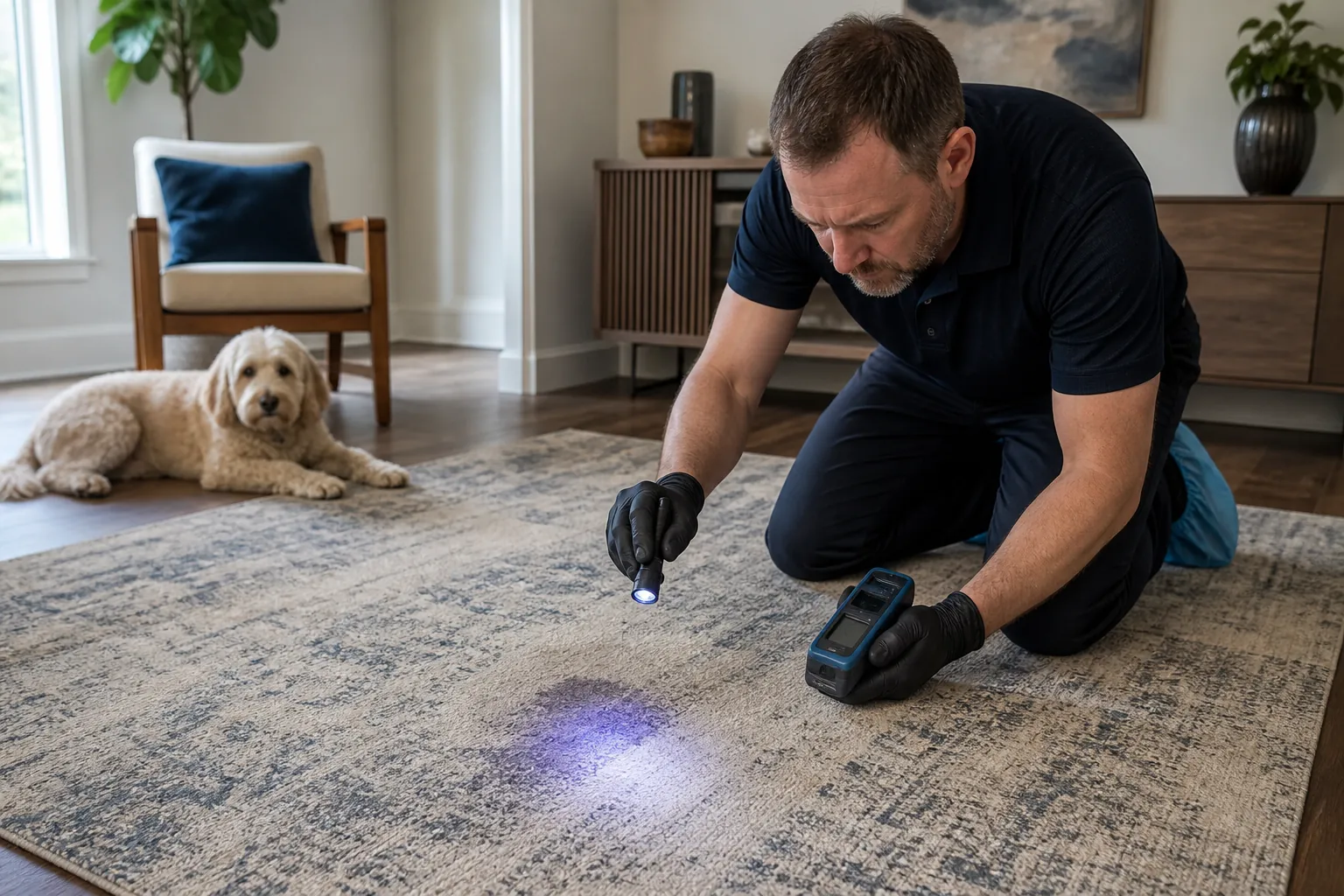
WHEN SMELL OUTLASTS THE SPILL
Trace what travelled below the face
Liquid can settle in backing, underlay or a floor joint. Say whether warmth or humidity revives the odour.
- Known source and approximate date
- Likely width of the wet area
- Products applied on either side
- Surface directly beneath the piece
FOUR QUESTIONS INSIDE ONE RUG
Fibre is only part of safe handling
The face yarn may tolerate something that its dyes, adhesive or foundation cannot.
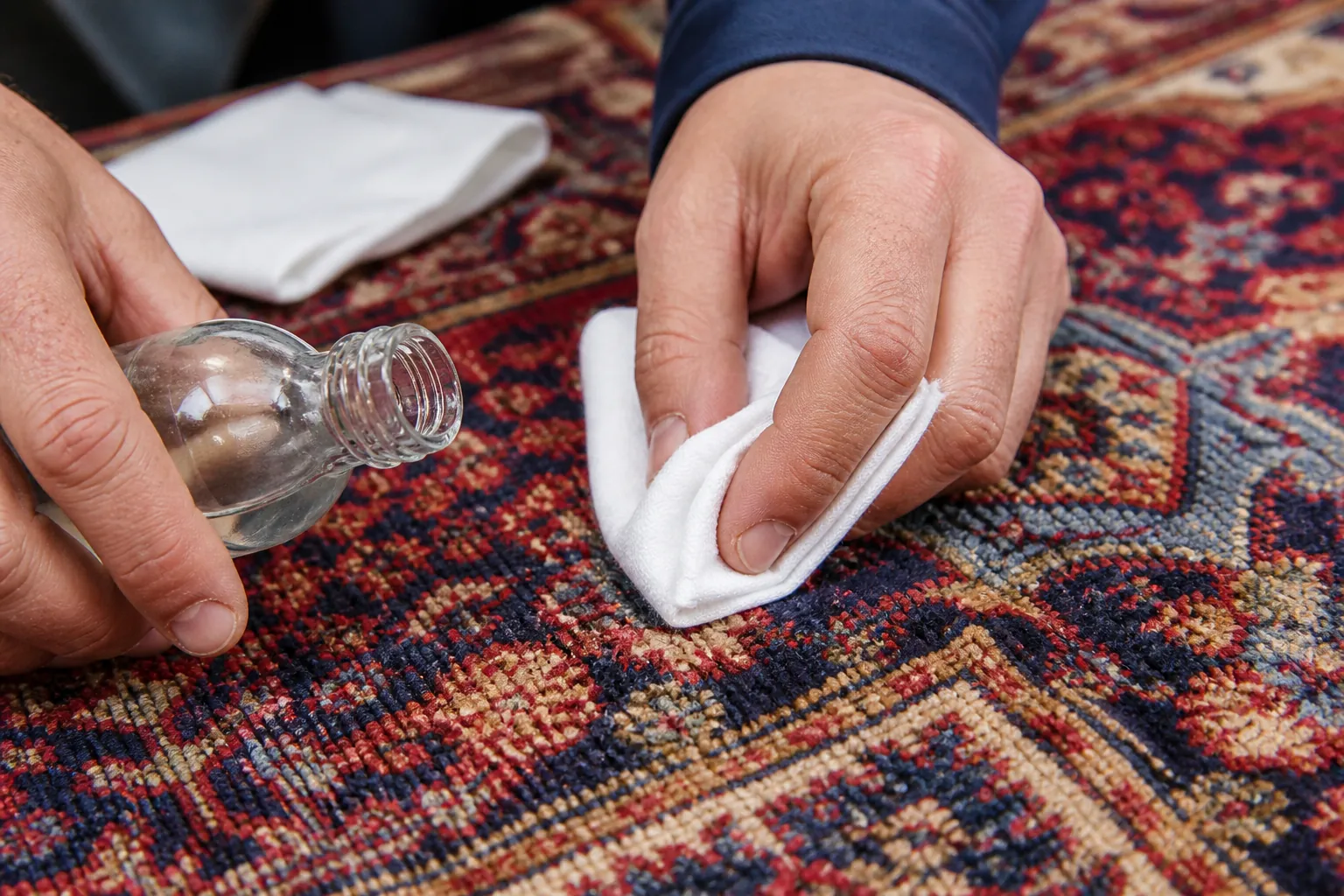
Yarn response
Absorbency and texture influence soil release.
Shade stability
Focused testing reveals migration risk.
Surface support
Backing can restrict moisture and movement.
Reduced strength
Thin edges and repairs require extra care.
A ROUTE SHAPED BY THE ACTUAL PIECE
Checks continue from intake to return
Each observation decides whether the next step remains suitable.
- 01
Log
Photograph dimensions and faults
- 02
Examine
Study construction and vulnerable colour
- 03
Lift grit
Reduce dry matter without driving it deeper
- 04
Treat priorities
Work within demonstrated tolerances
- 05
Control finish
Manage moisture and supported drying
- 06
Compare
Recheck field, edges and backing
- 07
Return
Explain placement and furniture precautions
HERNE HILL PRICE GUIDE
Size provides the opening band
Construction, condition, access and separately agreed specialist work inform the firm quotation.
MAKE THE FIRST MESSAGE COUNT
Nine facts prevent a vague estimate
A concise enquiry lets us ask relevant questions rather than rely on assumptions.
- Herne Hill postcode
- Maximum length and width
- Image showing all four edges
- Close view of traffic-side wear
- Underside and label
- Loose threads or repairs
- Products previously applied
- Floor and nearby furniture
- Collection and parking route
Before arranging a visit
Should I roll the rug first?
Only if weak edges can be moved without strain; otherwise ask.
Does a label settle the fibre?
It helps, but mixed components still need consideration.
Can one stain photo produce a quote?
Measurements, context and access notes are also needed.
Why mention the floor?
Moisture or residue may have transferred below.
ANSWERS FOR HERNE HILL HOUSEHOLDS
Questions before a rug is moved
Which pictures help at first contact?
Send the complete rug, concern, reverse, label, corners and fringe.
Can traffic wear be cleaned away?
Soil may lift, but missing or abraded fibres remain damage.
Why supply accurate dimensions?
They establish the guide band and reveal carrying requirements.
What should I say about a pet accident?
Share timing, spread, repeats and every remedy already tried.
Why might an odour return?
Buried residue can react again to warmth or humidity.
Are strong borders checked?
Potentially mobile shades are considered before wet work.
Can you collect upstairs?
Send stair width, turns, access rules and rolled length.
When may furniture return?
Follow the placement advice given for this particular piece.
What can change the size-band price?
Fragility, contamination, difficult access and specialist attention.
How does the £68 minimum work?
It is the visit threshold; compatible reviewed services may contribute.
BEGIN WITH THE RUG IN FRONT OF YOU
Send the facts that make your Herne Hill piece different
Clear images, measurements and candid history provide a sound beginning.
