
SOHO · CARE FOR BUSY CENTRAL ROOMS
Specialist Rug Cleaning in Soho
Rugs beneath restaurant tables, studio desks and compact flat furniture all face different pressures. We consider the textile, its use and the route through the building before recommending work.
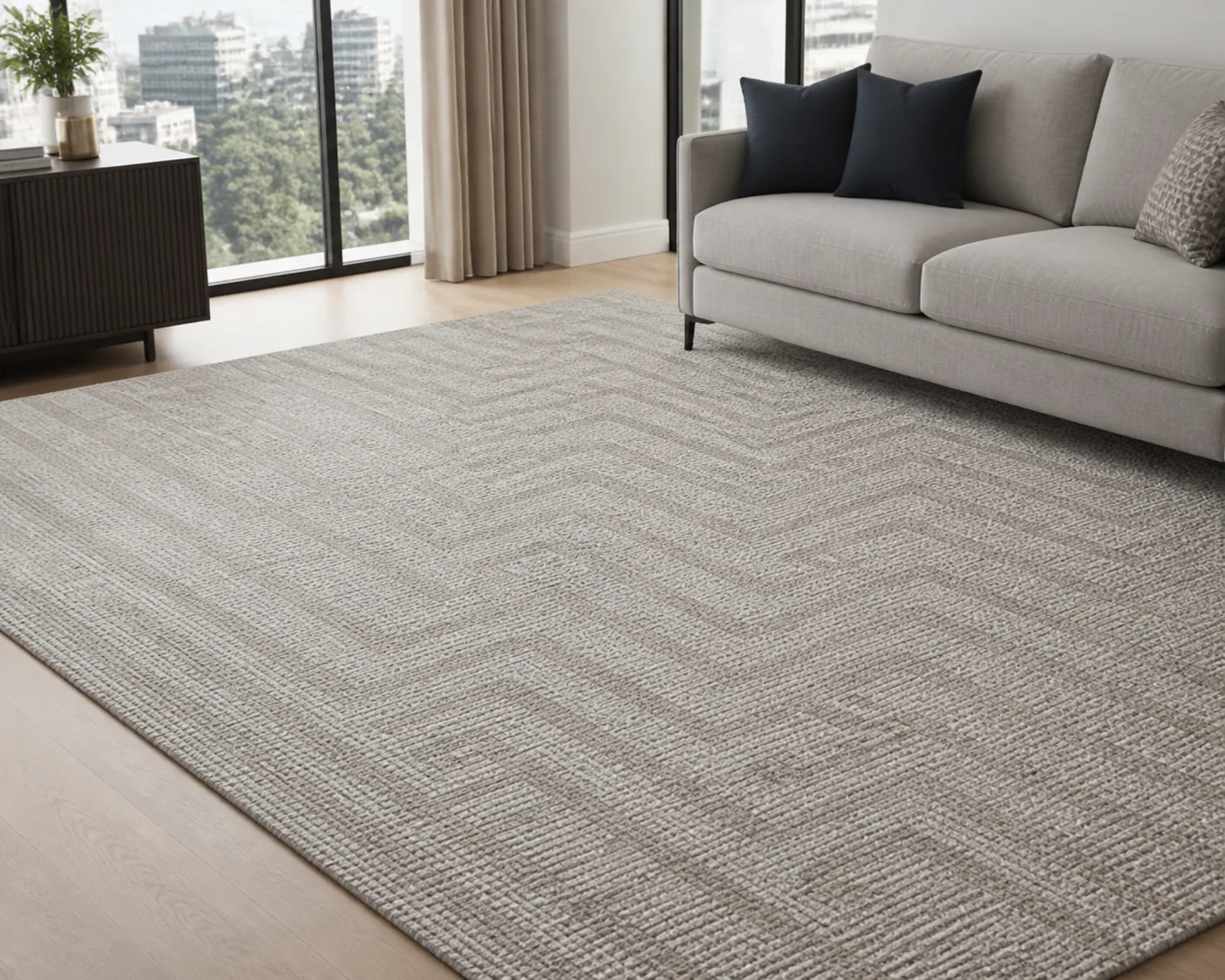
- Show the complete rug in daylight
- Photograph spills, worn paths and contrasting colours
- Include the reverse, label and edges where accessible
- Mention stairs, loading hours and reception rules
BUILD A USEFUL BRIEF
What can you already tell us?
Choose the nearest descriptions. They organise an enquiry; they do not diagnose the rug.
SOHO QUESTIONS
Before arranging a visit
Do you visit both homes and businesses?
Yes. Tell us how the premises is used so timing and access can be planned.
Which photographs help most?
Send the whole rug, its reverse, damaged edges and sharp close-ups of each concern.
Can a heavy table stay in place?
That depends on coverage and safe movement. List heavy pieces before attempting to shift them.
Will every stain disappear?
No. Dye loss, abrasion and bleaching can resemble removable contamination.
Does the care label decide the method?
No. Construction, colour stability, backing and condition also matter.
Should I apply a shop product first?
Avoid adding chemistry without advice; it can leave residue or spread colour.
How are fringes treated?
They are inspected separately because weak stitching may require restrained handling.
What should I report about odour?
Give its source, age and exact position, including any contact with the floor.
When can the rug be used again?
Fibre, thickness, ventilation and the chosen process determine aftercare advice.
How is the price confirmed?
Size sets a guide band; material, condition, access and optional work refine the quotation.
ROOM AND ROUTE
Soho logistics shape the appointment
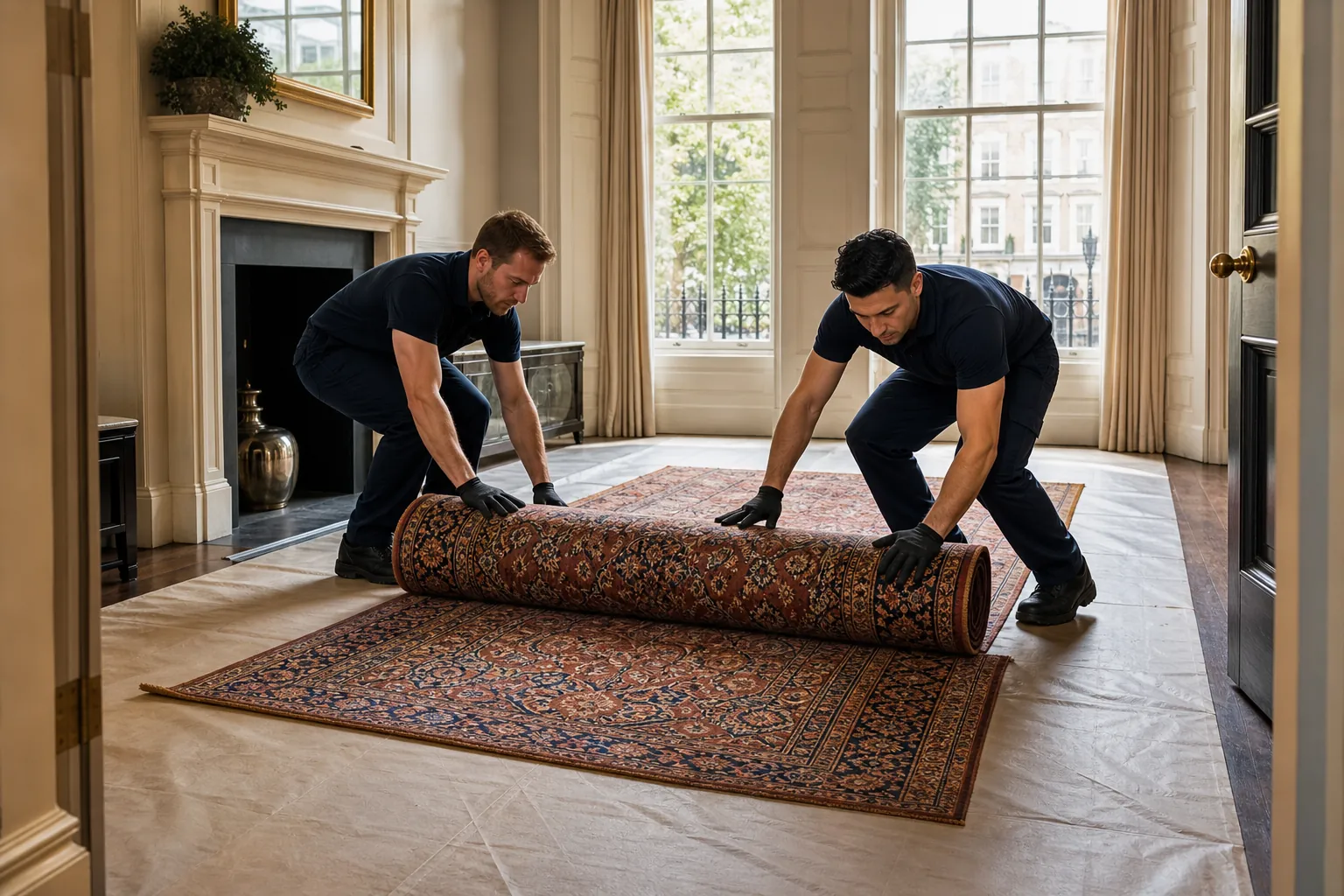
A theatre dressing room and an upper-floor sitting room demand different working arrangements. The setting never identifies a cleaning method, but it affects movement, timing and protection.
Consider a dining-room flat weave. Crumbs sit between yarns while a red border looks uneven. Loose matter must be separated from wear or colour movement.
A room photograph reveals chair clearance and timber below. Entrance dimensions and loading limits complete the brief.
Soho handover record
Use: home, hospitality, office or showroom.
Scale: greatest length and width.
Priority: exact location of the concern.
Incident: source and approximate date.
Products: sprays, powders or machines used.
Texture: stiffness, shedding or flattening.
Colour: fading or movement at boundaries.
Structure: curls, splits and loose binding.
Reverse: backing, labels and moisture signs.
Floor: finish beneath the rug.
Furniture: realistic clearance agreed.
Building: concierge and lift procedures.
Loading: legal arrival opportunities.
Air: ventilation and room temperature.
Expectations: cleaning distinguished from restoration.
SOHO PRICE GUIDE
Measure first, then confirm scope
These bands provide an initial indication; the agreed quotation reflects the actual rug and visit.
CONNECTED CHECKS
A rug is more than face fibre
Yarn, dye, assembly and vulnerable finishing details must be considered together.
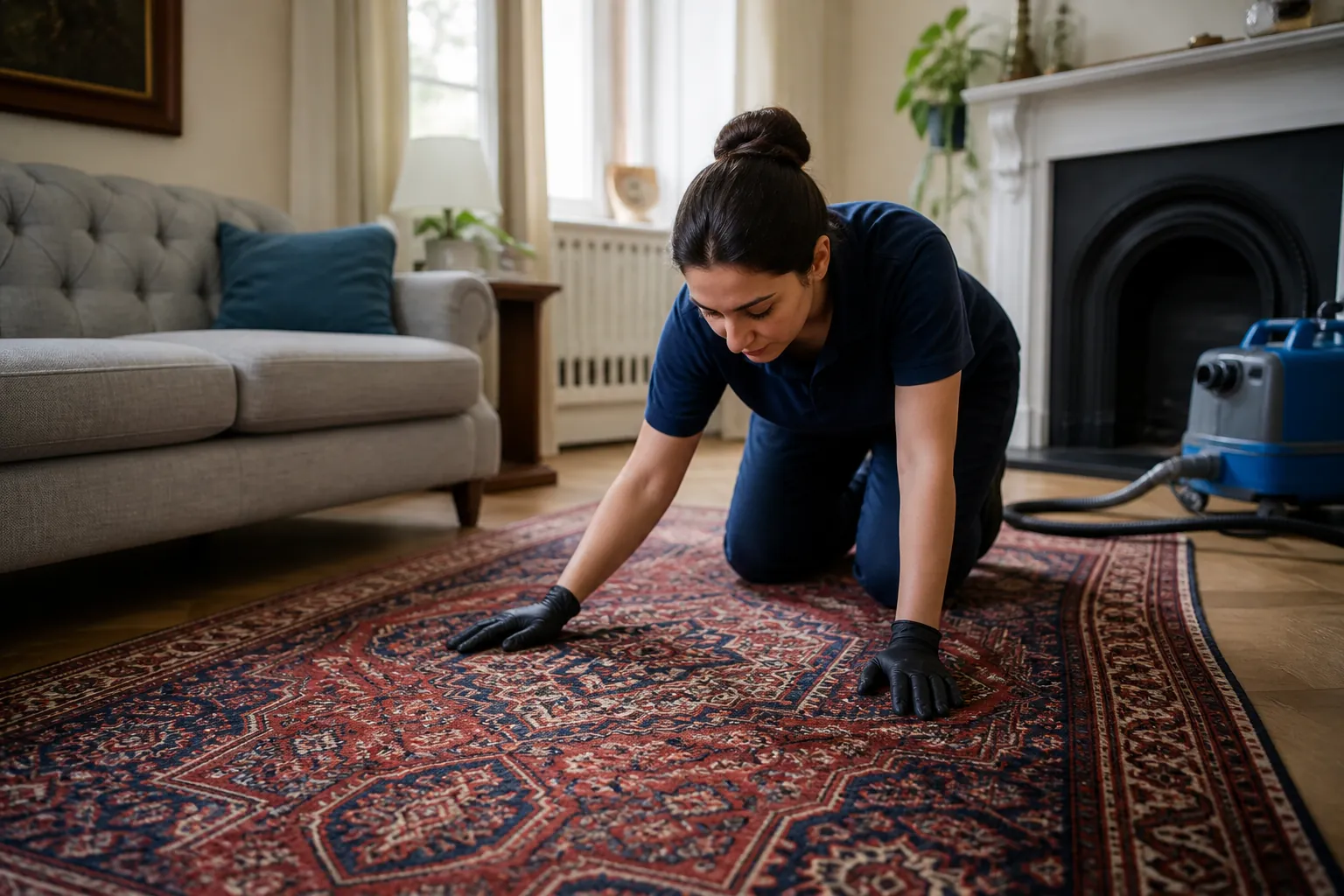
Material response
Absorbency and resilience affect handling.
Dye behaviour
Contrasts may require careful testing.
Foundation
Woven and tufted rugs present different risks.
Edges and repairs
Weak details receive separate attention.
PREPARE YOUR ENQUIRY
Nine facts that remove guesswork
- Address and premises type
- Length and width
- Whole-rug photograph
- Concern close-ups
- Reverse and label
- Edges and corners
- Known material
- Spill history
- Access restrictions
Quick guidance
Can photos confirm treatment?
They guide questions; physical checks may change the recommendation.
Is a dull path dirty?
Not necessarily; abrasion and crushed pile can remain visible.
Can furniture return at once?
Follow the individual handover advice.
Is deodorising included?
No; source and depth require separate scope.
CONTROLLED SEQUENCE
From record to aftercare
Each stage informs the next and leaves room to respond to unexpected limitations.
- 01
Survey
Map wear and weakness.
- 02
Test
Check relevant responses.
- 03
Prepare
Release dry debris.
- 04
Clean
Work within assessed limits.
- 05
Finish
Control moisture and edges.
- 06
Review
Compare priority areas.
- 07
Handover
Explain use and ventilation.
CHANGED APPEARANCE
Cleaning is not restoration
Lost dye, worn yarn and distortion may resemble stains but cannot be rebuilt by removing soil.
PERSISTENT SMELL
Follow the source
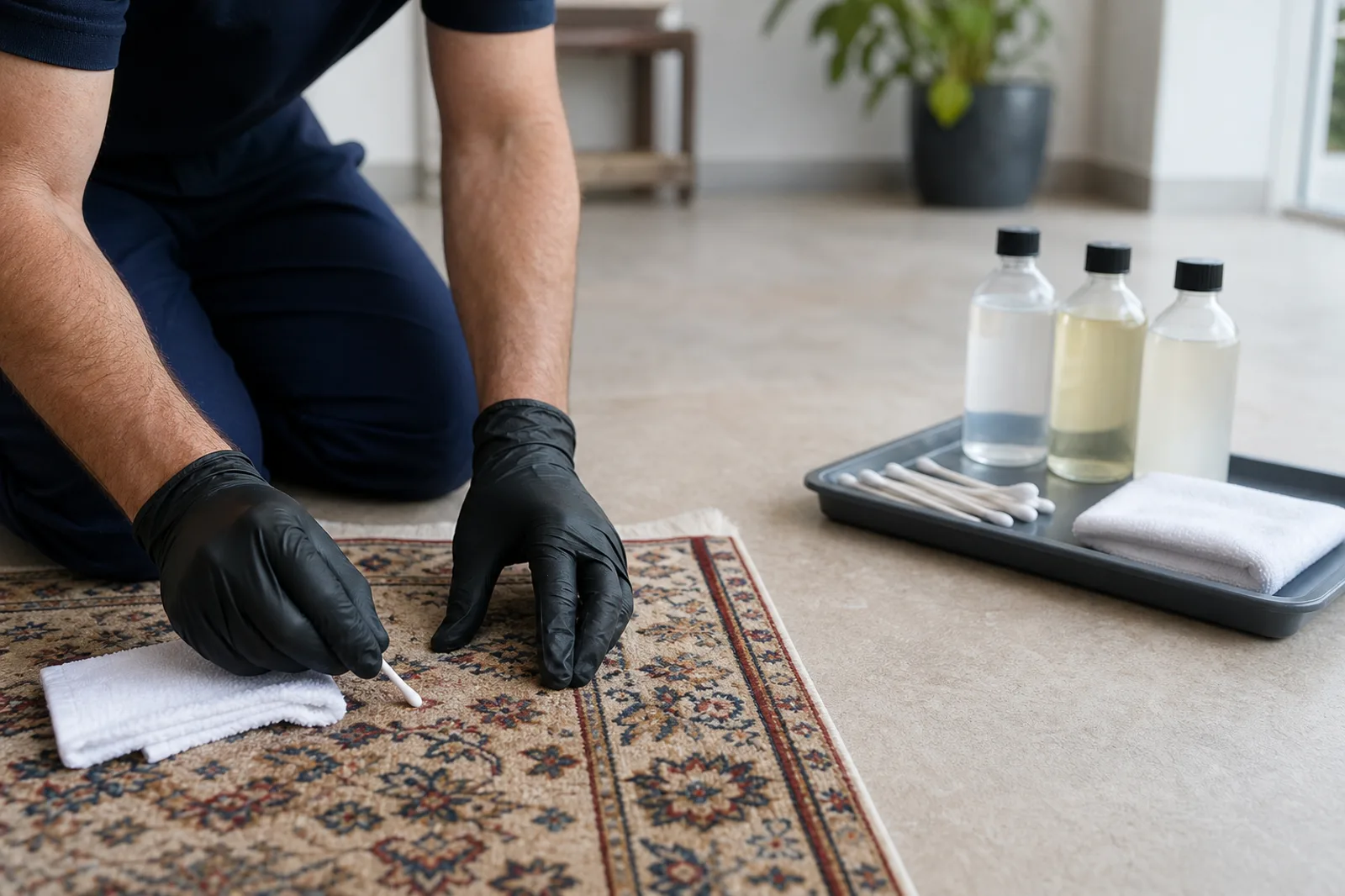
Odour may sit below the pile or reach the supporting floor.
- Locate the affected zone
- Describe the incident
- Check reverse and floor
- Agree realistic limits
