
WARLINGHAM · A PRECISE RUG PROFILE PREVENTS GENERIC ASSUMPTIONS.
Material-aware Rug Cleaning for Warlingham Homes
Rugs in Warlingham deserve a brief built around the actual textile, not a postcode template. We connect measurements, construction clues, dry grit, edge wear and an uncertain colour change, and the route through village cottages, gated houses and rural-edge properties before defining a sensible care scope.
- Photograph a traditional wool rug in a drawing room, including its complete outline and its position in the room
- Keep dry grit, edge wear and an uncertain colour change separate from normal loose dust when describing the priority
- Add close views of the reverse, label, edge finish and any previous repairs
- Explain long approaches, steps and weather-exposed entrances so handling can be planned before the Warlingham appointment
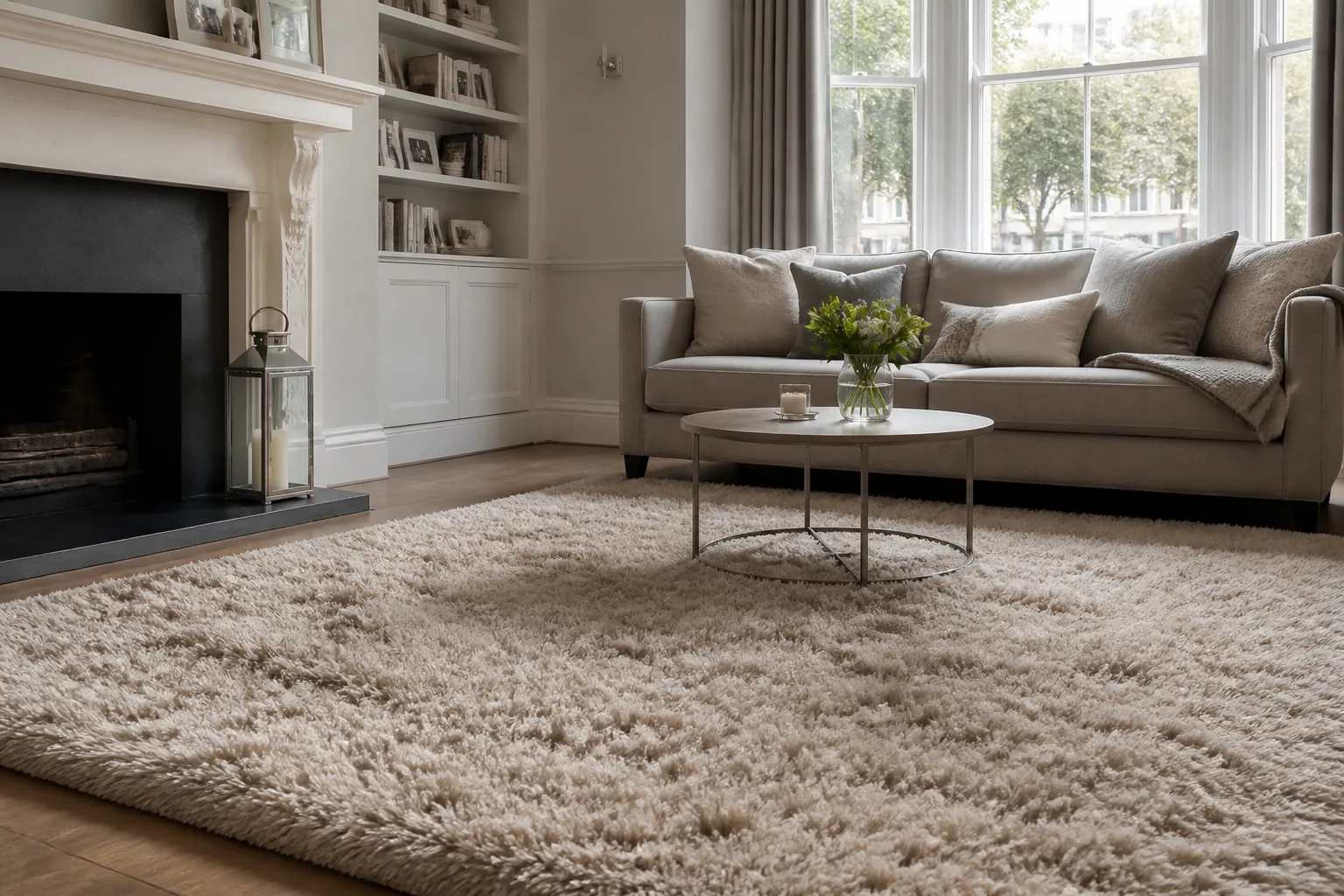
WARLINGHAM · A PRACTICAL LOCAL BRIEF
The textile, access route and room all affect the plan
Village cottages, gated houses and rural-edge properties create very different working conditions. For Warlingham, we ask where the rug lies, what rests on it, how it can be carried, and whether an undisturbed drying position is available. Those facts sit alongside fibre, dye and construction evidence; they do not decide a method on their own.
A realistic Warlingham enquiry. Picture a traditional wool rug in a drawing room. The owner records dry grit, edge wear and an uncertain colour change, measures the full textile and photographs it in daylight. We also note long approaches, steps and weather-exposed entrances. This gives the quotation a real object, a defined concern and an honest route into the property.
Why the room record matters. The rug currently meets stone flags. A reverse image, edge close-up and view of nearby furniture help separate textile condition from effects associated with the supporting floor. Any earlier product is named rather than repeated, and unknown fibre or dye behaviour stays marked as unknown until assessed.
Reading a Warlingham wool rug
Grit pattern. Trace granular soil from doorway to hearth rather than showing an isolated close-up.
Daylight comparison. Photograph suspected colour change beside an unaffected motif at equal exposure.
Stone beneath. Note cold or damp-feeling flags and any non-slip layer beneath the textile.
Long carry. State parking-to-room distance, including gates, gravel, steps and sheltered resting points.
Wool character. Natural variation, pile direction and fading can alter tone; keep each possibility open.
Fringe evidence. Lay each end flat and show broken tassels, colour and attachment points separately.
Old interventions. Identify repaired selvedges, re-fringing, moth treatment or earlier cleaning where known.
Weight estimate. Dimensions and construction help decide how many handlers a rolled rug may require.
Drawing-room use. Fireplaces, occasional tables and light footfall create a distinct soil map.
Wear versus soil. An abraded edge cannot become missing fibre, although removable grit may reduce.
Loose objects. Small furnishings can be cleared; valuable or heavy pieces require agreement.
Testing boundary. Suspect dyes and repaired areas are reviewed before a broad process is proposed.
Weather window. Exposed entrances and indoor airflow inform planning without a calendar promise.
Return position. Underlay and stone must be suitable before the rug goes back.
Seasonal entry. A weather-facing doorway may introduce mineral soil even when shoes are removed.
Decision record. The quote links observed condition to scope and flags specialist-review points.
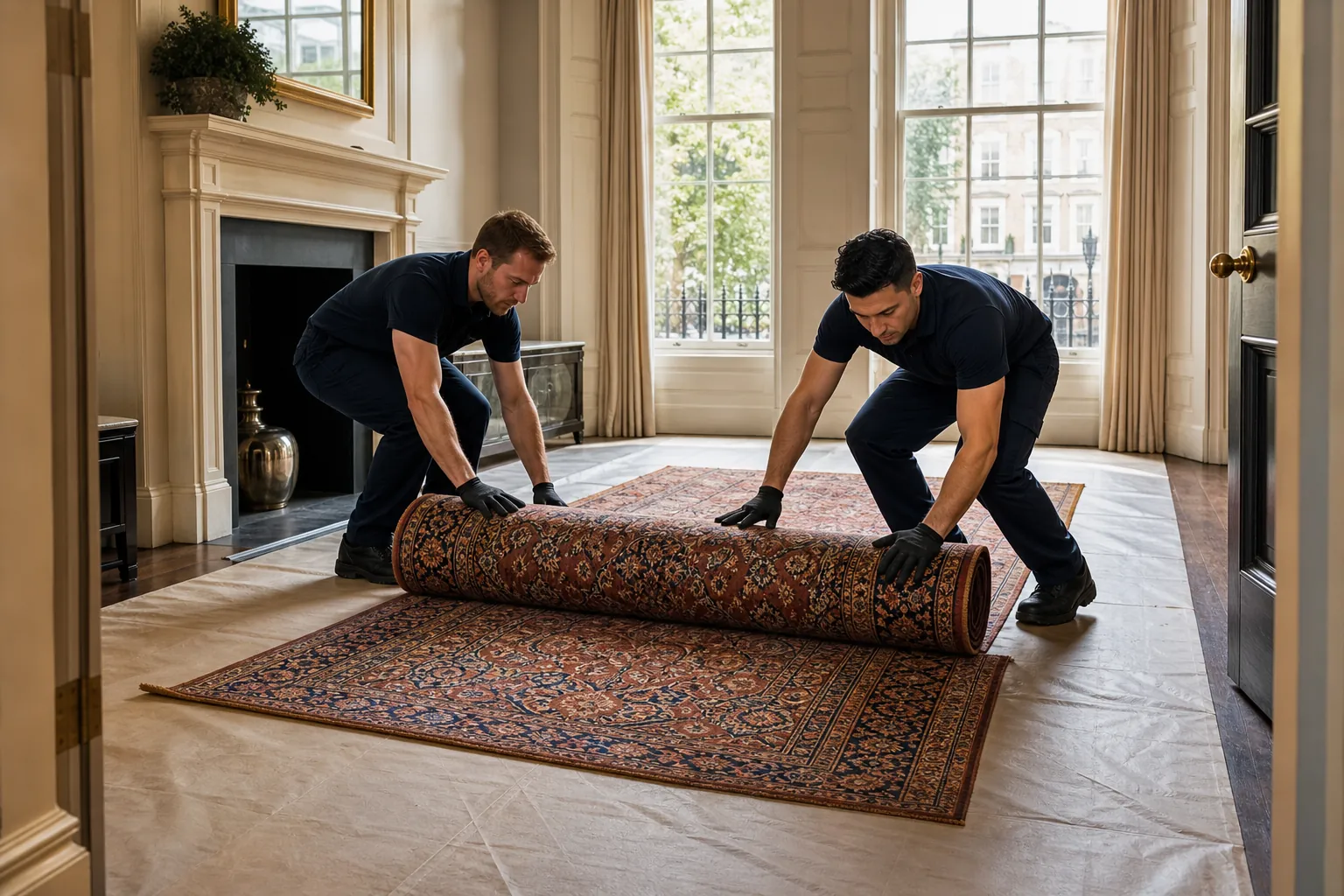
FOUR LIMITS TO CHECK
Warlingham handling starts below the visible surface
The pile is only one part of a traditional wool rug in a drawing room. Foundation, dyes and edge attachments can change what is practical.
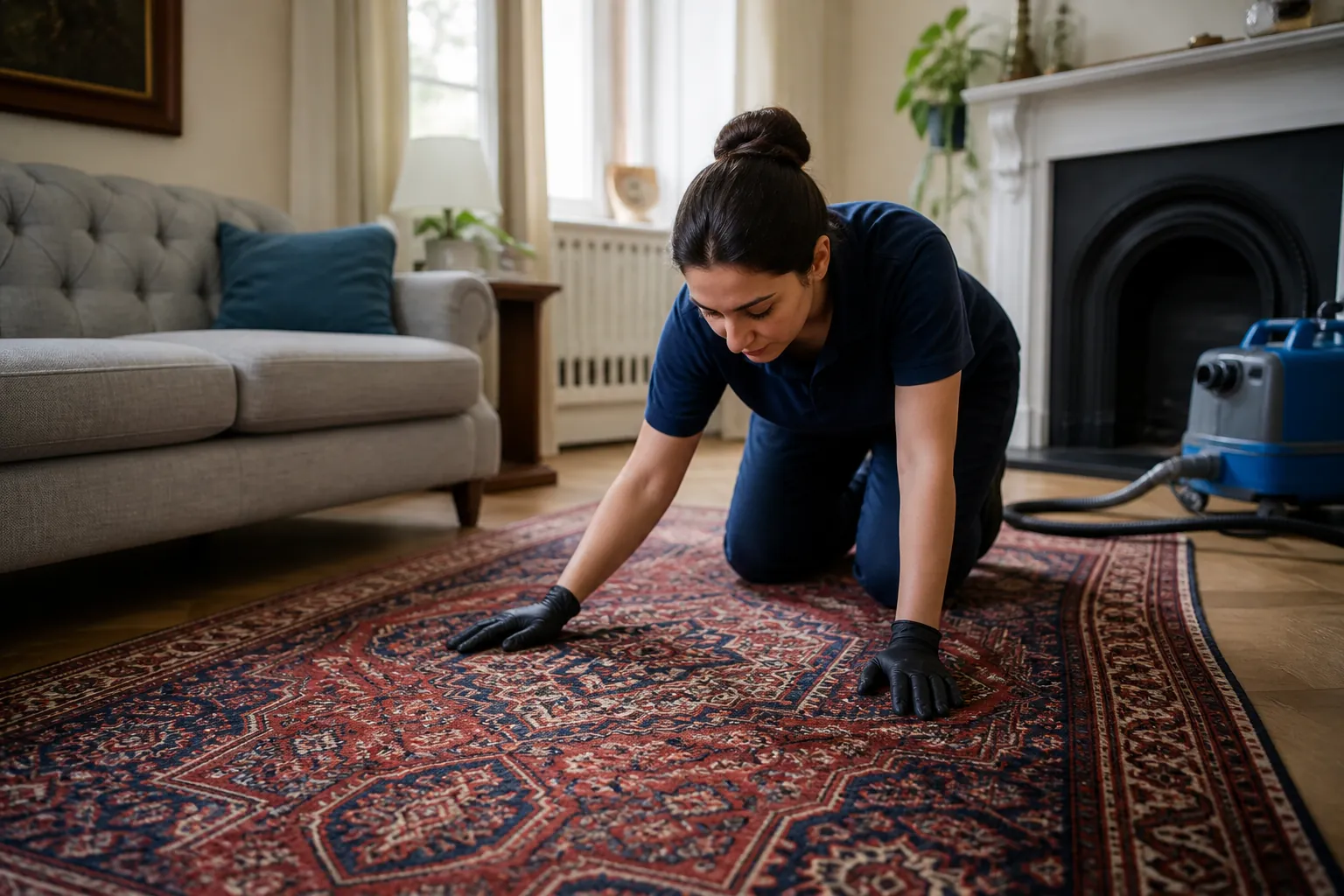
Absorbency and response
Fibre clues narrow the range of compatible products and agitation.
Stability across motifs
Contrasting dyes and faded areas deserve separate observation.
Weight and construction
Knotting, tufting or machine weaving affects moisture and handling.
Fringe, binding and repairs
Existing damage is recorded so cleaning is not confused with restoration.
READ THE CHANGE BEFORE TREATING IT
Warlingham photographs should distinguish soil from damage
Dry grit, edge wear and an uncertain colour change may involve loose particles, transferred material, altered dye, crushed pile or permanent fibre wear. These categories can look similar in a phone image but carry different outcome limits. We document the unaffected field as well as the priority area so improvement can be judged against a fair reference.
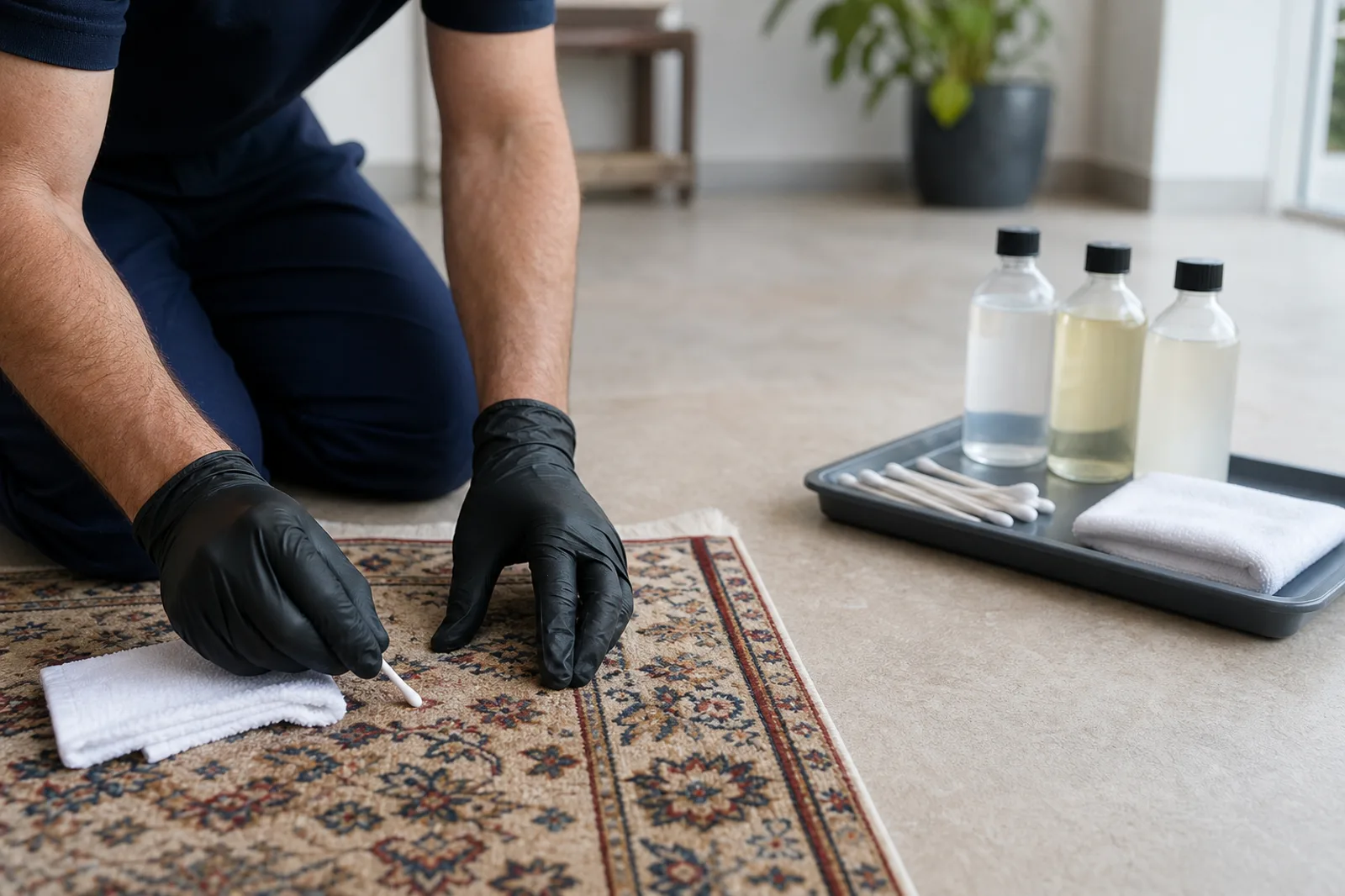
ODOUR, DEPTH AND PRODUCT HISTORY
A smell is evidence, not a diagnosis
For Warlingham, describe where an odour is strongest, when it appears and whether liquid may have reached the foundation, backing or stone flags. List every powder, spray, detergent or machine already used. This protects the next assessment from hidden residue and prevents an unsupported promise.
- Map the affected area on both face and reverse
- Check the floor separately after lifting is agreed
- Record contamination age and repeat incidents
- Set expectations only after construction is understood
SEVEN CHECKPOINTS FOR WARLINGHAM
Give a traditional rug a conservation-minded sequence
Construction-led judgement keeps dry grit, edge wear and an uncertain colour change in context while construction and room conditions set the safe boundaries.
-
01
Trace grit
Follow the mineral trail from exposed entrance across the field
-
02
Read provenance
Note construction clues, old repairs and the condition of ends
-
03
Secure weak points
Keep worn selvedges and detached fringe out of damaging handling
-
04
Test colour
Investigate the uncertain tonal area before wider work
-
05
Choose restraint
Match moisture and movement to wool, dyes and foundation
-
06
Examine motifs
Compare borders, central field and the recorded colour shift
-
07
Reunite with stone
Check the rug, underlay and flagstones before final placement
DESCRIBE THE WARLINGHAM RUG
Choose observations, then let assessment connect them
The buttons create a concise evidence note for a traditional wool rug in a drawing room. They are not a remote diagnosis and do not prescribe chemistry.
BUILD A USEFUL WARLINGHAM QUOTE PACK
One measured overview plus focused evidence
A strong request lets us understand the textile before discussing availability. Send the basics together, then add detail only where it changes the scope.
- Warlingham postcode and preferred contact details
- Length measured along the longest edge
- Width at the widest point
- A square-on photograph of the complete rug
- Close-ups and reverse views of dry grit, edge wear and an uncertain colour change
- Label, fibre information or “unknown”
- Fringe, binding and repair photographs
- Names of products previously applied
- Notes on long approaches, steps and weather-exposed entrances
Four points before booking in Warlingham
Is every dark patch removable?
No. Soil may lift, while abrasion, dye loss or pile-direction shading can remain because they are changes to the textile.
Are valuable or hand-knotted pieces automatically accepted?
They are considered individually. Construction, colour stability, repairs and present condition decide whether a safe scope can be offered.
Why is there no fixed drying promise?
Warlingham room conditions, fibre absorbency, pile depth and the chosen moisture level all influence the handover.
What happens to furniture?
We agree the preparation and return plan for this room; heavy items should not be replaced until the rug is ready.
WARLINGHAM SIZE GUIDE
Area is the starting point, not the whole quotation
These current guide figures preserve a simple size reference. The confirmed amount can also reflect fibre, construction, dry grit, edge wear and an uncertain colour change, access through village cottages, gated houses and rural-edge properties, and any optional work that is discussed and accepted.
WARLINGHAM RUG QUESTIONS
Practical questions from rural-edge properties
What should the first Warlingham photograph show?
Include the whole traditional wool rug in a drawing room and enough surrounding floor to show scale, furniture and the walking route.
Does dry grit, edge wear and an uncertain colour change mean the rug needs one particular treatment?
No. That description begins the assessment; fibre, dyes, foundation and residue still need to be considered before a route is chosen.
Why mention stone flags beneath the rug?
The support may hold moisture, transfer colour or impose placement limits. It is documented separately and is not treated as part of the rug by assumption.
Which access details matter in Warlingham?
Tell us about long approaches, steps and weather-exposed entrances, along with the rug’s rolled dimensions and anything that narrows the carrying path.
Will cleaning rebuild a thinning selvedge?
No. Soil reduction and textile repair are separate disciplines; missing or weakened structure may need a specialist.
How should I photograph the questionable colour?
Use indirect daylight, include a neighbouring motif, and avoid automatic filters that alter tone.
How is drying time estimated for this Warlingham rug?
It follows fibre absorbency, pile density, backing, treatment, room temperature and airflow. A fixed postcode-based duration would be misleading.
Do stone flags alter the rug assessment?
They can affect temperature, retained damp and underlay condition, so the floor is noted without confusing it with the textile.
Why give the distance from gate to drawing room?
A long outdoor carry exposes a heavy roll to weather and changes the handling plan.
How does the £68 minimum visit charge apply in Warlingham?
It is the current visit minimum. Eligible combined work may contribute only after the booked scope and address have been confirmed.
A CLEARER WARLINGHAM START
Share the rug, the concern and the route into the room
Measurements and honest photographs give us a better basis for fibre-aware advice and a scoped quotation.
