
NOTTING HILL · START WITH THE ACTUAL RUG
Rug Cleaning Planned for Notting Hill Homes
A rug beside a busy entrance has a different story from one kept beneath a dining table. We begin with the textile in front of us—its weave, colours, weak points and use—then account for the route through the property.
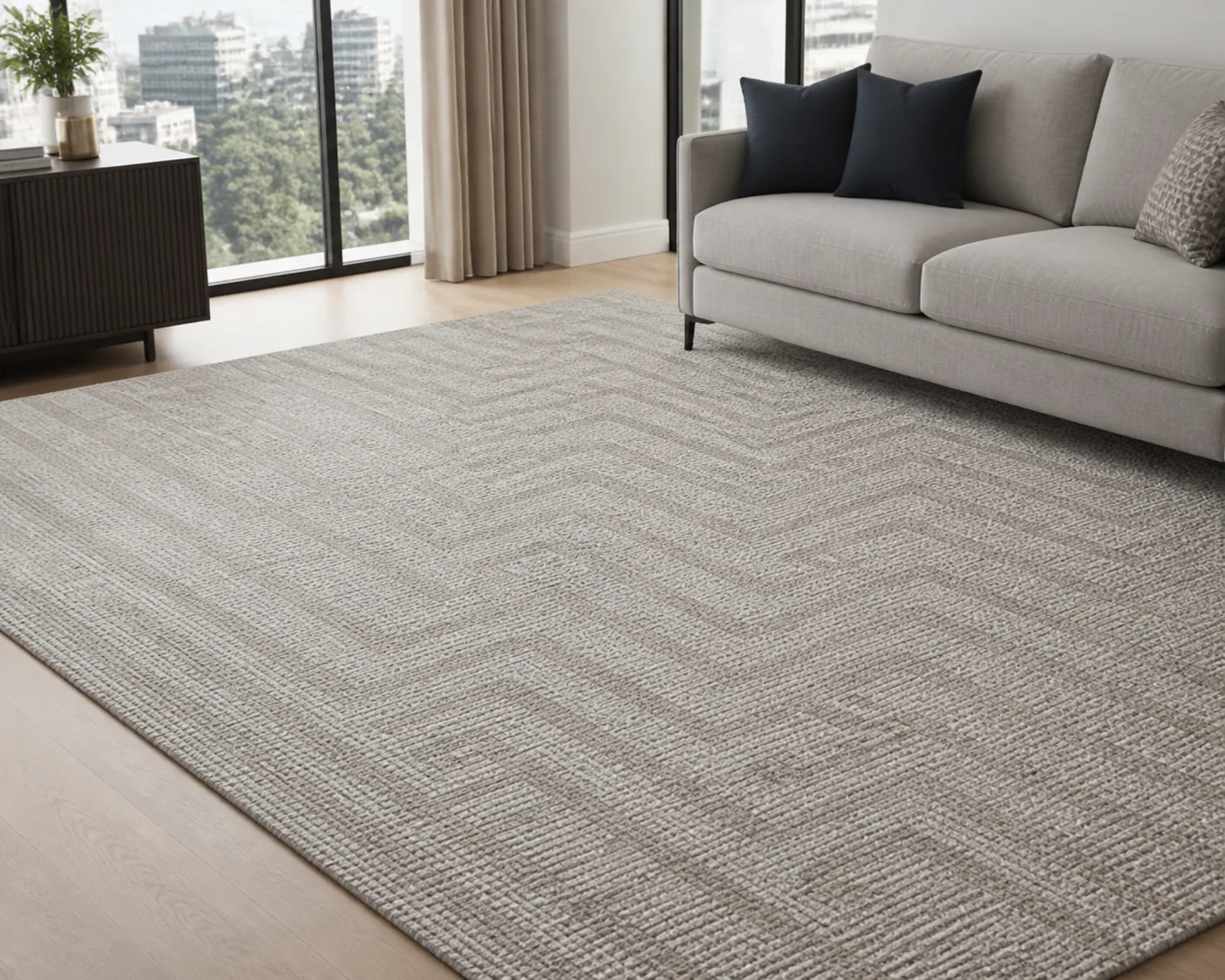
- Show the rug from edge to edge in its usual room
- Photograph stains, worn lanes and colour changes separately
- Share the care label and underside when they are easy to reach
- Flag communal doors, stairs, tight landings or limited loading time
BUILD A USEFUL FIRST BRIEF
Pick the facts you know, not the method you expect
These prompts help us understand what requires attention. They cannot replace inspection or confirm that a particular treatment is suitable.
BEFORE YOU BOOK IN NOTTING HILL
Ten questions worth resolving early
Which pictures make an estimate more useful?
Include one straight, complete view, a room photograph for scale and close shots of each concern. Add the underside, label, fringe and corners only when they can be reached without risky lifting.
Why are you asking about the room beneath the rug?
Polished boards, carpet and delicate stone each affect protection and handling. The answer helps us plan the working area; it does not identify the rug fibre.
Will a visible stain definitely come out?
No responsible assessment can promise that. A dark area might include residue, dye loss, abrasion or a chemical change as well as removable contamination.
Do shared entrances affect a Notting Hill appointment?
They can. Entry codes, lift rules, narrow communal stairs and loading restrictions may change arrival timing or the number of people needed for safe movement.
Is the manufacturer’s label enough to choose treatment?
It is one clue. Colour behaviour, foundation, repairs, ageing and previous products can introduce limits that the label does not describe.
Should I use a stain remover while waiting?
It is usually better to stop and report what has already been applied. Extra chemistry can spread the mark, leave residue or complicate later testing.
What if the fringe is already loose?
Show the whole affected edge before the visit. Unravelling, weak binding or an old repair may require restricted handling and a revised scope.
How should I describe an odour?
Mark its position, when it appeared and any likely cause. Mention whether it changes in warm or damp weather; smell alone cannot reveal the depth of the source.
When will the rug be ready for normal use?
That guidance follows the chosen process and room conditions. Yarn absorbency, density, backing, ventilation and temperature prevent a reliable universal time.
Are the displayed prices final quotations?
No. They are measured-area guides. Construction, condition, handling access and separately requested work are considered when the actual quotation is prepared.
A NOTTING HILL ROOM RECORD
Describe what the doorway photograph cannot show
Consider a runner leading from a garden flat entrance into a reception room. Fine outdoor grit is concentrated at one end, a pale border looks fragile, and the rug sits on sealed floorboards. The address alone tells us none of those useful facts.
Separate condition from cleaning ambition. The customer records the traffic lane, an old tea mark and the slightly rippled corner as three different observations. This avoids presenting every irregularity as removable dirt.
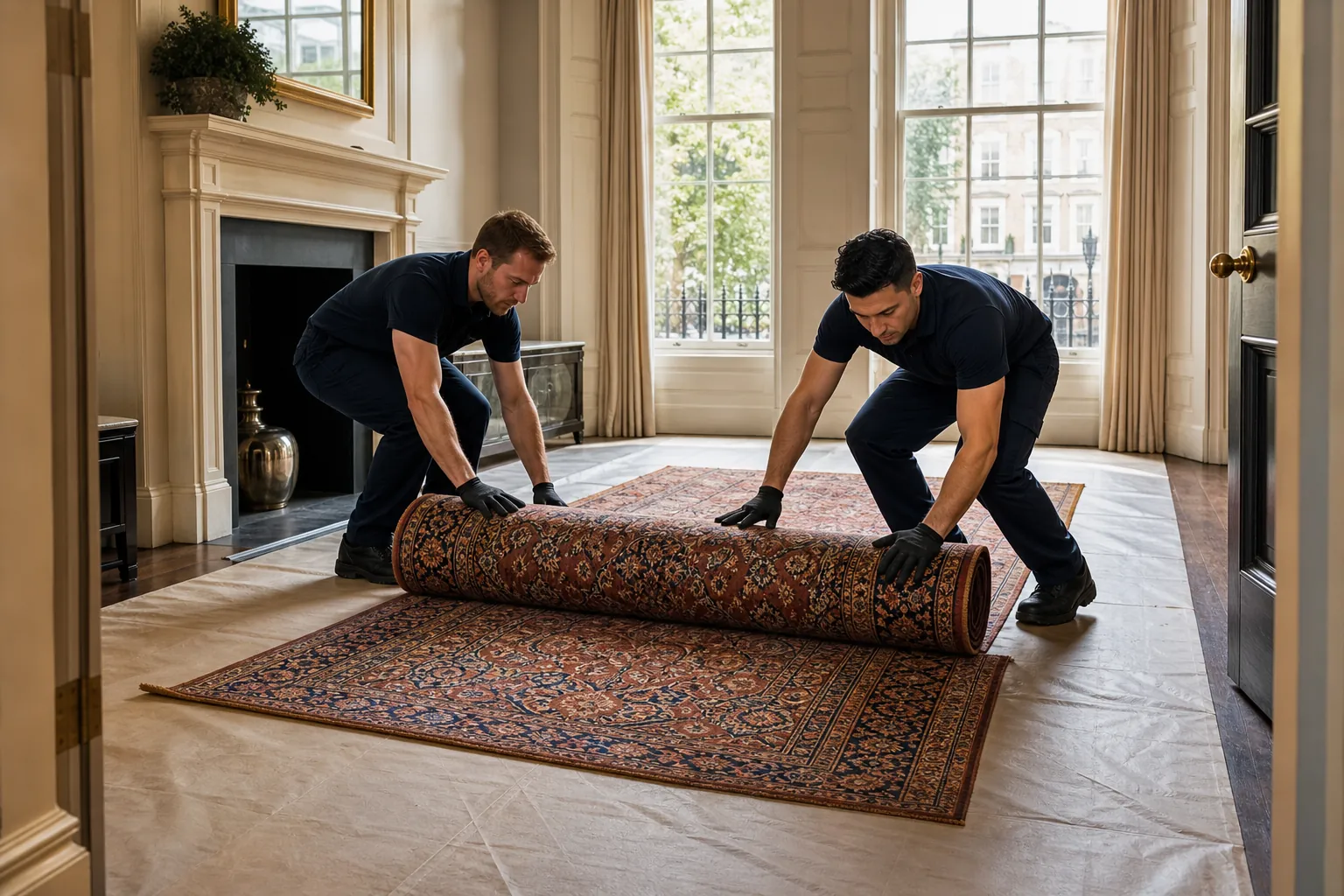
The access note covers two exterior steps, a bend inside the hall and the nearest legal loading point. With dimensions and images attached, the initial conversation can focus on a safe, proportionate route.
A practical rug file for the visit
Purpose: Explain whether the rug is decorative, heavily used, under a table or part of a busy entrance route.
Dimensions: Measure the longest and widest points rather than estimating from the room size.
Overview: Take a daylight image that keeps the complete outline and every corner visible.
Priority map: Give each spill, traffic patch, pet event or smell its own location and history.
Yarn evidence: Copy wording from the label instead of guessing from appearance.
Underside: Note latex, woven foundation, loose backing or staining only where it is safely visible.
Colour: Point out saturated reds, deep blues, pale borders and any earlier bleeding.
Edges: Capture missing stitches, curling, weakened fringe and damage from doors or vacuum heads.
Past attempts: Name household sprays, powders, machines or previous professional work as accurately as possible.
Subfloor: Identify the finish beneath the rug so protective handling can be discussed.
Clearance: Say which chair, sofa or table legs remain on the textile.
Building route: Include concierge requirements, controlled parking and limitations on lift use.
Expectation: Distinguish hygiene, appearance, an accident response and odour investigation.
Drying options: Mention whether windows open and whether the room must return to use quickly.
Quotation boundary: Confirm which rug and concerns are included, plus any extras requiring separate agreement.
Handover: Keep space available for a final review and follow the furniture-return advice provided.
MEASURED-AREA GUIDE
Size opens the estimate; the rug completes it
Use the longest measurements to find the closest band. We then consider the weave, current condition, access route and any additional request before confirming what the visit covers.
READ THE TEXTILE AS A WHOLE
Four checks shape one cautious decision
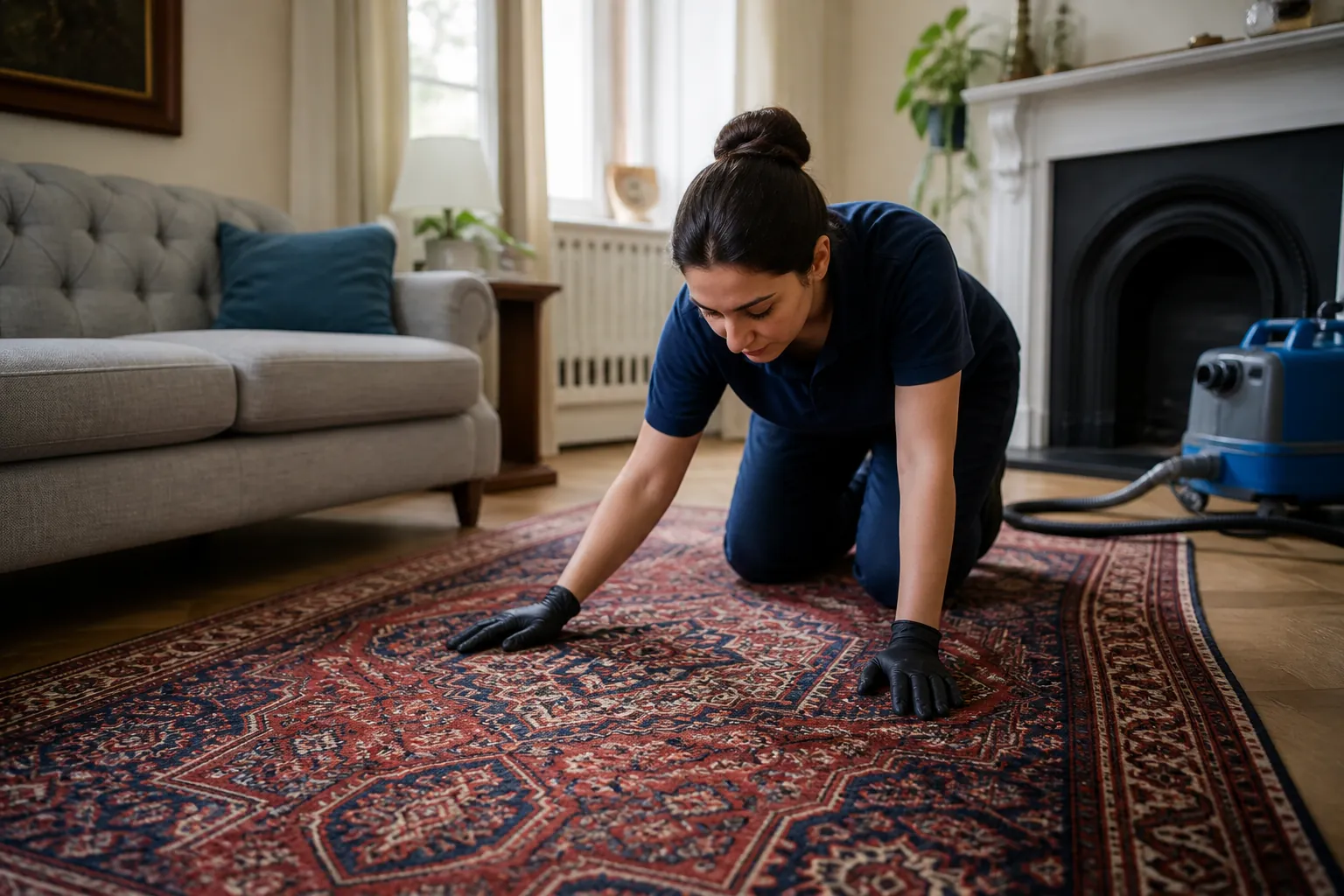
A familiar-looking rug can combine several materials and techniques. We connect yarn clues with colour, physical build and vulnerable details instead of treating any single feature as decisive.
How fibres react
Material characteristics influence wetting, movement and finishing limits.
What may migrate
Contrasts and unstable areas can require testing and tighter control.
What supports the face
Knotted, woven and tufted builds behave differently beneath the visible pile.
Where handling changes
Fringe, binding, repairs, backing and distorted corners are logged before movement.
MAKE THE FIRST MESSAGE COUNT
Nine details for a clearer Notting Hill quotation
- The postcode and suitable appointment windows
- Length and width at the widest points
- A full photograph taken square to the rug
- Individual close-ups of priority areas
- Label wording and an accessible reverse view
- Existing faults along edges or fringe
- Known materials and manufacturing details
- Spill history and products already attempted
- Doorways, stairs, parking and furniture constraints
Short answers before you start
Can a photograph confirm the safest method?
No. It supports triage and preparation, while the final route depends on checks of the physical rug.
Is every darker area a cleaning problem?
No. Pile direction, fading and wear can change how light reflects without being loose contamination.
Who decides when furniture returns?
The handover guidance is based on the rug’s condition, the treatment completed and the protected surface underneath.
Can odour work be assumed in the base scope?
No. Source, spread and feasible treatment need their own assessment and agreement.
FROM ARRIVAL TO HANDOVER
A sequence with decisions at every stage
The order is consistent enough to plan, yet flexible enough to respect an individual textile. Findings during inspection can narrow or redirect the work.
- 01
Survey
Confirm measurements, present faults and the requested priorities.
- 02
Test
Investigate material and colour response where appropriate.
- 03
Prepare
Address accessible dry debris and protect the surrounding room.
- 04
Treat
Work within the limits supported by the textile assessment.
- 05
Finish
Manage pile, edges and retained moisture without overworking them.
- 06
Review
Compare priority zones with the documented starting condition.
- 07
Return
Explain ventilation, use and furniture timing for this room.
VISIBLE CHANGE
A mark may tell more than one story
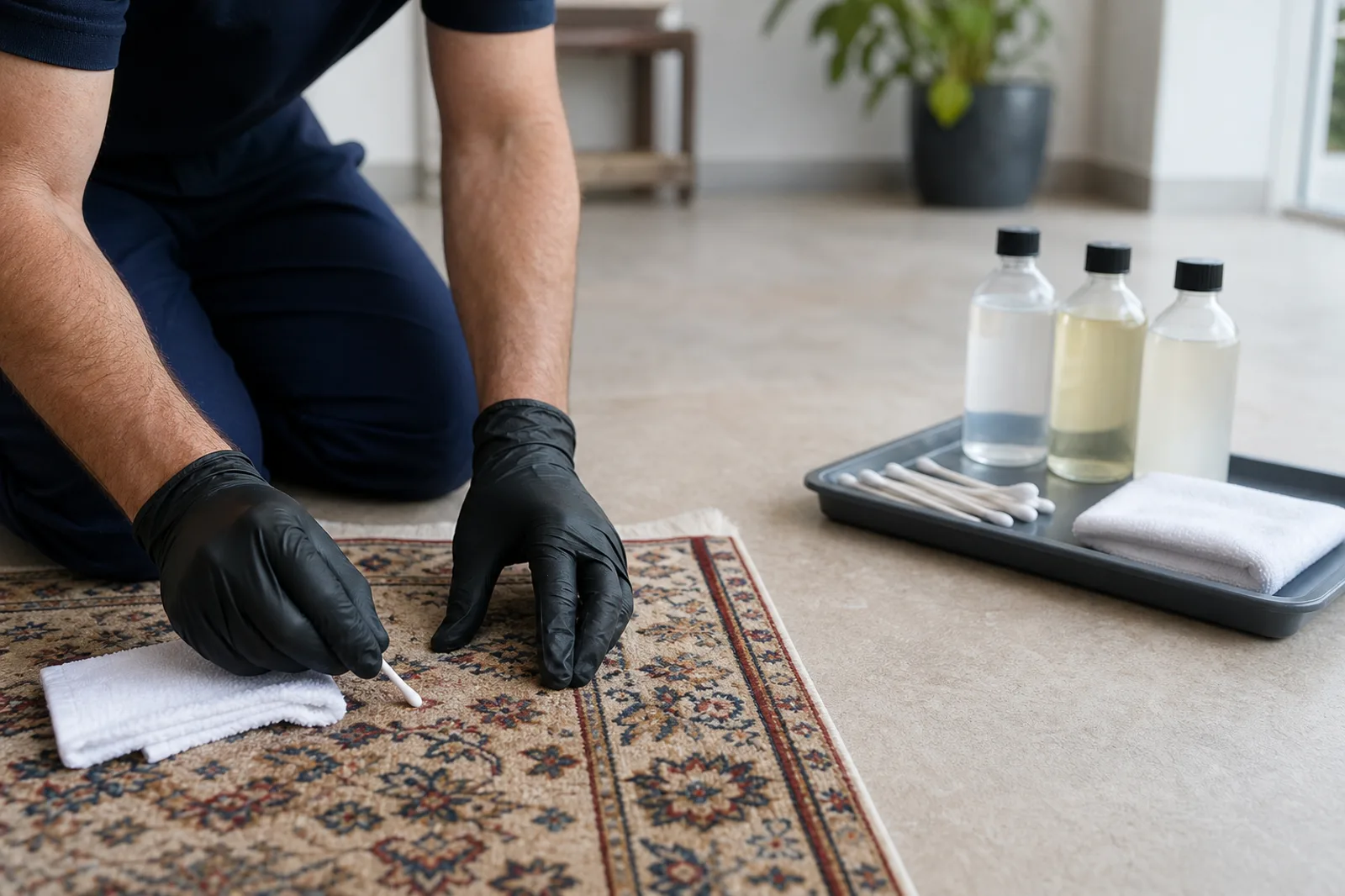
A discoloured patch can combine contamination with abrasion, dye movement or a previous chemical attempt. Mapping its boundary and history helps keep the expected outcome realistic.
SMELL AND RESIDUE
Follow the evidence through the rug
Odour can sit in the face yarn, foundation, underside or nearby floor. Report where it is strongest and what happened there instead of masking it before assessment.
- Mark the source area on a full-rug photograph
- List liquids and products connected with the incident
- Say whether the underside or subfloor was affected
- Keep deodorising outcomes conditional on what is found
READY TO PREPARE THE BRIEF?
