
Builders’ Dust Keeps Coming Back: How to Remove Fine Dust Properly
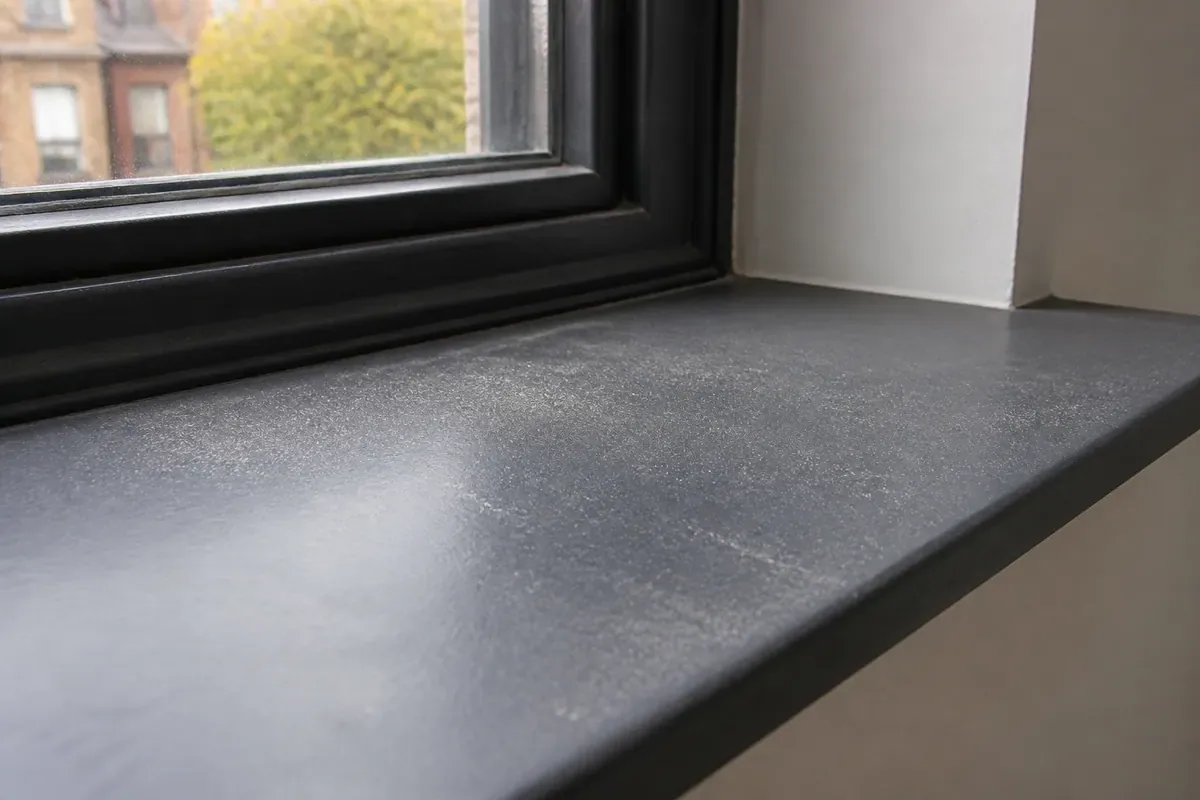
Builders’ dust keeps coming back because fine particles remain on high ledges, inside vents and joinery, in carpet edges and in moving air. Dry dusting or using a vacuum that leaks fine particles simply redistributes it. Remove debris first, capture dust from high to low with a sealed HEPA-filtered vacuum, damp-wipe suitable hard surfaces with frequently changed cloths, then repeat after particles have settled. Do not begin until the building work and active sanding are finished.
Plaster dust is not ordinary household dust
Fine mineral dust penetrates gaps and can scratch high-gloss, glass and finished timber when rubbed. Cement and silica-containing dust also have inhalation hazards. Keep unprotected people out, ventilate appropriately and use suitable respiratory protection selected for the exposure. Heavy occupational contamination belongs with trained specialists, not a domestic feather duster.
Alesta’s after-builders cleaning service is the primary route when the property needs systematic fine-dust removal after renovation.
Wait for the dirty work to be genuinely complete
Confirm sanding, drilling, cutting and snagging are finished. Ask contractors to remove tools, offcuts and waste. Cleaning around ongoing work guarantees redeposition and can damage a fresh finish. Heating and ventilation settings may also continue moving dust, so coordinate with the site manager before starting.
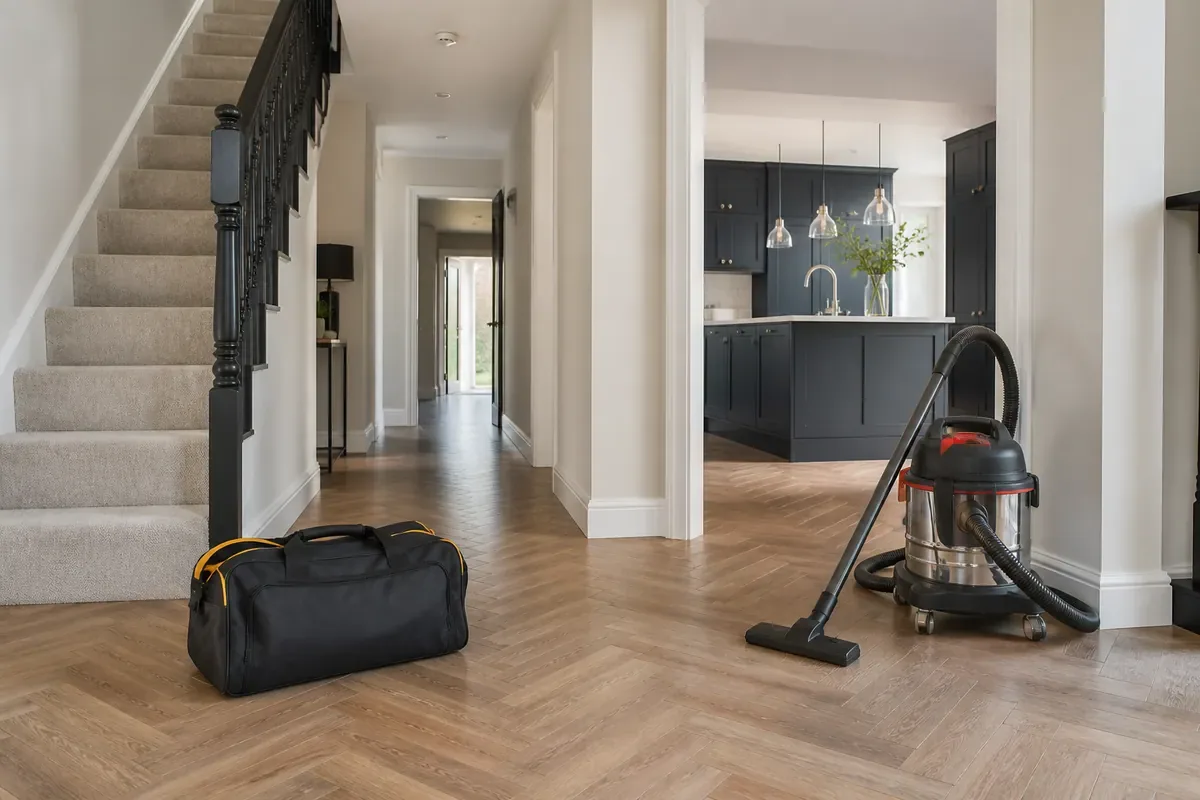
Divide the job into three passes
Pass one: debris and heavy deposits
Remove packaging, protective film and loose debris through the proper waste route. Do not vacuum nails, wet plaster or large rubble with a domestic machine. Check that screws and sharp fragments are not hidden in carpet or corners.
Pass two: high-to-low dust capture
Vacuum ceiling lines, tops of frames, cupboards, pipes, radiators externally, skirting and floor edges using a sealed machine with suitable filtration. Work slowly. Empty or change the collector outside the cleaned area according to the machine instructions.
Pass three: surface-specific finishing
Damp-wipe compatible hard surfaces with folded microfibre cloths, turning to a clean face frequently. Rinse or replace cloths rather than moving grey slurry between rooms. Clean floors last, then return after settling for inspection and a second light pass.
The white-cloth map
After the first pass, use separate clean white cloths on top of doors, inside window reveals, shelving, socket tops externally and cabinet interiors. Label the worst locations. This is more useful than wiping random central surfaces. Never insert cloths into electrical fittings, vents or live equipment.
Protect new finishes from the cleaning method
Fresh paint may not be fully cured, natural stone can react to acids, and new wood finishes can watermark. Obtain product and curing information from the installer. Test in a hidden place. Do not scrape paint spots with metal blades unless the surface manufacturer approves the method.
Windows and frames need several clean tools
Vacuum tracks and hinges before wet cleaning. Grit caught in one cloth can scratch every pane thereafter. Use separate cloths for frames and glass. Remove labels and adhesive with a product compatible with the glazing and coating, not a universal solvent.
Carpets can become a dust reservoir
Fine dust works into pile edges and under thresholds. Multiple slow HEPA-filtered vacuum passes in different directions may be needed. If dust or spills have entered the textile deeply, professional carpet cleaning may follow dry capture, but wetting loose plaster dust too early can form difficult residue.
Ventilation and filters
Check manufacturer-accessible extractor and HVAC filters, but do not open ductwork or mechanical plant. A visibly loaded disposable filter should be replaced with the correct specification. Running fans at maximum while dusting can spread particles; plan air movement to exhaust safely without contaminating finished rooms.
When dust returns overnight
Look for an uncleaned high surface, open service void, dusty soft furnishing, overloaded vacuum filter or continued work next door. Close finished rooms while another zone is cleaned. A second settling pass is normal; identical heavy deposits each morning indicate an unresolved source.
Rubbish, rubble and cleaning are separate
Bagged dust, timber, plasterboard, paint and rubble have different disposal requirements. Arrange appropriate waste removal before detailed cleaning. Do not overload household bins or leave contractor waste in communal areas.
Handover tests that have meaning
Inspect in side light, run clean cloths across agreed high ledges and check floor edges, tracks and cupboard interiors. Ask whether the quote includes a return settling pass. The goal is not zero airborne particles forever; it is removal of construction residue to a condition suitable for occupation and ordinary maintenance.
Once the source is gone, a regular domestic cleaning routine can control ordinary dust. It should not be used to finish a renovation clean room by room over several months.
Room sealing prevents clean zones being recontaminated
Work from the least contaminated finished room towards the exit, closing doors after inspection. Use clean overshoes and tools when entering completed zones. If contractors must return, agree a protected route. Walking repeatedly through dust and then across a clean floor defeats high-to-low sequencing.
Vacuum specification matters
A machine labelled “HEPA filter” can still leak around seals or exhaust if not designed and maintained as a complete system. Use equipment appropriate for fine construction dust and the manufacturer’s bag or filter. Do not use a domestic bagless vacuum until it clogs; loss of suction and filter damage can release fine particles.
Wet wiping without slurry
Mist the cloth where appropriate rather than spraying walls, sockets or fresh joinery. Fold it into clean faces and retire it as soon as grey residue covers them. Two buckets or pre-folded cloth sets prevent dirty rinse water returning to surfaces. Dry compatible finishes afterwards to reveal streaks and remaining dust.
Soft furnishings brought back too soon
Curtains, rugs, mattresses and sofas absorb airborne dust during work. Keep them wrapped or outside the work zone until high surfaces are captured. If they stayed in place, vacuum or clean them according to material instructions before declaring the room finished. Otherwise they release dust whenever moved.
Questions for the contractor and cleaner
- Who removes protective film and construction waste?
- When is the final sanding complete?
- Which new finishes have curing restrictions?
- Are ventilation filters being changed?
- Does the cleaning quote include a settling pass?
- How will fine dust be contained between rooms?
Written answers align responsibility and prevent the cleaner arriving while dust-generating snagging continues.
Plan the final reoccupation
Do not bring clothes, bedding and food back while ledges still fail the cloth check. Complete the dirty-to-clean route, ventilate and allow damp-cleaned finishes to dry. Replace clean textiles only after cupboards and wardrobes are dust-free. If occupants have respiratory conditions, ask a health professional about appropriate precautions rather than assuming an ordinary mask makes heavy residual dust acceptable.
