
Dishwasher Smells Bad: Clean These Five Places in the Right Order
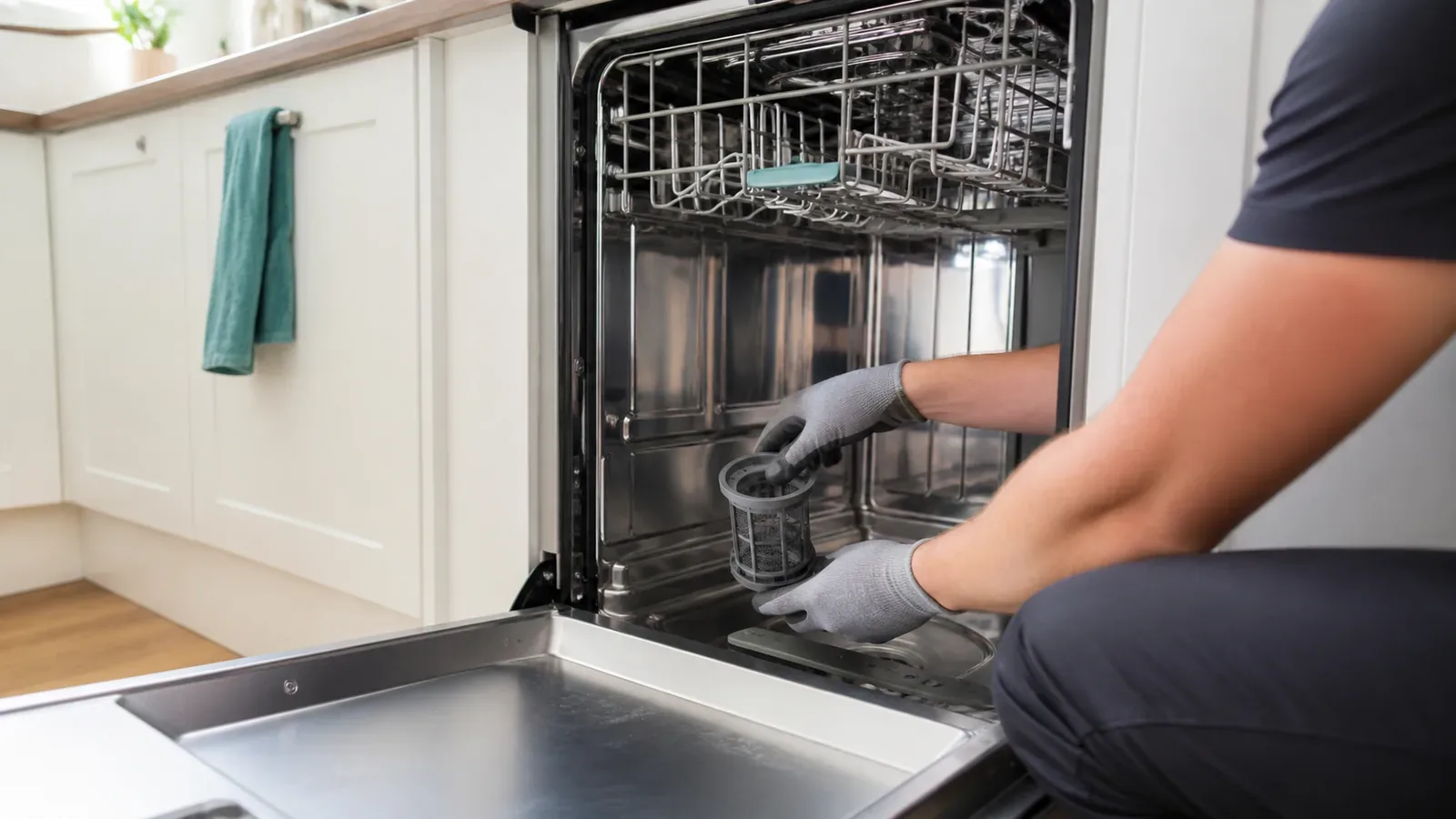
A dishwasher usually smells because food and grease are trapped in the filter area, spray arms, door seal or drain connection. Clean those places in that order, then run the hottest maintenance programme the manufacturer permits. If dirty water returns after the cycle, the machine does not drain fully, or the smell is hot plastic or electrical insulation, stop using it and arrange a repair.
Empty it and look at the water first
Remove the dishes and lower rack. A small amount of clean water may sit below some filters by design, but a visible pool of cloudy water above the sump points to incomplete drainage. Photograph the level before touching anything. If the water is hot, wait. Isolate the appliance at its accessible switch before putting hands near the filter.
A sewage-like smell that appears when the sink is used may come through a shared waste connection. A rancid food smell confined to the closed machine is more likely internal residue. Burnt wiring has a sharp, unmistakably wrong character; do not cover it with a cleaning cycle.
1. Wash the filter without losing debris into the sump
Follow the handbook to unlock the filter assembly. Lift slowly and keep it upright. Scrape solids into the bin, then wash removable parts with warm water and a soft brush. Avoid knives, wire wool and forcing a mesh screen. Check that glass fragments are not hidden in grease before using bare fingers.
Wipe the accessible filter well with a damp cloth, working outwards. Do not push rice, labels or bone fragments deeper. If an impeller cover is user-removable, follow the exact model instructions; otherwise leave it closed. Refit every piece flat and locked. A filter sitting proud can allow debris into the pump and interfere with the lower spray arm.
2. Check each spray arm
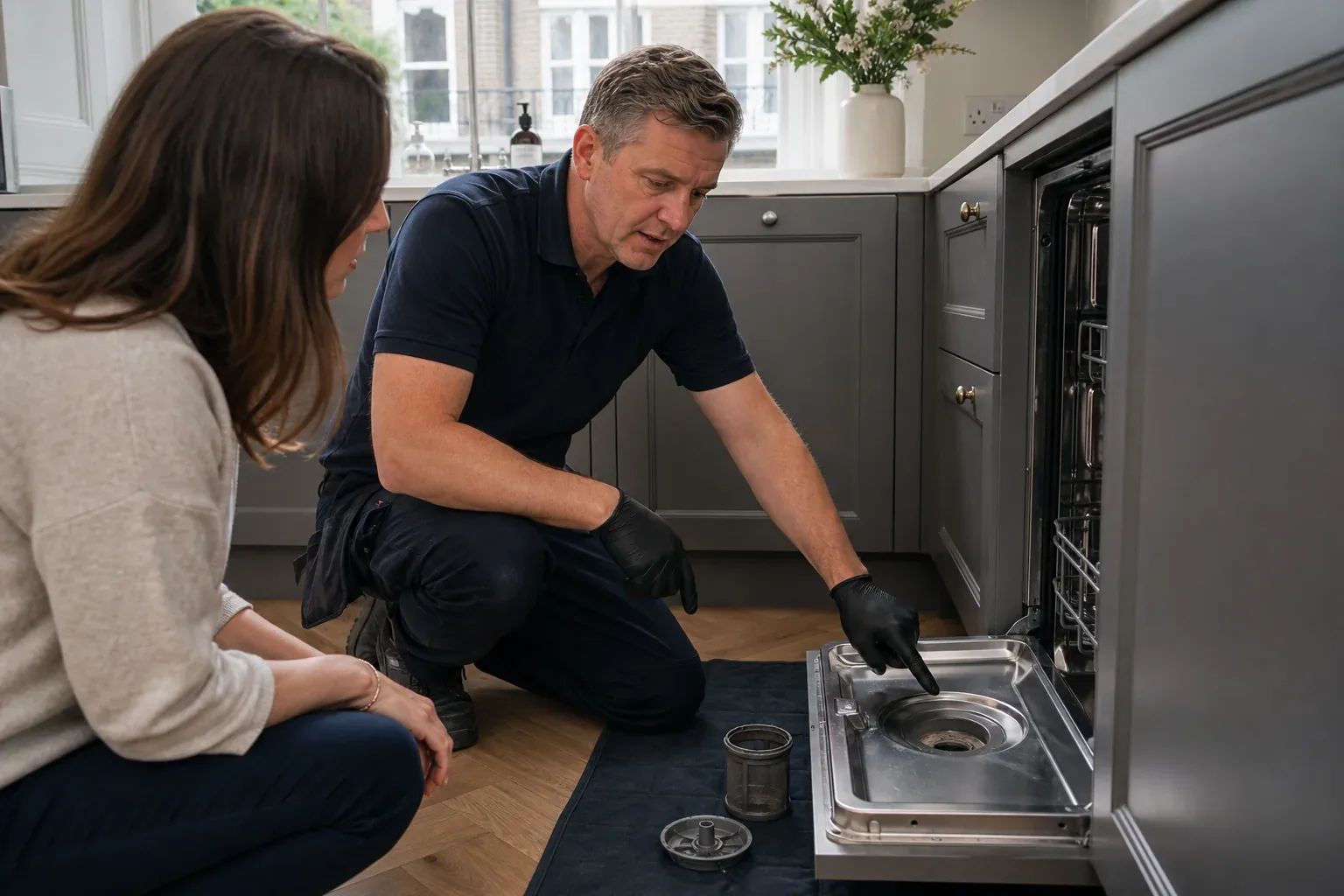
Remove an arm only where the manual shows a tool-free method. Hold it under a tap and look through the jets. Seeds, limescale and paper can block one side, leaving dirty water to recirculate. Use a wooden cocktail stick or soft brush if permitted; a metal drill bit enlarges holes and changes the spray pattern.
Turn the refitted arm by hand before replacing the rack. A tall plate, pan handle or loose utensil can prevent rotation, producing poorly rinsed food that later smells. Inspect the arm for a split seam: water escaping through a crack reduces pressure even when the holes look clean.
3. Follow the seal all the way to the bottom
Door gaskets collect a dark line where the wash spray does not reach. Wipe folds with a cloth and a mild product approved for the material. Pay attention to the lower door lip and hinge corners; they are easy to miss because they sit below the visible stainless cavity. Never mix bleach, descaler, vinegar or proprietary dishwasher chemicals.
A loose or torn seal is not improved by scrubbing. Photograph the damage and avoid stretching it back into place unless the manual gives a refitting procedure. Leakage during a cycle requires isolation and a dishwasher repair service, not another deodorising tablet.
4. Clean the detergent and rinse-aid zone
Old gel can set around the dispenser flap, especially after short low-temperature cycles. Wipe the accessible cup and check that a pan is not blocking it when the rack closes. Do not pour hand-washing liquid into the machine: its foam can escape through seals, interfere with level sensing and leave a stale residue.
Use the detergent type and dose recommended for the machine, local water and programme. More product is not automatically cleaner. Too much can leave film; too little may fail to deal with grease. Keep salt in the correct reservoir on models that use it, and clean spills from the cavity before a programme.
5. Inspect the route to the sink waste
Look at the visible drain hose without pulling a built-in appliance out. It should not be kinked or crushed. Its connection normally needs the high-loop or air-gap arrangement specified by the manufacturer so sink water cannot run backwards. If the smell began after a new waste-disposal unit or trap was fitted, mention that timing.
Run the kitchen tap and watch how quickly the sink clears. A slow sink and smelly dishwasher may share a downstream restriction. Fixed pipework belongs to a plumber; a pump fault belongs to appliance repair. Alesta’s domestic appliance repair team is the broader route when the source has not yet been separated.
Run one useful maintenance cycle
Once physical debris has been removed, run the manufacturer’s maintenance programme with the recommended machine cleaner. An empty hot cycle can loosen grease; it cannot grind through glass, repair a pump or correct backflow. Do not combine products in the hope of a stronger result.
At the end, listen for draining, open the door carefully and check whether water remains above the filter. Smell the clean cavity after steam has cleared. If the odour has gone but returns after the next load, examine loading, pre-scraping and programme choice rather than repeating chemicals every night.
Daily habits that prevent the smell
- Scrape bones, labels, rice and heavy food into the bin; full hand-rinsing is usually unnecessary.
- Load so spray arms rotate and the dispenser opens.
- Use a hot enough programme regularly if most cycles are eco or quick.
- Clean the filter at the interval in the manual, and sooner after a heavily soiled load.
- Leave the door slightly ajar after cooling where the manufacturer and household safety allow.
Surrounding worktops and the sink also need routine hygiene, but a regular kitchen clean should never be represented as internal appliance servicing.
Do not ignore the cupboard beside it
Moisture around a loose hose union can soak the cabinet base and create a musty smell even when the stainless cavity is clean. Use a torch from the accessible front edge and touch only dry, non-electrical surfaces. Swollen board, staining or active drips need prompt attention. Do not pull a connected built-in machine out alone; hoses and flooring can be damaged.
When smell means repair rather than cleaning
Book diagnosis if the machine leaves standing water, produces an error code, drains noisily, refills with dirty water, leaks, trips electricity or develops a burning smell. Note whether the smell appears before use, during heating or after draining. Provide the model number, a photograph of the water level and details of recent plumbing work.
Do not repeatedly run a blocked pump. Each cycle adds heat and contaminated water without clarifying the fault. A technician should test drainage, hose routing, pump operation and seals, then demonstrate a completed drain. The right finishing point is a machine that empties correctly and stays neutral between loads—not one temporarily perfumed by cleaner.
