
Garden Waste Disposal: Bags, Council Collections or a Clearance Team?
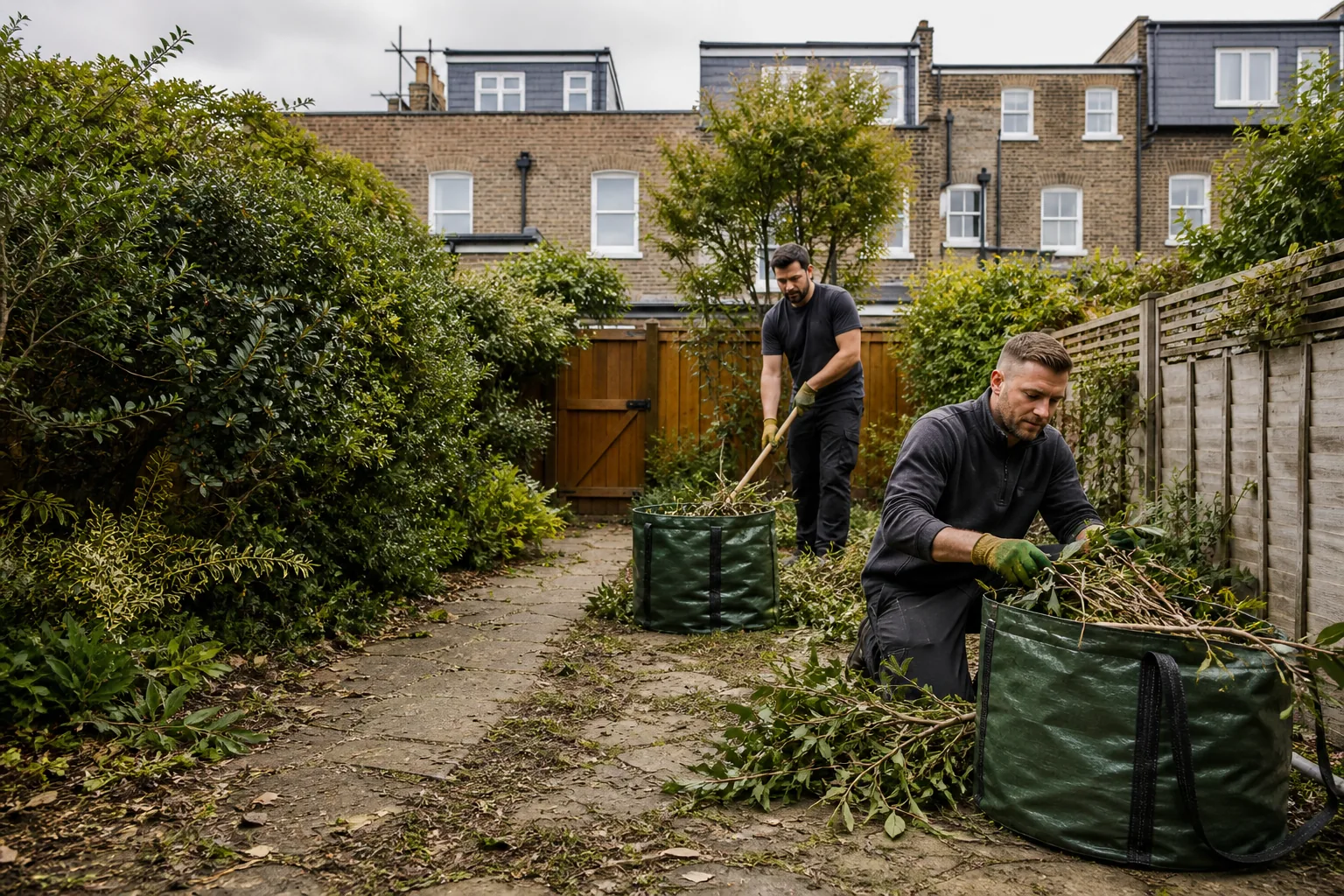
Use a council garden-waste collection for regular accepted cuttings, a household recycling centre for occasional self-delivered material, and a licensed clearance team for bulky volumes, mixed outdoor waste or difficult access. Bags are only a container, not a disposal route. Before choosing, separate green waste from soil, rubble, treated timber, chemicals and invasive plants; each can have different rules.
Identify the waste before choosing the vehicle
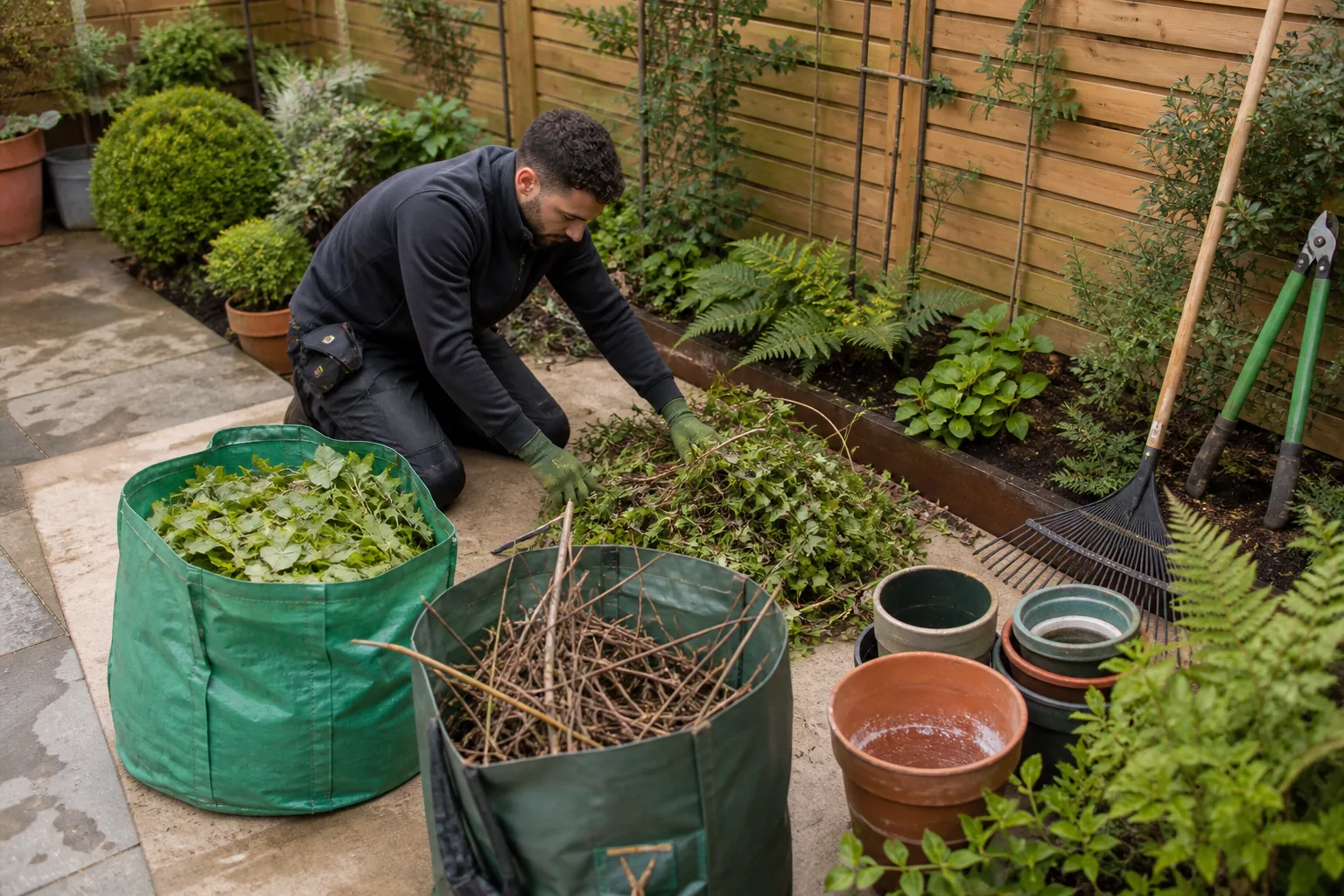
Make separate piles for grass and leaves, woody prunings, soil and turf, stones or concrete, timber, pots and plastics, electrical tools and hazardous products. Photograph the piles with scale. Do not hide heavy or prohibited items beneath hedge cuttings.
Check thorns, sharp wire, broken glass and animal contamination. Tell anyone collecting about them. Wet leaves and soil become much heavier than their dry appearance suggests, so a bag that closes may still be unsafe to lift.
Option one: council subscription or scheduled collection
Many councils operate paid garden-waste schemes using a bin, sack or seasonal schedule. Accepted materials, container rules and collection dates differ by borough. Check your council’s current page rather than copying a neighbour’s arrangement. Food, soil, large branches and plastic bags may be excluded.
This route suits predictable mowing and pruning where the household can store the approved container between collections. It is less useful for a one-off clearance that produces several cubic metres or material outside the scheme.
Option two: take it to a recycling centre
Household recycling centres can accept specified garden waste from eligible residents, subject to site, vehicle, booking and proof-of-address rules. Check opening times, van permits and whether trailers are allowed. Secure the load so branches cannot leave the vehicle.
Do not overload a car, block mirrors or put wet unsealed waste on seats. Wear gloves and use containers one person can handle. Commercial waste and waste carried for payment may follow different rules; be honest about its origin.
Option three: a clearance team
A professional team is practical when waste is bulky, must be cut down, passes through a home, includes mixed items or exceeds safe household lifting. The quote should identify labour, loading, disposal, access, parking and VAT. Ask where the waste goes and check appropriate carrier registration.
Alesta’s garden clearance service is the precise collection route for an outdoor clear-out. The earlier guide to what changes a London garden-clearance quote explains why two equal-looking piles can cost differently.
Bags, bins and builders’ sacks
Use containers designed for the material and collection method. Thin refuse sacks split on twigs and conceal dangerous contents. Reusable garden bags are useful for moving leaves around the property but are not accepted automatically by every collector. Builders’ bulk bags can hold volume but become immovable when filled with wet soil.
Never leave bags on the pavement without authorised collection. Label different waste types where several contractors are involved. Keep soil and rubble out of a green-waste bag unless the receiving service explicitly accepts them.
Branches and hedge arisings
Cut branches to the permitted size for a council scheme, using suitable tools from ground level. Do not climb an unstable ladder or attempt chainsaw work just to fit a bin. Tie bundles only if the collector specifies a safe method.
If the pruning itself is not done, coordinate with a hedge cutting and waste-planning service. Ask whether arisings are included; “trim the hedge” and “remove every branch” are separate scope items unless stated.
Soil, turf and rubble are heavy waste
Clean topsoil may be reusable locally, but do not move contaminated soil or advertise it without knowing its condition. Turf contains both organic matter and soil and may be excluded from a pure green stream. Stones, slabs and concrete need an inert or mixed-waste route.
A clearance vehicle can reach its legal payload while appearing half empty. Give dimensions and depth, not “a few bags”. Splitting heavy waste from foliage produces a fairer and safer estimate.
Treated timber and old garden furniture
Fencing, decking, sheds and furniture are not ordinary green waste. Paint, preservative, nails, roofing felt and glass change handling. Do not burn treated timber; domestic bonfires create smoke nuisance and can release harmful pollutants.
Reusable sound items may go through a legitimate reuse channel. Broken mixed items belong in licensed waste removal, subject to the provider’s accepted materials.
Invasive plants require specific control
Do not strim, compost or transport a plant you suspect is Japanese knotweed or another controlled invasive species until it is identified and current rules are checked. Small fragments can spread. Ordinary garden-waste assumptions are unsafe.
Seek specialist advice on on-site treatment and authorised disposal. Tell a clearance company before booking; never conceal suspect material in a green bag.
Can it be composted at home?
Healthy leaves, grass and suitable small prunings can become useful compost when balanced and managed. Exclude diseased material where guidance recommends, persistent weeds in seed, pet faeces, treated wood and cooked food. A heap needs air, moisture balance and enough space; dumping a wet grass mass creates odour rather than compost.
Chipping woody material may reduce volume, but machines introduce serious cutting and projectile hazards. Hire appropriate equipment and competence rather than improvising.
Your duty does not end at the gate
Householders should take reasonable steps to ensure waste goes to an authorised person. Record the business, registration details, date, material and amount. Keep an invoice or receipt. If an untraceable cheap collector fly-tips it, the original household may still face questions.
Avoid cash-only doorstep offers with no paperwork or disposal explanation. Legitimate collection costs include lawful handling; fly-tipping is not a discount service.
Choose by frequency, material and access
For weekly clippings accepted locally, a council scheme is simple. For one car-load and safe transport, a recycling centre can work. For a shed clear-out, heavy soil, long branches or a route through the home, price a licensed team. If several routes fit, compare time, lifting, vehicle cleaning and paperwork as well as the fee.
Finally, reduce the next load: compost suitable material, prune at manageable intervals, avoid unnecessary plastic pots and agree waste removal whenever garden work is booked. The cheapest garden waste is the material safely reused on site; the next cheapest is the load correctly separated before anyone has to sort it again.
Flat residents need a storage plan
Communal bin stores and balconies are not overflow depots. Ask the managing agent where approved garden containers can stand and whether lifts or corridors have booking rules. Keep damp waste away from fire routes and neighbouring doors while waiting for collection.
Keep the collection confirmation until every container has been removed and the communal route is left clean.
