
Converted and period flats
Old and newer wiring can meet behind later finishes. Photos of the accessory, room and consumer unit help frame the first visit.
Circuit · symptom · test · clear scope
Electrical work in a Westminster flat, mansion block or managed building starts with the circuit—not a guessed replacement part. Tell us what has changed, where it happens and what the consumer unit shows, so the visit can be matched to the likely testing, access and materials.
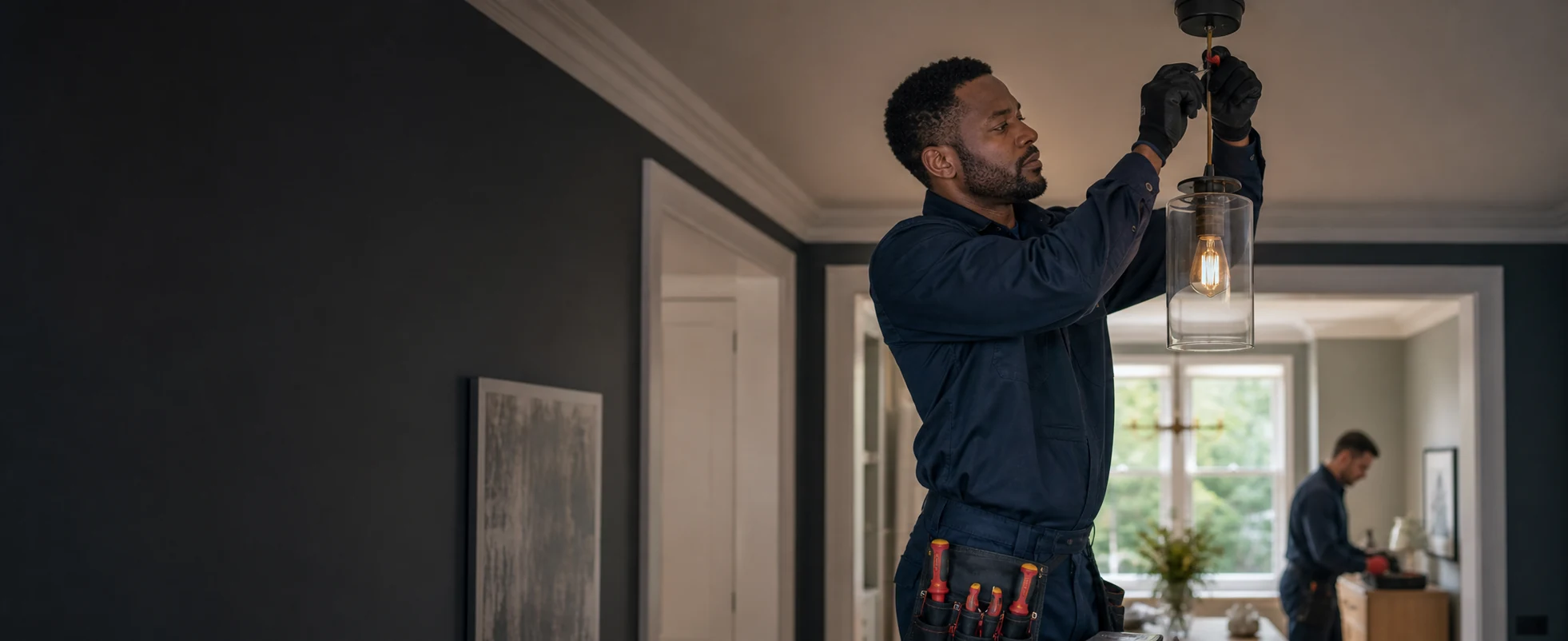
Start with the behaviour
Flickering, loss of power or repeated tripping can have more than one cause. The safe next step is to record what happens and leave covers in place for assessment.
| What you notice | Useful next step | Why assessment matters |
|---|---|---|
| One light flickers | Note whether it follows a switch, dimmer or particular lamp | The fitting, control, connection or supply could each be relevant |
| A circuit protective device operates repeatedly | Record the circuit label and what was in use; do not keep resetting it | Testing is needed before deciding whether the issue is an appliance or fixed wiring |
| A socket or switch feels hot, smells burnt or shows damage | Stop using it and seek professional help; avoid touching damaged parts | Heat damage can extend beyond the visible accessory |
| Several points lose power | List the affected rooms and whether other circuits still work | The pattern helps define the circuit and test sequence |
Choose the right service route
Suggested route
For tripping, intermittent power, flickering or a problem whose cause is not yet known.
Open this service →| Scope | Starting point | Likely outcome |
|---|---|---|
| Fault finding | A symptom without a confirmed cause | Test findings and a defined repair route |
| Repair | A known damaged or failed component | Agreed repair, checks and handover |
| Replacement | An existing item is unsuitable or beyond repair | Compatible replacement fitted to the agreed scope |
| New installation | A new point, fitting or fixed item is required | Route, capacity, protection and finish coordinated |
| Upgrade | Planned improvement to part of the installation | Assessment-led design and defined testing |
Repair or replace?
A loose faceplate may need a straightforward repair; heat damage or unsuitable wiring may change the scope. Likewise, the age of a consumer unit does not by itself prove that replacement is required. Condition, protective measures, test results and planned work all need to be considered.
| Question | Repair may suit | Replacement may suit |
|---|---|---|
| Is the existing item compatible and sound? | Yes, with a defined local defect | No, or damage affects its safe use |
| Can the cause be confirmed? | A clear repair restores the intended function | The item cannot be made suitable within a sensible scope |
| Is wider work planned? | No material change to the circuit | The new requirement changes load, protection or layout |
Westminster property context
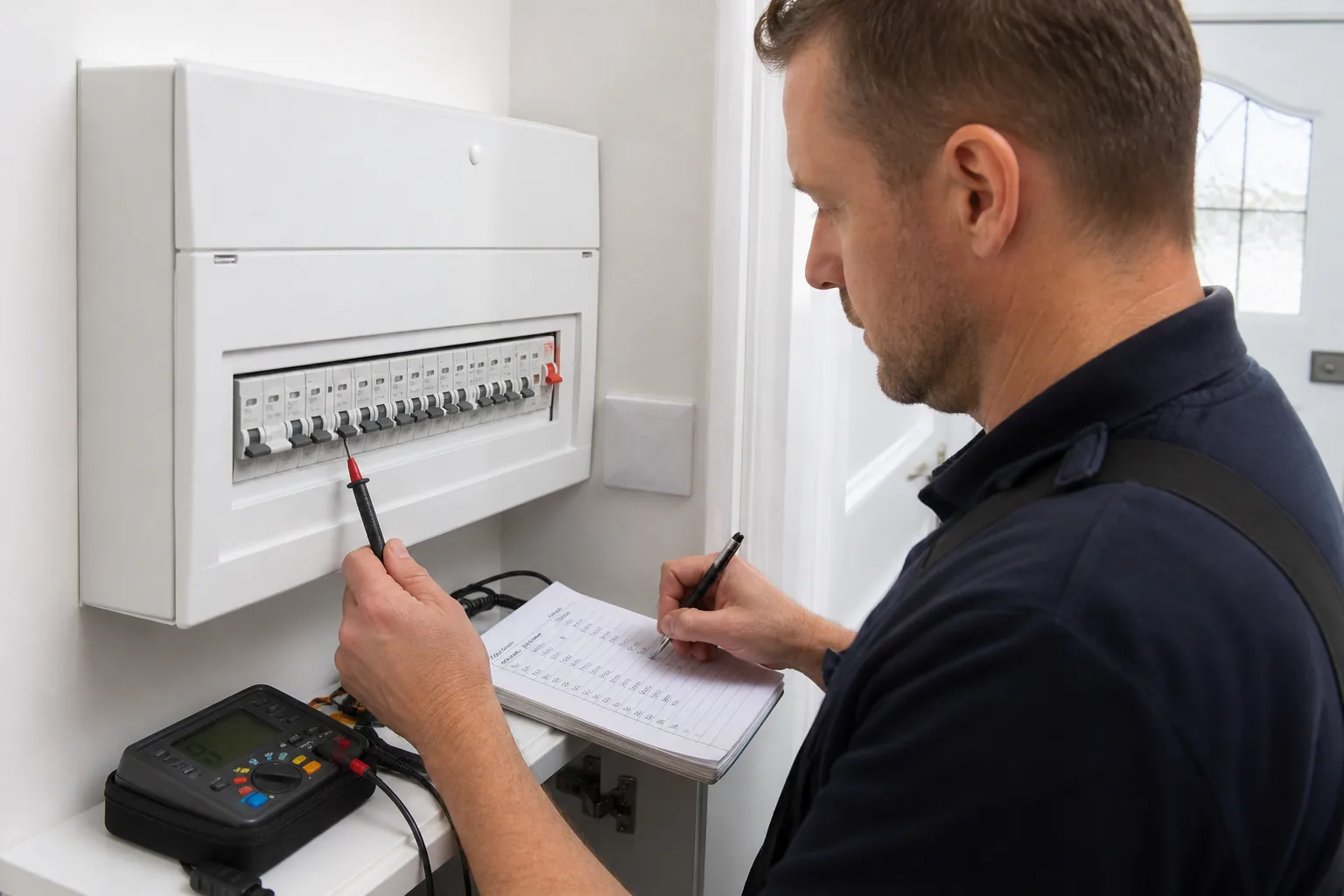
Central Westminster includes converted flats, mansion blocks, period houses and managed developments. The room may be simple to reach while the cable route, communal area or isolation point is not.
Old and newer wiring can meet behind later finishes. Photos of the accessory, room and consumer unit help frame the first visit.
Concierge hours, lift use, quiet periods and restrictions on drilling or communal routes may need agreement.
Separate the resident’s task from communal supplies and confirm who can approve access or a changed scope.
Agree positions and routes before joinery, tiling or decorating closes the working area.
| Property setting | Detail to confirm | Why it affects the visit |
|---|---|---|
| Purpose-built flat | Consumer-unit location and affected circuit | Helps separate the dwelling supply from communal services |
| Mansion block | Concierge, parking, lift and permitted working hours | Access can limit tools, materials and isolation time |
| Period conversion | Likely cable route and finish sensitivity | Concealed routes may not follow the current room layout |
| Managed rental | Occupier access and approval contact | Diagnosis and additional work may need different authority |
Safety first
Burning smells, visible heat damage, sparking or arcing, exposed conductors and damaged accessories can indicate immediate risk. Stop using the affected item or area if it is safe to do so, keep people away and seek professional help. If there is fire, smoke or immediate danger, leave the property and contact the emergency services.
Repeated operation of a breaker or RCD needs assessment. Do not remove covers, probe wiring or repeatedly reset a protective device to keep the circuit running.
Circuit · access · materials
What serves the point now, what else is connected, and does the intended work alter demand or protection?
Can the fitting, route and consumer unit be reached, and are parking, concierge or working-hour arrangements needed?
Is a customer-supplied item compatible in rating, dimensions, location and control method?
| Factor | What changes the scope | Useful evidence |
|---|---|---|
| Diagnosis | Known task versus intermittent or multi-circuit fault | Symptom notes and affected rooms |
| Cable route | Surface route, concealed route, distance and finish | Room and route photographs |
| Access | Furniture, height, parking, keys and building controls | Access instructions before arrival |
| Materials | Standard accessory versus specialist fitting or controls | Product model and specification |
| Testing and records | Nature of the alteration and required verification | Existing circuit and consumer-unit details |
Real Alesta service routes
| Electrical problem or plan | Relevant service | Important boundary |
|---|---|---|
| Cause of tripping, flickering or intermittent power is unknown | Electrical fault finding | Testing comes before the repair decision |
| Damaged switch, socket or a planned new power point | Switches and sockets | A new point depends on route and circuit suitability |
| Failed light, new fitting or changed lighting control | Light fixtures | The fitting and control method must be compatible |
| Wider fixed wiring is being renewed | Electrical rewiring | Decoration and making good need separate agreement |
| Home EV charging is planned | EV charger installation | Equipment, supply capacity and cable route need assessment |
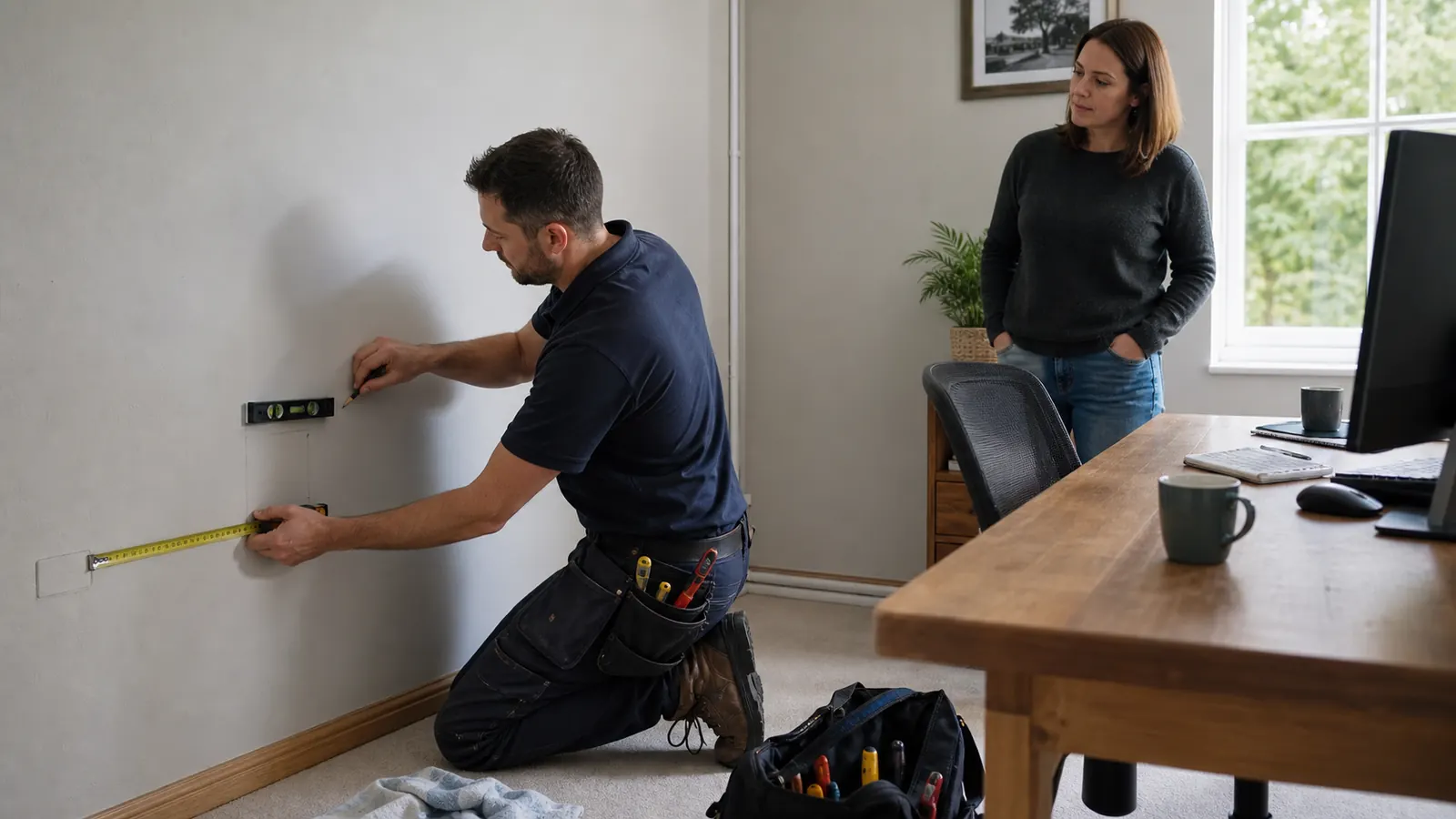
Before the visit
A defined visit
Share the task, symptom and intended result.
Add photos and consumer-unit details.
Confirm access, timing and likely materials.
Review the relevant installation on site.
Gather evidence before choosing the remedy.
Agree the work and any limitation.
Carry out the defined electrical task.
Verify, explain and hand over.
Quick answers
Not necessarily. Share the model before booking if you already have one.
The relevant circuit usually needs safe isolation; the expected interruption can be discussed.
Only when expressly agreed. Cable routes and finish repair should be scoped separately.
No. A photo helps plan the visit but does not replace electrical testing.
No. Condition, protection, test results and planned work are what matter.
No. Repeated operation is a reason to stop and arrange assessment.
Often yes, provided safe access and any necessary isolation can be arranged.
Confirm the authorised contact before the visit or before the scope changes.
The quote should state what is supplied and what depends on inspection.
Testing depends on the task and is part of determining or verifying the scope.
It may, but fixed wiring and appliance internals are different service scopes.
Westminster electrical FAQ
Typical enquiries include fault finding, damaged accessories, socket and switch work, lighting, extractor fans, consumer-unit projects, new circuits and defined upgrades. The exact scope depends on the installation and testing.
Send a description of the outcome or symptom, the affected room, clear photos of the item and surrounding area, and a consumer-unit photo with labels visible. Do not remove any covers.
No reliable diagnosis can be made from a message alone. Details help select the right visit, but test results and inspection determine the cause.
Stop using it if it is damaged, hot or smells burnt. Note whether nearby points work and arrange assessment; the visible socket may not be the only relevant part.
It depends on the property, route and work. Ask the managing agent about communal areas, drilling, isolation, access hours and any approval process.
Some defined tasks may be completed once suitability is confirmed. Faults, concealed routes or specialist materials may require diagnosis and a separate agreed repair.
Age is one consideration, not a conclusion. The condition, protective measures, test results and future work should inform the recommendation.
Diagnosis time, cable route, circuit condition, access, parking, materials, isolation, testing and any required records all affect the final scope.
Yes, if the access contact and person authorised to approve work are clear. This is practical booking guidance, not legal advice.
Keep away from exposed or damaged parts. If there is smoke, fire or immediate danger, leave and contact the emergency services; otherwise stop using the affected area if safe and seek professional help.
Nearby service areas
Electrical work, clearly defined
Share the relevant photos and Westminster access details. We will help separate the assessment, planned work and any follow-on requirement.
