
Fault diagnosis and repair
The locksmith reviews the reported movement, checks the door cycle and identifies the relevant component or alignment issue. Remedial work is agreed from that evidence.
Symptom · comparison · fault finding · proportionate repair
A key that sticks, a latch that misses the keep and a handle that will not lift are different clues. Describe the behaviour with the door open and closed so the locksmith can distinguish the lock from alignment, frame and connected hardware.
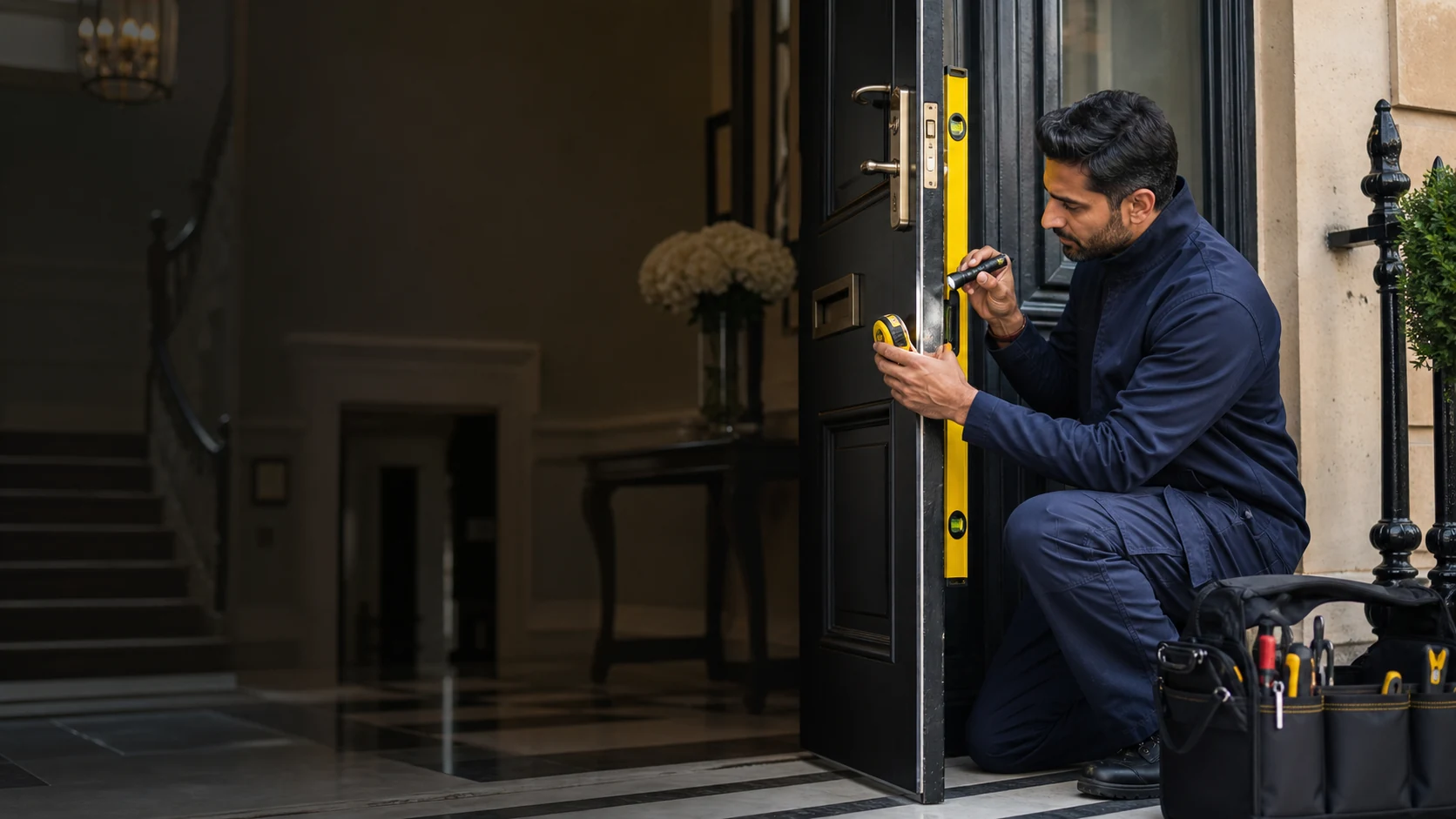
Fault-first locksmith guidance
Islington’s terraced houses, subdivided flats and basement entrances use a wide range of timber, composite and UPVC doors. The same complaint can arise from several conditions. A mortice lock may feel stiff because the bolt meets the frame incorrectly. A multipoint handle may resist because the door has dropped, a keep is tight or the mechanism is failing. A key can be worn even when the cylinder remains serviceable. Naming a replacement too soon can miss the real cause.
If the door is safe to operate and already open, note how the key and handle move in that position, then compare normal closing without force. Do not perform this check on a door that could trap you outside, is visibly damaged or may not reopen. The aim is a simple observation for the locksmith, not a DIY diagnosis. Where the faulty entrance is communal, report it to the responsible manager as well as describing the mechanics.
| Symptom | Useful observation | Why assessment is needed |
|---|---|---|
| Key turns when open but resists when closed | Where the door rubs and whether gentle pressure changes the result | Frame alignment can load the bolt even when the lock operates freely. |
| Key enters only part way | Key condition, debris visible without probing and behaviour of an authorised spare | A damaged key, obstructed keyway or internal cylinder fault can feel similar. |
| Handle moves but latch stays retracted | Handle return and latch movement with the door safely open | Spindle, handle spring, latch or internal mechanism may be involved. |
| UPVC handle will not lift fully | Operation open and closed, plus where the door meets its keeps | Alignment and multipoint mechanism faults must be separated before parts are ordered. |
| Night latch closes but will not release | Inside and outside operation, key response and visible snib position | The rim case, cylinder, connecting tail and door pressure work together. |
| Lock became unreliable after visible damage | Safe images of leaf, frame, hardware and current security | The job may include urgent securing plus separate frame or door repair. |
Safe observations
Repeated force can turn a manageable fault into a lockout. If the key bends, the handle grinds or the bolt needs increasing pressure, stop cycling the door. Keep an undamaged spare available for identification, but do not keep testing it in a resistant lock. Avoid glue, drills, sharp probes and unidentified lubricants. These interventions can hide the original condition and add damage inside the keyway.
For a basement entrance, mention exposure to weather, steps and the route from the pavement. For a flat within a terrace, say whether the first common door works and who controls it. This prevents the locksmith arriving at the wrong entrance or being unable to reach the affected one. Safe photographs should show the full door, both handle or lock faces, edge hardware and frame keeps.
Explain whether someone can remain safely at the property and whether the opening is private or shared. Do not leave a communal entrance wedged open. If there is an immediate threat to life, active fire or a crime in progress, use the emergency services rather than waiting for a routine locksmith visit.

Repair, adjustment or replacement
| Finding | A repair or adjustment may suit | Replacement may be considered |
|---|---|---|
| Lock works freely with the door open | Hinges, keeps or alignment can be corrected within an agreed door scope. | Lock wear or damage is also present and prevents dependable operation. |
| One key fails but a sound authorised key works | A correctly cut replacement key resolves the isolated key problem. | Key control is lost or the lock itself shows unreliable operation. |
| Latch does not return | A serviceable handle, spring or local component can be restored. | The relevant case is damaged, incompatible or no longer reasonably repairable. |
| Multipoint strip will not engage | Door alignment or an identifiable replaceable component is responsible. | The failed mechanism requires a compatible replacement to restore operation. |
| Keys are unaccounted for | Existing control remains acceptable after the circumstances are reviewed. | New key control is required for the authorised private entrance. |
| Frame is split or distorted | Lock work can proceed after suitable structural repair is agreed. | Hardware is also damaged, but door and frame reinstatement remains distinct. |
Services selected from findings
The locksmith reviews the reported movement, checks the door cycle and identifies the relevant component or alignment issue. Remedial work is agreed from that evidence.
Authority, door condition and lock type are confirmed before a suitable entry method is considered. Successful opening does not automatically resolve the reason the door failed.
Where condition or key control supports replacement, measurements and security requirements guide the part. Existing cut-outs and door construction still matter.
The fragment location and cylinder state determine whether extraction is possible and whether the lock remains dependable afterwards.
Cylinder, handles, gearbox, strip, rollers or hooks, keeps and door alignment are checked as connected parts rather than guessed from one symptom.
The locksmith scope may restore locking or provide an agreed temporary measure. Leaf, frame, glazing and decoration can require separately arranged repair.
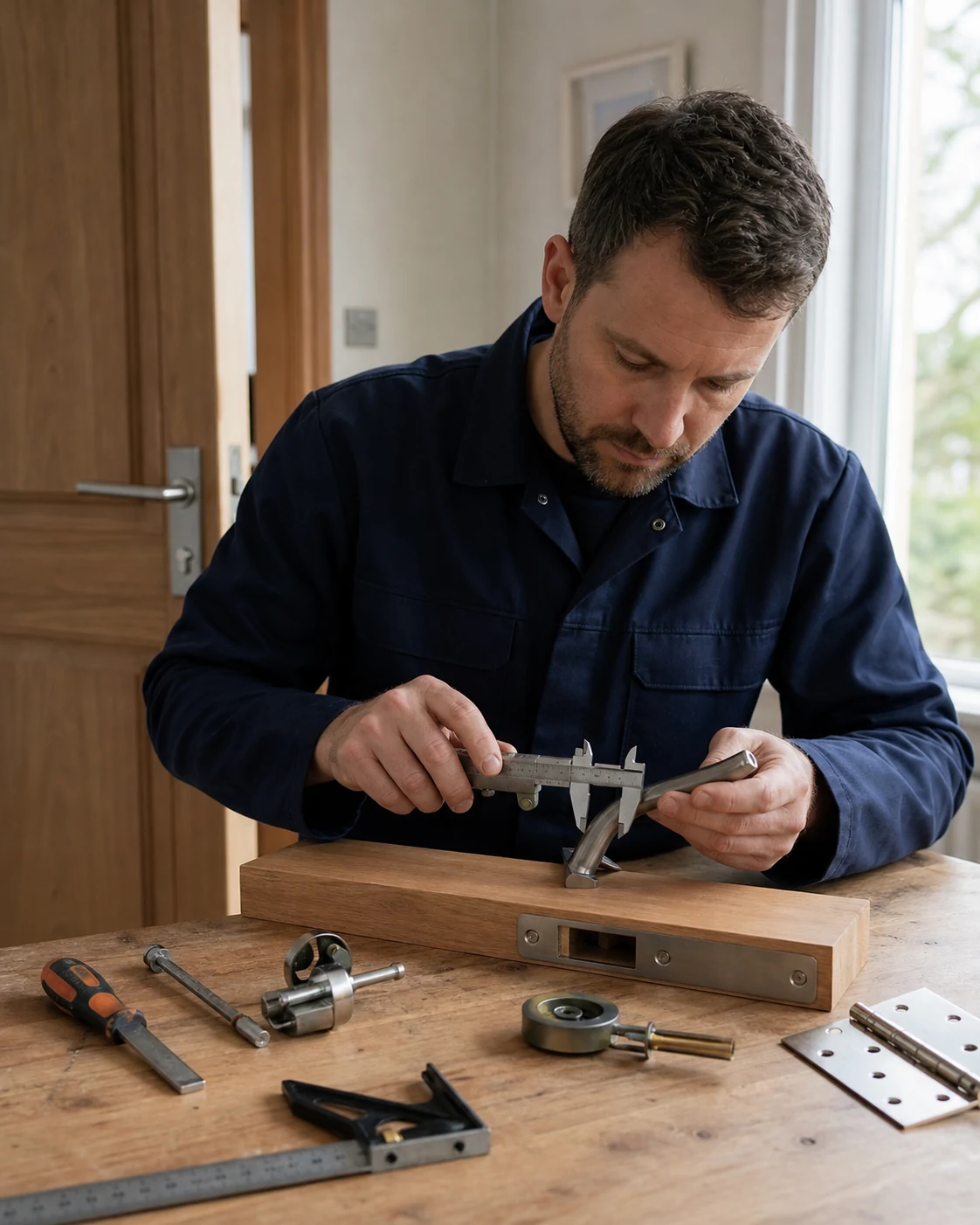
Islington property context
A terraced house may have a timber street door that has moved in its frame over time. A subdivided property can place a common front entrance before several private flat doors, each with different authority. Basement doors may be reached by steps and exposed to weather, while rear access can pass through another occupier’s area. These facts influence working space, key arrangements and who may approve work.
They do not prove that a particular lock has failed. Report recent decoration, door adjustment or building movement as background only. The locksmith should still test the mechanism and how the leaf meets the frame. For common entrances, ask the landlord, freeholder or managing agent to attend or provide written authority. A tenant should not solve a private lockout by altering a lock used by every household.
Provide the correct gate or basement entrance, clear ordinary objects from around the door and ensure lighting is available. Leave fitted panels and lock covers assembled. If parking or unloading is restricted, give a lawful nearby option rather than promising space that may not exist.
Quote by fault and outcome
An area name does not produce a reliable price. The quote should follow the reported symptom, attendance conditions, direct findings and accepted result. If diagnosis is the first stage, it should not be presented as though a particular replacement has already been confirmed.
| Quote category | Evidence to share | Scope boundary to confirm |
|---|---|---|
| Intermittent or unclear fault | Timeline, open-versus-closed behaviour and safe photographs | Diagnostic labour before any additional repair or component. |
| Locked door | Inside or outside position, lock state, authority and known damage | Attendance, opening method, post-entry repair and securing. |
| Replacement | Measurements, door type, security aim and number of keys | Named hardware, fitting, testing and key handover. |
| Alignment-related work | Contact points, hinge condition, keeps and lock operation when open | Locksmith adjustment versus separate door or joinery repair. |
| Communal entrance | Management contact, all users and any closer or electronic release | Authority, key distribution and specialist access-control work. |
| Physical damage | Current security and damage to the lock, leaf, frame or glazing | Temporary protection compared with permanent reinstatement. |
Ask the locksmith to explain a destructive method before it is used. If inspection reveals a larger problem, request the evidence, new scope and price. Further work should proceed only when the responsible person has accepted those terms.
Islington locksmith FAQ
The bolt or multipoint parts may be meeting the frame under pressure, although direct checks are needed. Avoid forcing the key and describe where the door rubs or needs lifting.
No. Key wear, alignment, keeps, hinges or a serviceable internal component can cause stiffness. Replacement should follow the identified condition and required security outcome.
Stop forcing it. Say whether the door is open or closed and whether the handle moves normally when open. A multipoint system includes alignment and several connected components.
A non-destructive method is considered where suitable, but it cannot be promised for every failed or deadlocked device. The approach and any expected damage should be agreed first.
The freeholder, managing agent or properly authorised building contact should coordinate it. The closer, frame and electronic release may need attention alongside the mechanical lock.
Avoid glue, drilling and improvised probes, which can push the fragment farther in or damage the cylinder. Keep the other piece and report the door’s current state.
Show the complete door, both sides of the handles or lock, the edge hardware and frame keeps. Do not remove covers or expose the mechanism for the photograph.
Give the route from the street, steps, gate access, lighting and whether the area is private or shared. Mention weather exposure as context without assuming it caused the fault.
Only if stated. Mechanical repair, door alignment, structural frame work and decorative making good may be separate parts of the overall solution.
Map and nearby area pages
The current nearby pages have their own property and access guidance. Follow the page matching the address rather than transferring assumptions between adjoining areas.
Show what moves and what resists
Send the exact door, safe observations, open-and-closed behaviour, access arrangements and the person authorised to decide the next step.
