
Residential lockout
The locksmith verifies a reasonable right to enter, checks the actual door and discusses a suitable opening approach. A lock failure may require a second decision after access is achieved.
Correct entrance · mixed use · timing · lawful authority
A flat above or beside commercial premises can have several doors at one street address. Tell the locksmith which entrance serves the home, who controls the shared hall and whether business activity affects the route before describing the lock itself.
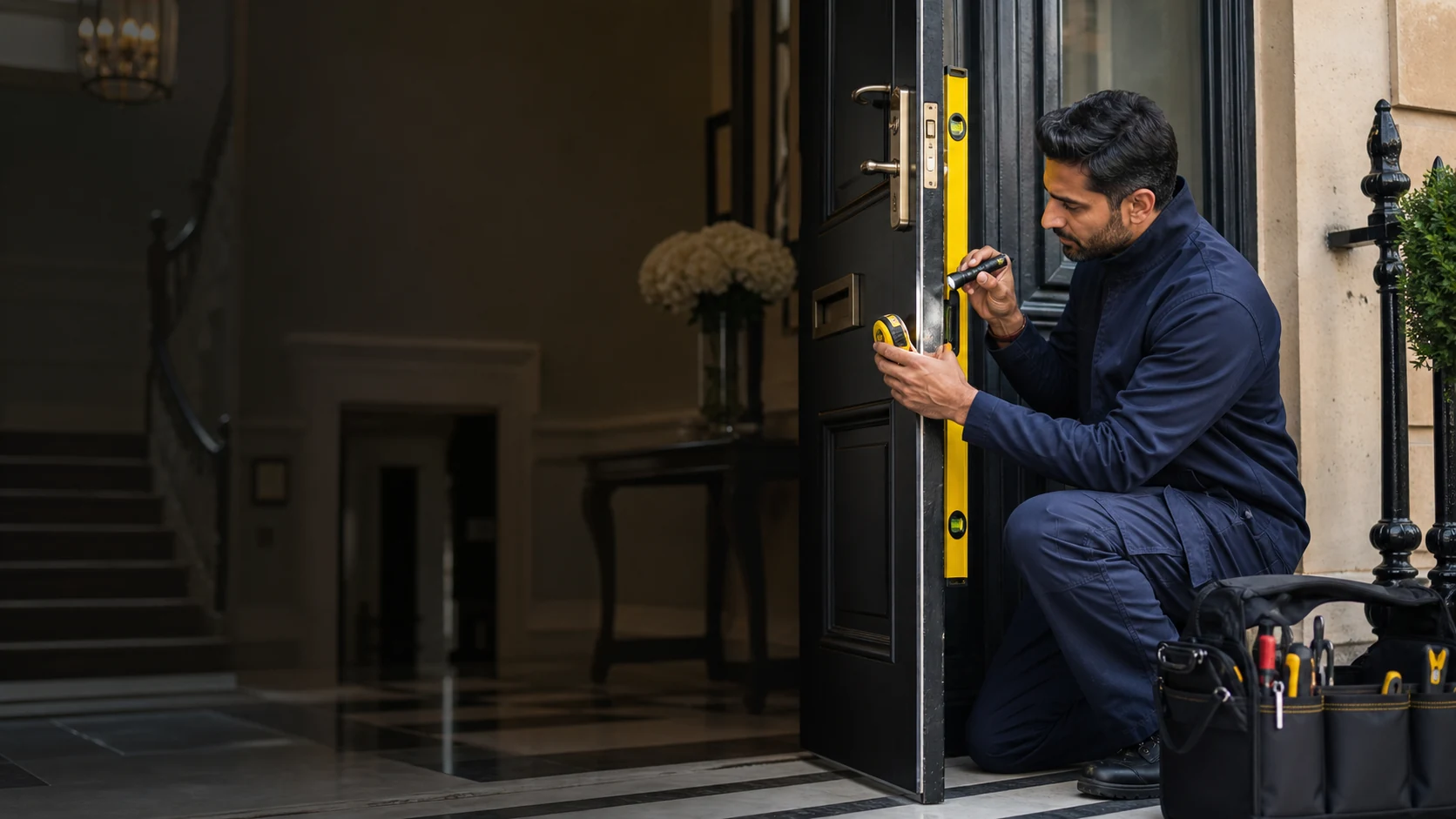
Mixed-use entrance planning
Angel includes upper-floor flats reached through doors beside shopfronts, converted houses with narrow shared corridors and buildings where a commercial unit occupies the ground floor. The trading name may be more visible than the residential number, but it does not necessarily identify the correct entrance. Give a plain description of the doorway and the route beyond it. If the locksmith must pass through a business area, obtain permission and agree a suitable time rather than assuming staff can admit a contractor.
Separate the street door, the internal common door and the flat entrance in your report. Say where the key or handle fails and which earlier doors still operate. A shop operator may control a shutter or service gate without having authority to alter the residents’ lock. Conversely, a flat occupier should not commission changes to a commercial or shared entrance they do not control. This route-first description prevents work drifting across legal and practical boundaries.
| Building arrangement | Details to provide | Boundary to confirm |
|---|---|---|
| Flat above a shop | Residential door position, floor, stair route and whether the shop must provide access | Shopfront hardware and the private flat lock may have different responsible parties. |
| Converted house with narrow hall | Common front door, internal flat entrance and space available around each one | The shared entrance needs freeholder or managing-agent authority. |
| Home beside a commercial unit | Exact door number, distinguishing features and safe unloading point | Neighbouring businesses should not be treated as the customer’s entrance. |
| Rear residential access | Gate, alley, lighting, opening hours and lawful key holder | The route must be authorised and safe before tools are carried through. |
| Door with intercom or electric release | Which mechanical and electronic functions still work | Access-control faults may belong to management or another specialist. |
Timing and shared circulation
A busy shop doorway and a narrow residential stair cannot always accommodate tools, residents and customers at the same moment. For planned work, agree a window with the person controlling the common route. State whether deliveries, refuse collection or business opening create a temporary obstruction. The aim is not to promise a response time but to ensure the appointment has a lawful, workable arrival.
For an urgent private lockout, say whether you are outside the street entrance or only outside the flat. If identification is inside, mention that while booking so an appropriate authority check can be discussed. Do not ask shop staff to force a residential door, lend unverified keys or hold a fire-resisting common entrance open. If a child or vulnerable person is in immediate danger, or a crime is in progress, contact the emergency services.
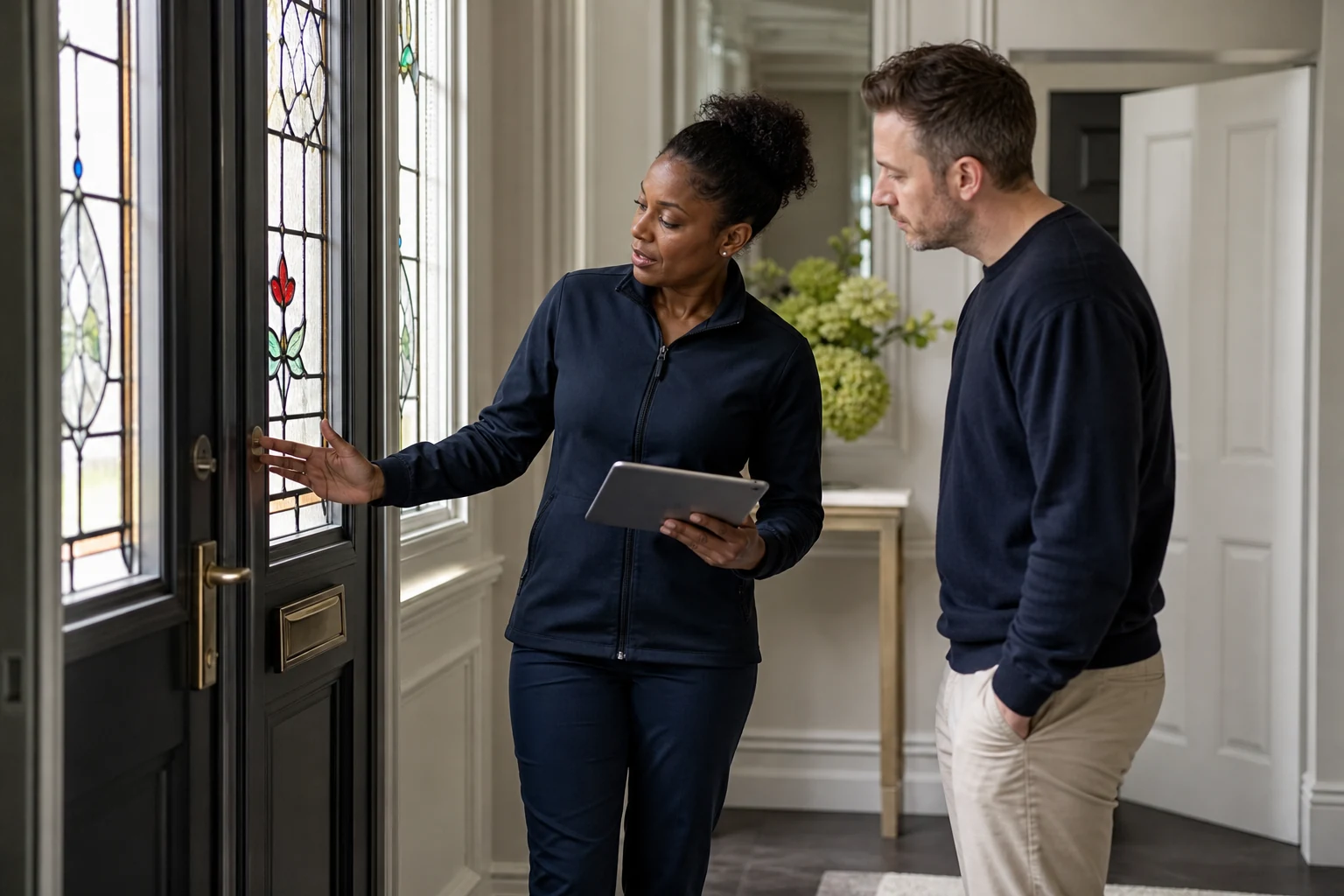
Door and service boundary
| Situation | Appropriate locksmith focus | Possible separate responsibility |
|---|---|---|
| Resident locked outside their private flat | Authority check, suitable opening method and post-entry lock condition | Access through the building must still be provided lawfully. |
| Common street key no longer works | Mechanical lock assessment when instructed by the building controller | Management approval and replacement keys for all authorised occupants. |
| Shop-adjacent door will not latch | Lock and latch operation with the door open and closed | Closer, hinges, damaged frame or electronic release may need other work. |
| Key lost during a tenancy | Review of key control for the doors served by that key | Landlord approval and common-door authority where relevant. |
| Multipoint flat door handle is stiff | Cylinder, handle, gearbox, strip, keeps and alignment assessment | Door repair where movement or structural damage exceeds adjustment. |
| Attempted entry damaged several elements | Agreed opening or temporary securing of the lock area | Police or insurer evidence, glazing, frame, joinery and decoration. |
Locksmith options for the authorised entrance
The locksmith verifies a reasonable right to enter, checks the actual door and discusses a suitable opening approach. A lock failure may require a second decision after access is achieved.
Difficult keys and unreliable latching are examined through the complete door cycle. Alignment and frame contact are compared with internal lock operation.
Lost keys, a move or failed hardware may support replacement. The tenant or owner must still have authority and the part must suit the existing door.
The fragment is left untouched until assessed. Extraction does not automatically mean the cylinder is damaged, and replacement is not assumed.
UPVC and composite systems use connected hardware. Handles, cylinder, mechanism and alignment need inspection before compatible components are selected.
The immediate aim can be a door that is safely secured. Permanent repair to the leaf, frame, glazing or surrounding finish may be arranged as another scope.
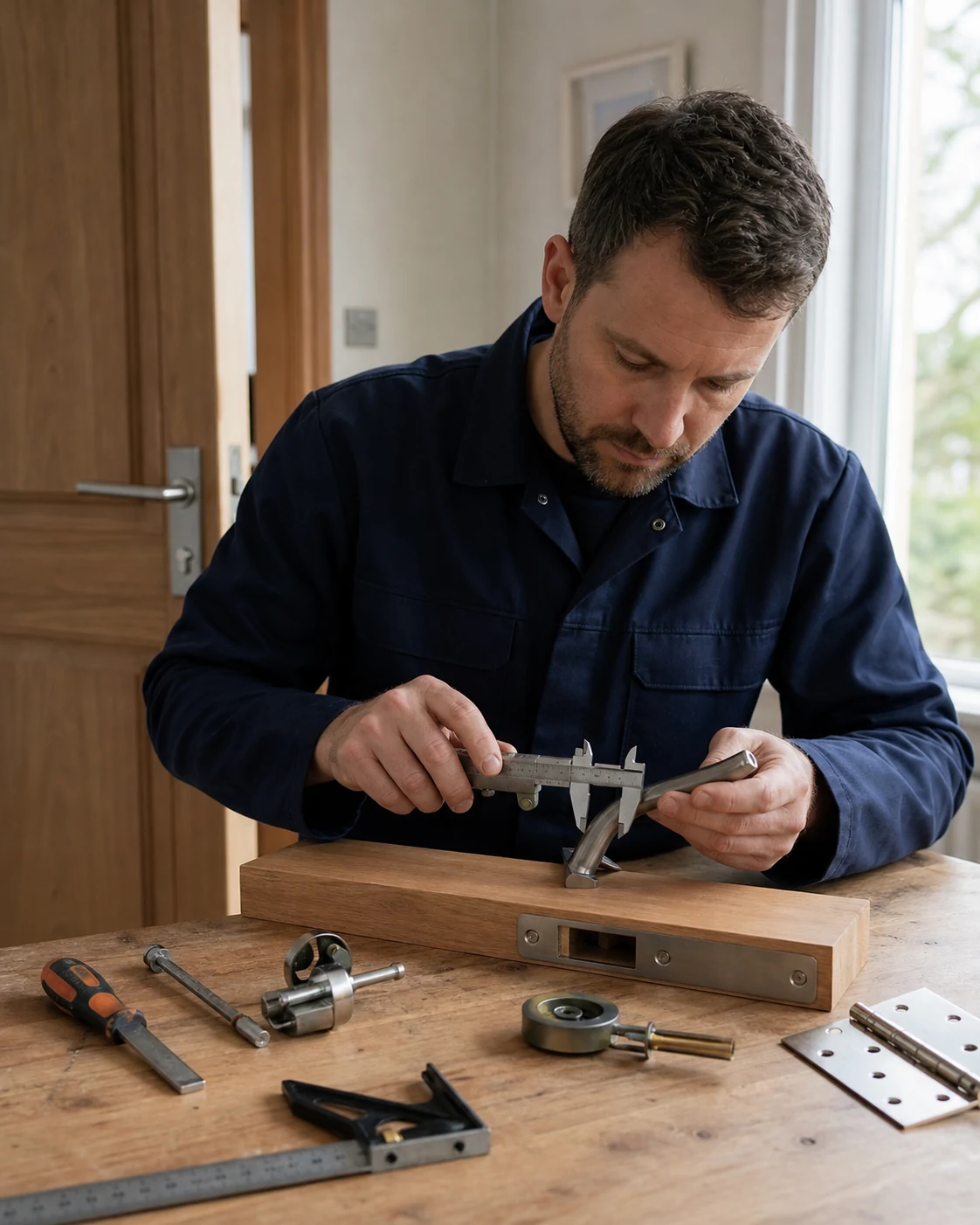
Narrow halls and converted houses
Older converted properties can have compact vestibules, steep stairs and doors that open close to neighbouring entrances. Move only loose objects and arrange with occupants before tools are set down in the hall. Do not remove decorative panels, lift flooring or block the staircase in preparation. Where a replacement is planned, clear images of the door edge, frame and both hardware faces help establish which measurements will be needed on site.
The completed work should be tested under normal conditions, not only while the door is held open. Check closing, latching, key operation and handle return. For a common door, the responsible manager should ensure authorised residents receive any required keys and that the entrance is not left less functional for the sake of one flat. For a private door, new keys should be counted and handed to the nominated customer.
If the closer slams, the frame is split or an electric release stays active, record that remaining issue. Replacing a cylinder does not correct unrelated door movement or wiring. A clear handover lets the landlord, shop operator or managing agent send the right follow-on instruction.
Quoting a mixed-use visit
Angel is not a price category. The cost depends on the service, time, lock, method, hardware and practical access. A written quote should also distinguish waiting for a shop or manager, working on a private lock and referring a fault at a shared electronic entrance.
| Factor | Evidence or arrangement | What the quote should clarify |
|---|---|---|
| Correct entrance | Door description, residential number, route and local contact | Which secured door is included and how the locksmith gains access to it. |
| Timing around commercial use | Permitted working window, deliveries and controlled gates | Any attendance limitation or need for a separately arranged return. |
| Opening method | Door state, lock type, authority and visible damage | Attendance, entry, expected damage and post-opening security. |
| Repair or adjustment | Behaviour open and closed, frame contact and connected hardware | Diagnostic work, agreed repair, parts and excluded door work. |
| Replacement | Measurements, door construction, required key control and hardware aim | Specified part, keys, fitting and normal operational tests. |
| Damage or shared-system fault | Photos, responsible party, current security and other affected components | Temporary measures, permanent repair and specialist referrals. |
If direct inspection changes the task, ask for a revised method and scope before work continues. A different lock, destructive opening, additional keys or repair to another entrance requires the agreement of the person entitled to decide.
Angel locksmith FAQ
Give the street number, position relative to the frontage, door appearance and the route to the flat. Say whether shop staff control any gate or internal passage.
Only if they are also the properly authorised owner or manager for that entrance. Physical proximity or a shared address does not by itself give authority.
The locksmith needs reasonable evidence of occupancy, ownership or authorised management. If documents are inside, explain that when booking so a verification approach can be agreed.
Not without the responsible building party’s approval and a plan for every lawful user. Fire-door, key-control and electronic-release considerations may also apply.
Give a lawful loading or parking option and describe the carrying route. Do not promise a bay controlled by a business or resident unless it has actually been arranged.
Usually these are separate functions. Report the credential, reader, intercom release and mechanical key behaviour to the building controller before altering hardware.
No. Added force can snap the key or worsen internal damage. Stop using the lock and arrange authorised access rather than rushing the mechanism around trading hours.
Only when stated in the accepted scope. Lock repair, frame or joinery work, protection of common areas and decoration can be separate responsibilities.
The correct door and authority must be established before work proceeds. A new location within the building may change access, ownership, hardware and the quotation.
Map and nearby pages
Nearby pages in the current set describe their own entrance arrangements. Use the correct property location and keep the contextual service links for the actual lock or door need.
Start at the pavement and follow the right route
Send the residential entrance, shared access contacts, door behaviour, safe photographs and the person authorised to agree the work.
