
Arrival contact
Name the person at the desk and the resident receiving the locksmith upstairs.
Occupant · porter · manager · locksmith
A managed-building visit works best with a short access dossier: who occupies the flat, who can confirm authority, which desk or manager releases common areas and which private door needs locksmith work.
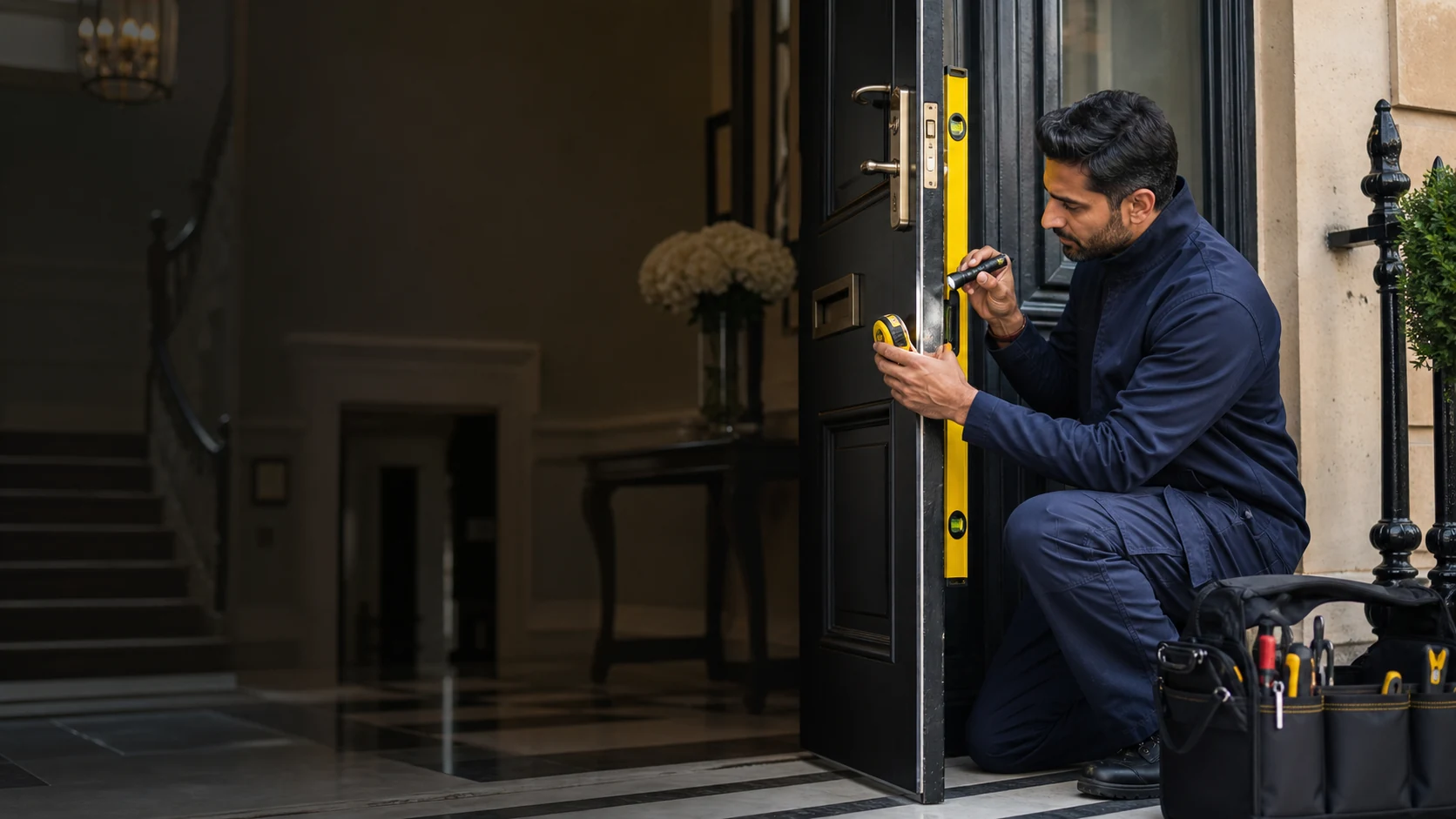
The access dossier
Managed access involves more than finding the building. The locksmith needs the correct resident, the correct flat, a lawful route through common areas and the person authorised to approve the actual work. A porter can admit a contractor without being entitled to select hardware. A tenant can explain a private lockout while the landlord retains decisions about alteration. A managing agent may control meter cupboards or the street door but not hold details about the fault inside the flat.
Put these roles into one message. Include the building entrance, desk or intercom procedure, floor, private door and consumer of the service. If identification is locked inside, explain how the building or property contact can support reasonable verification. Do not rely on a booking name that differs from the occupier without explaining the relationship.
| Dossier section | Information to include | What it does not automatically authorise |
|---|---|---|
| Occupant | Name, flat, relationship to property and available evidence | Changes to communal doors or another let unit |
| Porter or reception | Desk hours, visitor registration, lift or service-route instructions | Selection of private replacement hardware |
| Landlord or owner | Contact for private-door alteration, costs and retained keys | Interference with common access outside their ownership |
| Managing agent | Authority for common entrances, cupboards and appointed contractors | A finding about the condition of the resident’s private lock |
| Locksmith brief | Exact door state, observed symptom, desired outcome and safe photographs | Unstated door, frame, electrical or decorative work |
Occupancy changes
The duration of occupation does not remove the need for lawful instruction. A guest, tenant, owner or property representative should explain who booked the work and who can confirm the right to enter. Management records may help, but the locksmith must still be satisfied with the verification route appropriate to the circumstances.
If a booking platform, relocation agent or landlord arranges attendance remotely, nominate a reachable decision-maker. State whether the occupant may approve only opening, whether replacement parts need separate consent and who receives new keys. Do not leave a porter to resolve a price or product decision that belongs to somebody else.
At a changeover, distinguish missing keys from a faulty lock. Unknown copies may justify a key-control conversation; stiff operation requires a door-and-lock assessment. Combining these issues without stating both can produce the wrong preparation.
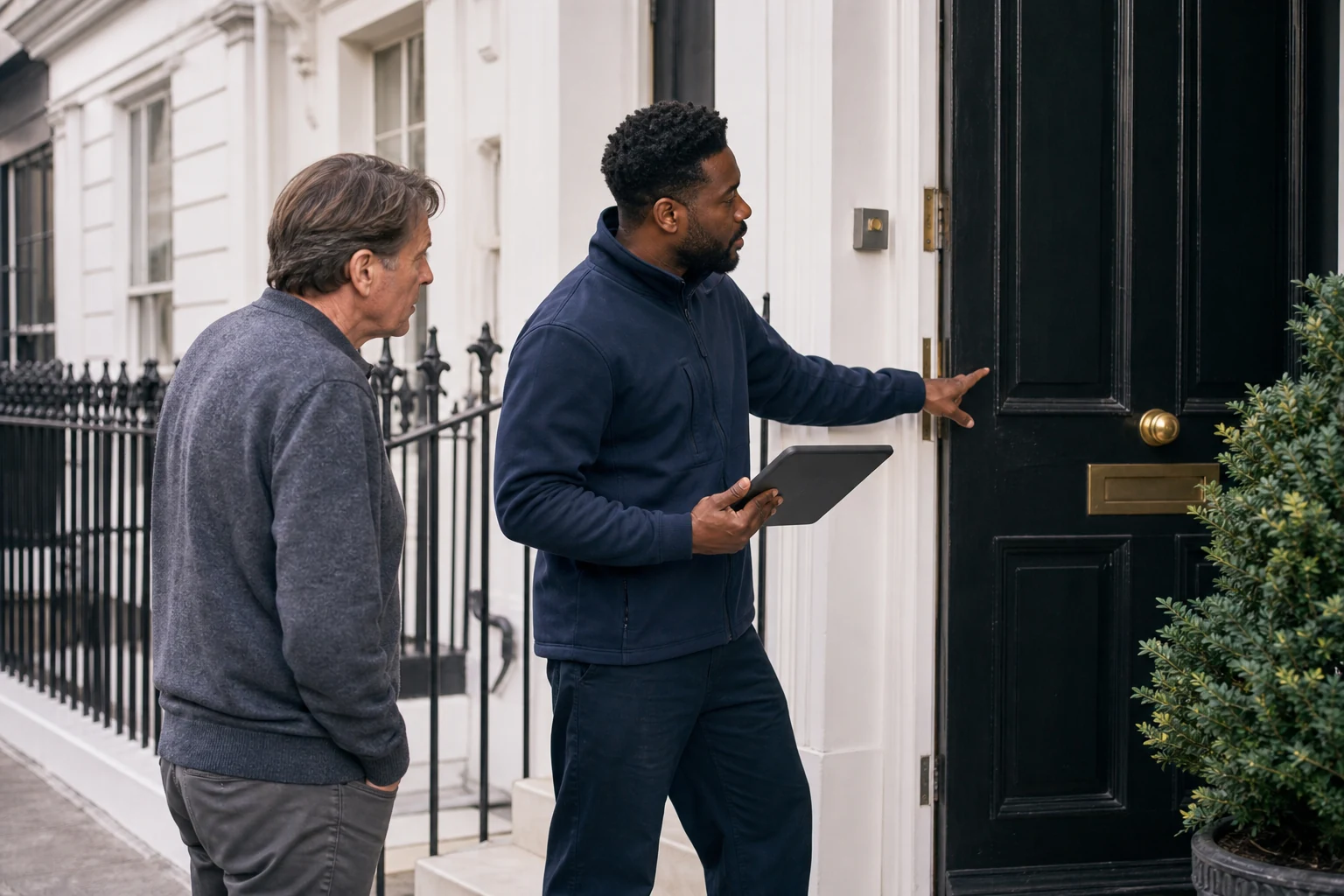
Private door or building system?
| Reported problem | First boundary to establish | Possible responsible route |
|---|---|---|
| Resident’s key will not operate the flat entrance | Whether the door is private and authority for opening is available | Locksmith assessment of key, lock, door and frame |
| Common front-door key affects several residents | Management ownership and whether the fault is shared | Managing agent instructs authorised mechanical work |
| Fob is accepted but door does not release | Mechanical latch versus powered release and closer behaviour | Management routes locksmith, access-control or electrical assessment |
| Intercom call does not reach one flat | Whether the mechanical door still functions normally | Building access-control or electrical service rather than guessed lock replacement |
| Private door is damaged after attempted entry | Lock damage versus leaf, frame, glazing and insurer evidence | Urgent securing with separate permanent repair scopes |
| Keys are not returned at occupant changeover | Address risk, included private doors and landlord authority | Planned key-control change and documented handover |
Desk-to-door route
Give the main entrance used by contractors, not simply the most visible façade. Note the reception desk, intercom label, floor, lift restrictions, stairs and final flat. If tools must use a service route, confirm permission and the person releasing it. A long internal journey can affect what equipment is practical, but it does not justify an invented surcharge; the quote should state actual access factors.
Arrange keys for any managed cupboard that may genuinely be relevant. Do not request access to service areas merely because they are nearby. Keep corridors and the flat entrance clear without holding a common fire-resisting door open. If residents will be affected by testing or a key change, management should use its own communication procedure.
Name the person at the desk and the resident receiving the locksmith upstairs.
Record lift, stairs, turns and any service entrance approved for equipment.
Use flat number, floor and a photograph of the correct private entrance.
Keep the owner or manager reachable if the initial scope needs revision.
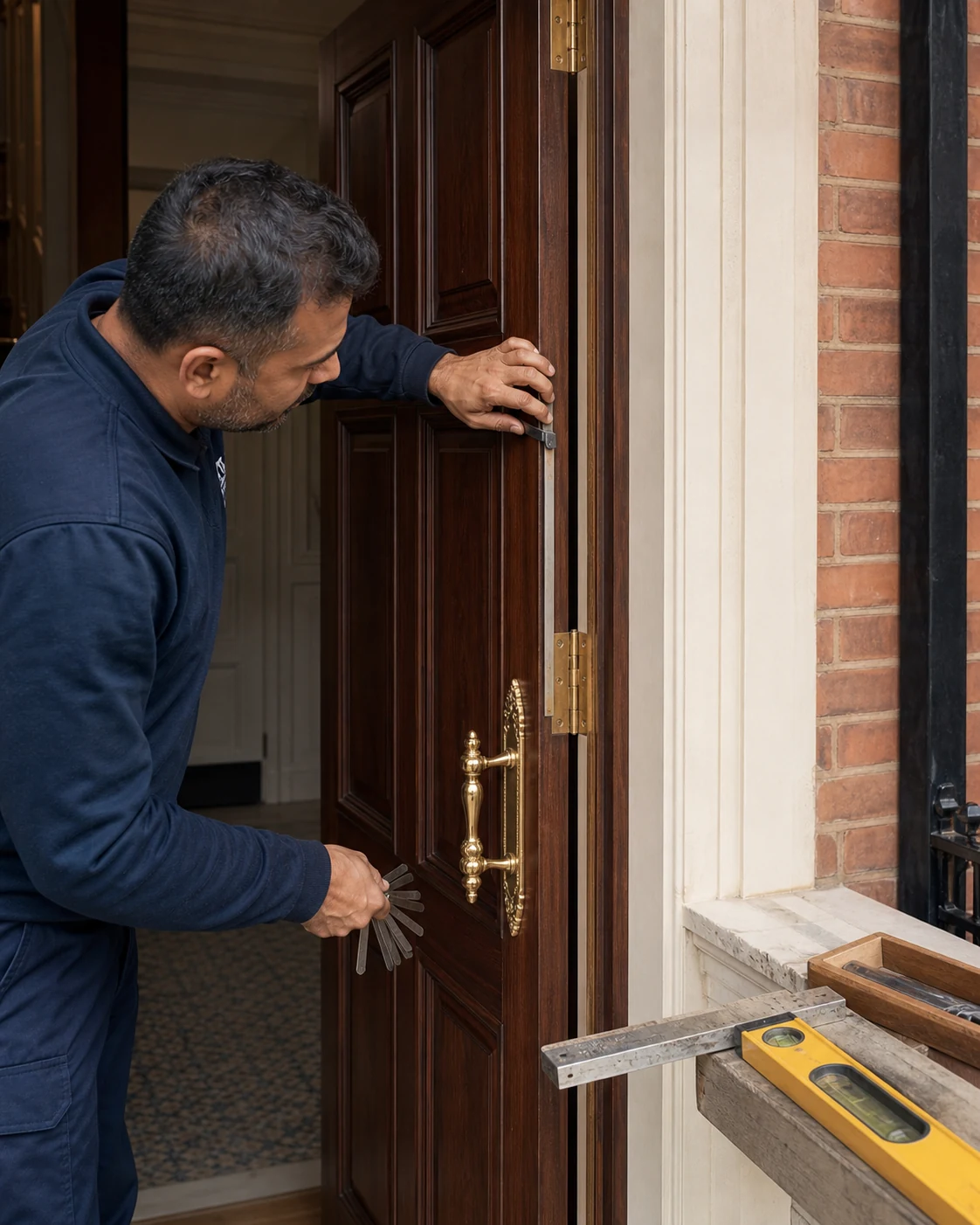
Bayswater property context
Bayswater enquiries can involve mansion blocks, managed apartments and a mixture of shorter and longer occupation. These contexts make a clear dossier valuable. They do not establish the resident’s tenure, the fitted lock, a fire-door status or management policy at a particular address.
A porter-controlled entrance can create two separate jobs: reaching the private flat and, if authorised, assessing a common mechanical problem. A basement or upper flat may have another entrance or service route. A furnished let may have multiple legitimate key holders, while an owner-occupied flat may still sit behind a management-controlled front door.
Ask for current building rules and responsible contacts rather than copying assumptions from another block. Where management supplies a door specification, pass the actual document to the locksmith. Where no document is available, the proposal should remain within the assessed private door and avoid compliance claims that have not been verified.
| Property arrangement | Confirm in advance | Boundary for the written scope |
|---|---|---|
| Mansion block with porter | Contractor admission, lift route, flat contact and management authority | Access assistance versus permission to alter hardware |
| Long-let flat | Tenant entry, landlord approval and legitimate key recipients | Occupant observations versus owner decisions |
| Shorter managed occupation | Booking party, current occupant, identification route and remote approval | Opening authority versus follow-on replacement |
| Basement or secondary entrance | Correct external route, gates, steps and common-door access | Main building entry versus the private final door |
| Communal access-control door | Mechanical symptoms, powered symptoms and building contractor contact | Locksmith work versus electrical or access-control systems |
Quote and managed handover
Prices depend on timing, access, verification, opening method, labour, compatible parts and follow-on work. No reliable amount follows from the area or building style. A managed booking should add decision roles to the normal quotation.
The named person can authorise attendance and lawful work at the exact private or common door.
A reachable owner or manager can accept destructive entry, parts or a revised finding-led scope.
The payer receives the same description of labour, parts and exclusions as the occupant.
Keys, operation notes and unresolved issues go to named resident and management contacts as appropriate.
Ask whether the quote covers attendance, successful opening, repair, replacement hardware, key quantity and making good. A porter signature is not a substitute for the customer’s product and scope approval unless the building has explicitly authorised that role.
Bayswater locksmith FAQ
Only where the building has actually assigned that authority. Porter assistance with entry or contractor registration should not be assumed to include product or cost decisions.
Explain this while booking. Reasonable verification may involve available documents and an authorised property or building contact, depending on the circumstances.
Yes, when the occupant, address, authority and decision limits are clear. Keep the owner or agent available if opening reveals a need for extra work.
The managing agent, freeholder or authorised building representative should instruct work that affects all residents. Report the mechanical and powered symptoms separately.
No. Credential, reader, controller, power, release, closer and mechanical latch may be involved. Management should route assessment without assuming the visible lock is responsible.
Agree quantities and recipients with the authorised landlord or agent. Count keys and record which private doors changed; do not alter shared access informally.
The booking may be limited or rescheduled because lawful access is essential. Confirm desk hours, visitor procedure and the exact internal route beforehand.
Only when stated. Locksmith work, temporary securing, joinery, glazing, access control and decoration should remain visible as separate scopes.
Look for the named door, authority, access window, service outcome, method, labour, parts, key issue, exclusions and the approval route for changed findings.
Nearby coverage
Use the task links for the service and live area pages for nearby building context.
One dossier from reception to the private door
Send the Bayswater building route, authority evidence, private-door symptom and approval boundary for an accountable managed visit.
