
Door construction
Identify timber, composite, UPVC, metal or another construction from reliable information. The material affects fixing, preparation and the relevant lock family.
Audit · outcome · compatibility · finish care
A planned lock upgrade should begin with the complete door, not a catalogue choice. Record the existing hardware, the security or access outcome you want, the authority for alterations and the finishes that must be retained.
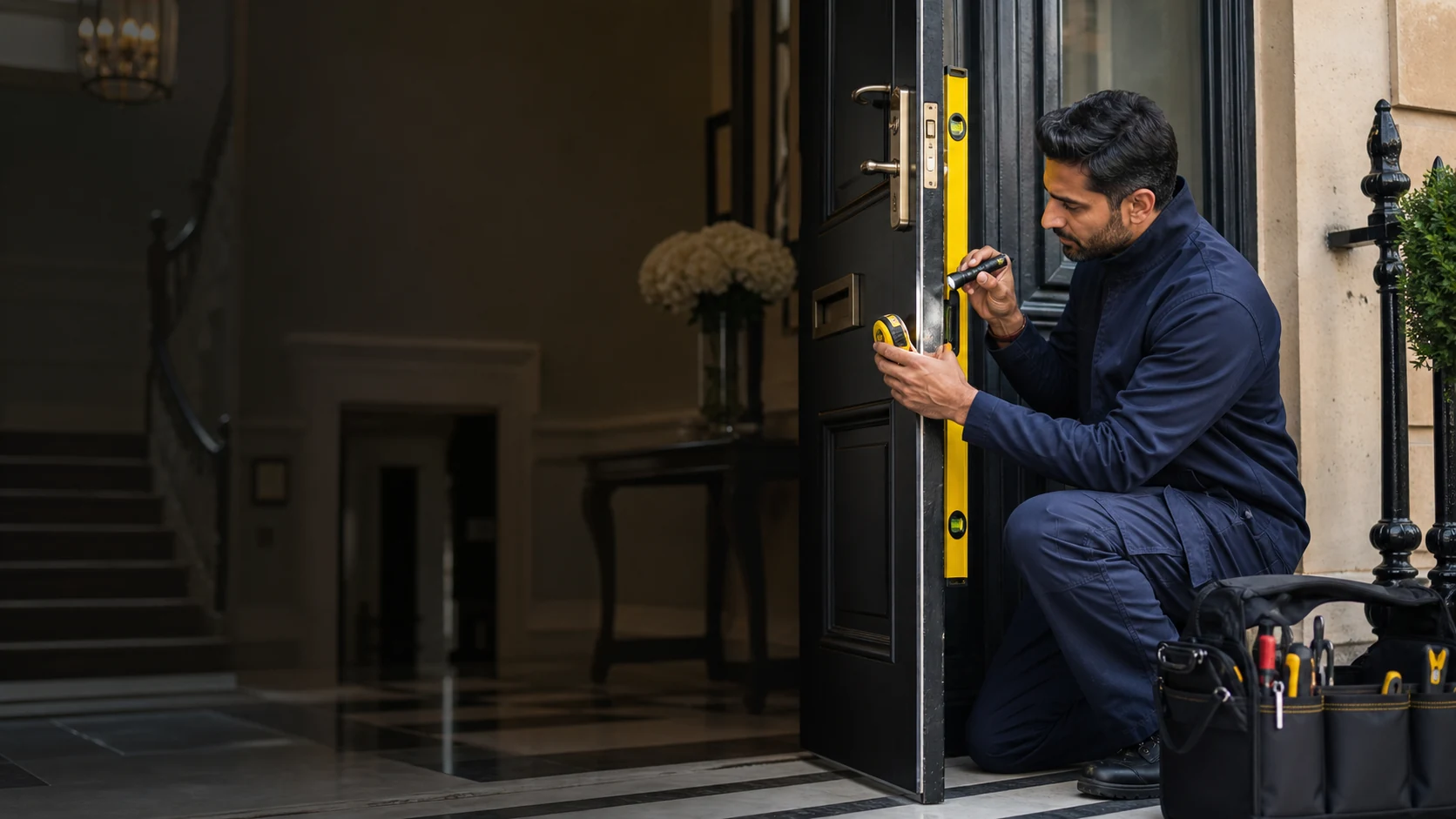
Planned lock upgrade
“Better lock” is not yet a specification. The customer may want to recover control after unknown keys, improve everyday operation, add a convenient internal function, replace worn hardware or meet a documented property requirement. Each objective leads to different questions. State the priority and who uses the door, then identify the current arrangement.
A Hampstead period entrance may have established cut-outs, decorative furniture and a frame that should not be altered casually. A mansion-flat door may sit within management rules or a fire-door arrangement. A gate can have different exposure and operation from the home’s front door. These contexts guide preparation; they do not prove which product is fitted or suitable.
| Desired outcome | Evidence to gather | Question for the proposal |
|---|---|---|
| Known control after a move or missing keys | Door schedule, existing keys and authorised users | Can the relevant key-control component change while sound hardware remains? |
| More reliable everyday operation | Key, handle, latch and frame behaviour with the door open and closed | Is an operating fault being mistaken for a specification problem? |
| Documented security requirement | The exact insurer, landlord or management wording | Which compatible product has evidence matching that requirement? |
| Improved accessibility or convenience | User needs, inside and outside operation, door closer and existing furniture | Can the desired function be achieved without undermining safe egress or other duties? |
| Coordinated appearance | Finish references, existing holes and surrounding ironmongery | What visible changes or unused holes will remain after fitting? |
The door audit
Identify timber, composite, UPVC, metal or another construction from reliable information. The material affects fixing, preparation and the relevant lock family.
Photograph the faces, handles, escutcheons, edge hardware and frame keeps. Record legible markings without removing the lock for the picture.
Note rubbing, movement, splits, loose keeps or previous repairs. New hardware should not be expected to conceal an unresolved door fault.
List paint, veneer, polish, panelling, stone thresholds and decorated walls that could be affected. Agree who protects and restores them.
Confirm ownership, tenancy, freeholder or management approval. Retain any product or fire-door information already held for the entrance.
Count authorised users, agree required keys and state how the door must operate from each side. Avoid unsupported claims about copying restrictions.
Compatibility before purchase
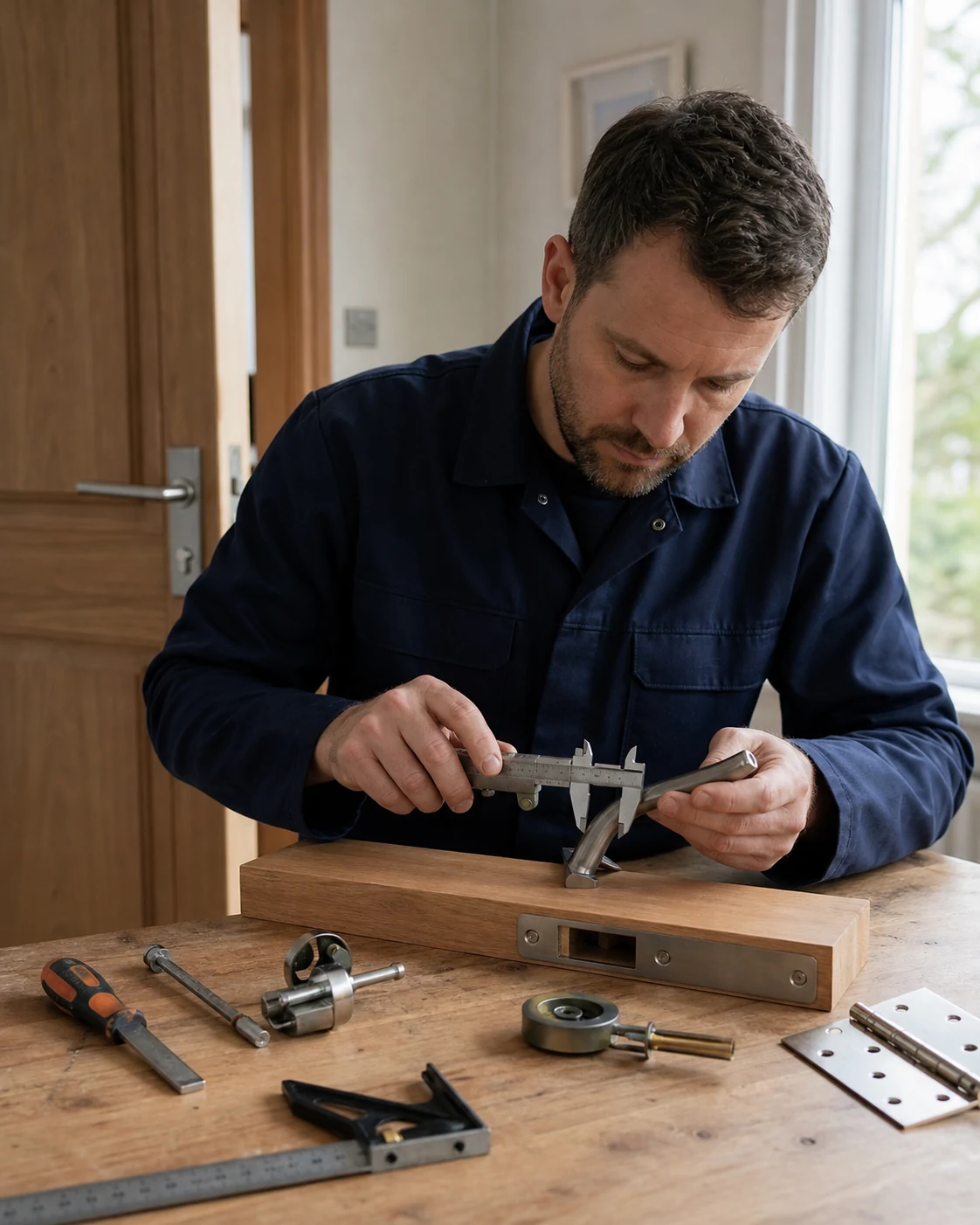
A mortice lock sits within a cut-out in the door edge. A night latch and rim cylinder use fixing positions across the leaf. Multipoint systems combine a cylinder, handles and an extended mechanism. Replacing one arrangement with another can expose holes, require new preparation or conflict with decorative furniture. Accurate dimensions and on-site condition therefore matter.
Do not order from the external key shape or a single close-up. The locksmith may need door thickness, backset, case depth, centres, cylinder dimensions, handing and keep positions, depending on the system. If a manufacturer’s identification is uncertain, the proposal should say so instead of presenting a guess as compatibility.
A product description should distinguish documented characteristics from marketing language. Where a standard, rating or key restriction is important, ask for the exact evidence associated with the proposed item. The page does not claim that one lock type is universally appropriate for every Hampstead entrance.

Keep, adapt or replace
| Element | Reason it may be retained | Reason the proposal may change it |
|---|---|---|
| Lock case or mechanism | It operates reliably and supports the agreed outcome | Wear, damage or incompatibility is established during assessment |
| Cylinder or key-control part | Known keys and documented function remain acceptable | Control is no longer trusted or another compatible specification is required |
| Handles and decorative furniture | They are sound, compatible and important to the door appearance | Operation, dimensions or proposed lock function require a different set |
| Keeps and frame fittings | They align correctly with the serviceable door and hardware | Damage, movement or a changed system requires adjusted or compatible fittings |
| Door leaf and frame | They are stable and suitable for the intended work | Damage or movement needs a separate repair before dependable locking can be achieved |
Hampstead property context
Hampstead work can involve period homes, mansion flats, gated entrances and managed common doors. The useful distinction is not whether a property looks old or expensive. It is who controls the opening, what records apply and which parts of the door must remain intact.
For a private timber entrance, the owner can describe the desired change and any conservation or finish advice already received. The locksmith should still avoid claiming planning or conservation permission on the customer’s behalf. For a mansion flat, management may have requirements for appearance, common-key systems, fire doors or contractor access. A gate can involve hinges, closers, weather exposure or access control beyond the lock itself.
Provide the entrance route, parking or loading instruction, porter hours and the person able to decide if inspection uncovers extra work. If the existing door is part of a wider refurbishment, coordinate the locksmith scope with the joiner, decorator or other responsible trade rather than leaving reinstatement implicit.
| Entrance context | Confirm before specification | Boundary to record |
|---|---|---|
| Period timber front door | Existing cut-outs, decorative furniture, frame condition and approved finish | Lock fitting versus joinery and redecoration |
| Mansion-flat entrance | Managing-agent rules, door records and private-versus-common responsibility | Resident instruction versus building authority |
| Gated approach | Gate construction, exposure, closer and any powered release | Mechanical lock work versus gate repair or electrical control |
| Recently refurbished interior | Protected surfaces, fitted panels and the approved access route | Hardware installation versus making good |
| Communal lobby door | Fire-door and access-control responsibilities already documented by management | Locksmith component work versus wider compliance decisions |
Quotation without invented prices
Price depends on the door, existing preparation, labour, product, access and finish work. A reliable quotation cannot be produced from the area name alone. For a planned upgrade, the most useful comparison is between clearly described outcomes.
The quotation identifies the lock and door assumptions on which compatibility is based.
The product, documented specification, finish and supplied key count are named.
New holes, exposed marks, adjustments and protection requirements are stated before fitting.
The agreed operating functions and any excluded door issue are recorded at handover.
Also confirm attendance arrangements, disposal of removed hardware and responsibility for decoration. If a hidden condition changes the plan, ask for a revised explanation and approval before the scope grows.
Hampstead locksmith FAQ
Send the whole door from both sides, lock and handle faces, edge hardware, frame keeps and any nearby decorative detail. Do not remove covers simply to identify a model.
It is usually better to confirm dimensions, compatibility, door condition and the intended outcome first. Customer-supplied hardware should not be assumed suitable until assessed.
That depends on the existing and proposed preparation. Ask for exposed marks, unused holes, plates and making-good requirements to be discussed before approval.
Age and appearance alone do not identify a suitable product. Existing construction, operation, documented requirements, dimensions and the desired security outcome all matter.
The resident’s authority may cover the private flat door, but the lease, freeholder or managing agent can impose other requirements. Confirm the actual boundary in writing.
Possibly, where they are sound and compatible with the agreed lock function. Their dimensions, spindle, fixing positions and condition need review rather than assumption.
Provide the exact current wording. Ask the locksmith to identify product evidence relevant to it, and check acceptance with the insurer rather than relying on a broad marketing phrase.
Only if the written scope includes it. Protection, filling, joinery and decorative repair should be allocated to the appropriate party before work starts.
Keep the product details, keys supplied, operation checks, limitations and any remaining door or frame recommendation with the property records.
Nearby coverage
Use service pages for the type of work and live local pages for nearby property context.
Audit before altering a finished door
Send the Hampstead entrance details, full-door photographs, authority, finish limits and any documented requirement for a compatible written proposal.
