
Document
Photograph and measure the existing arrangement without dismantling fixed hardware for identification.
Function · visible change · approval · finish
A planned lock upgrade can change the appearance of a door as well as its operation. Agree a simple appearance-change sheet showing what stays, what moves and which marks or making good may remain.
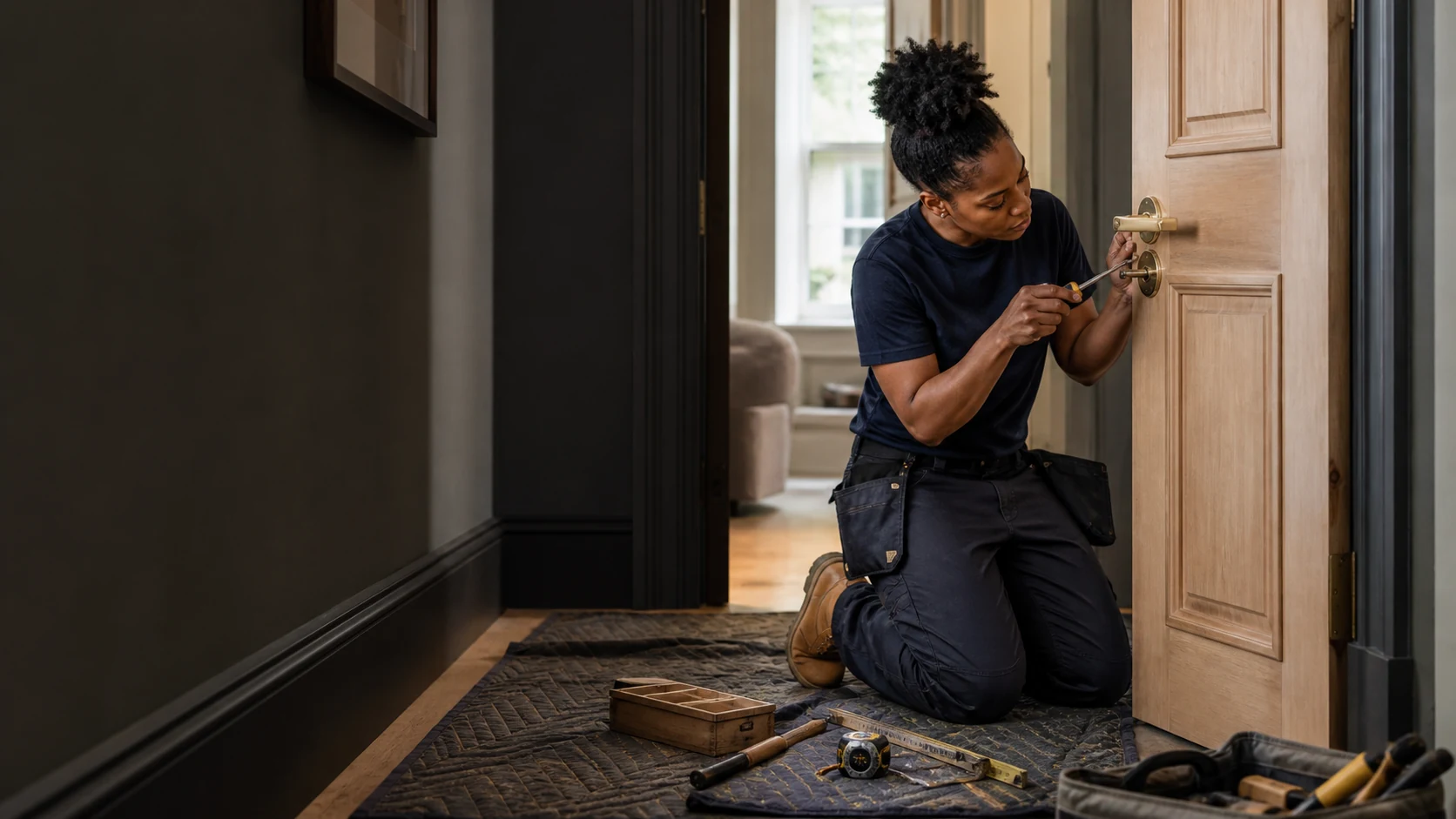
The appearance-change sheet
A lock can be technically compatible yet leave an appearance the customer did not expect. A new case may use a different faceplate length. A handle backplate can reveal old screw holes. A cylinder or escutcheon can sit differently against finished timber. On a mews or period-style entrance, even a small visible plate may matter to the approved brief.
Create a one-page record using full-door photographs from inside and outside, a door-edge view and close-ups of existing furniture. Mark items to retain, items allowed to change and surfaces that another trade will restore. Add the intended function: key-control change, reliable operation, a documented security requirement or a different authorised user experience. This keeps appearance and performance in the same conversation without claiming that style alone determines security.
| Visible element | Record before work | Approval question |
|---|---|---|
| External lock face or cylinder | Position, projection, surrounding marks and finish | Will the proposed item change profile, colour or visible coverage? |
| Handles and backplates | Dimensions, fixing locations, spindle position and wear marks | Can they remain, or what old preparation will a new set expose? |
| Door-edge faceplate | Length, width, recess and relation to existing finish | Will fitting alter the edge or require joinery outside the locksmith scope? |
| Frame keeps | Existing cut-outs, plates, fixings and nearby decoration | Does the proposal retain, move or replace them? |
| Decorative timber or panelling | Protected areas, previous repairs and agreed access route | Who authorises disturbance and completes later making good? |
| Removed hardware | Item list and condition before removal | Should components be retained, labelled or disposed of? |
Function before finish
Begin with the actual door system and required operation. Timber mortice locks, rim arrangements and multipoint doors use different preparation. Measurements such as door thickness, backset, case depth, centres, cylinder length and handing may be relevant. The locksmith should confirm the appropriate set for the identified hardware rather than copying values from another door.
Once compatibility is established, compare supported finish options. Photographs can distort colour and texture, so do not promise an exact match from a screen image. Where visual coordination is important, record the product reference and obtain the authorised customer or manager’s approval. Samples or existing references may help, but availability should not be invented before the supplier and product are confirmed.
Keep product evidence with the proposal. If an insurer, landlord or building record sets a requirement, use the current wording and identify how the suggested hardware relates to it. Avoid generic claims such as “highest security” without a documented basis.
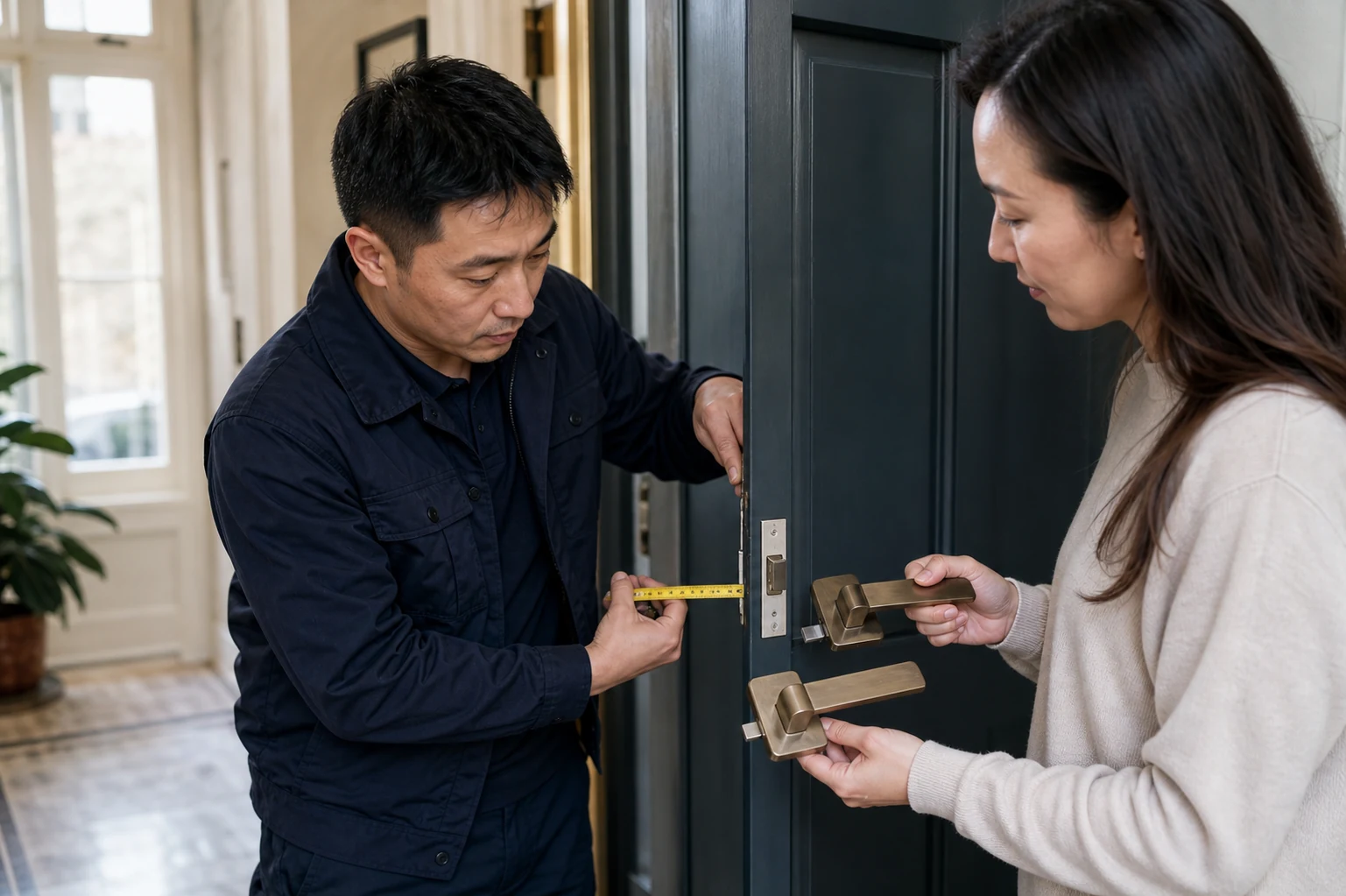
Choose the least disruptive compatible route
| Existing element | Reason to retain it | Reason a documented change may be proposed |
|---|---|---|
| Sound decorative handles | They suit the door appearance and operate with the agreed system | Dimensions, wear or new function make them incompatible |
| Serviceable lock case | It operates reliably and the desired outcome does not require its replacement | Condition, key control or documented requirements justify another compatible case |
| Existing cylinder | Dimensions, operation and authorised keys remain acceptable | Key control is lost or supported product characteristics need to change |
| Established frame keeps | They are secure, aligned and compatible with the retained mechanism | New hardware or damaged preparation requires different keeps |
| Visible cover plates | They protect earlier preparation and form part of the approved appearance | The revised layout makes a better coordinated, explicitly approved solution possible |
| Door and frame finish | It can remain untouched within the fitting route | Necessary preparation requires a separate joinery or decoration plan |
A staged approval route
Photograph and measure the existing arrangement without dismantling fixed hardware for identification.
Name the compatible hardware, function, finish and visible changes in a written option.
The owner or manager accepts preparation, appearance, keys and exclusions before fitting.
Completion photographs, product details and remaining making good return to the property file.
This staged route is useful even for a single door. It reduces pressure to choose between unsuitable alternatives during attendance. If assessment discovers unstable timber, previous concealed repairs or an incompatible cut-out, pause and allocate the joinery decision rather than hiding it beneath a larger plate without consent.
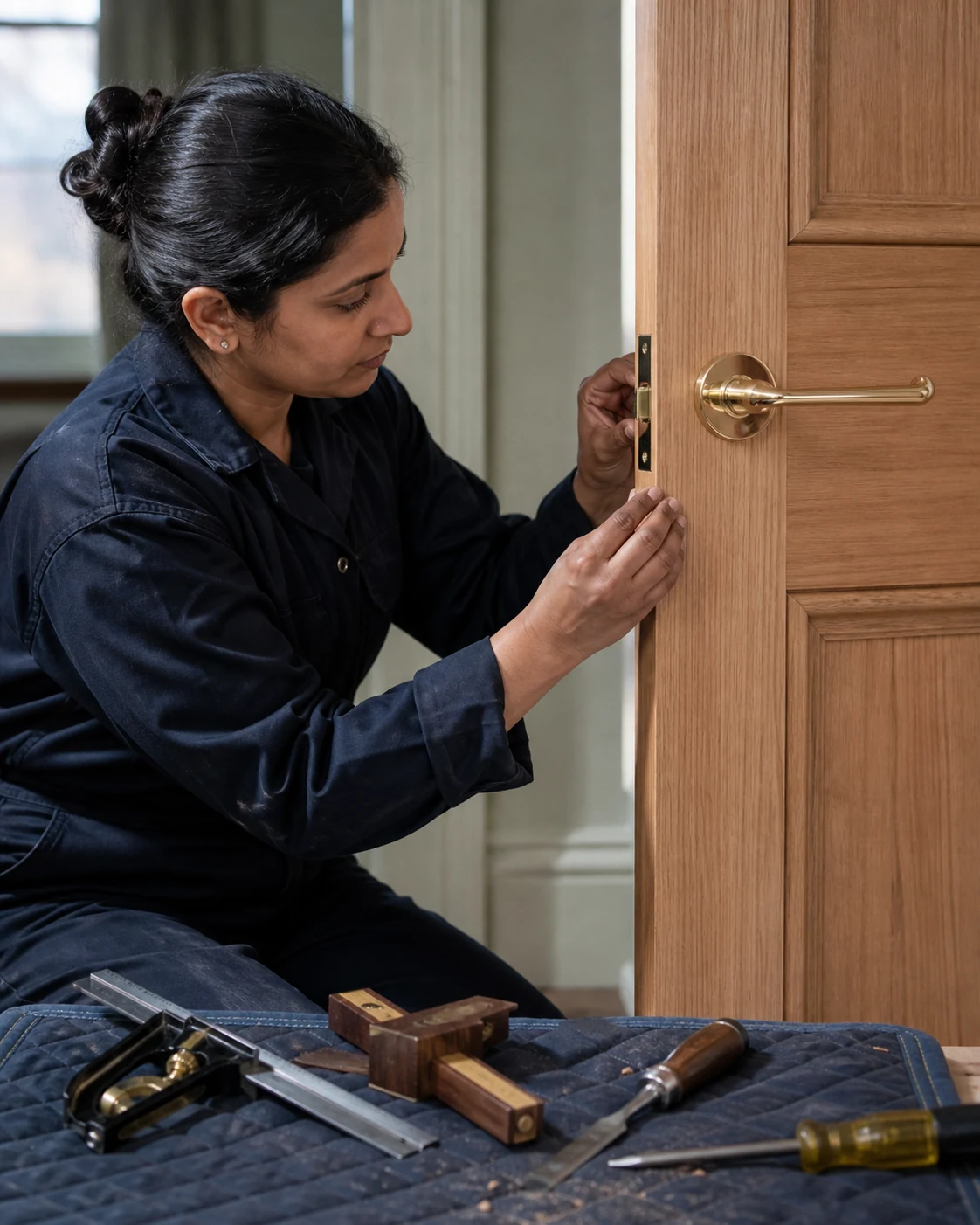
Holland Park property context
Holland Park enquiries can involve period houses, high-finish conversions, mews properties and managed apartments. These descriptions prompt practical questions about existing joinery, shared authority and working access. They do not establish conservation status, door construction or the lock fitted at a particular address.
A mews door may open close to the street or a compact access route, so give the lawful unloading position and space available around both sides. In a conversion, identify whether the door belongs to one flat or the common entrance. In a managed apartment building, obtain approval for contractor access and any appearance requirement before ordering hardware.
Where the customer wishes to retain original-looking ironmongery, document what is genuinely original, what is a later addition and what must simply remain visually consistent. The locksmith can advise on compatibility within the assessed door; the owner, designer, freeholder or other authorised party decides the acceptable visual result.
| Property or entrance type | Information to provide | Decision boundary |
|---|---|---|
| Period timber entrance | Full joinery record, existing cut-outs, hardware and any current property guidance | Lock compatibility versus conservation, joinery and decoration approval |
| High-finish conversion | Owner of surfaces, access limitations and approved visible finish | Electrical-free lock fitting versus reinstatement by other trades |
| Mews house door | Street approach, working clearance, door swing and weather exposure | Hardware installation versus door or threshold work |
| Managed apartment entrance | Manager contact, door records, contractor procedure and resident authority | Private instruction versus building requirements |
| Communal entrance with access control | Mechanical lock, closer, powered release and decorative hardware described separately | Locksmith component work versus management or electrical systems |
Quotation and making good
No reliable quote comes from the area name or an aesthetic description. Cost depends on survey, access, compatibility, product, preparation, fitting and separate finish work. A useful proposal shows how the door will look and function within the available evidence.
Name the product, documented characteristics, finish and supplied key quantity.
State new recesses, holes, plates, keep work and assumptions about existing timber.
Allocate coverings, dust control and access around completed surfaces where relevant.
Identify filling, joinery, polishing or decoration included or left to another party.
At handover, test closing, latching, locking and unlocking, count keys and compare visible work with the approved sheet. Record any unavoidable mark or unfinished surface honestly. A revised finding should receive fresh approval before extra preparation is carried out.
Holland Park locksmith FAQ
Include the whole door, both hardware faces, edge and frame, then mark items retained, removed or changed. Add expected holes, plates and making-good responsibility.
Do not assume an exact match from photographs or a broad colour name. Confirm the actual product finish and have the authorised customer accept the proposed visual relationship.
Only measured comparison can answer that. The proposal should state exposed preparation, any approved plates and who fills or redecorates remaining marks.
Possibly, when their condition, dimensions and operation are compatible with the chosen lock. Retention should be confirmed during the survey, not promised from appearance.
Appearance alone cannot answer that. The owner or responsible property professional should provide current requirements; the locksmith can then work within an authorised scope.
The resident may instruct work within their authority, while the freeholder or managing agent may control door records, common appearance or contractor access. Confirm the real boundary.
Agree this before fitting. If items are to remain with the property, label and hand them to the named owner or manager rather than disposing of them.
Only where expressly included. Joinery, filling, polishing and decoration should appear as named tasks with a responsible party.
Compare the same function, hardware evidence, finish, key issue, preparation, visible change, protection, testing and reinstatement boundary.
Nearby coverage
Use service pages for the task and existing local pages for related property context.
Agree the visible result before fitting
Send the door record, desired function, authority, compatibility details and accepted finish boundary for a transparent proposal.
