
Alignment assessment
Reference points and open-versus-closed operation are compared. Adjustment follows the measured relationship rather than trial filing or keep movement.
Safe approach · door reference points · alignment evidence · garden mechanism
A sloping approach or split-level home changes how a garden door is reached, while the door itself can show movement through changing contact at the frame. A Forest Hill brief should document both the access route and the alignment observations without claiming a cause.
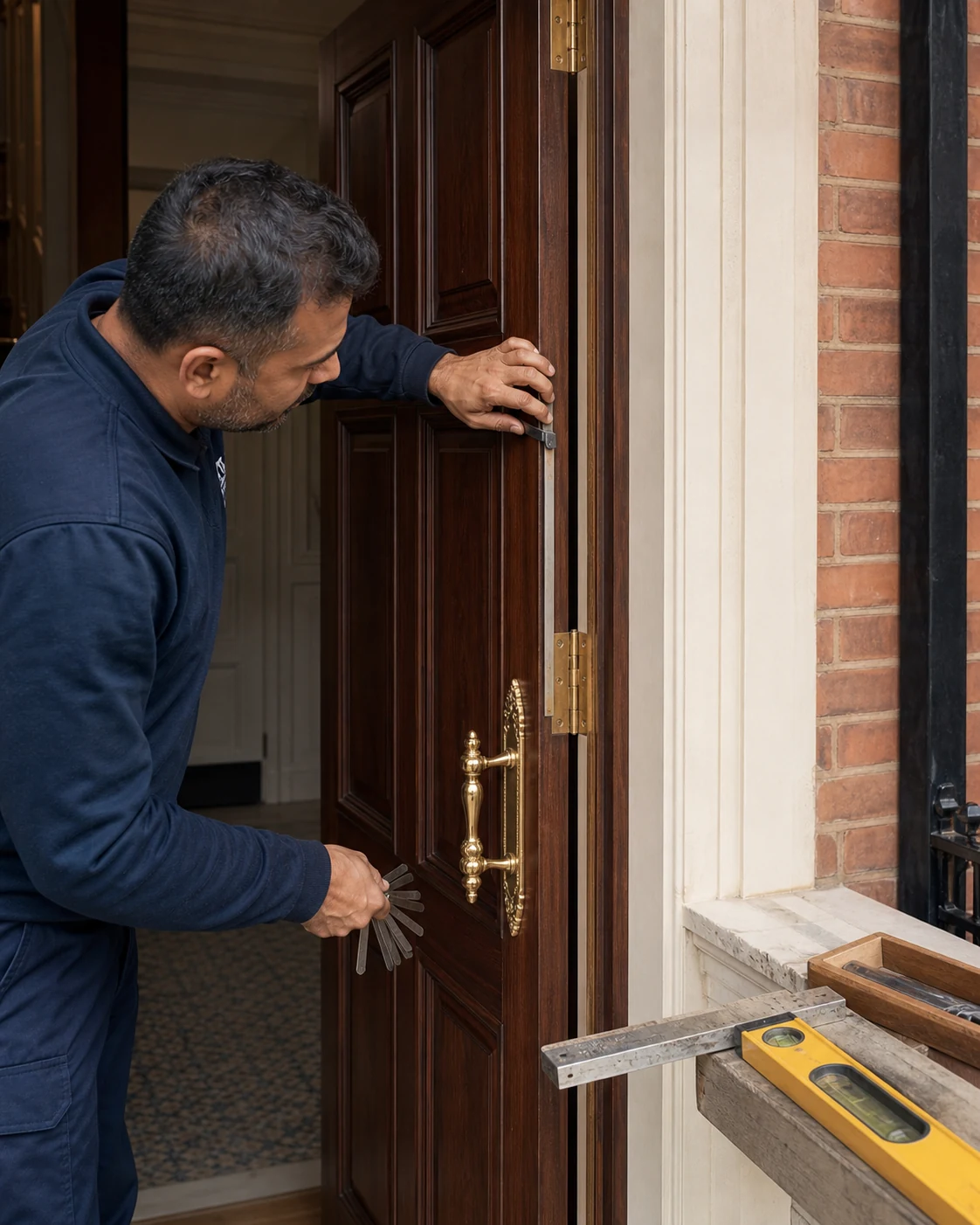
Alignment observation sheet
A door can rub at the top, touch at the latch side, drag over the threshold or need pressure before the handle lifts. Record the place and action rather than concluding that the building, frame or hinge caused it. The locksmith can compare those observations with the mechanism and door condition on site.
For a UPVC garden door, photograph the whole leaf and frame, hinge side, threshold, handles and visible locking strip from a safe position. Do not mark the frame permanently, loosen keeps or lift the door with tools. If the behaviour changes over time, note the dates only when actually observed. Weather, ground and building movement should not be invented from one stiff lock.
| Reference point | What to observe safely | Assessment question |
|---|---|---|
| Hinge side | Visible gaps, rubbing and whether the leaf drops during movement | How hinges and door position relate to the frame |
| Latch and handle height | Contact, pressure needed and handle travel | Whether alignment or mechanism resistance appears at this stage |
| Top corner | Marks, touching or a change as the door closes | Whether the leaf meets the frame evenly |
| Threshold | Dragging, debris and normal closure without lifting | Door position, obstruction and lower locking-point engagement |
| Locking strip and keeps | Visible layout and contact without adjustment | How hooks or rollers align with their frame positions |
Route before repair
Tell the locksmith whether the route includes outdoor steps, a sloping path, a side gate or internal changes of level. Clear loose items and provide suitable lighting without attempting to modify the path. If tools must pass through a shared conversion hallway or another occupier’s area, obtain permission beforehand.
State whether both faces of the door are reachable from authorised, stable ground. Do not climb over a fence, lean across a drop or use furniture as a platform. If only the internal face is safely available, the locksmith needs to know because this may restrict identification and testing.
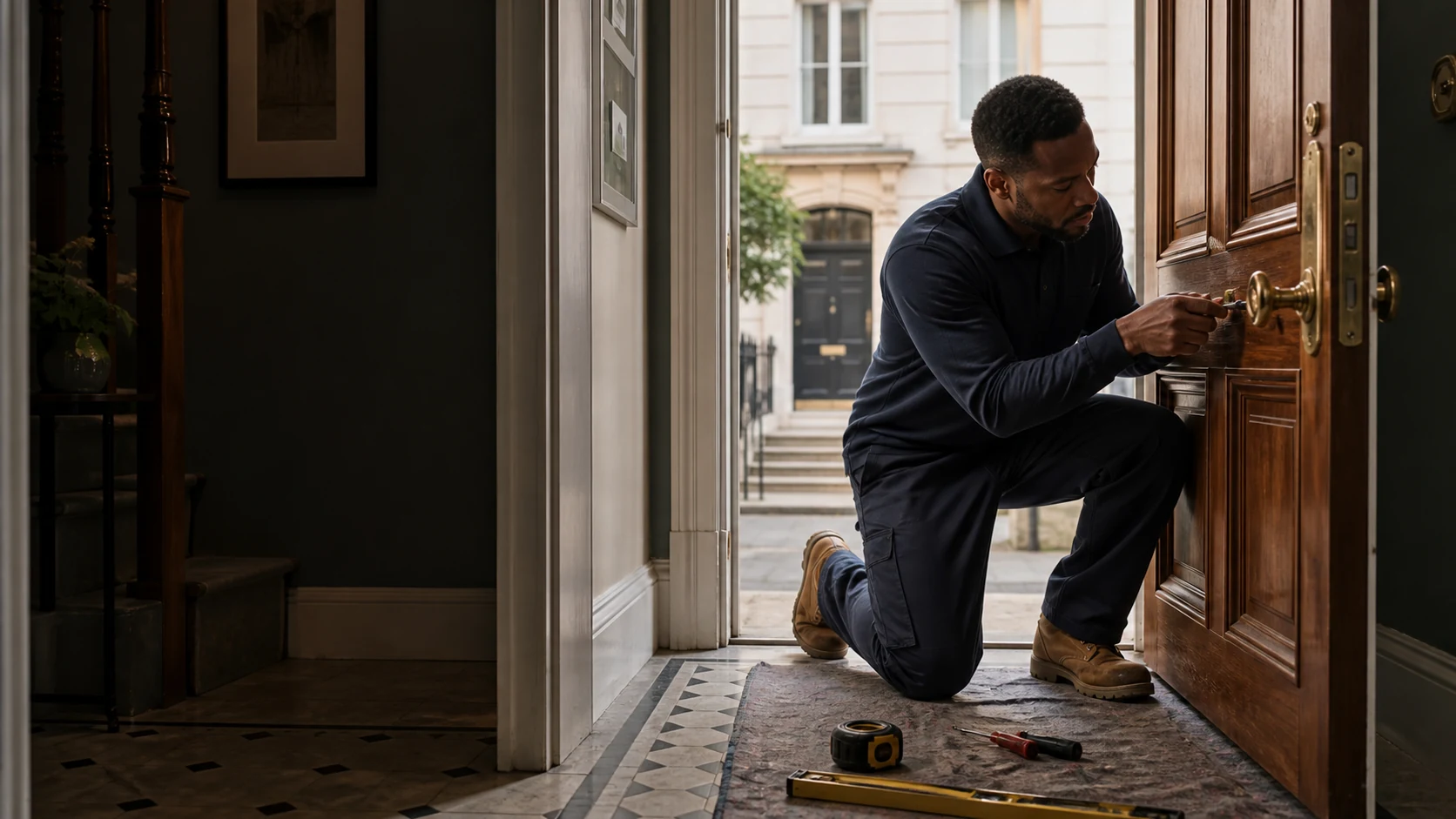
Behaviour and first check
| Observed behaviour | Record without force | What inspection must distinguish |
|---|---|---|
| Door rubs before reaching the latch | Contact point and whether it occurs throughout movement | Hinge, leaf, frame, obstruction and general position |
| Door closes but handle will not lift fully | Where resistance begins and whether open operation differs | Keep engagement, gearbox, strip and alignment |
| Handle lifts but key remains stiff | Key condition and whether the mechanism reached its full position | Cylinder condition versus pressure from connected components |
| One hook catches while others move | Visible hook and corresponding keep, left unchanged | Local contact, strip travel and door position |
| Door works intermittently | Dates, door position and ordinary use when directly observed | Changing alignment, wear and component condition |
| Frame or threshold visibly changes | Safe photographs and factual timing | Locksmith limit and need for door or building assessment |
Evidence-led repair options
Reference points and open-versus-closed operation are compared. Adjustment follows the measured relationship rather than trial filing or keep movement.
Handle, gearbox, strip and locking points are tested as a system. Compatible parts depend on identification and retained door condition.
A worn keyway or key-control requirement may justify a cylinder change. It does not correct door position or a failed gearbox.
Loose movement, return and connection to the gearbox are examined. Fixing centres and door thickness guide compatible furniture.
Damaged hinges, leaf, frame, glazing or threshold can require a door specialist or joiner. The mechanical lock scope should state this boundary.
Suspected structural or ground-related concerns are not diagnosed by a locksmith. Record visible facts and seek the appropriate property professional.
Quote the observed boundary
Forest Hill does not produce a standard locksmith price. The quotation follows access, assessment, labour and parts. A useful proposal says whether alignment work is included and where door or building repair begins.
| Scope element | Evidence needed | Written boundary |
|---|---|---|
| Route and access | Steps, slope, gate, levels and safe working positions | Areas that can be reached and any limitation |
| Alignment assessment | Reference-point observations and open or closed behaviour | Checks included before adjustment is recommended |
| Adjustment | Confirmed hinge, keep or frame relationship | Exact movement and retained hardware condition |
| Mechanism repair | Identified cylinder, handle, gearbox or strip fault | Part, labour and frame work excluded |
| Door repair | Leaf, frame, hinge, panel, glazing or threshold condition | Separate provider and making-good responsibility |
| Final test | Safe positions and normal operating sequence | Functions tested and unresolved contact recorded |
If adjustment reveals worn mechanism parts, or mechanism removal reveals damage, pause and revise the scope. The authorised owner should see the new evidence before work expands. A single attendance should not merge locksmith and structural advice invisibly.
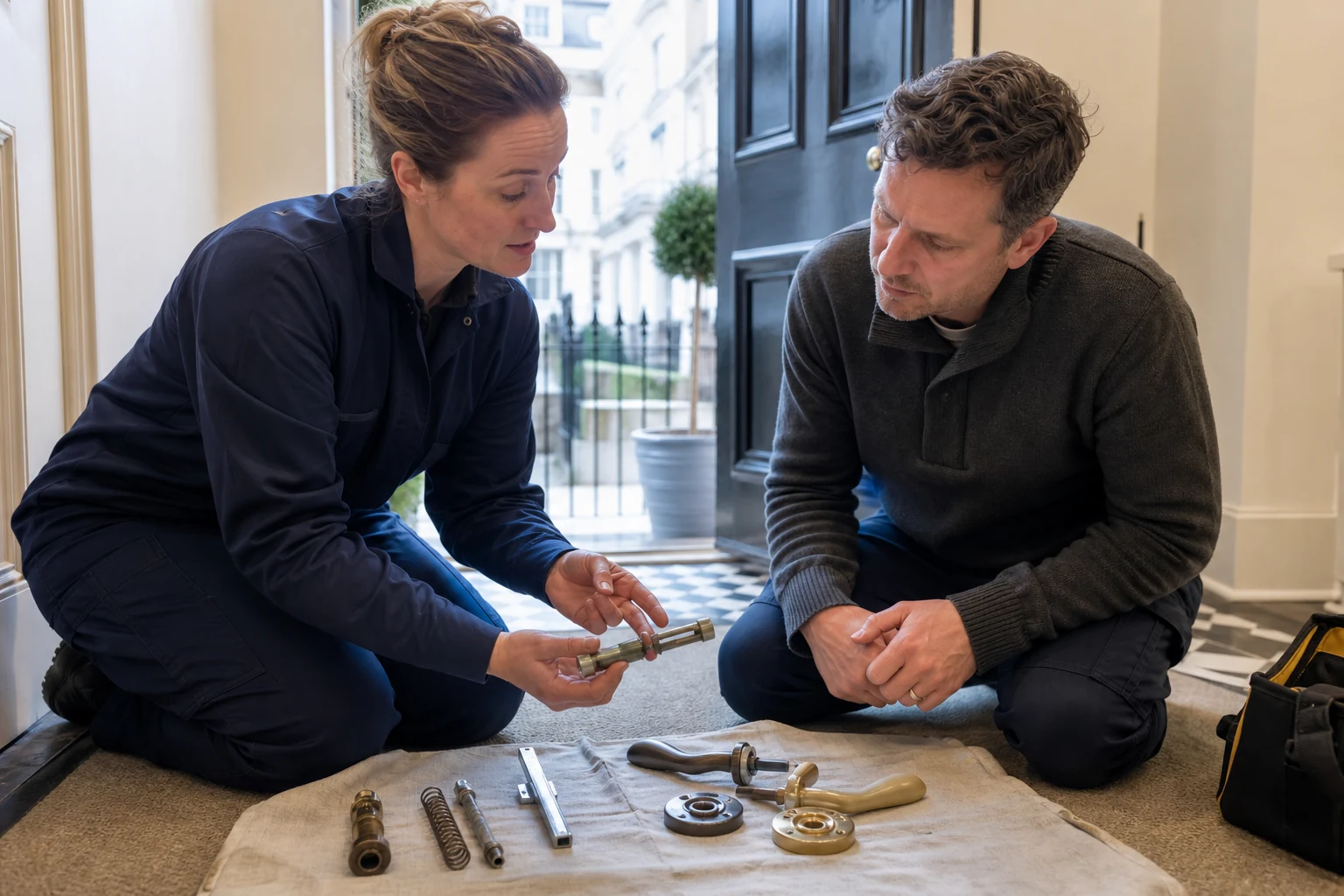
Forest Hill property context
A split-level house may place the consumer of the door, keys and garden entrance on different floors. Describe the whole path so the locksmith brings tools safely to the target. Internal stairs and outdoor slopes should be clear and properly lit.
In a conversion, the garden door can belong to one flat while the side passage is shared. Confirm both ownership and passage permission. Access through another household should never be assumed.
Where the door appears to have changed position, avoid attributing it to local terrain or property type. The locksmith can assess lock and alignment evidence. Wider movement belongs with the relevant door, building or structural professional.
Reference-point handover
Repeat the closing and locking sequence with the authorised user. Check the former contact points and record any remaining limitation. The door should not rely on an unexplained lift, shove or pull unless that is part of its intended operation.
Count keys and note which adjustment or part was used. If the frame, threshold or building needs further review, preserve the photographs and name the responsible follow-on contact.
Forest Hill alignment FAQ
No. Terrain does not diagnose the door. Record direct contact and operation, then seek the appropriate assessment for lock, door or building concerns.
Use a photograph or written reference without permanent marking or alteration. Leave the frame and keeps in their current positions.
Only with a safe authorised approach and stable working area. Explain steps, slope and access limitations before attendance.
Report that observation but stop using force. Alignment and the mechanism need checking together before a remedy is chosen.
Possibly, when evidence supports it and the full door remains reliable. Do not move a keep before the system has been assessed.
A door specialist, joiner or building professional may be needed. The locksmith should state what mechanical work can be completed safely.
No. A gearbox addresses an identified mechanism issue; it does not correct how the leaf meets the frame.
Keep the reference points, adjustment made, retained hardware, complete operation test and any remaining door or building concern.
Nearby south-east pages
Choose the page matching the actual address and access route.
Record contact, movement and the safe route
Send the Forest Hill address, steps or slope, door position, alignment observations and authorised contact.
