
Authorised opening
The locksmith verifies the right to enter and inspects the secured hardware. A suitable method follows the door condition, not the next meeting time.
Live-work boundary · trading route · residential door · authority window
A warehouse apartment or live-work unit may share its address with studios, offices or a commercial frontage. Define when the route is residential, who controls each entrance and which door needs work before arranging attendance.
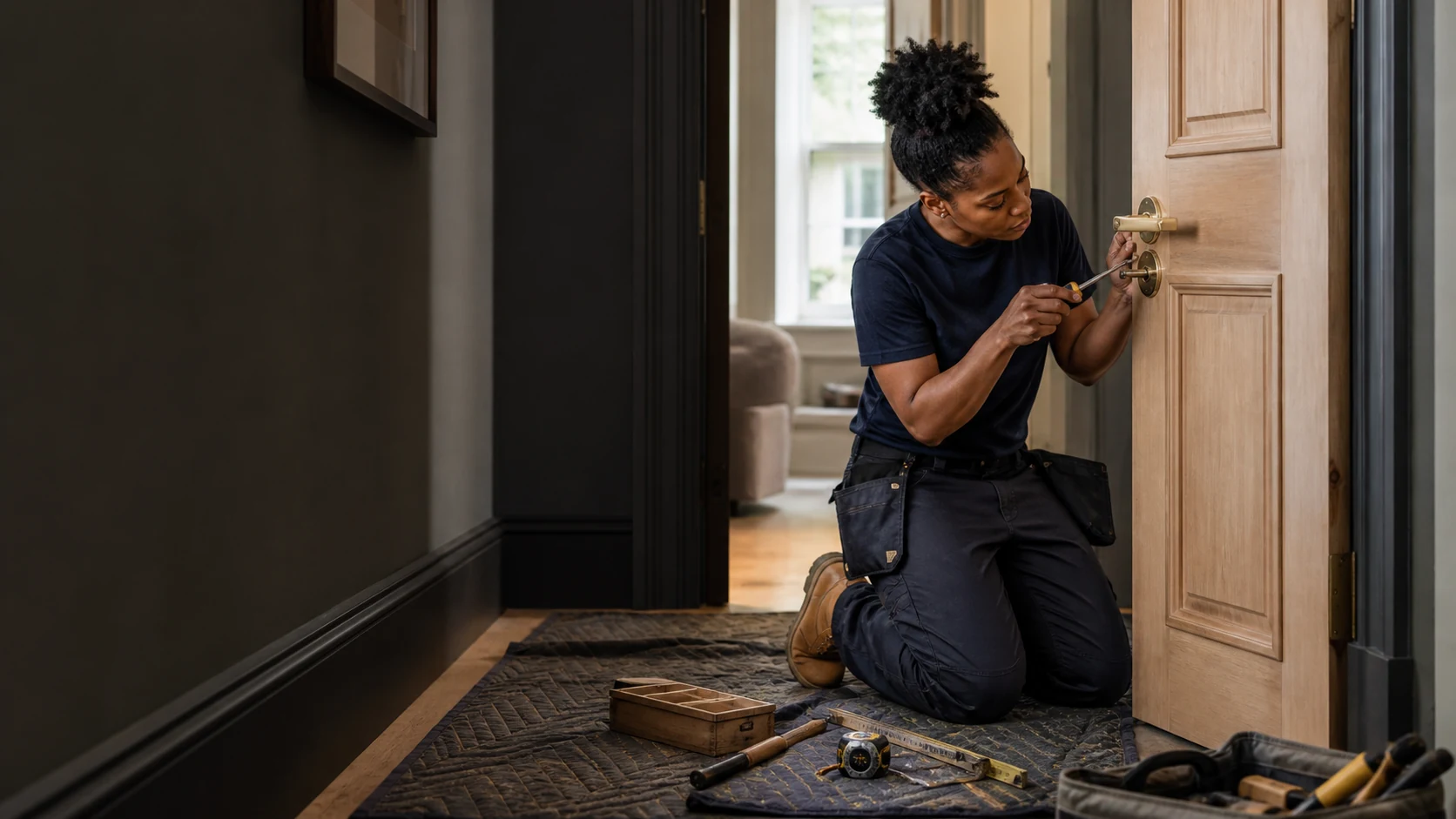
Use and route schedule
Shoreditch warehouse apartments, live-work units and homes behind commercial frontages can use the same hallway differently during trading and residential hours. A street door may admit customers during the day but become a controlled residents’ entrance later. A loading gate may offer physical access without being approved for a locksmith. A studio occupier may control their unit but not the common lobby.
Give the locksmith a use-and-route schedule. State the affected door, who passes through it, when the route is available and who can approve changes. Avoid relying on a staff member who finishes before the appointment or a resident-only fob that cannot admit contractors. These details make the visit lawful and workable without pretending every door at a mixed address shares one owner.
| Route | Normal users and timing | Authority to confirm |
|---|---|---|
| Commercial front entrance | Customers and staff during trading hours | Business controller for hardware and contractor presence. |
| Separate residential door | Residents and authorised visitors | Freeholder or manager for common parts; resident for private door. |
| Live-work unit entrance | Occupier, colleagues and invited clients | Owner or tenant rights for the demised unit. |
| Loading or service gate | Deliveries and nominated contractors in set windows | Site operator for lawful access and key release. |
| Warehouse conversion lobby | Fob users, reception and maintenance staff | Managing agent for credentials and common hardware. |
| Private apartment entrance | Household and authorised key holders | Resident, owner or landlord within building rules. |
Live-work authority
Ask whether the customer occupies the unit as a resident, business tenant, owner or authorised manager. A colleague may hold a key without permission to replace the lock. A receptionist may admit a locksmith but not approve a changed common entrance. Where identification or tenancy evidence is inside a locked unit, explain that before attendance so a reasonable verification route can be discussed.
If lost keys serve both work and living areas, list every affected door and the people needing continued access. Do not circulate detailed key photographs among a wide team. Separate mechanical keys from fobs and codes, which may be administered by building management.
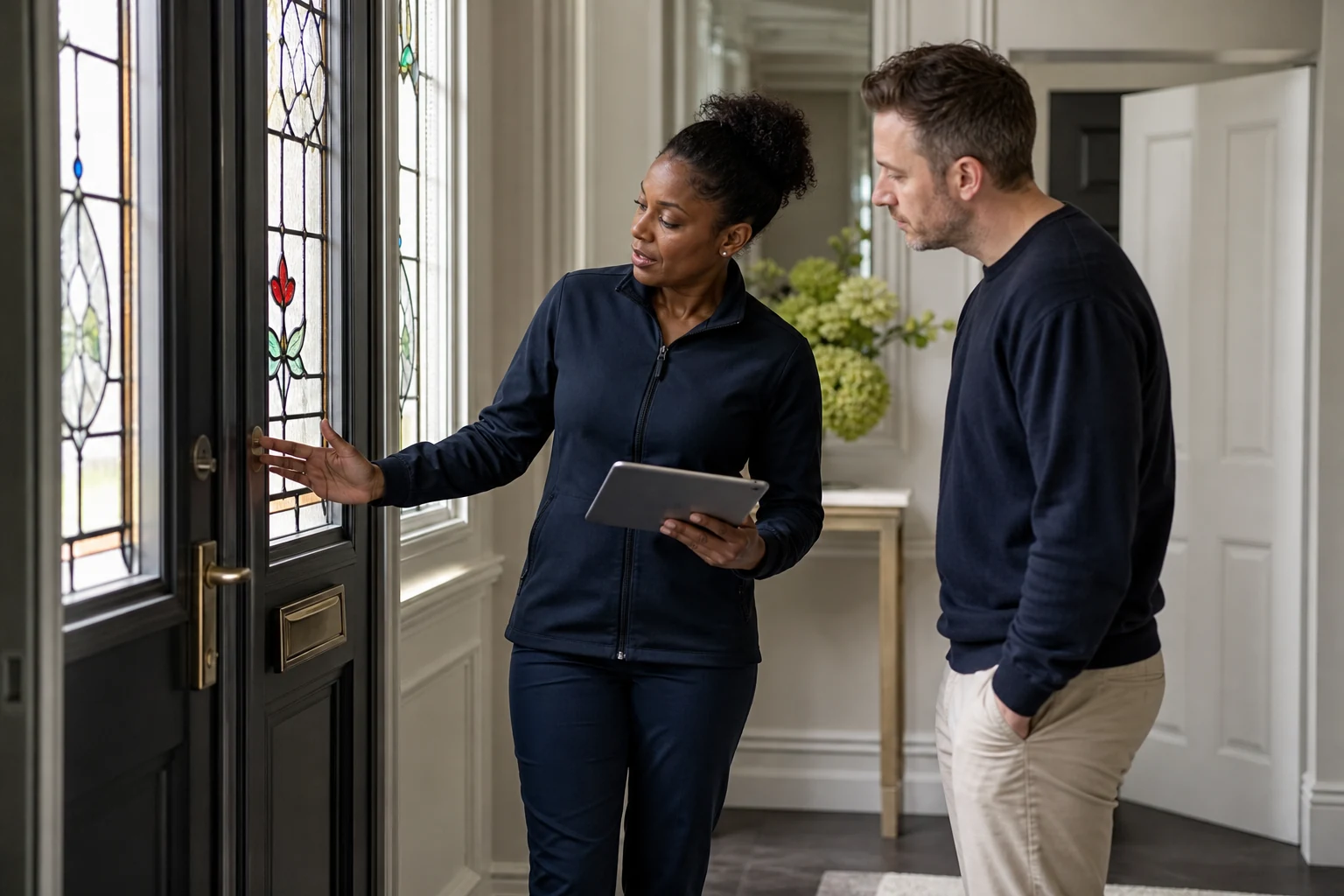
Problem and operating context
| Situation | Context to record | Next decision |
|---|---|---|
| Unit key fails before a client appointment | Private authority, door state and alternative lawful access | Assess opening without treating business timing as permission for damage. |
| Residential lobby fob stops working | Credential status and whether other authorised users enter | Building administrator checks the access system. |
| Street door will not latch after trading | Closer, latch, frame and electronic-release behaviour | Common controller coordinates relevant mechanical and electronic work. |
| Studio lock is stiff only when closed | Frame pressure, key condition and open-door movement | Compare alignment with internal lock condition. |
| Delivery gate key is missing | Doors served, key holder and site operating rules | Business or property controller reviews key control. |
| Damage crosses a shopfront and residential surround | Ownership, current security and separate affected materials | Define locksmith, glazing, frame and commercial scopes independently. |
Locksmith work for one defined unit
The locksmith verifies the right to enter and inspects the secured hardware. A suitable method follows the door condition, not the next meeting time.
Key, handle, latch and bolt action are tested through the normal door cycle. Alignment and connected furniture remain part of diagnosis.
Measurements, door construction, desired key control and user quantity guide a compatible product for the approved entrance.
Fragments should remain undisturbed. Extraction, entry and follow-on repair are agreed from the lock’s condition.
Relevant composite or UPVC doors are assessed through cylinder, handles, gearbox, strip, keeps and alignment.
An immediate mechanical result can be defined while frame, glazing, shutter or access-control work is referred separately.
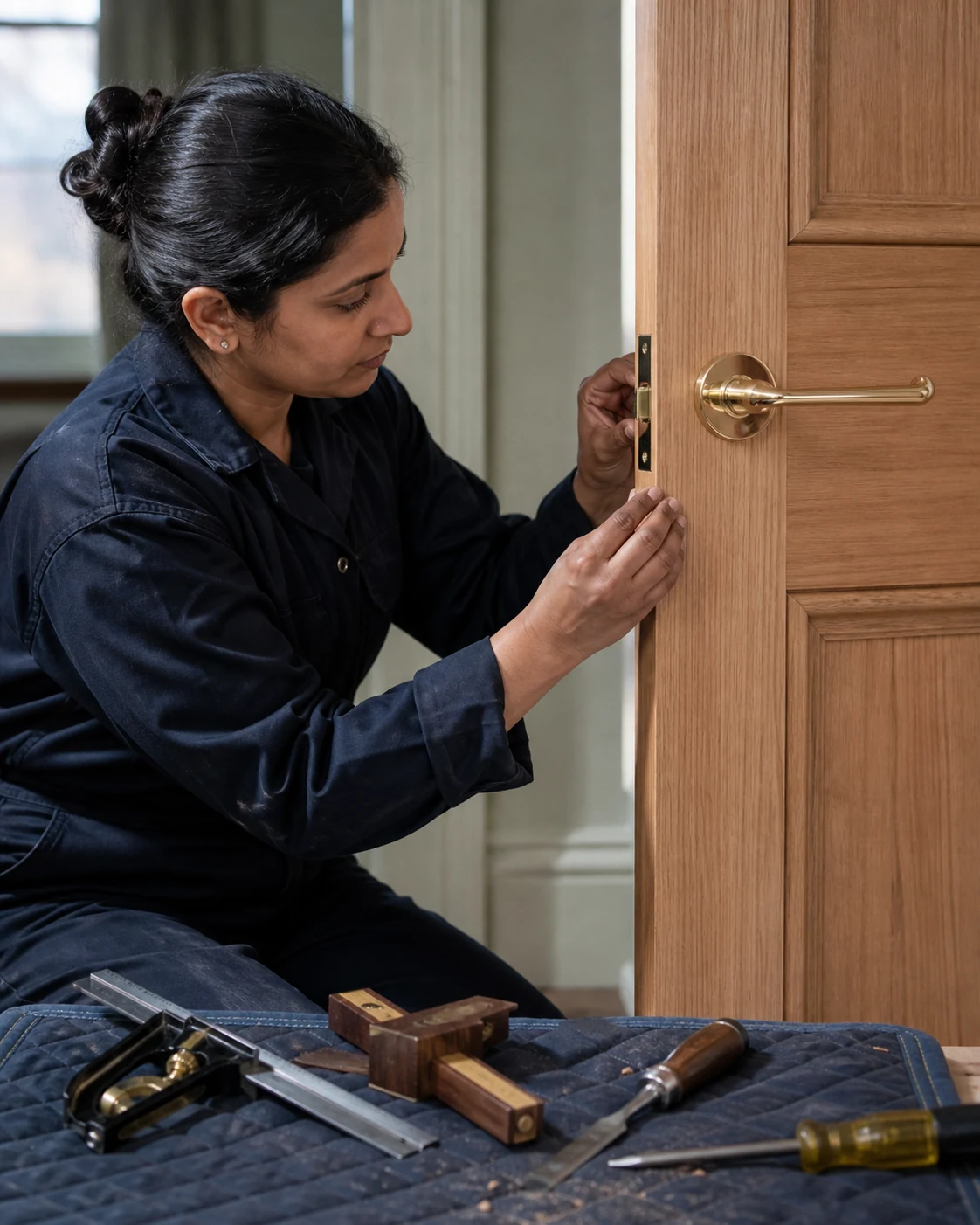
Warehouse and converted interiors
Open-plan units can blur the visual boundary between workspace and home, but the lock still belongs to a specific door and tenure. Clear the immediate area without moving business equipment you do not control. If a corridor handles deliveries or customers, agree where tools can be placed and keep escape routes open.
Converted doors may have non-standard thickness, metal elements or previous cut-outs. Photographs help, but direct measurements establish compatible hardware. Do not order a replacement solely from an exterior face. Ask how any new drilling, plates or frame work affect the finished entrance.
After work, test closing, latching, locking and unlocking under ordinary conditions. Count keys and identify their authorised recipient. Make sure commercial or management contacts understand any unresolved common-door or access-control problem before the route changes at the end of trading.
Quotation around use and access
Shoreditch itself does not determine a fixed figure. The quote depends on the defined unit, timing, route, authority, method and hardware. Commercial urgency should not erase approval or make damaging entry automatic.
| Line item | Evidence | Boundary |
|---|---|---|
| Arrival window | Residential or commercial entrance, gate, loading and contact | Route assumed available and return arrangements. |
| Unit lockout | Authority, door state, lock and visible damage | Attendance, method, entry and security afterwards. |
| Repair | Key, handle, latch and open-versus-closed operation | Diagnosis, parts and excluded door work. |
| Replacement | Measurements, construction, users and key-control aim | Specified hardware, fitting, tests and key count. |
| Common system | Manager, credentials, closer and electric release | Mechanical work compared with system-provider action. |
| Damage | Unit, commercial and common materials affected | Temporary securing and separate permanent repairs. |
If the reported unit or access route changes on arrival, confirm the new controller before proceeding. Additional parts, destructive entry and work on another door require a revised scope.
Shoreditch locksmith FAQ
Only if they have proper authority for that entrance. Holding a key or working in the unit does not by itself permit replacement.
Give its position, route, business landmark, controlled gates, floor and unit. State who can open each stage.
No unauthorised bypass should be requested. Management should administer credentials and system faults while lawful private-door access is arranged.
Reasonable evidence of occupancy, ownership or management authority is needed. Explain if documents are inside the locked space.
No. The method depends on the lock and door condition. Any destructive approach and follow-on replacement should be explained first.
Only with authority for both doors and separate compatible scopes. Their users, ownership and security requirements may differ.
Record closer, latch and electronic-release behaviour at that time and report it to the building controller for coordinated assessment.
Only if stated. Frame, fabrication, joinery, glazing and decoration can remain separate work.
Check closing, latching, locking, unlocking, handle return and keys, then record any unresolved common or electronic issue.
Map and nearby live pages
Use the actual property location and route. These nearby pages exist or are included in this batch.
Define use, route and authority together
Send the exact unit, access window, controlled doors, lock behaviour and the person entitled to approve the result.
Operating plan
For planned work, identify when repeated opening, closing and key tests are acceptable. A live-work occupier may need to pause calls while neighbouring units still use the common route. Explain whether deliveries or visitors have another entrance during the checks, but do not promise exclusive use of a shared lobby. The final test should reflect the real door routine rather than an artificially empty building. Record who will confirm the unit lock, who checks any common door and when the commercial route changes at the end of the working window.
