
Authorised flat entry
The locksmith verifies a reasonable right to enter and assesses the private door. Earlier route access is arranged rather than altered.
Route ledger · key holder · shared hall · private instruction
A flat above commercial premises or inside a converted terrace can depend on several people to open the route. Build a ledger naming each door, its key holder and its responsible owner before the locksmith travels.
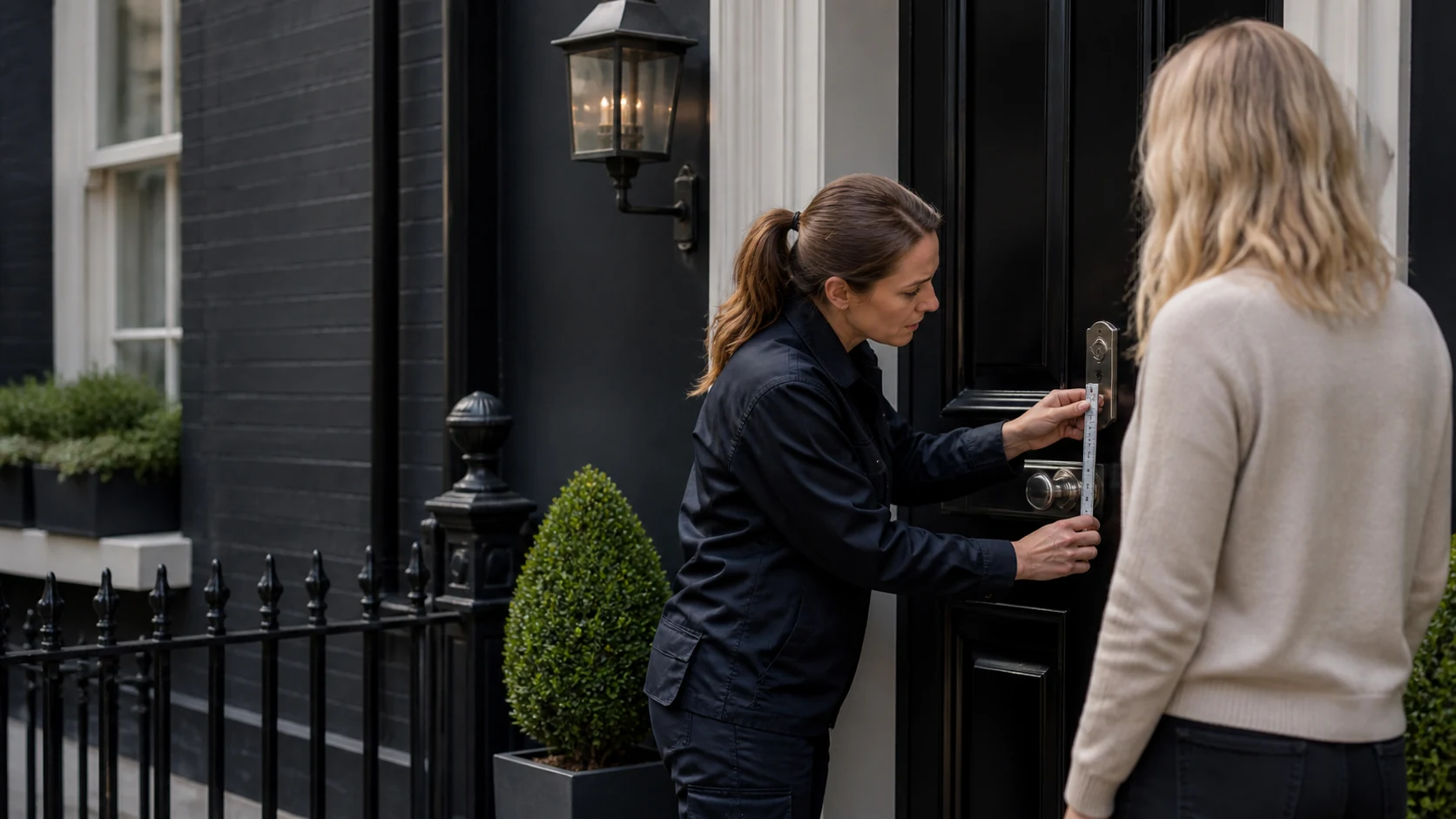
Route-ownership ledger
Dalston flats above commercial premises and converted terraces can have a side entrance, common front door, narrow hall and private flat lock under different control. A shop employee may hold the side-gate key but not own the residential door. A tenant may control the flat key but need landlord approval for permanent replacement. A freeholder may own the common entrance while an agent arranges daily access.
Write one ledger row per door. Include its position, normal key holder, person or organisation able to authorise changes, and available hours. Then add the observed symptom only to the affected row. This avoids turning a private lockout into a request to alter every earlier entrance.
| Entrance | Physical access holder | Change authority |
|---|---|---|
| Shop-side residential door | Resident, business staff or nominated key holder | Building owner, freeholder or managing agent. |
| Common terrace entrance | Residents with shared keys | Freeholder or agent acting for the common parts. |
| Shared internal hall door | Occupants and maintenance contact | Controller of the converted building. |
| Private flat entrance | Tenant or owner | Occupier, landlord or owner according to the tenancy. |
| Rear passage gate | Business, neighbour or building key holder | Owner of the passage or common route. |
| Electronic lobby stage | Authorised fob users | Manager or access-control administrator. |
From ledger to booking
It is not enough for someone to open the first gate and leave. The locksmith may need to carry tools back, test a common key or return through the same route after completion. Confirm the key holder will remain reachable and that commercial closing time will not trap the contractor inside or outside. Give a lawful parking or unloading option rather than relying on a busy frontage.
For a lockout, state whether the customer is outside the building, outside the flat or inside but unable to secure a door. If identification is behind the private entrance, mention that when booking. Do not ask the locksmith to follow another resident through a controlled door or force an unrelated lock.
Ledger scenario guide
| Scenario | Ledger check | Action |
|---|---|---|
| Private flat key has snapped | Occupier authority and lawful route through common doors | Assess extraction, opening and lock condition at the flat. |
| Common key fails for one resident | Condition of that key and response of authorised spares | Avoid changing shared hardware until the evidence is compared. |
| Common door will not latch | Freeholder or agent, closer, frame and electric release | Arrange building-authorised mechanical and door checks. |
| Shop-controlled passage closes early | Key holder and approved alternative route | Reschedule access rather than force the gate. |
| Flat lock change requested by tenant | Tenancy permission and landlord access requirement | Agree private hardware and key handover with proper authority. |
| Fob works but mechanical lobby key does not | Manager ownership of override and common lock | Refer the common mechanical issue through management. |
Services linked to one door
The locksmith verifies a reasonable right to enter and assesses the private door. Earlier route access is arranged rather than altered.
Key, handle and latch behaviour are checked in open and closed positions. Door alignment remains part of the evidence.
Measurements, door construction, desired control and key quantity guide a compatible product for the authorised entrance.
Leave the fragment undisturbed and retain the other piece. Removal and any follow-on replacement are separate decisions.
For relevant UPVC or composite doors, cylinder, handles, gearbox, strip, keeps and alignment are reviewed together.
A defined mechanical result may be possible while door, frame, glazing or electronic work is assigned to another row or provider.
Converted terraces and commercial neighbours
A narrow common hall should remain usable by other households. Agree where tools can be placed and avoid blocking escape or deliveries. Do not wedge the street door open. Where access crosses a business-controlled area, agree the window and route with that operator, but keep the residential lock decision with its proper authority.
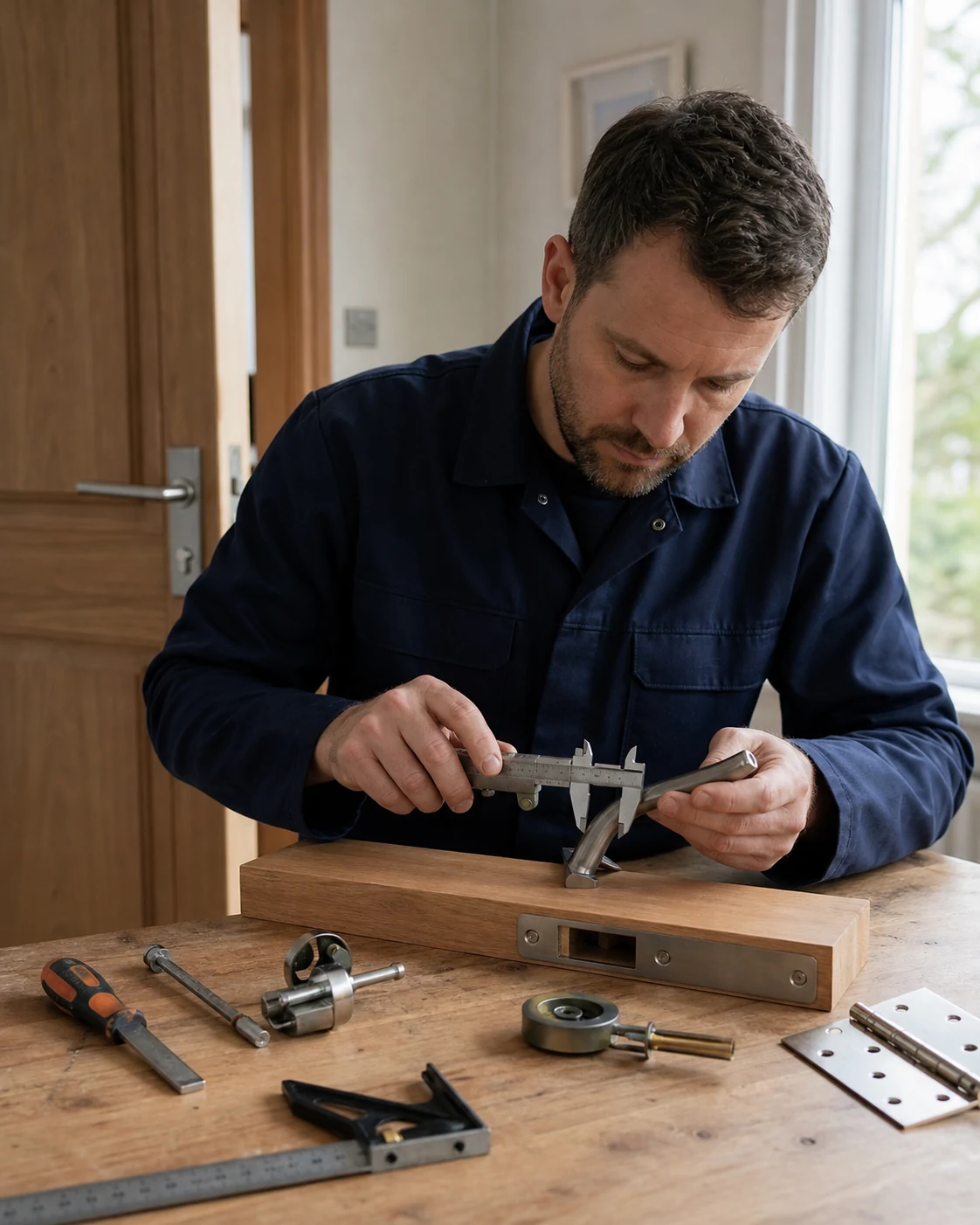
Converted properties may contain older timber doors with previous alterations. Safe photographs support planning, yet direct measurements are needed for a compatible case, cylinder or furniture. Do not remove a common lock for identification on one resident’s request.
After work, test the specified private door and count keys. Mark the row complete, then record unresolved common closer, frame or credential issues under their own controller. This prevents a successful flat opening from being mistaken for repair of the entire building route.
Quote with route assumptions
Dalston does not create a fixed locksmith cost. The quotation depends on arrival, authority, method, diagnosis and parts. The ledger makes access assumptions visible before they cause waiting or unauthorised work.
| Field | Information | Boundary |
|---|---|---|
| Route | Street door, hall, stairs, gate, key holder and window | Stages assumed open for attendance and exit. |
| Lockout | Private authority, door state, hardware and damage | Attendance, opening, repair and security afterwards. |
| Repair | Key, handle, latch and frame behaviour | Diagnosis, parts and excluded door work. |
| Replacement | Measurements, construction, key users and outcome | Specified hardware, fitting, tests and keys. |
| Common door | Freeholder, all residents, closer and electronic release | Building-owned work and distribution of keys. |
| Damage | Lock, leaf, frame, glazing and current security | Temporary measure versus permanent reinstatement. |
If a different door requires work after arrival, create a new ledger row and obtain its controller’s approval. Destructive methods and extra parts also require a revised explanation.
Dalston locksmith FAQ
No. Physical access and legal or management authority can belong to different people. Record both in the route ledger.
Only if they also hold proper authority for that door. They may simply control the passage used to reach it.
The locksmith needs reasonable evidence of occupation, ownership or authorised management. Explain if documents are inside.
Not alone. The freeholder or agent should coordinate all users, keys and any closer or access-control obligations.
Stop pushing the fragment, retain the other piece and avoid glue or drilling. Say whether the door is open or secured.
Only with authorised access. Confirm the key holder and hours or arrange another lawful route before the visit.
The same controlled doors may be needed for tools, testing and departure. A key holder leaving early can interrupt completion.
Only if stated. Mechanical hardware, frame, closer, glazing and electronic release can be separate scopes.
Mark the completed door, hardware, keys and tests, then assign any unresolved shared-system item to its controller.
Map and nearby live pages
Use the actual property location and route. These nearby pages exist or are included in this batch.
Record the holder and controller for every door
Send the route, access window, affected row, lock behaviour and the person authorised to accept the work.
Route contingency
Record a backup contact or agreed key-collection arrangement where the primary holder of a shared gate may leave. The same route may be needed for carrying tools, testing and departure, so permission should cover the full appointment rather than a quick entry. If commercial staff control a passage, confirm who remains responsible after a shift change. A contingency does not grant wider authority: it simply prevents an approved private-door task ending because an unrelated entrance becomes unavailable. Note the alternative in the ledger and tell both contacts which door the locksmith is authorised to assess.
