
Alignment assessment
Hinges, leaf position and frame keeps are compared with free mechanism operation. Adjustment is scoped only where suitable.
Private mechanism · managed boundary · alignment · compatible part
A UPVC apartment door can be private even when the route to it is managed. Confirm contractor access and ownership, then compare cylinder, handle, gearbox, multipoint strip and alignment before selecting parts.
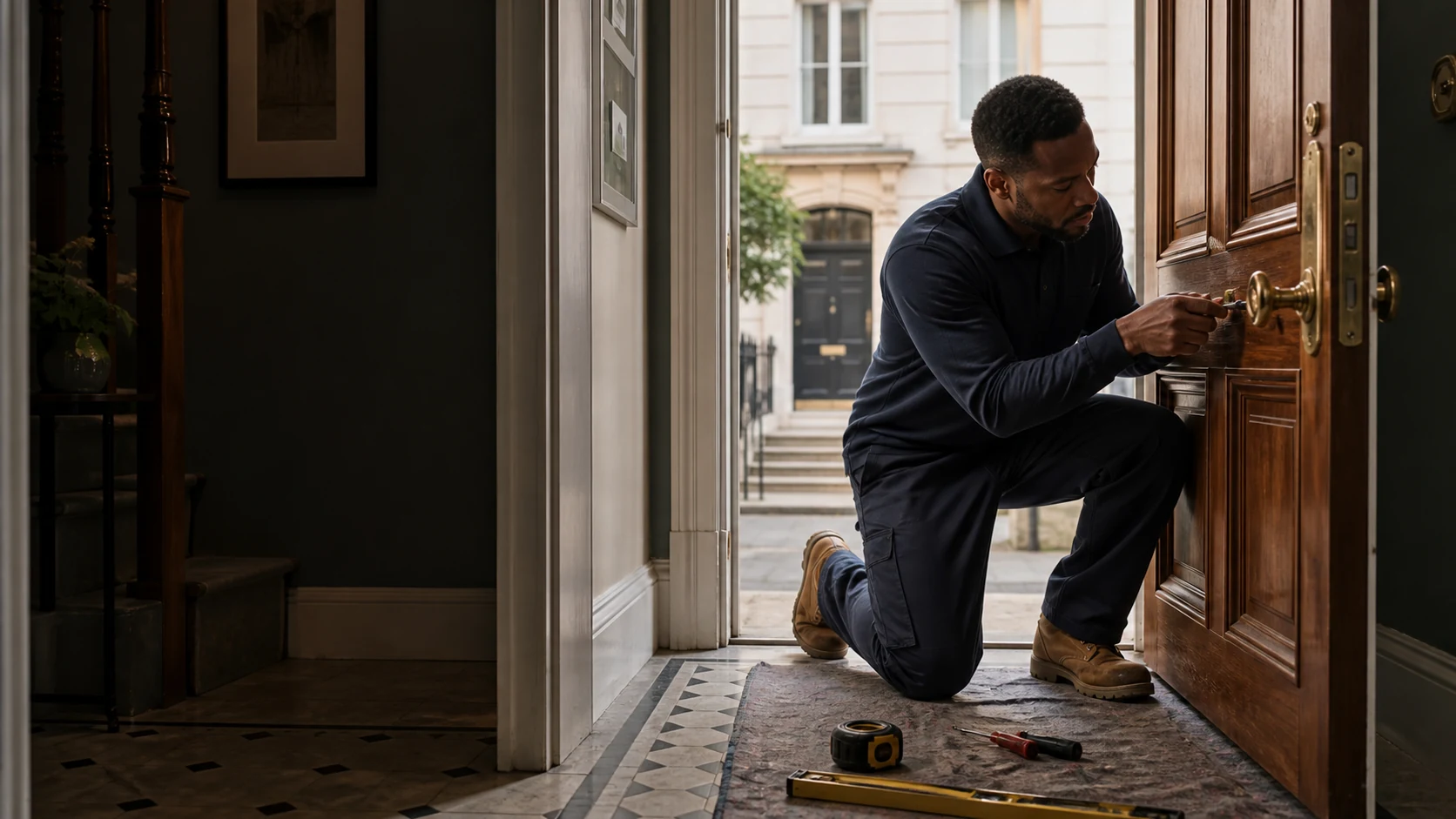
Managed route, private system
Hendon includes suburban houses, purpose-built flats and managed developments. A resident may control the lock on their dwelling while reception or a managing agent controls the gate, lobby and service lift. Ask how a contractor enters, where tools may be unloaded and who can release shared keys. Do not assume an apartment fob authorises work on a common door.
At the private entrance, identify the material and hardware. A UPVC or composite door often uses a euro cylinder, handles, gearbox and long multipoint strip engaging with frame keeps. The building route is an access problem; the door system is a mechanical assessment. Keeping them separate prevents an electronic lobby fault being confused with a private cylinder problem.
| Element | Controller | Relevant question |
|---|---|---|
| Development gate or lobby | Managing agent or access-control operator | Does the credential or release system work for authorised users? |
| Common corridor door | Freeholder or building manager | Are closer, latch and common hardware functioning together? |
| Private apartment entrance | Resident or owner within building rules | Which key, handle or multipoint action fails? |
| Suburban house front door | Owner or authorised occupier | Is the system UPVC, composite or timber and how is it used? |
| Balcony or garden-side door | Dwelling owner, sometimes subject to management rules | Can both sides be reached and does alignment change operation? |
| Service cupboard or plant room | Building operator | Is it required for the private lock task or a separate system? |
Multipoint sequence
When the door is safely open, the handle may lift to move hooks, rollers or bolts. The key then secures the mechanism. If the handle resists only when closed, the leaf may be loading the keeps. If the handle lifts but the key does not turn, the cylinder, key or gearbox position needs consideration. A floppy handle raises another set of possibilities.
Do not close a door that may trap you outside or leave the home insecure. Stop if force increases. Photograph the whole edge strip, handles, cylinder and frame keeps while everything remains assembled. Visible markings help identify parts, but direct dimensions are often still required.
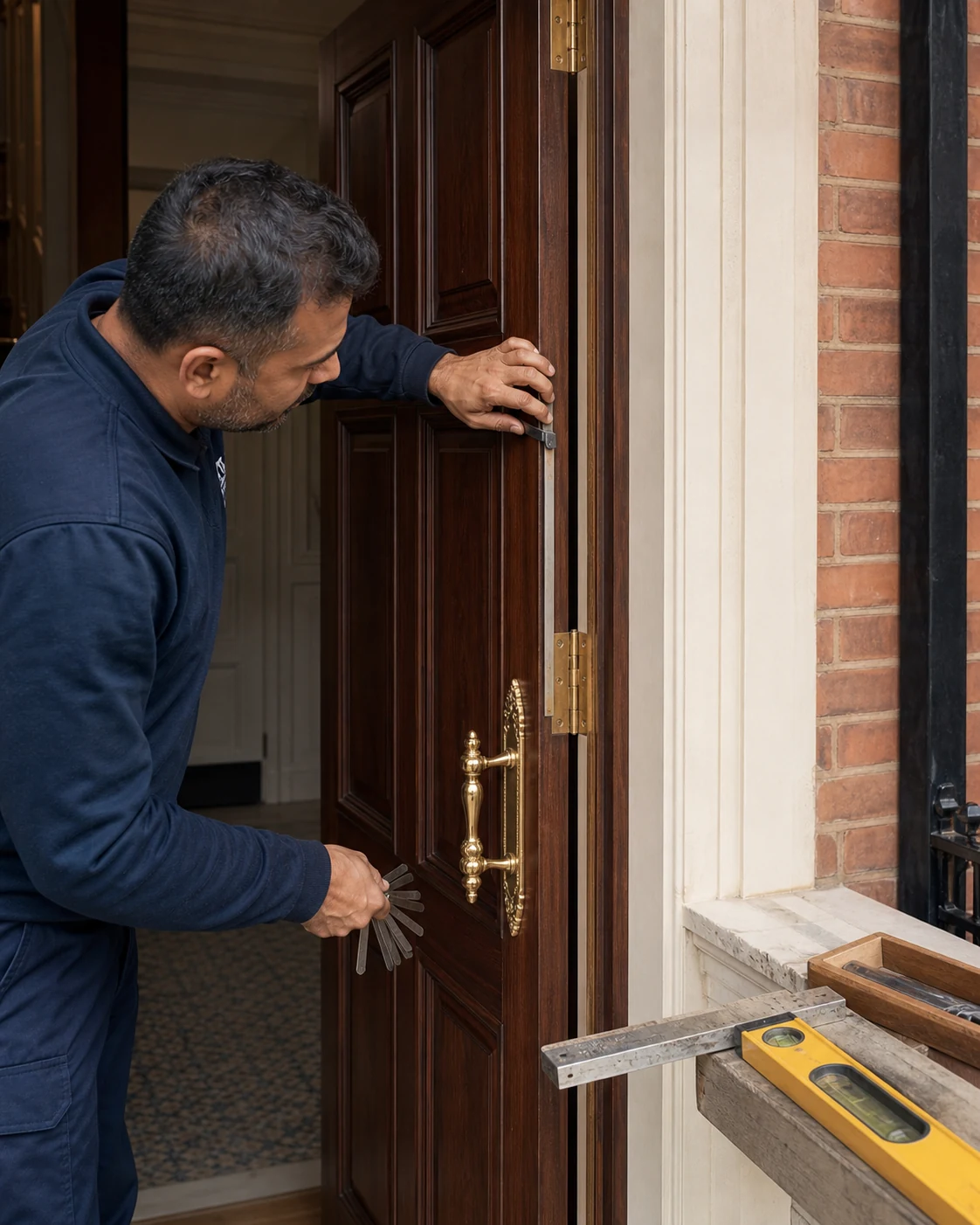
Component symptom guide
| Symptom | Areas to distinguish | Safe action |
|---|---|---|
| Handle lifts when open but not closed | Hinges, frame keeps, alignment and strip resistance | Report the comparison and avoid force. |
| Key enters but will not turn | Key, cylinder, engagement and gearbox position | Retain a sound authorised spare without probing the keyway. |
| Handle drops or feels loose | Fixings, spring, spindle and gearbox | Limit use and photograph both faces. |
| One hook misses its keep | Door position, strip and individual keep | Do not file or enlarge the frame yourself. |
| Key snapped after stiffness | Fragment, cylinder and original mechanical resistance | Leave the fragment and keep the other piece. |
| Private door works but lobby does not | Credential, reader, electric release and common door | Report the building system to management. |
System services
Hinges, leaf position and frame keeps are compared with free mechanism operation. Adjustment is scoped only where suitable.
Dimensions, cam, key-control objective and door thickness guide a compatible cylinder without assuming the strip has failed.
Fixing centres, spindle, backplate and connected resistance are checked. Appearance alone does not identify a functional match.
Markings, dimensions and locking-point layout support part selection. Similar-looking mechanisms need not be interchangeable.
For a locked-shut private door, authority and condition guide the method. Post-entry repair is agreed from the findings.
Fobs, readers, intercoms and building releases remain with management or its nominated provider.
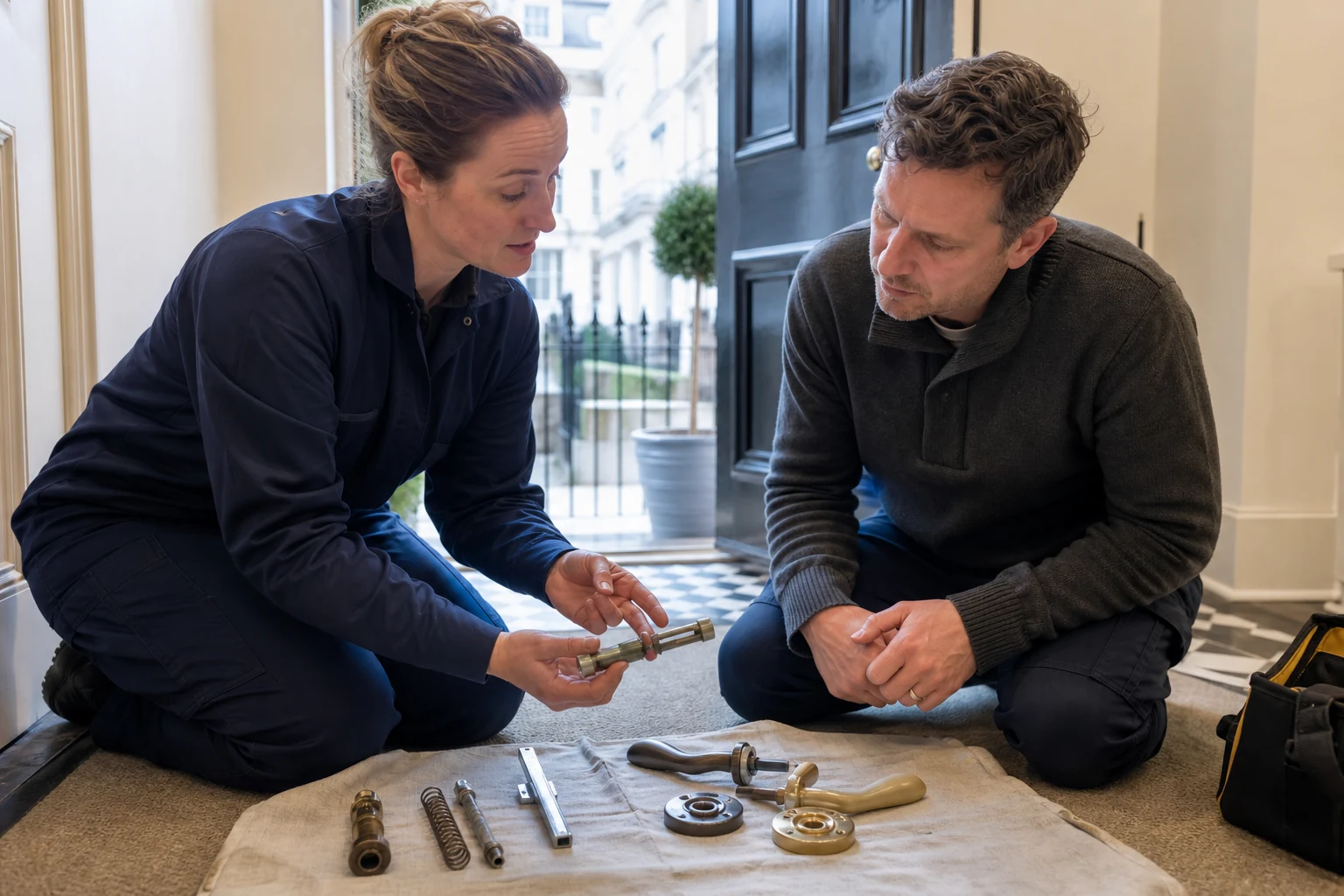
Suburban houses and apartment developments
A house driveway can help with unloading, but the side passage or garden route may determine whether the outside face of a rear door is reachable. State whether gates are locked and who holds keys. In an apartment, reception access does not guarantee entry to a balcony or common service area.
If management restricts changes to external appearance or door hardware, obtain the rule before ordering parts. The locksmith still needs to verify mechanical compatibility. A building preference cannot make an incorrectly sized cylinder or handle suitable.
Test the repaired door in its normal closed position and confirm locking points engage without excessive force. Count supplied keys and record any remaining hinge, frame, seal or managed-system issue. Give building management only the relevant common-area finding.
Component quotation
Hendon does not establish a fixed figure. The quotation depends on diagnosis, access, compatible hardware and any alignment or door work. Building delays and mechanical parts should be visible as different assumptions.
| Field | Input | Boundary |
|---|---|---|
| Managed arrival | Reception, parking, lift, booking and key holder | Access assumed available for the visit. |
| Diagnosis | Open and closed behaviour, photographs and door state | Assessment before parts. |
| Cylinder or handles | Measurements, cam, centres, spindle and key quantity | Specified components, fitting and tests. |
| Gearbox or strip | Markings, dimensions and locking points | Compatible part and labour. |
| Alignment | Hinges, keeps and frame contact | Adjustment versus structural door repair. |
| Locked-shut opening | Authority, method and likely follow-on work | Attendance, entry, repair and final security. |
If the identified component changes after opening, request a revised explanation and total. Common access-control work also requires separate building authority.
Hendon locksmith FAQ
No. Alignment, keeps, strip resistance, handles and gearbox can feel similar. Compare open and closed operation safely.
Yes when it is the identified issue and the remaining system works reliably. Dimensions and cam must match.
The building access administrator or nominated provider should assess credentials and readers, not a private lock change.
Not alone. The freeholder or manager controls common access, keys and related door systems.
No. Excessive force can damage the key, handle or gearbox. Stop and report the behaviour.
Markings, dimensions, gearbox positions and locking-point layout may all be needed. An exterior photograph is insufficient.
That is useful evidence about alignment and frame pressure, but the mechanism still needs direct assessment.
Only if written. Mechanism, alignment, hinges, seals and structural door work can be separate.
Check closing, handle movement, locking points, key operation and reopening without abnormal force.
Map and nearby live pages
Use the page matching the actual property. These nearby pages already exist or are included in this batch.
Separate the route from the mechanism
Send building access, private-door behaviour, edge photographs and the person authorised to approve compatible parts.
Interim security
A measured assessment may show that a gearbox or strip cannot be selected safely from the first exterior photograph. Before dismantling, ask how the dwelling will remain secure if the original component cannot be refitted reliably. The answer may be to delay removal until a compatible item is confirmed, or to agree a separate temporary measure suited to the door. It should never be left as an unspoken assumption.
In a managed development, decide who receives updates if a return visit affects reception booking or contractor hours. Keep the property manager informed about access logistics without sharing unnecessary details of private keys. Record the diagnosed part, measurements still required, approval contact and test expected at final completion. This gives the resident a usable trail even when repair and building scheduling happen on different days.
