Collection planning · Swiss Cottage

A practical waste removal plan for Swiss Cottage properties

Describe the material, show the full load and explain the route from item to vehicle. Those facts are checked before collection scope or timing is agreed.

  • Photographic load assessment
  • Access and carrying route considered
  • Restricted material declared first
  • Quotation based on the assessed work
Call 020 3608 3976
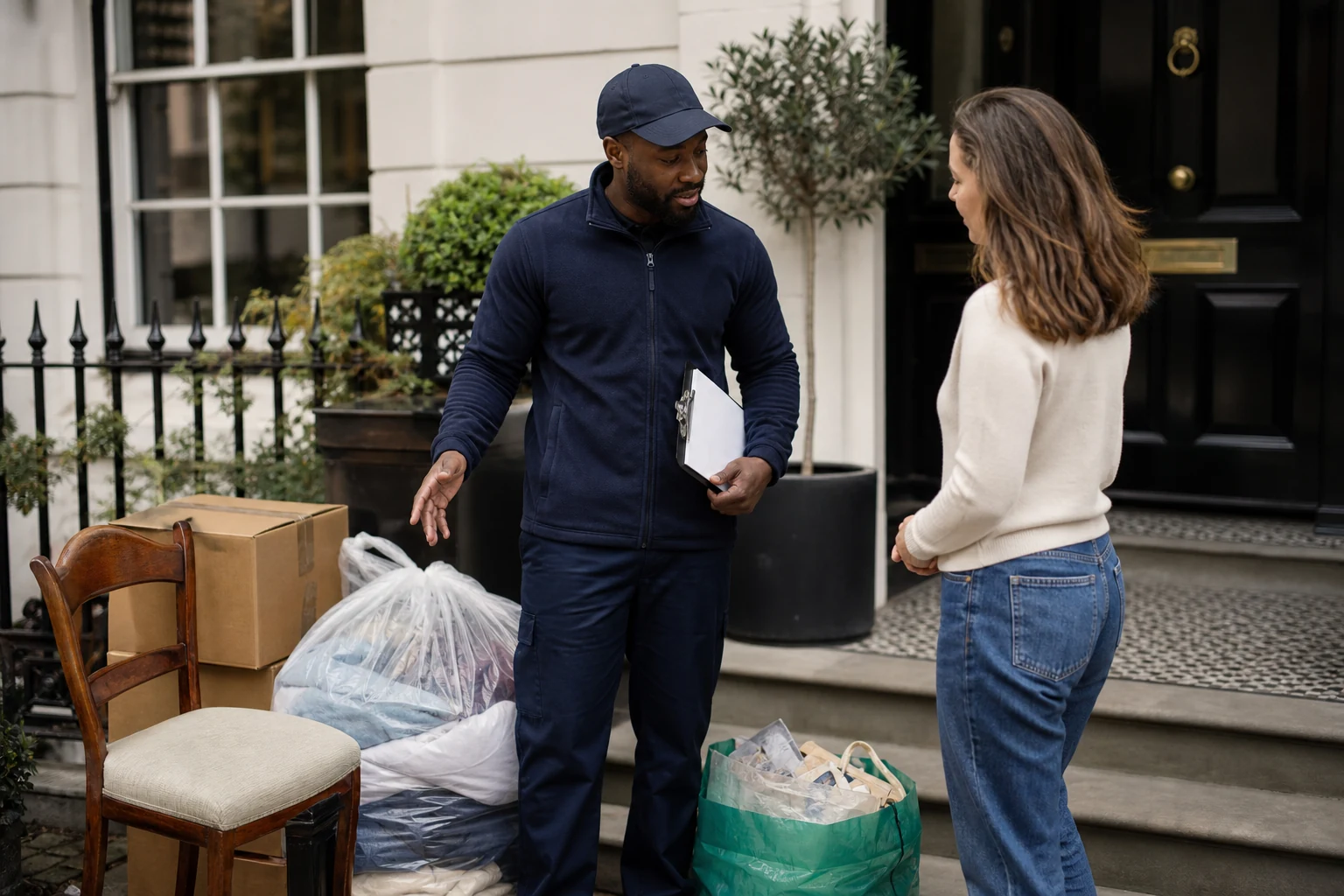
Waste removal team loading sorted household items outside a London home
a bulky furniture collection planned around restricted residential roads

Before the team arrives For the wider booking boundaries, review Alesta's main waste removal service.

Keep communal space clear before attendance

Separate objects that remain and confirm authority for everything listed. Remove everyday trip hazards, arrange building entry and verify that the loading information is current. Do not stack waste against lift doors or block a shared corridor while preparing. Restricted materials must remain identified and apart from household bags. Report extra items, damaged packaging or a lift failure before the team travels. Keep pets away from the route and ensure the person providing access can be contacted during collection.

  • Send clear, recent photographs
  • Mention stairs, lifts and carrying distance
  • Confirm current parking restrictions
  • Separate material where requested
  • Highlight unusually heavy items
  • Declare restricted or hazardous material

Make the load visible Bulky household pieces can be assessed separately through the bulky furniture disposal.

Use the right evidence for each material group

Count contained household bags and describe what they broadly hold. Measure large furniture at its widest points, including the depth that may obstruct a lift or landing. Photograph garden material in its storage area and keep heavy project debris distinct from lighter contents. Say whether loose items occupy several rooms or storeys. Clinical waste, hazardous substances, asbestos, gas cylinders, refrigerants and unidentified liquids do not belong in ordinary mixed sacks. Declare them openly for clarification. If a fragile object or dismantled item is included, show every component and explain its present condition.

Identify the material Declared renovation material should follow the separate renovation waste collection rather than an ordinary mixed load.

What is being cleared from this Swiss Cottage address?

Describe every group that is present. Do not place uncertain liquids or unlabelled containers inside an ordinary mixed load.

01

Furniture

Freestanding sofas, tables, wardrobes and other bulky household pieces.

02

Bagged household material

Closed bags with their general contents described and unusual weight highlighted.

03

Green material

Cuttings and garden material kept visible and separate where accepted.

04

Renovation debris

Compatible non-hazardous project debris, declared before the quotation.

Collection sequence

A collection with visible decision points

  1. 01

    Describe

    Send photographs and identify material.

  2. 02

    Check access

    Explain restricted residential roads, floors and vehicle position.

  3. 03

    Agree scope

    Confirm the expected work and quotation basis.

  4. 04

    Compare and load

    The presented load is checked before loading.

  5. 05

    Route material

    Suitable material follows the appropriate disposal route.

Property context in Swiss Cottage

Record the Swiss Cottage route from item to loading point

Prepare the collection record by walking through every space that contains unwanted material. Photograph furniture, household sacks, green cuttings and renovation debris as recognisable groups, then add dimensions, counts and notes about condition. A close view should identify sharp, leaking or unfamiliar contents, while a wide frame establishes the overall quantity. Include cupboards or secondary rooms only when their contents form part of the agreed job.

Swiss Cottage flats and managed buildings can place lifts, shared halls and controlled entrances between the load and the street. Describe the collection floor, all internal steps, door widths, tight corners and the lift that is actually available. Continue beyond reception or the main door to the realistic vehicle position. A lengthy pavement carry still matters for ground-level items. Note current access arrangements and loading restrictions as observed facts; the neighbourhood name alone cannot establish where the vehicle may lawfully stop.

Quotation basis

Why Swiss Cottage access changes the working plan

What is the biggest cost factor?

The estimate combines material facts with property logistics. Quantity, weight, waste type and disposal charges affect routing and capacity; stairs, lift access, carrying distance and vehicle placement affect crew time. Furniture dismantling belongs only where it is safe and agreed beforehand. Fixed services and structural work are separate trades. A Swiss Cottage postcode does not create a standard price. When added rooms, heavier debris or altered access change the documented scope, the quotation may need review so it still represents the collection presented on arrival.

Volume and weightMaterial typeCrew and loading timeStairs, lift and carryVehicle positionAgreed dismantlingDisposal requirementsMultiple collection points

Material route and limits

What must be declared separately

Reusable and recyclable material is separated where practical. The actual route depends on what is presented, so no fixed recycling percentage is promised.

Unknown liquids, paints, solvents, fuel and refrigerants must be declared before any collection is discussed. Batteries, specialist electrical items and hazardous substances need to be identified rather than hidden inside bags or boxes.

Access changes the work

Floors and distance belong in the quote

Ground floor

Show steps, gates and the distance from door to vehicle.

Flats and stairs

State the floor, stair turns and shared areas.

Lift access

Confirm the working size and any booking rule.

Rear access

Photograph gates, alleys and surface changes.

Restricted parking

Use current signs or authority information.

Bulky pieces

Supply dimensions before dismantling is considered.

Questions for this collection

Planning answers for a Swiss Cottage collection

Which photographs make the quantity clear?

Take a wide view from each collection area's entrance, then closer images of individual groups. Photograph bulky furniture from different sides and include something that helps indicate scale.

What should I record about stairs and lifts?

Give the floor, number of flights, landing turns and narrowest point. Describe the lift's usable size and availability, with the stairs noted as an alternative route.

Is the number of bags enough information?

No. Describe their general contents and identify torn, overfilled, sharp or unusually dense sacks. A familiar bag size does not demonstrate that it can be carried safely.

Can a wardrobe be dismantled during the visit?

Only safe dismantling agreed in advance can be planned. Share wardrobe and doorway measurements first. Electrical disconnection, plumbing, structural work and removal of fixed fittings require separate trades.

Which substances need separate declaration?

Identify asbestos, chemicals, paints, solvents, batteries, cylinders, clinical material, fuel, refrigerants and unknown liquids or containers. None should be concealed within normal household waste materials.

Does a set-back entrance affect ground-floor work?

Yes. Every metre between the stored material and legal loading point forms part of the carry. Gates, paths and controlled parking can add labour without any internal stairs.

What happens when the collection grows later?

Send fresh pictures and counts promptly. Additional furniture, sacks or dense debris may change loading, disposal arrangements and capacity, potentially requiring a revised quotation or further journey.

Will all recyclable-looking items follow the same route?

Not necessarily. Separation may occur where practical, but condition, contamination and material type influence the suitable destination. No fixed recycling percentage can be guaranteed for one collection.

Collection area

Swiss Cottage collection map

Use the map to identify the collection address and describe the actual vehicle approach. Current access restrictions still need to be checked for the proposed date.

Nearby waste removal pages

Return to the Waste Removal Services hub for the service scope.

Chat