
Ground floor
Show steps, gates and the distance from door to vehicle.
Collection planning · West Hampstead
Describe the material, show the full load and explain the route from item to vehicle. Those facts are checked before collection scope or timing is agreed.
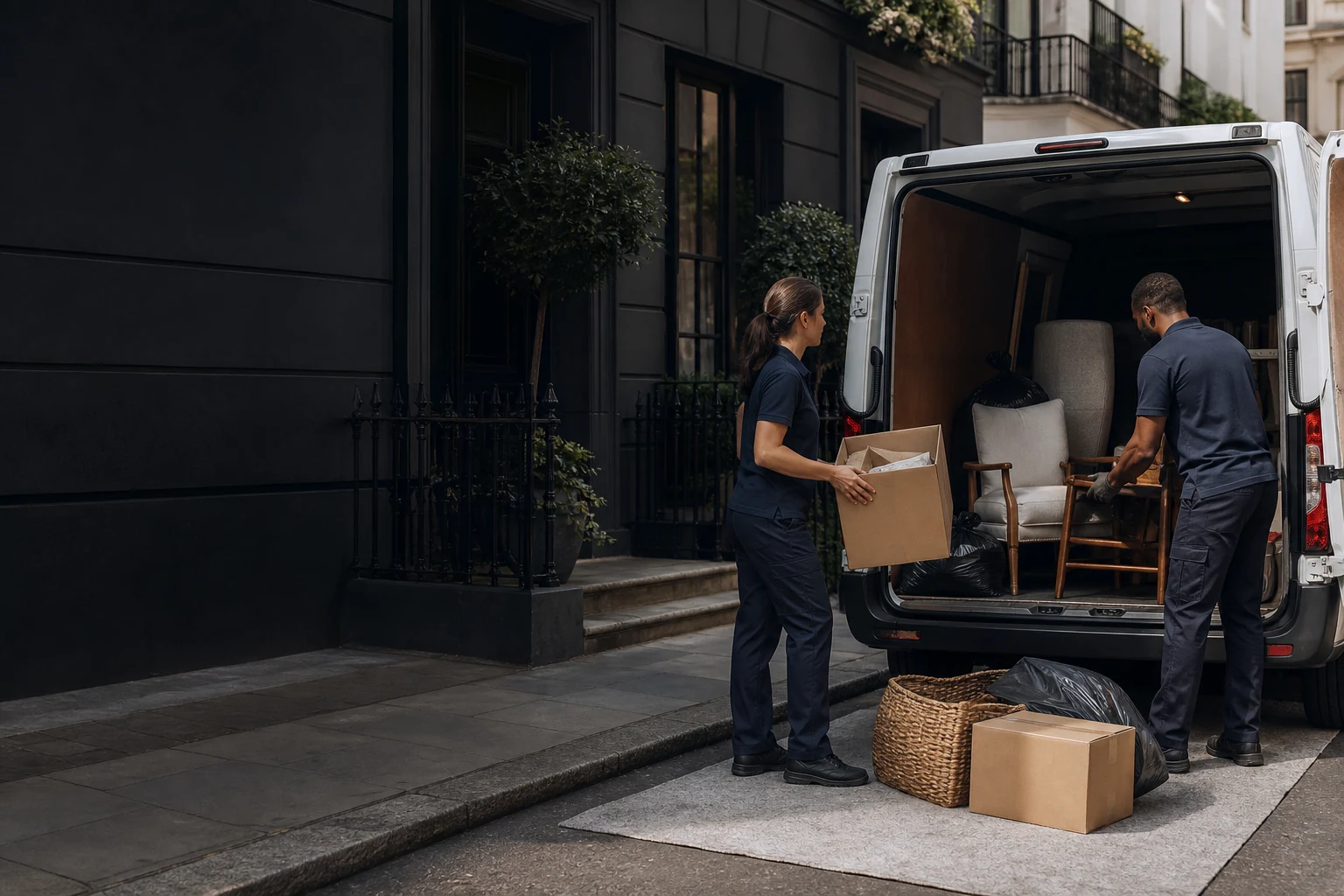
Access changes the work For the wider booking boundaries, review Alesta's main waste removal service.
Show steps, gates and the distance from door to vehicle.
State the floor, stair turns and shared areas.
Confirm the working size and any booking rule.
Photograph gates, alleys and surface changes.
Use current signs or authority information.
Supply dimensions before dismantling is considered.
Property context in West Hampstead If several rooms or stored areas are involved, the full-property clearance support may be the more useful scope.
Build the enquiry from locations, not from a single estimate of van space. Identify which room, cellar, loft or garden contains each group, then classify furniture, bagged domestic waste, green material and renovation debris. Supply broad photographs before close details, count containers and measure awkward objects. Flag sharp edges, unexpected density or uncertain contents. This creates an inventory that can be checked when the crew arrives and prevents overlooked areas from expanding the job without warning.
Many West Hampstead collections begin in upper-floor flats or subdivided houses where the route passes through communal space. Record the floor, stair configuration, lift dimensions, entrance steps and narrow doors. Mention any resident or management arrangement governing access. Follow the path outside and identify a realistic point for loading, including the distance from the doorway. Controlled parking or temporary street conditions should be described as current observations, not assurances. Update them if circumstances change before the booked visit.
Identify the material Declared renovation material should follow the separate renovation waste collection rather than an ordinary mixed load.
Describe every group that is present. Do not place uncertain liquids or unlabelled containers inside an ordinary mixed load.
Freestanding sofas, tables, wardrobes and other bulky household pieces.
Closed bags with their general contents described and unusual weight highlighted.
Cuttings and garden material kept visible and separate where accepted.
Compatible non-hazardous project debris, declared before the quotation.
Quotation basis
Quantity and material influence vehicle capacity and disposal charges, while property access determines carrying labour. Multiple floors, tight turns, a failed lift, distant loading or safely agreed dismantling can each alter the work. West Hampstead itself does not set a fixed collection price. The estimate follows the documented inventory and route. Later additions, concealed contents or denser-than-described debris may require reassessment, a changed load plan or another trip. Prompt updates keep the quotation linked to the collection that will actually be presented.
Make the load visible
Use counts for sacks, dimensions for furniture and separate close photographs for heavy project debris. Show garden cuttings in context so their spread is visible, and identify contents divided between rooms. Where a large object is already dismantled, include every section, fastening and loose component. Further disassembly must be agreed rather than presumed. Ordinary bags must not contain clinical waste, chemicals, batteries, gas cylinders, refrigerants, fuel or unidentified liquids. Declare unusual material explicitly. A complete sequence of images allows occupied space, weight and handling needs to be considered together without pretending they are the same measure.
Before the team arrives
Separate belongings that remain and confirm authority for every object being removed. Keep corridors, stairs and shared entrances free of newly created obstructions. Arrange keys, access codes and any building contact in advance, then verify the loading information remains accurate. Do not combine restricted material with household sacks. If a lift fails, bags multiply or an additional storage space joins the job, send updated details promptly. Ensure someone familiar with the agreed inventory can answer questions during attendance.
Collection sequence
Send photographs and identify material.
Explain converted-building entrances, floors and vehicle position.
Confirm the expected work and quotation basis.
The presented load is checked before loading.
Suitable material follows the appropriate disposal route.
Material route and limits
Reusable and recyclable material is separated where practical. The actual route depends on what is presented, so no fixed recycling percentage is promised.
If the contents or material are uncertain, keep them separate and send a close photograph or label information before booking. Asbestos, chemicals, clinical waste, gas cylinders and unidentified containers are not ordinary mixed waste.
Questions for this collection
Photograph each room, loft, cellar or garden separately and list what it contains. Add one overall inventory so no secondary space is lost when the scope is reviewed.
State the level, staircase shape, narrowest doors, shared halls and whether a usable lift exists. Continue the description to the proposed loading point outside the building.
Dense renovation waste may weigh heavily while occupying modest space. Independent photographs and container details support decisions about safe carrying, stable loading, capacity and disposal requirements.
Keep them outside routine household bags and disclose them. Photographs and readable labels help clarify restricted materials, which cannot be treated as ordinary mixed contents.
The organiser should confirm authority and agree the inventory with everyone affected. Clearly separate objects that stay, especially in communal areas or rooms that remain occupied.
Another journey may be required if the presented load exceeds the assessed quantity, proves substantially heavier or cannot fit planned capacity. Early notice gives time to reconsider arrangements.
No such work should be assumed. A practical sweep of the immediate loading area may be possible, while thorough cleaning, repairs and making good need separate arrangements.
Report added material, split bags, blocked access, lift failure or a different vehicle position. New information allows the team to review labour, handling risk and available capacity.
Collection area
Use the map to identify the collection address and describe the actual vehicle approach. Current access restrictions still need to be checked for the proposed date.
Return to the Waste Removal Services hub for the service scope.
