
Collection planning · Hampstead

Arrange rubbish removal in Hampstead without guessing the load

Describe the material, show the full load and explain the route from item to vehicle. Those facts are checked before collection scope or timing is agreed.

  • Photographic load assessment
  • Access and carrying route considered
  • Restricted material declared first
  • Quotation based on the assessed work
Call 020 3608 3976
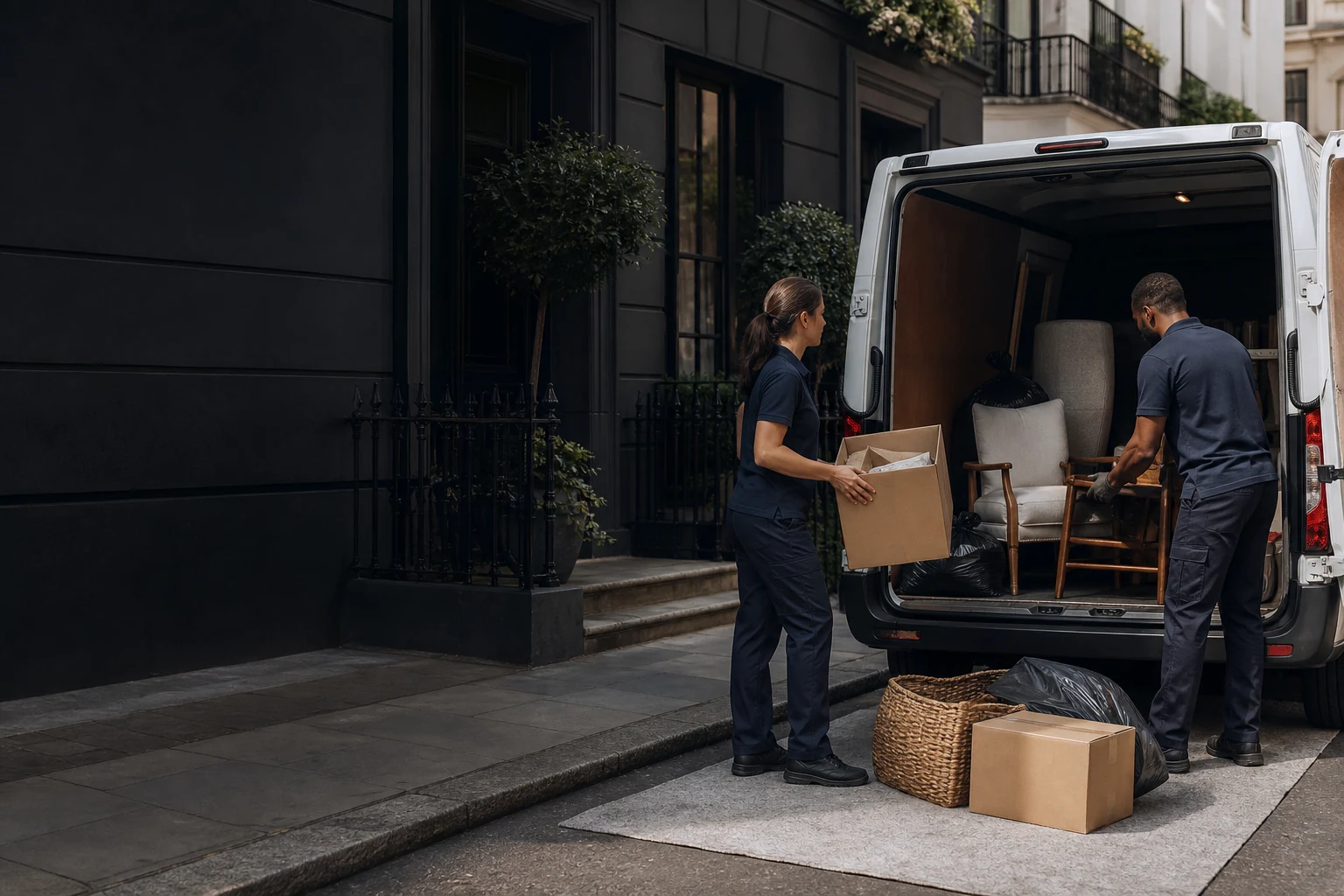
Waste removal team loading sorted household items outside a London home
green material kept apart from general rubbish planned around converted-building entrances

Make the load visible For the wider booking boundaries, review Alesta's complete waste removal service.

Keep dense and restricted contents visible

Arrange the evidence so that a large piece of furniture does not hide smaller but heavier material. Photograph ordinary household bags, bulky objects and renovation debris independently, then show how the groups relate in the room. Explain whether loose contents continue into other areas. Identify wet, torn or sharp-filled sacks because they may need safer containment. Paints, chemicals, solvents, batteries, fuel, cylinders, refrigerants and unidentified containers require separate declaration. Do not treat them as a routine addition to mixed waste. If dismantled furniture is present, include all panels and hardware in the stated quantity.

Quotation basis If several rooms or stored areas are involved, the property clearance service may be the more useful scope.

The Hampstead assessment follows the pictured scope

What is the biggest cost factor?

A quotation is based on declared material, volume, weight, disposal charges and the vehicle capacity required. The carrying route contributes labour through stairs, gradients, internal distance, restricted access and loading position. Agreed safe dismantling can introduce further work. There is no standard Hampstead price inferred from the district. When the real load differs from the photographs, the earlier figure may no longer represent collection. Restricted material first needs identification and a suitable route; it cannot simply be counted as ordinary waste to produce a convenient total.

Volume and weightMaterial typeCrew and loading timeStairs, lift and carryVehicle positionAgreed dismantlingDisposal requirementsMultiple collection points

Access changes the work Declared renovation material should follow the separate separate construction-waste service rather than an ordinary mixed load.

Match every large item to the exit route

Ground floor

Show steps, gates and the distance from door to vehicle.

Flats and stairs

State the floor, stair turns and shared areas.

Lift access

Confirm the working size and any booking rule.

Rear access

Photograph gates, alleys and surface changes.

Restricted parking

Use current signs or authority information.

Bulky pieces

Supply dimensions before dismantling is considered.

Identify the material

What is being cleared from this Hampstead address?

Describe every group that is present. Do not place uncertain liquids or unlabelled containers inside an ordinary mixed load.

01

Furniture

Freestanding sofas, tables, wardrobes and other bulky household pieces.

02

Bagged household material

Closed bags with their general contents described and unusual weight highlighted.

03

Green material

Cuttings and garden material kept visible and separate where accepted.

04

Renovation debris

Compatible non-hazardous project debris, declared before the quotation.

Before the team arrives

Resolve unknown contents before opening the route

Check labels and disclose anything uncertain rather than placing it into common sacks. Separate possessions that stay and confirm the owner has authorised the listed objects. Keep stairs, shared corridors and entrances usable while preparing. Revisit the outdoor carry and current loading information, especially after local conditions change. Split or rain-soaked bags should be reported and safely contained. Send new photographs for added material, and ensure the person meeting the crew understands every room included in the agreed scope.

  • Send clear, recent photographs
  • Mention stairs, lifts and carrying distance
  • Confirm current parking restrictions
  • Separate material where requested
  • Highlight unusually heavy items
  • Declare restricted or hazardous material

Property context in Hampstead

Describe the Hampstead collection from the furthest room

A dependable brief begins wherever the least accessible item is stored. Photograph every included room, garden store, basement or loft, not merely the group nearest the entrance. Divide the inventory into furniture, bagged household waste, green material and renovation debris. Add sack counts, bulky-item dimensions and notes about anything exceptionally heavy, sharp or unclear. Wide views show extent while close images reveal condition and material.

Hampstead properties may combine sloping approaches, converted layouts and several internal levels. Follow the intended carrying line through doors, stair turns, lifts and shared spaces, recording tight points and changes in level. Continue to the location where loading could realistically take place, including outside steps and the walking distance. If the road position is controlled or remote from the entrance, state what is currently known. Property-specific facts are more useful than assuming access from an address or postcode.

Collection sequence

Five checks before the area is clear

  1. 01

    Describe

    Send photographs and identify material.

  2. 02

    Check access

    Explain converted-building entrances, floors and vehicle position.

  3. 03

    Agree scope

    Confirm the expected work and quotation basis.

  4. 04

    Compare and load

    The presented load is checked before loading.

  5. 05

    Route material

    Suitable material follows the appropriate disposal route.

Material route and limits

Keep restricted material visible

Reusable and recyclable material is separated where practical. The actual route depends on what is presented, so no fixed recycling percentage is promised.

Asbestos, chemicals, clinical waste, gas cylinders and unidentified containers are not ordinary mixed waste. Unknown liquids, paints, solvents, fuel and refrigerants must be declared before any collection is discussed.

Questions for this collection

Waste removal questions in Hampstead

What makes an initial Hampstead enquiry complete?

Include wide photographs, close views of unusual material, bag counts, furniture dimensions and every storage location. Add the floor and a description of the full carrying route.

Why mention an uphill or stepped approach?

External gradients and steps form part of every carry between the property and vehicle. They can affect handling even when all unwanted items are stored on the ground floor.

How do I document a mixed household and renovation load?

Show the complete group first, then photograph project debris separately from furniture and household bags. Name the materials and containers so weight and disposal needs can be assessed.

What information is needed for paint or solvent?

Keep it separate and provide clear photographs of the container, contents description and any label. Paints, solvents and unknown liquids are not ordinary mixed household material.

Can attached equipment be treated like movable furniture?

No. Explain how it is fixed before assessment. Electrical or plumbing disconnection, structural removal and work on fitted elements need an appropriate separate trade rather than ordinary loading.

What makes a household sack unsuitable for carrying?

Overfilling, split material, sharp fragments, leakage or unexpected weight can make handling unsafe. Report the problem and use suitable containment instead of assuming the original bag is adequate.

How should uncertain roadside access be described?

Report the current signs, likely lawful loading point and distance to the entrance. Avoid promising a space; vehicle position can change and must be considered with the full route.

How are reusable objects considered?

Items may be separated for reuse or recycling where practical, depending on condition and material. The individual outcome cannot be promised through a standard recycling percentage.

Collection area

Hampstead collection map

Use the map to identify the collection address and describe the actual vehicle approach. Current access restrictions still need to be checked for the proposed date.

Nearby waste removal pages

Return to the Waste Removal Services hub for the service scope.

Chat