
Assembled inside the room
A move can reveal that furniture assembled indoors has never passed through the exit as a complete piece.
Crystal Palace / Storage with the Carry Route Described
A furniture list is only half the collection picture.
For Crystal Palace storage, pair the belongings with the route they must take out of the property. A sofa’s dimensions, a fixed cabinet and a tight turn can each change the preparation discussion. Start with those details before treating a collection date as settled.
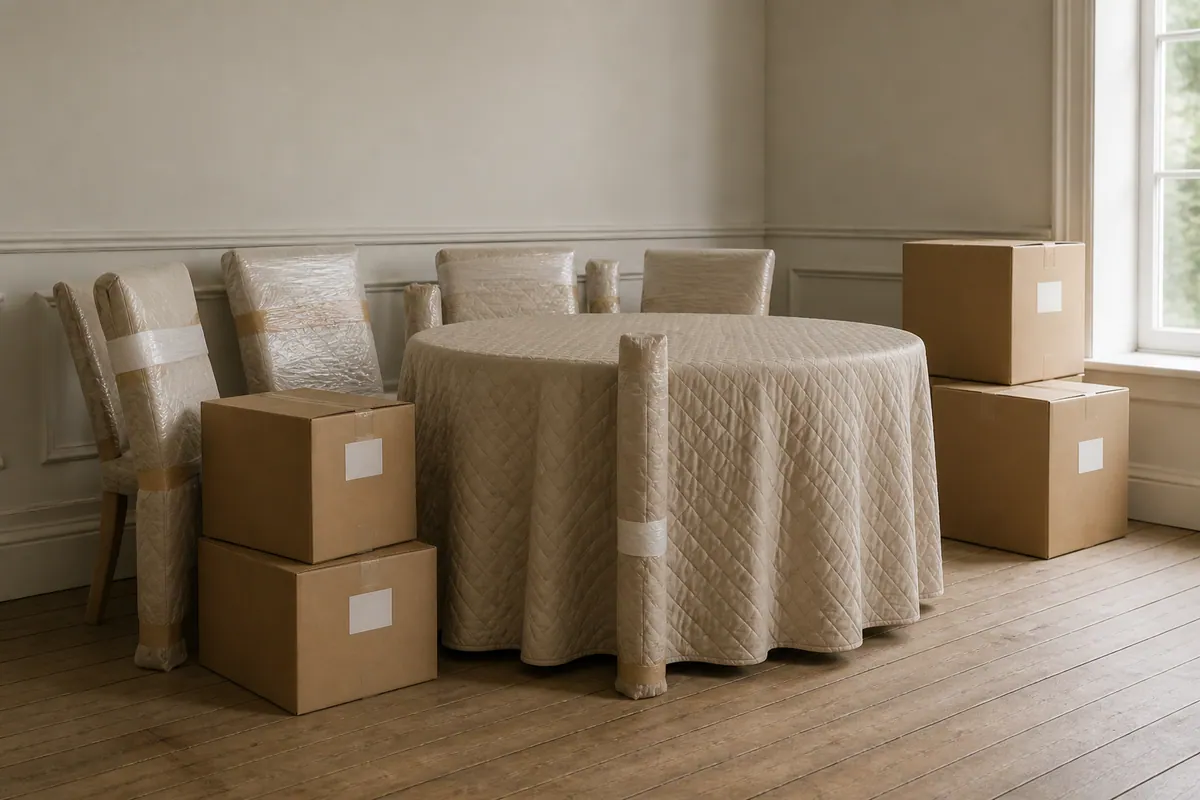
What changes at home?
A move can reveal that furniture assembled indoors has never passed through the exit as a complete piece.
Renovation work may narrow an otherwise usable route. Describe current conditions rather than relying on older photographs.
A selected furniture collection still needs the full route reviewed even when there are very few items.
A different return property may introduce new stairs or turns. Its access needs separate information.
Collection is part of the storage plan
Photograph turns with a clear explanation of the intended direction of travel.
Give the relevant door measurements and the furniture’s fixed projections.
Describe steps and distances between the exit and proposed vehicle position.
Identify who can arrange entry or any building-specific access booking.
If the route changes before collection, send updated information rather than relying on the earlier assessment.
Flats and apartments: Show shared stairs and internal level changes.Mansion blocks: Check lift dimensions for the actual furniture.Houses: Include gates, steps and longer outdoor carries.Rental or managed properties: Confirm the person arranging entry.

Crystal Palace, before collection day
Look beyond the room door when planning a Crystal Palace collection. The full route may include an internal turn, communal passage, entrance steps and the distance to a usable loading point. Describe the actual property rather than assuming all local homes have the same access.
Your item-list example: A sofa, a tall cabinet and packed household boxes need different descriptions. Include assembled dimensions and tell the team about parts that are removable only if that is known.
Photographs can explain a route but do not replace measurements or confirm that handling is possible. Ask which details are still needed, and report changes if building work or other belongings obstruct the path later.
Plan the route out of your property ↓Choose your starting point
Furniture prompts are useful for awkward pieces; carton prompts help with quantities and delicate contents. Mixed loads should describe both rather than choosing just one label.
Inventory focus
Record different carton sizes and flag delicate household contents. Keep essential personal items outside the stored group so they remain available during the transition.
Add this to your inventory ↓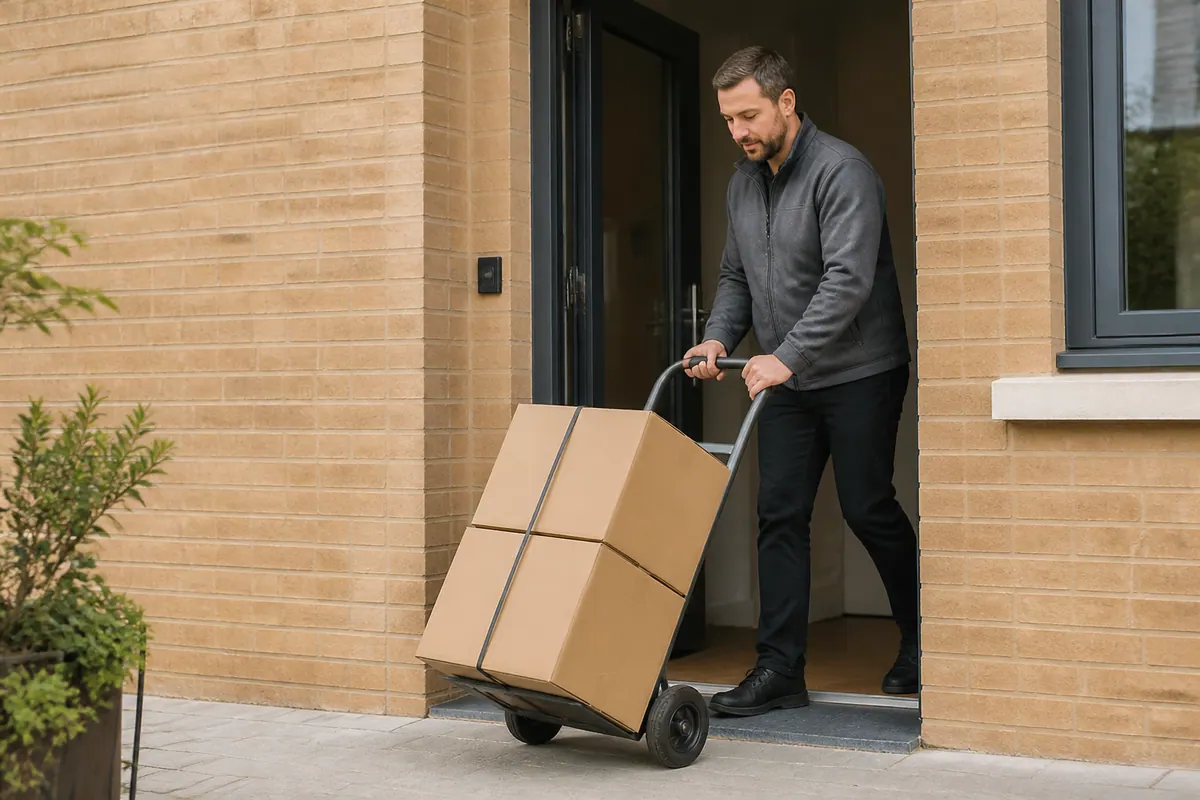
A useful first conversation
Add measurements and handling questions beside the quantities. Explain fixed projections, loose components and preparation still to be agreed; the counters alone cannot establish access or storage volume.
Dimensions before estimates
Long, tall or non-stackable pieces can affect the space assessment independently of their weight. Describe them in their proposed transport condition.
Pair the carton total with dimensions for the larger object.
Identify the room’s broadest or tallest furniture.
Distinguish assembled pieces from confirmed separable components.
Request an assessment of mixed furniture rather than a room-size shortcut.
Allow for suitable protection and the planned arrangement. The diagrams do not authorise stacking or establish exact capacity.
Plan the return before the departure
Do not assume a successful collection proves that the next property can receive the same furniture. Share the return address and its access details when known, especially if the route differs substantially.
Need earlier
Need later
If smaller cartons need to arrive before the larger pieces, ask about that sequence and any additional release or delivery charges.
Use references that distinguish early cartons from the furniture load; they may have different destination requirements.
Ask how projecting or delicate parts should be prepared. Protection needs to suit the item rather than merely cover its surface.
Keep later furniture returns linked to the correct destination and the access information supplied for it.
One connected arrangement
Record the largest pieces and their current dimensions.
Describe door openings, turns and the loading approach.
Agree preparation after the handling questions are reviewed.
Confirm collection against the assessed inventory and route.
Check the conditions appropriate for the selected belongings.
Supply the destination route before planning their return.
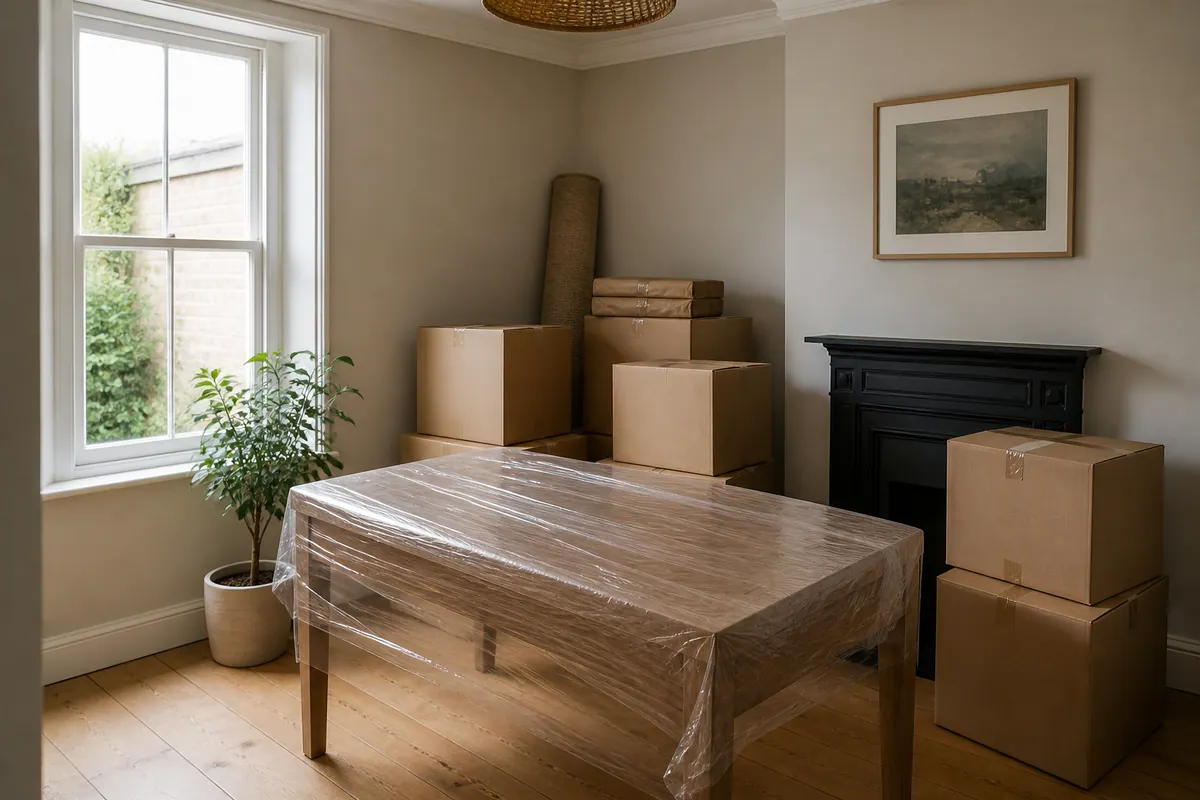


The timetable can change
| Planning point | A shorter gap | A longer arrangement |
|---|---|---|
| Typical purpose | A known gap before delivery | A destination still being prepared |
| Preparation | Preparation for the assessed journeys | Review the proposed longer storage conditions |
| Retrieval | Return when access is confirmed | Discuss interim cartons separately |
| Duration | Use the expected arrival window | Keep uncertain completion dates provisional |
| Quotation | Quote the known handling requirement | Clarify additional visits and term changes |
Access work or an undecided destination can change the expected end date. Ask how the agreement handles an extension and how much notice is needed for the return.
Scope first. Quote second.
The Crystal Palace quotation should use the furniture measurements and route information you provide. Ask whether preparation, crew requirements and transport have been included rather than comparing storage alone.
| Service scope | Price approach | Main factors |
|---|---|---|
| Volume & access assessment | Assessment from the actual furniture list | Dimensions, shape and proposed protection |
| Collection & placement | Collection after route review | Turns, steps, loading distance and preparation |
| Ongoing storage | Storage under the selected terms | Space requirement, duration and item suitability |
| Final retrieval / delivery | Return based on destination information | Receiving route, release process and transport |
Difficult access, protective materials, duration and the eventual delivery can change the scope. Record unresolved route questions before accepting an arrangement.
Direct answers before you book
Give the complete furniture dimensions and relevant openings or turns. Explain fixed projections and any known removable components.
They help explain the route, but further measurements or assessment may be needed. Do not treat a photograph as confirmation that a piece will fit.
Describe its construction and ask what preparation is appropriate. Do not assume dismantling is necessary, suitable or included.
No. One awkward item may still determine the handling arrangement. Supply the route details with the inventory.
Tell the team before collection is confirmed and provide current information. A changed route may alter the plan.
Discuss that destination and its access. The return movement needs its own assessment and quotation assumptions.
Its dimensions, protection and suitable placement inform the space assessment. A room label does not capture those constraints.
Ask for a partial-release arrangement in advance. Availability, notice and charges depend on the agreed storage process.
The handling requirements determine the proposed arrangement. Ask the quotation to explain what collection work is included.
Request the relevant extension terms before booking, then communicate changes promptly. Continued storage and revised delivery require agreement.
Confirm the proposed storage location and conditions directly before accepting the arrangement. A Crystal Palace collection enquiry does not establish a local facility.
Keep the move connected
Connect household removal plans with the storage interval and both property routes.
Ask about smaller loads only after their lifting and handling requirements are understood.
Discuss wrapping and preparation suited to the furniture’s condition and shape.
Plan a defined furniture movement with the receiving access reviewed.
Alesta customer feedback / Furniture removal & packing
“I used Alesta Services for furniture removal and packing when I moved houses. The team was incredibly careful with my belongings and made the whole process seamless.”
James W. · Existing Alesta review, not a storage testimonial for Crystal Palace.
Crystal Palace / Service area
Give the Crystal Palace postcode alongside the actual furniture-to-vehicle route. For the wider household offering, visit Storage Services.
Ask about the storage location, conditions and retrieval procedure in the proposed agreement. Those details are separate from the collection map.
A little space. A clear next step.
Start with the Crystal Palace item list, measurements and access photographs. Note any preparation or return-address question that still needs assessment.
