
Need earlier
The pieces with an earlier practical use.
- Seasonal possessions kept apart from later-room furniture
- Suitable equipment needed before the retained room is furnished
- An arrival group distinct from the spare-room components
Blackheath / Storage for Furniture Kept for Later
Keep the future room in mind when recording the furniture.
Some belongings are worth retaining even when their next room is not ready. Describe that purpose with the actual pieces, while keeping everyday necessities available. The proposed duration and conditions still need to suit the declared items.

A useful first conversation
Say whether the spare bed is assembled and identify components. Give sideboard and chair dimensions rather than one spare-room label.
Plan the return before the departure
A bed without its matching components may not serve its purpose. Describe the complete intended group and confirm retrieval.
Need earlier
Need later
Keep daily necessities and irreplaceable records separately. Future-room labels are not an access guarantee; confirm release notice, costs and the suitability of any earlier group request.
Identify all components needed to make the future room usable.
Describe sensitive finishes and never use fragile components as supports.
Separate occasional-use cartons from the retained furniture references.
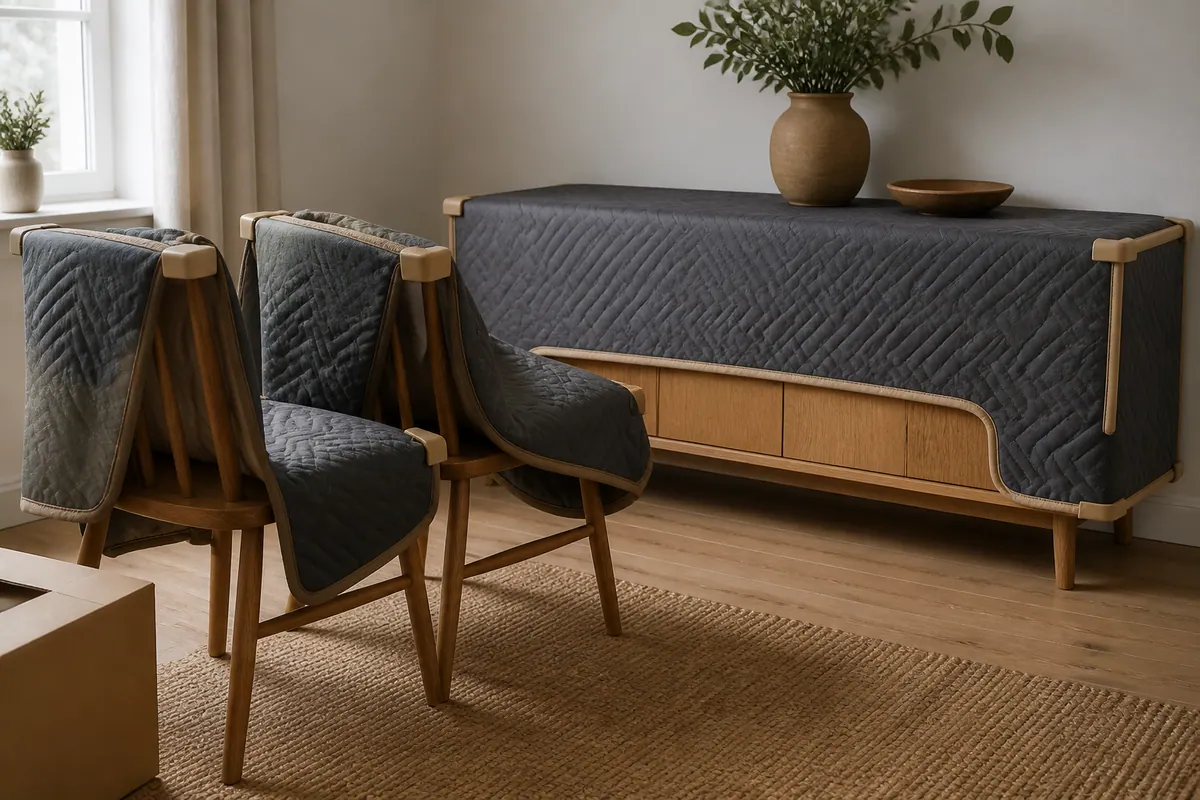
Blackheath, before collection day
Some household pieces are intended for a future room rather than immediate arrival. Describe those retained belongings individually and explain their intended grouping without assuming the material suits any length of storage. For Blackheath, keep everyday needs separate and identify matching components or fittings. The future purpose helps explain the plan, while condition, dimensions and proposed terms still determine the practical assessment.
Your item-list example: a spare-room bed, sideboard and protected chairs. This is an illustration for the enquiry, not a description of a booked job. Record the actual pieces and quantities you want assessed.
State which pieces are already dismantled and how their parts are identified. Group furniture by the room it is intended to occupy after storage.
Plan the route out of your property ↓Keep the move connected
Discuss furniture transport when the receiving space is usable, providing destination requirements rather than assuming collection repeats in reverse.
Describe the selected furniture load rather than a whole-house move.
Agree protection for the declared finishes and loose components.
Connect complete furniture groups to the future receiving room.
Alesta customer feedback / Furniture removal & packing
“I used Alesta Services for furniture removal and packing when I moved houses. The team was incredibly careful with my belongings and made the whole process seamless.”
James W. · Existing Alesta review, not a storage testimonial for Blackheath.
Choose your starting point
Explain where retained pieces are intended to go, distinguishing them from belongings needed throughout the transition.
Inventory focus
Count retained cartons and identify their intended use. Note delicate contents and keep everyday necessities and essential documents apart from the furniture waiting for a future room.
Add this to your inventory ↓
Dimensions before estimates
Actual shapes and protection determine the assessment, not the size of the room where the furniture may eventually stand.
Measure the retained pieces for their actual shapes.
Identify bed parts and furniture remaining assembled.
Keep future-room groups distinct from arrival essentials.
Assess the retained contents against their materials and period.
Keeping furniture for later does not confirm suitability. Declare sensitive finishes or unusual components for assessment.
What changes at home?
Separate later-room pieces from arrival essentials and discuss suitability for the expected period.
Furniture for a room still being prepared can wait separately from pieces needed at arrival.
Keep permanently replaced pieces outside the retained future-room group.
Identify occasional household belongings by intended use rather than placing them inside furniture groups without references.
Collection is part of the storage plan
An assembled sideboard and separated frame have different route questions. Request additional preparation explicitly.
Confirm how retained pieces will reach the collection point, even where return is much later.
Show current assembly and fixed components through relevant doors and turns.
Arrange entry with somebody able to identify all retained components.
State which pieces are already dismantled and how their parts are identified.
Flats and apartments: describe the route for the furniture being kept. Mansion blocks: verify lift arrangements for the measured pieces. Houses: identify stairs affecting assembled and separated items. Rental or managed properties: confirm who releases the retained group.
One connected arrangement
List the piece, its parts and preparation so the record remains useful when the furniture is requested again.
Assess the furniture in its present assembled condition.
Link protective preparation and fittings to each retained piece.
Confirm the group intended to return rather than every spare item.
Review material suitability for the proposed conditions and period.
Request complete room groups under the agreed release procedure.
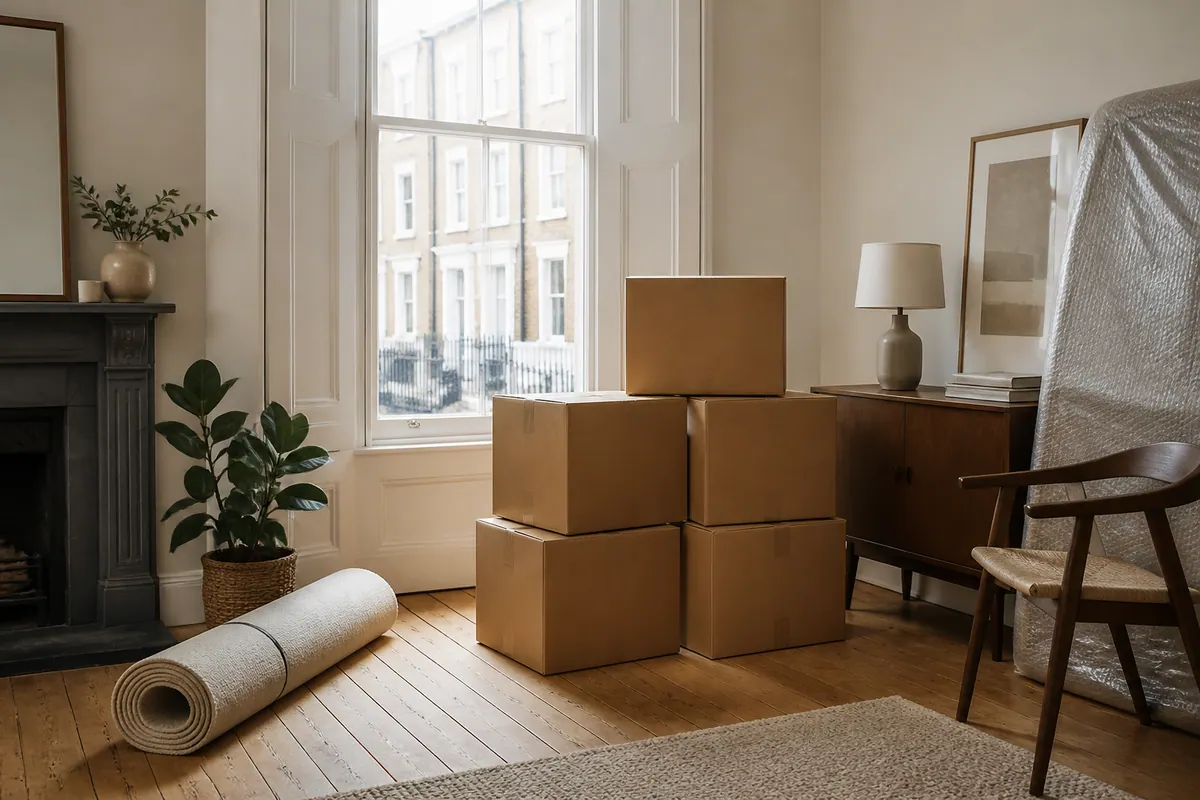
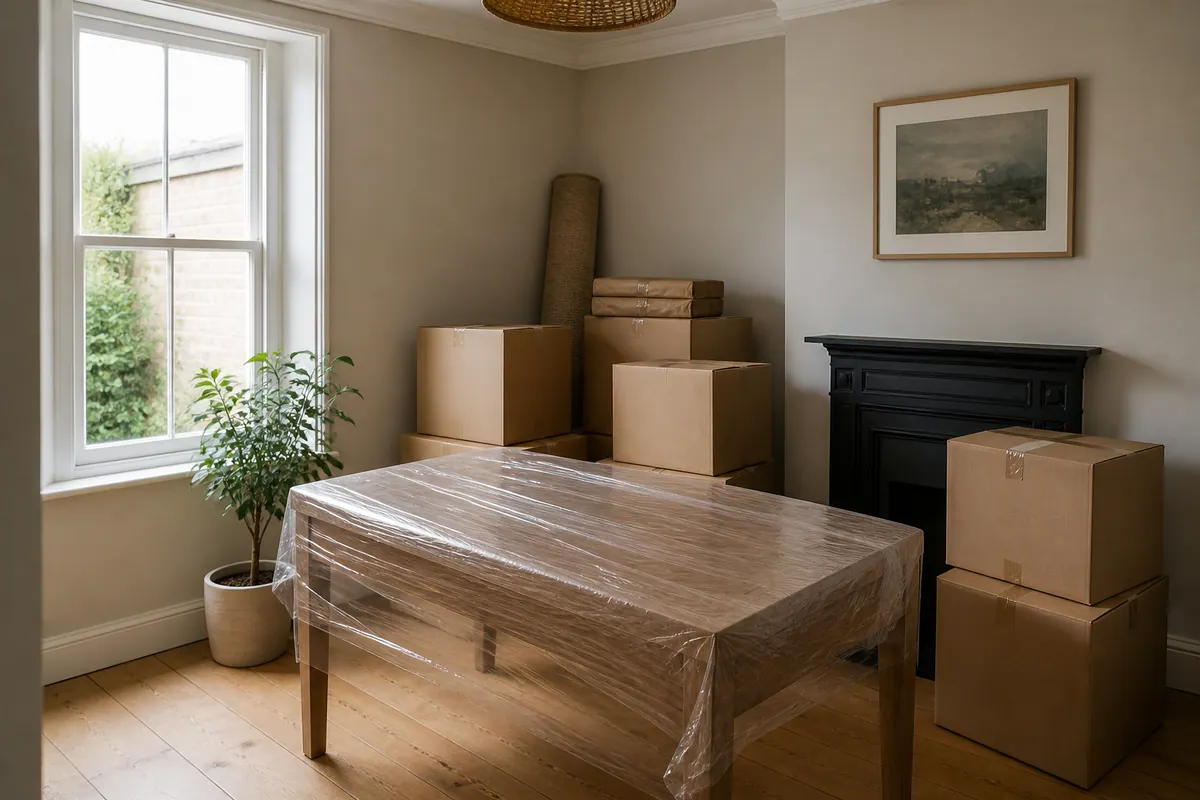
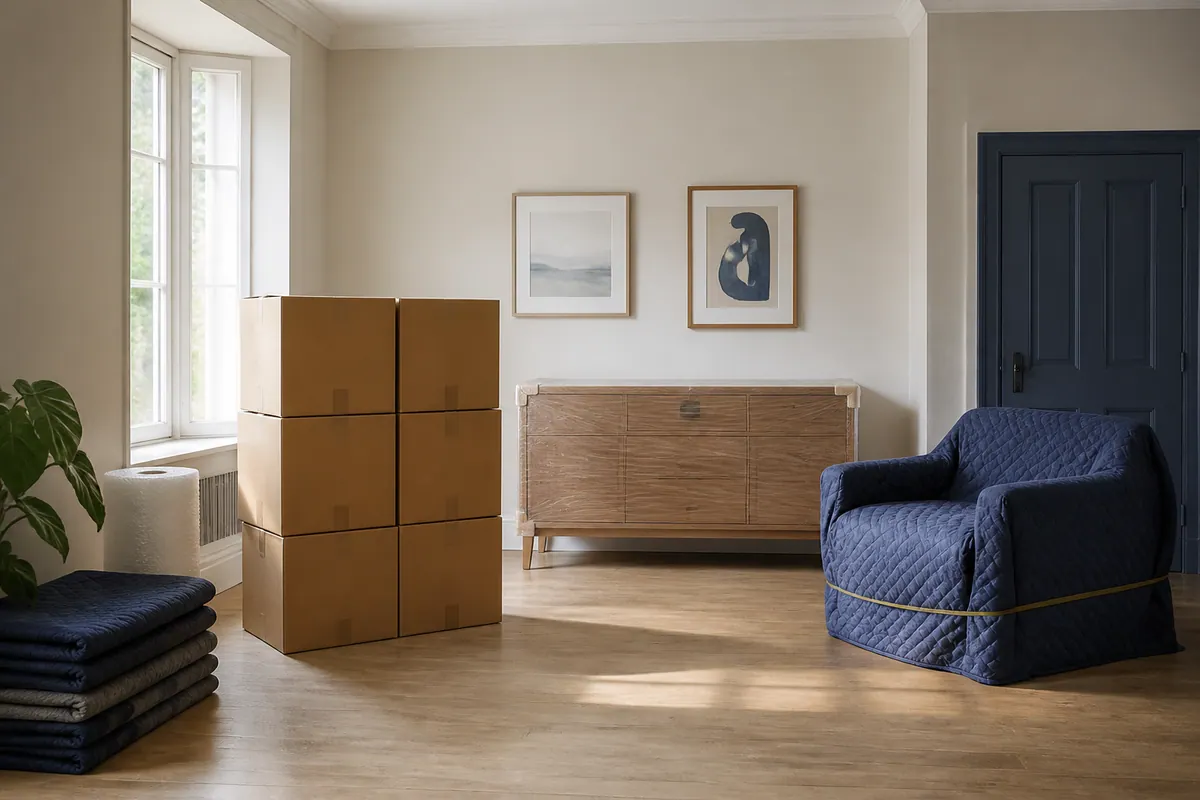
The timetable can change
| Planning point | A shorter gap | A longer arrangement |
|---|---|---|
| Typical purpose | Furniture waiting for one room to become usable | Retained pieces intended for a later household setup |
| Preparation | Protect components with matching references | Check finish suitability across the expected period |
| Retrieval | Identify the complete room group returning | Explain earlier needs outside the later-room plan |
| Duration | Agree terms for the retained pieces explicitly | Discuss delays to the intended future use |
| Quotation | Measured furniture and preparation requirements | Material conditions, period and complete-group release |
Discuss materials, protection and proposed conditions. An extended period is not automatically suitable for every finish.
Scope first. Quote second.
Dimensions, preparation, access and duration inform assessment. The reason you retain a piece does not establish special handling.
| Service scope | Price approach | Main factors |
|---|---|---|
| Volume & access assessment | Retained furniture individually assessed | Dimensions, finishes and component details |
| Collection & placement | Current assembly and route reviewed | Protection, carrying and collection requirements |
| Ongoing storage | Confirmed retention period quoted | Suitable conditions for the declared materials |
| Final retrieval / delivery | Complete furniture return arranged | Matching parts, receiving room and notice |
Materials, preparation and route matter alongside dimensions and time. Confirm suitable conditions, facility charges, insurance and receiving arrangements before relying on a retained-furniture total.
Direct answers before you book
Describe the retained pieces and expected period for suitability and terms to be assessed.
Link parts and fittings to the same piece so the return record stays clear.
No; describe materials and ask about the proposed conditions.
Keep everyday necessities, valuables and essential records available separately.
Confirm partial release, notice and delivery charges first.
Give dimensions, construction, condition and relevant loose or fragile components.
Request preparation and confirm materials and responsibilities explicitly.
Follow the agreed extension process and update the expected return.
Give quantity and identify material differences or unusual concerns.
The receiving route and load need their own agreement.
A measured retained inventory, condition notes, access and intended period.
Blackheath / Service area
Share your Blackheath postcode, floor, building entry arrangements and intended collection point. For the full household scope, visit Storage Services.
Give the actual route privately; facility suitability must be established separately from a local area reference.
A little space. A clear next step.
Send materials, dimensions and intended room groups with the likely timetable, without assuming unconfirmed conditions.
