
Apartment rooms after works
An unfurnished flat offers access to edges that may later be hidden. Tell Alesta whether it will still be empty when the proposed visit takes place.
Finchley · Clean the released areas deliberately
Clean the released areas deliberately
A clear brief for staged return to the house.
Staged renovation needs a staged description, even when you hope to arrange one clean. Tell Alesta which Finchley rooms are complete, which routes are clear and where new floor or door finishes still need time.
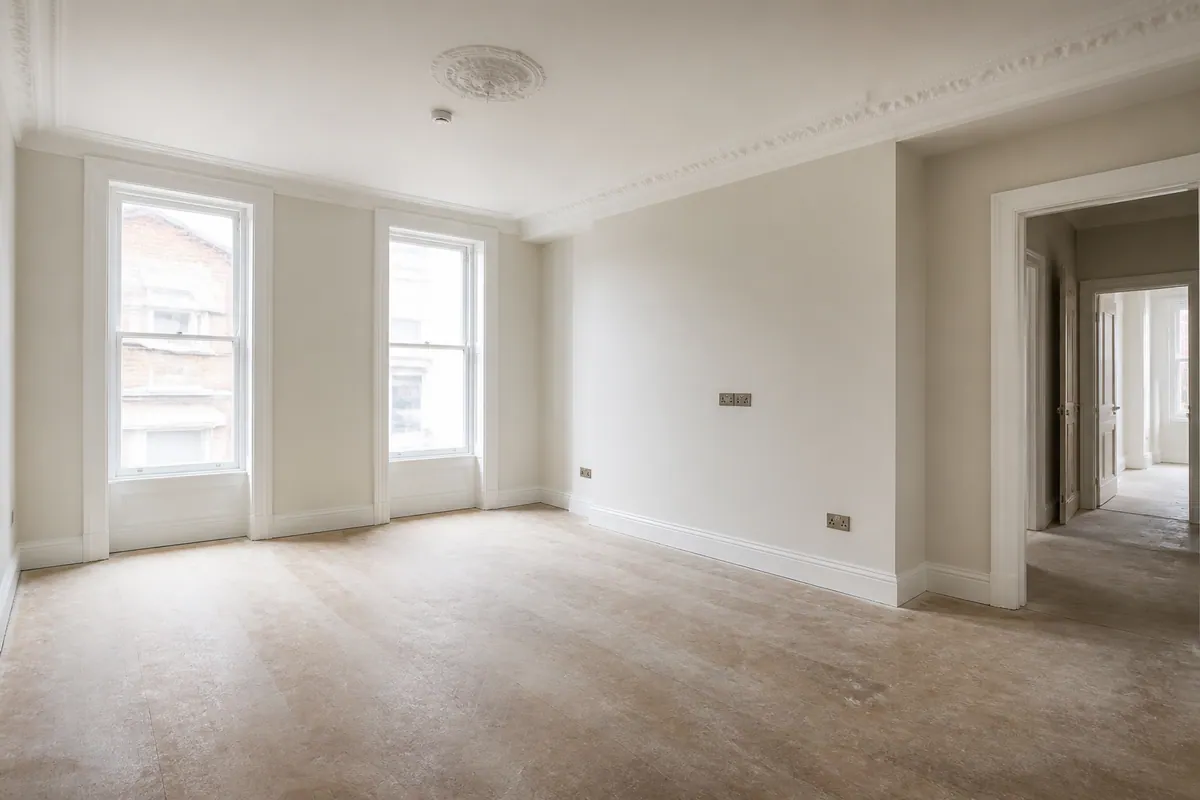
The image is illustrative and does not depict a customer job.
Identify before treating
| What is visible | What to identify | Before treatment |
|---|---|---|
| Fine deposits | released rooms beside unfinished areas | Check which surfaces can be cleaned safely. |
| Surface remnants | Non-bulky cleaning residue | Clarify the material before including it. |
| Labels or adhesive | Labels or marks beside floor and door finishes | Check what the installer says about the material. |
| Plaster and paint spots | Isolated spots near the released rooms beside unfinished areas | The material beneath the mark must be identified. |
| Surface protection film | Factory protection left in place | Do not interpret protection removal as an automatic cleaning task. |
Different work leaves different detail
An unfurnished flat offers access to edges that may later be hidden. Tell Alesta whether it will still be empty when the proposed visit takes place.
Protective labels or film on new kitchen items need a responsibility check. Their removal is not automatically part of cleaning around the installation.
If grouting or adjustment remains, tell Alesta before planning the clean. Later fitting activity can change the condition of already cleaned areas.
Keep surface instructions with the room they concern. This avoids a general care note being applied to unrelated finishes elsewhere in the property.
The person arranging a rental-property clean should explain what work was completed. Previous occupation marks may not belong to the post-build scope.
Commercial suitability must be checked for the specific premises. Explain the proposed work and site access before expecting a contractor arrangement.
At your Finchley property
Mark the boundary between released rooms and continuing work.
Separate the carrying route from tool storage. If the only route crosses an active work area, explain that before the date is agreed rather than leaving it to arrival.
List the rooms released now and the trades expected later. Additional work after the visit creates a new cleaning question, not an automatic extension of the original scope.
Review only the released areas against their agreed priorities. Keep later-stage rooms clearly identified so completion of one part is not mistaken for completion of the whole house.
Quoting the Finchley work
From £29/ hour
Check the current rate for the work described. Equipment and cleaning materials are part of the published service information.
The final figure needs the actual property condition. Do not read the starting rate as an all-inclusive project price.
| Enquiry type | Price basis | Detail needed |
|---|---|---|
| One affected space | £29/hour starting guide only | Condition of the released rooms beside unfinished areas |
| Kitchen/bathroom enquiry | From £29 per hour | Readiness of floor and door finishes |
| Whole-property scope | Discuss an individual quotation | Room access before staged return to the house |
| Business refurbishment | Confirm project suitability first | Premises and attendance requirements |
Based on Alesta’s published after builders cleaning rate. Building waste is a separate service enquiry.
Questions for this project
Use released rooms beside unfinished areas as a starting point and explain which adjoining surfaces were affected. The quotation should follow the actual room condition.
Explain who can open the agreed areas and where equipment must pass. Access to released rooms beside unfinished areas should not depend on moving unmentioned materials.
Give the available guidance for floor and door finishes, including recent application or installation. Cleaning should not be expected to repair damage.
There is no automatic rule based on the doorway. Include relevant adjoining deposits in the room list and confirm their scope.
The guide starts at £29/hour, including cleaning materials and equipment. It is not a project total; ask for the current scope and quotation.
Tell Alesta whether the proposed rooms remain subject to dusty tasks. The planned visit should reflect their actual completion state.
The contractor’s remaining materials need a different agreement from dust removal. Explain what is left before the visit is planned.
List windows or carpets explicitly when contacting Alesta. Do not assume specialist equipment or time is included in the general visit.
Explain the intended next stage, then let the actual condition inform timing. A room count cannot set a reliable completion interval on its own.
A finishing clean cannot promise to restore floor and door finishes. Any unresolved mark should be identified with the relevant limitation.
Describe the Finchley work
The work type helps start the brief. Alesta still needs to know what remains and which areas can be reached.
A wider renovation needs a released-room list with material information. Show the connecting routes and distinguish any area still holding tools or supplies.
Inspect the affected route
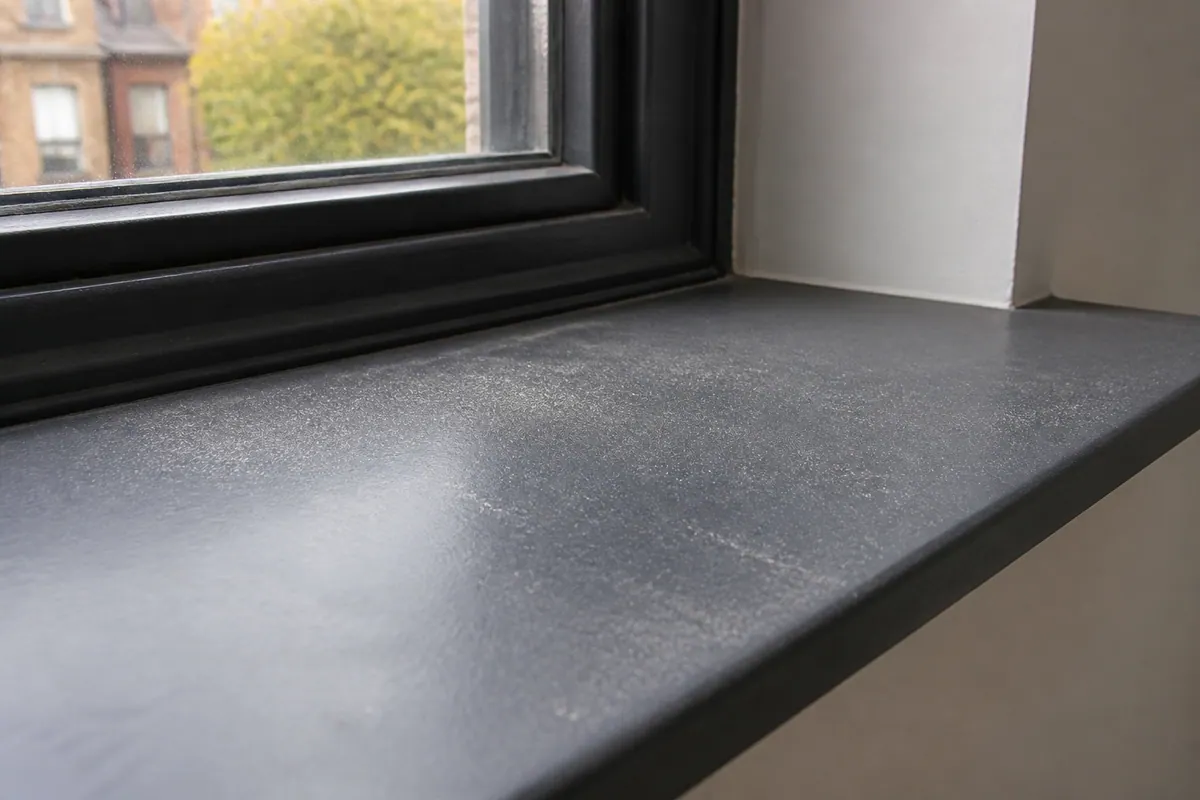
Dust patterns do not always match room names.
Identify deposits in the completed rooms without overlooking the route from unfinished areas. Dust can return if nearby work continues, so those boundaries matter to the planning conversation.
A room description is stronger when it names the ledges, fittings and floor edges involved. Those details help separate general dust from individual difficult spots.
Discuss any later dust-producing visit before fixing the cleaning sequence.
Draw the cleaning boundary
Use the room diagram to spot missing questions; it is not a measured customer floor plan.
Dust may be visible on exposed ledges after the central floor looks tidy; name those needing attention.
Explain which room edges can be reached without relocating furniture or building supplies.
Fittings should be named where they require particular care; a general dust description may not be enough.
Suitable floor work follows the actual material and available access rather than a uniform whole-home assumption.
Keep clearance outside the dust brief
Agree dust and fitting detail as cleaning tasks, with any resistant residue separately assessed.
A waste enquiry should explain volume, weight and collection access. The cleaning quotation cannot substitute for those details.
Ask about separate building waste collection ↗Check the conditions for arrival
Before the clean
For the appointment
Name rooms, not an unlimited checklist
Name the accessible kitchen detail before discussing timing. Film, labels or hard spots should not be assumed removable within ordinary dust work.
Describe bathroom fittings by condition and material rather than assuming new means ready. Follow the relevant drying guidance.
Name the bedroom finishes recently changed and any dust beyond those areas. This gives a clearer brief than an identical checklist for every room.
Living areas may contain retained furniture beside new fittings. Describe the exposed surfaces without assuming treatment of the furniture itself.
A finish is not just a colour
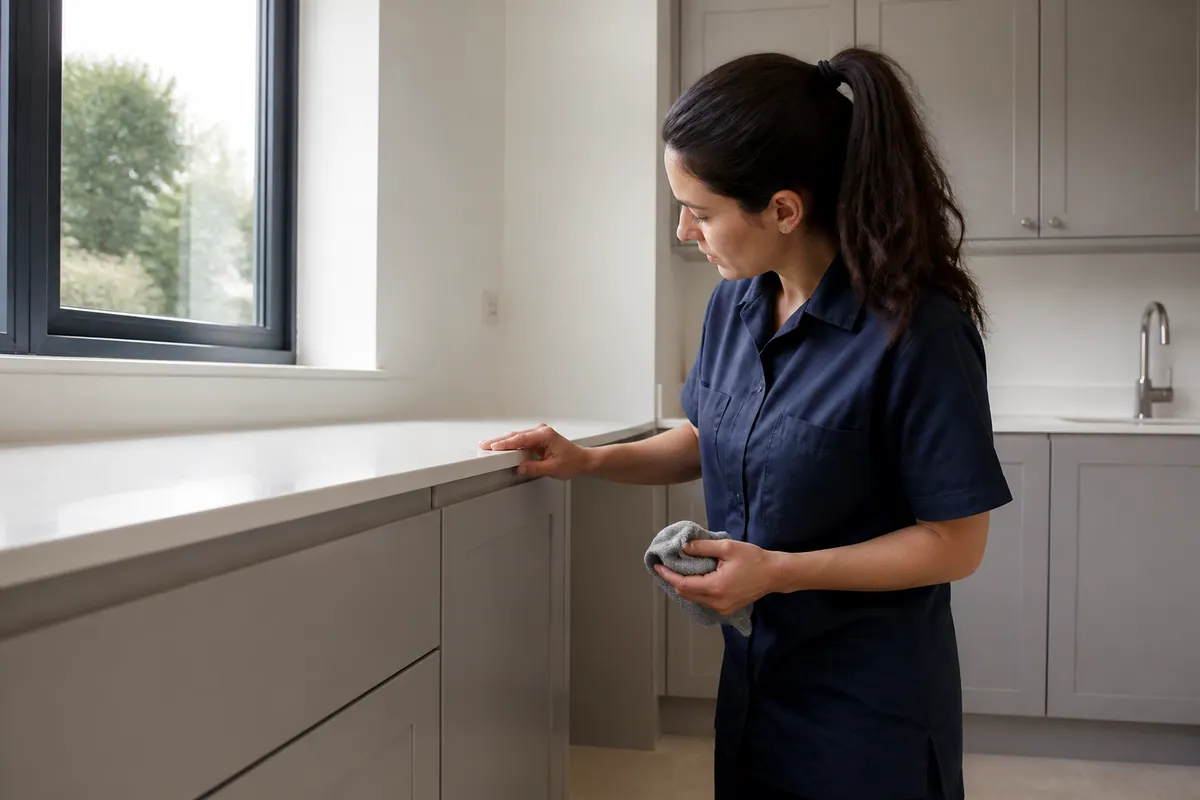
Illustrated material assessment.
The deposit cannot be assessed without the finish.
Record the newest floor and door finishes separately. One ready room does not establish that a recently coated threshold or door is suitable for cleaning and equipment contact.
Ask when contact cleaning is permitted, not just when paint feels dry.
Name the finish beneath any bonded residue.
Record damage independently of removable deposits.
A sequence, not a completion guarantee
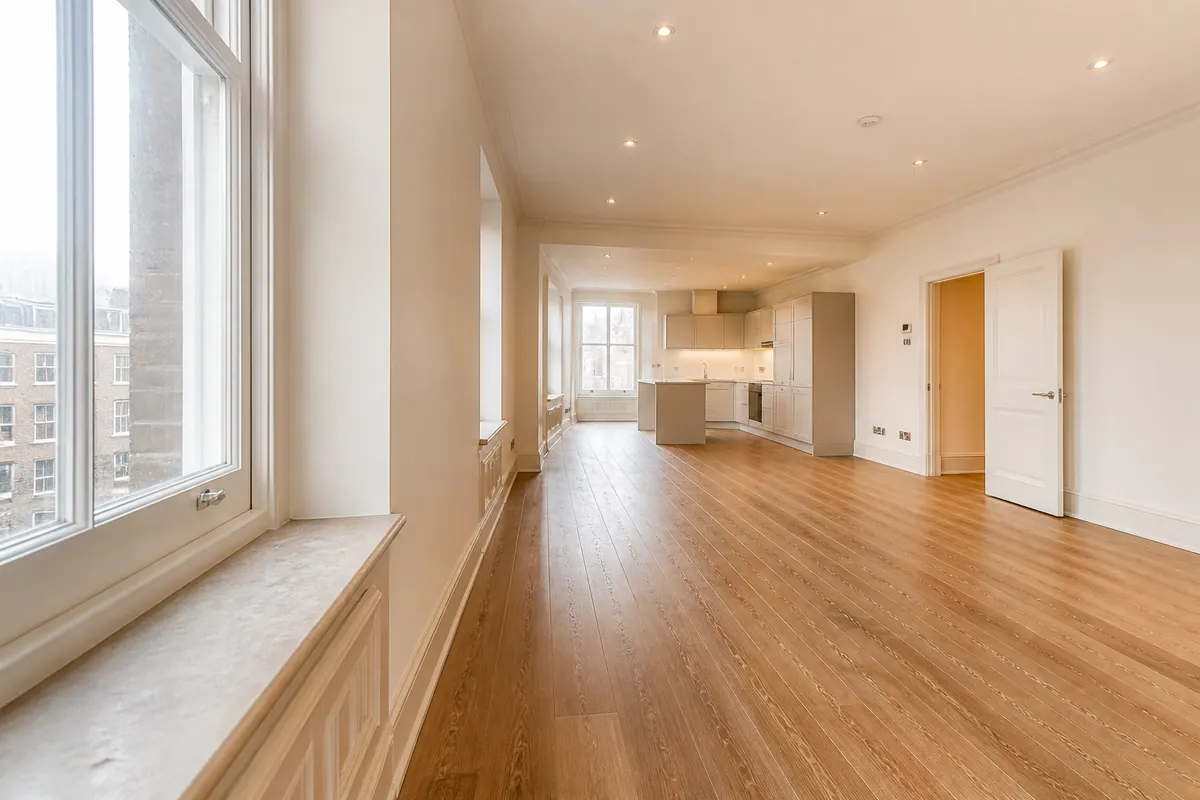
Establish which spaces can be reached on the day.
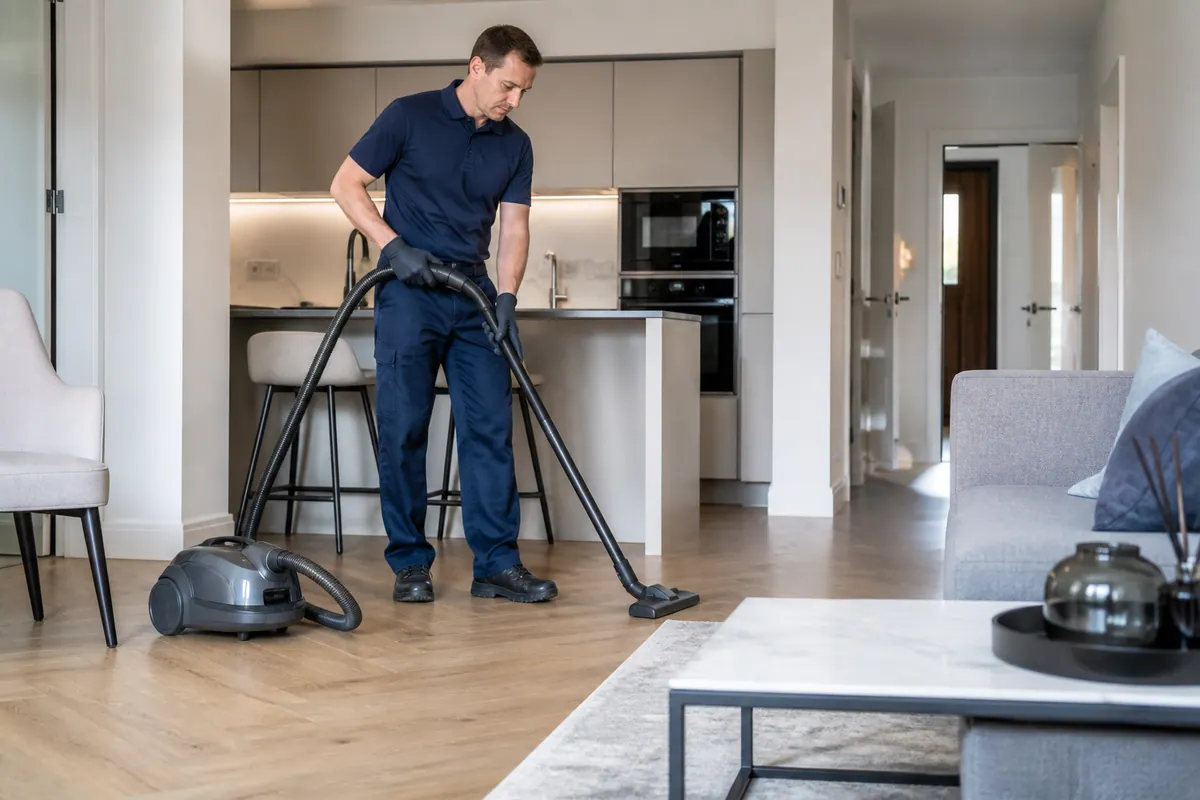
Work through the reachable surfaces included in the agreement.
Identify any mark requiring a separate decision.
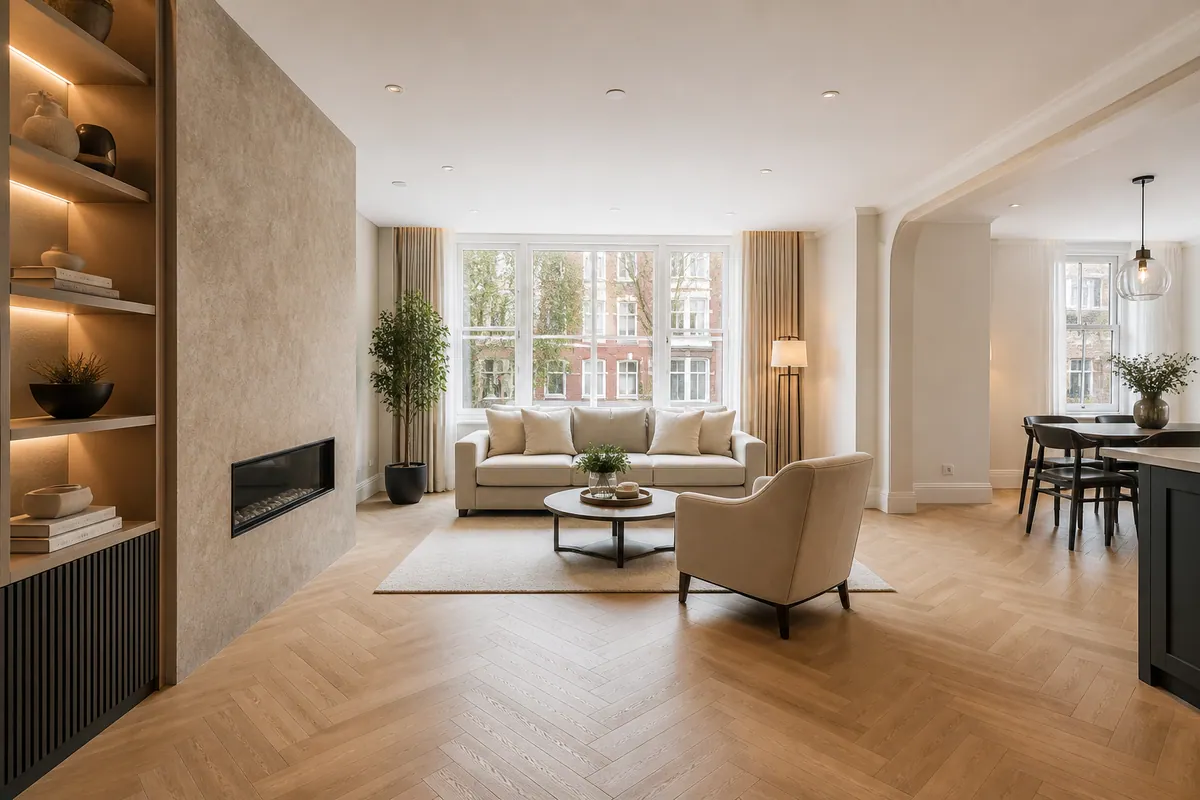
Separate the next property task from the completed clean.
The pictured stages are not a guarantee of the condition after treatment.
Brief answers, clear limits
Prepare a conversation, not a booking
Describe the work without assuming a fixed package.
The form has no schedule for staged works. Explain the released-room boundary directly with the summary; no information is sent, no date is reserved and no charge is calculated.
Keep later-stage rooms visible in the conversation. The summary cannot predict dust or access changes from unfinished work.
Talk through the room list: 020 3608 3976Make the responsible contact clear
Keep a clear distinction between rooms released now and spaces still holding the next stage’s materials. A completed cleaning list should not imply that later renovation work has already been covered.
Give the keyholder a clear refurbishment brief. A tenancy inventory and the finishing-clean agreement are separate documents.
Describe the proposed handover stage without treating this page as a contract offer. Availability and coordination must be checked.
Glazing is an explicit request
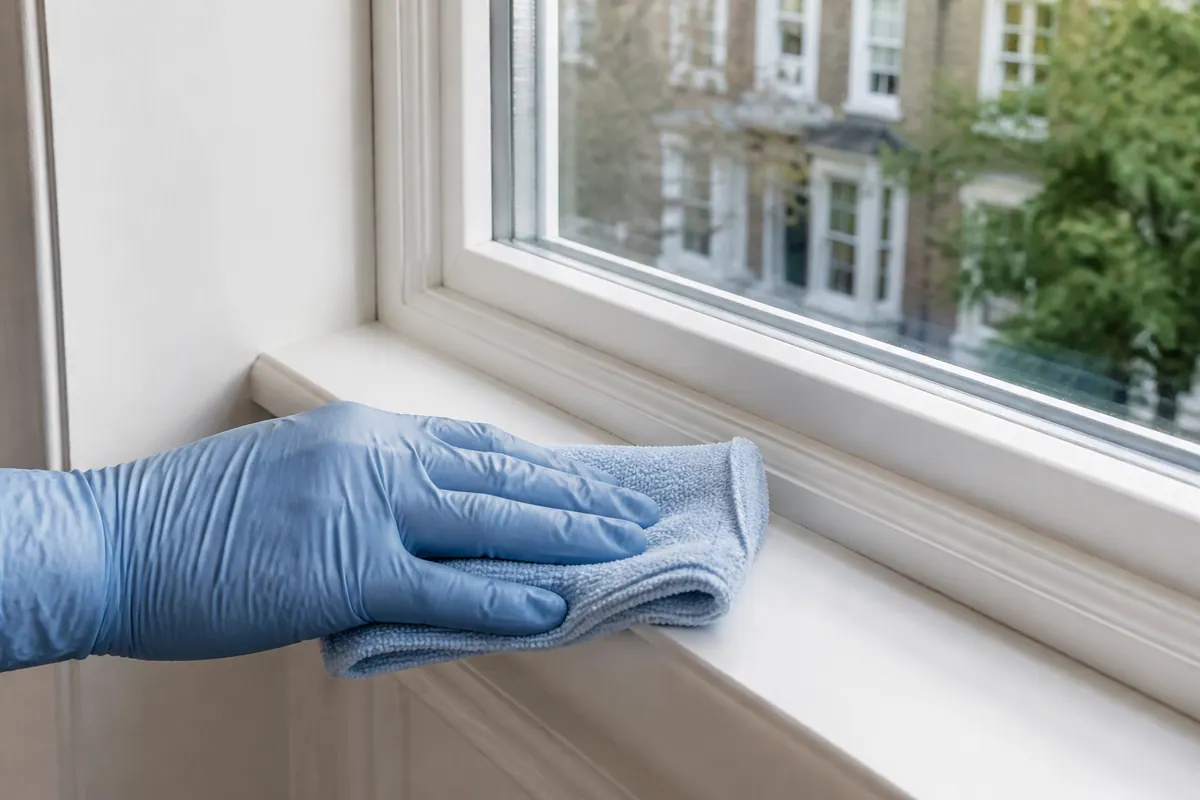
Identify windows only in the rooms released for the proposed stage, and flag any glazing beside continuing work. A request across the whole house could imply areas that are not yet accessible or ready.
Identify installation residue separately from general dust on glass. Safe removal and its inclusion must be confirmed.
Ask about the window scope ↗Address and access
This is an enquiry page for Finchley. Confirm the property address and practical access directly; the map is not a business-location claim.
For a separate location, use the after builders service page for an address-specific answer.
Finchley / next conversation
Explain what the trades completed and where deposits remain. Add the surface information and next-use plan so Alesta can discuss the appropriate work.
