
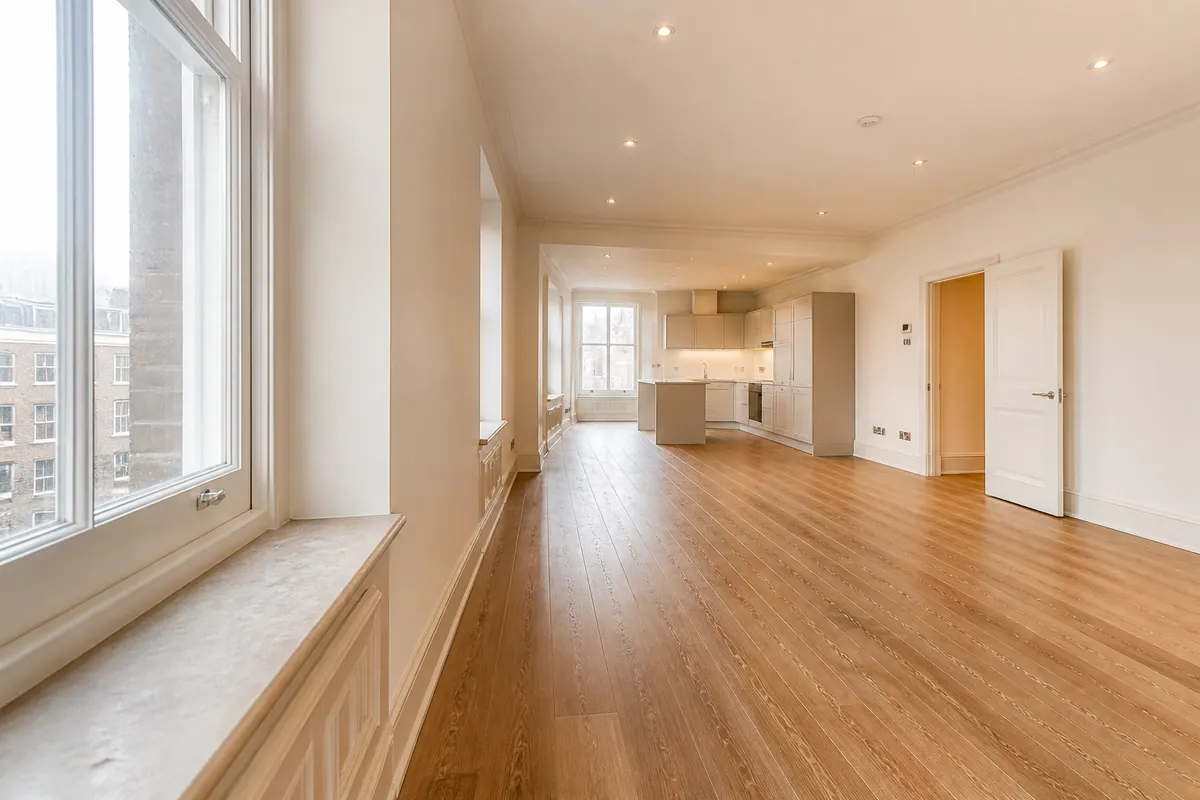
Release the work area
Establish which spaces can be reached on the day.
Hampstead · Retained features, newly finished rooms
Retained features, newly finished rooms
A clear brief for returning to refurbished rooms.
When a refurbishment keeps older features, the finishing clean should respect the difference between age and new residue. Describe the retained timber and newly painted areas in your Hampstead home before discussing methods.
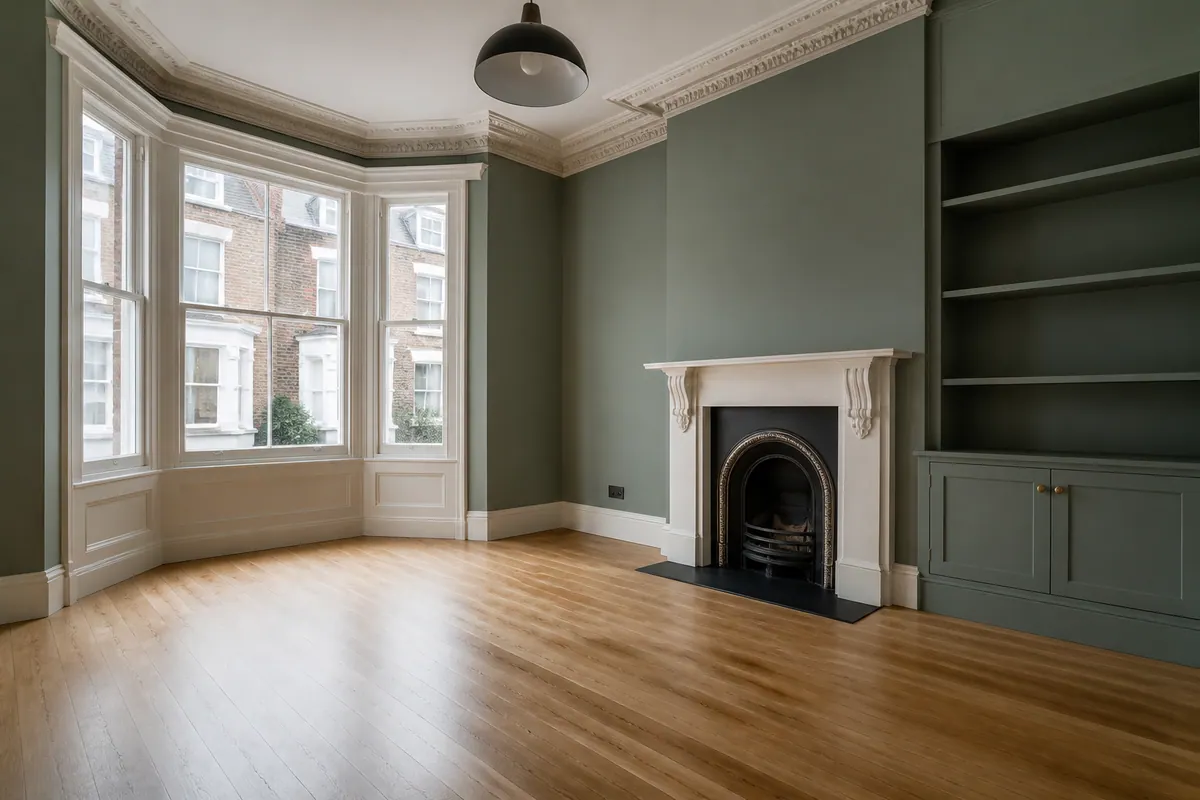
No customer outcome is represented by the illustration.
Describe the Hampstead work
Describe the project through a category if useful, but do not assume all suggested tasks are included.
Give the finishing condition as well as the project name. Access, fitted detail and new materials help determine the proposed work.
Inspect the affected route
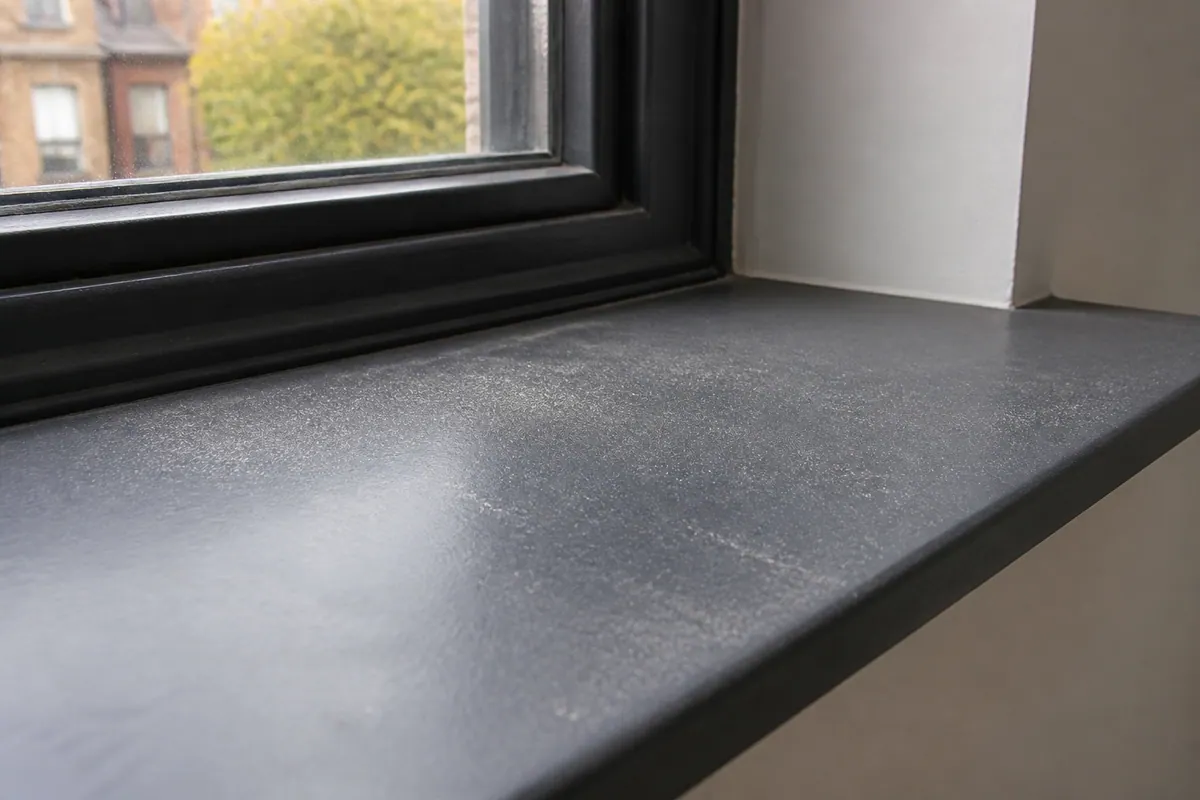
Include the edges in the first description.
Look along accessible ledges around the retained features, including surfaces outside the decorated room. Existing colour variation should not be recorded as building dust merely because it becomes more noticeable afterwards.
Tell Alesta which coverings have already been removed and which surfaces are exposed. Their previous protection does not prove they are clean now.
Discuss any later dust-producing visit before fixing the cleaning sequence.
At your Hampstead property
Separate recent deposits from the original condition of retained features.
Describe the stairs to each affected room, including any turns where equipment must pass. Clear access protects the practical route without assuming that every staircase surface belongs in the cleaning list.
Separate the decorator’s remaining work from the surfaces released for cleaning. Retained fittings may still need attention from a trade even when the new paint looks complete.
Use the review to record what was cleaned and what needs conservation or installer advice. Cleaning cannot restore worn finishes or erase the history of a retained feature.
Quoting the Hampstead work
From £29/ hour
Materials and equipment are included for the cleaning service. The hourly starting figure does not replace an individual quotation.
Describe obstructions and difficult residues rather than relying solely on room numbers. Those facts influence the work that can be quoted.
| Work category | Rate guide | Condition to describe |
|---|---|---|
| A defined work zone | Guide from £29/hour, not a total | Condition of the retained ledges and room edges |
| New room fittings | From £29 per hour | Readiness of older timber coatings |
| Whole-property scope | Condition-based quotation required | Room access before returning to refurbished rooms |
| Commercial suitability check | Availability and scope to agree | Release arrangements and access |
Based on Alesta’s published after builders cleaning rate. Disposal is not part of this hourly guide.
A sequence, not a completion guarantee
Establish which spaces can be reached on the day.
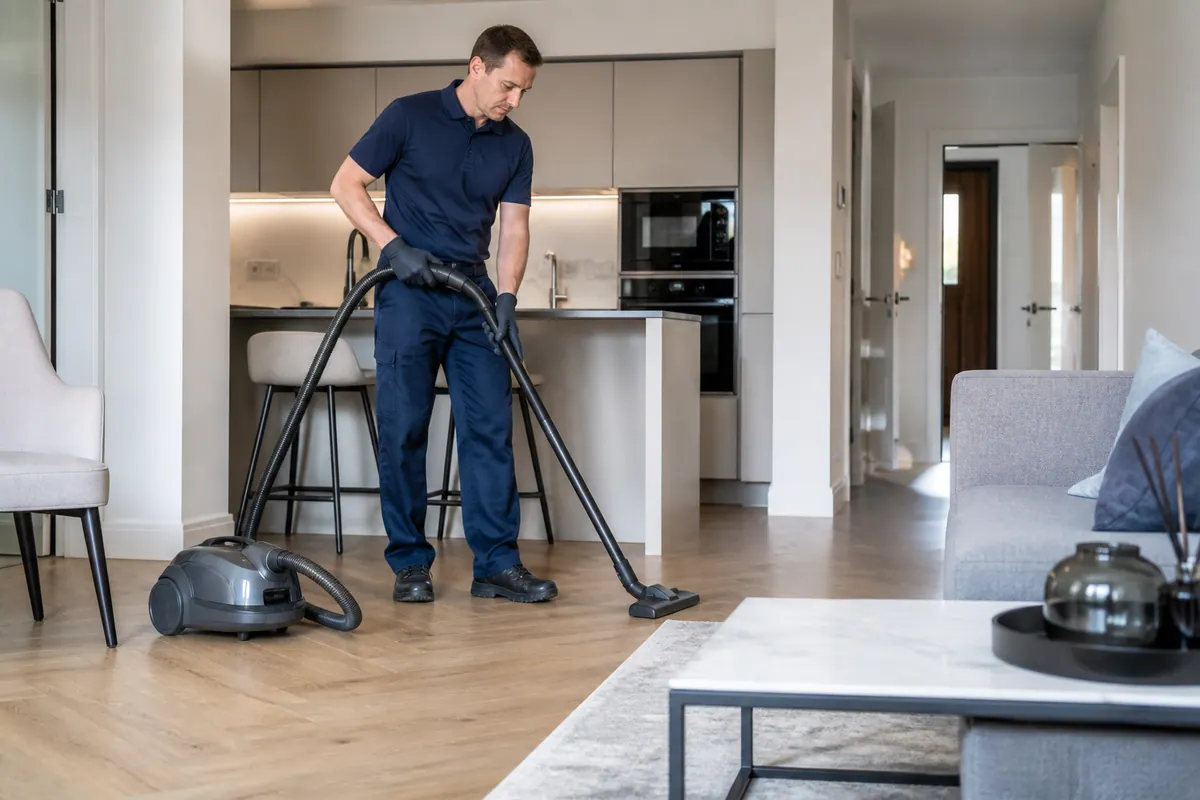
Address the named deposits and suitable floor areas.
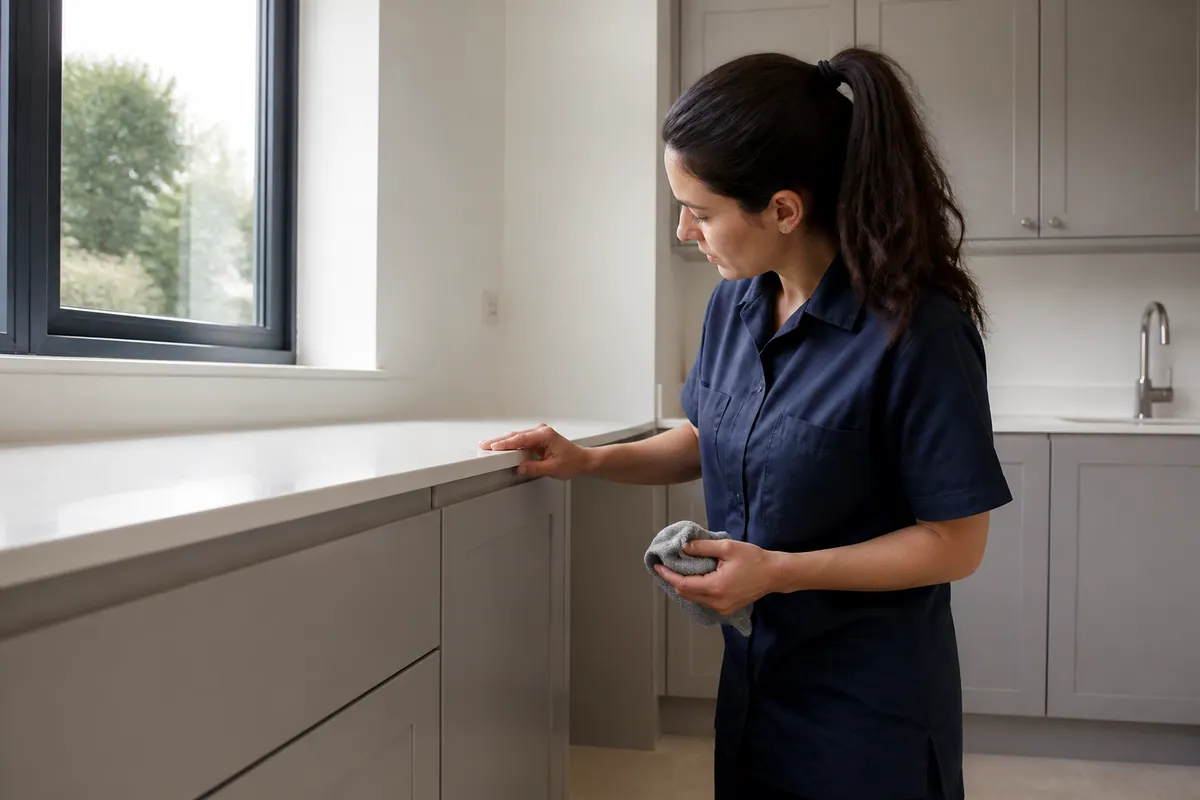
Keep unresolved fitting issues on the trade’s list.
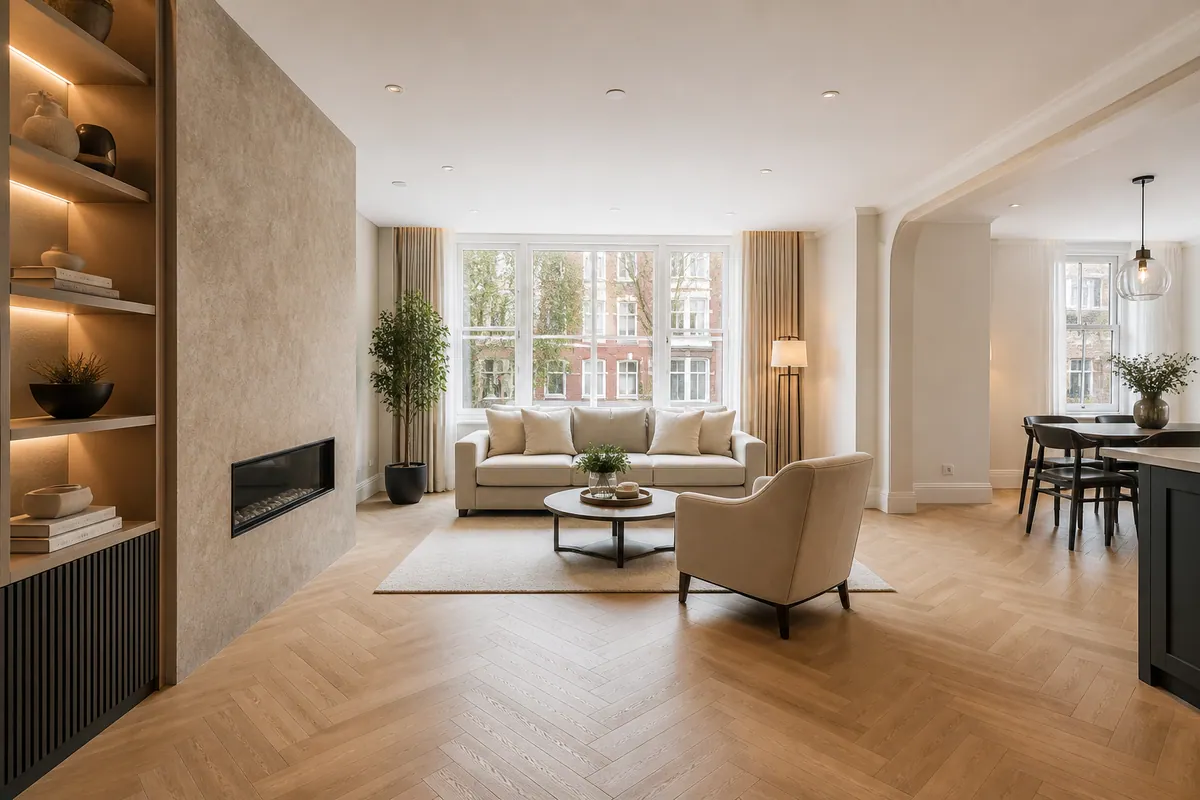
Arrange the next use around any outstanding guidance.
The sequence is explanatory; the images do not promise an outcome.
Draw the cleaning boundary
Use the room diagram to spot missing questions; it is not a measured customer floor plan.
Describe the exposed ledges individually if fitted furniture creates several levels of detail.
Door surrounds and low corners can need attention separately from the open floor.
Point out new hardware that carries an isolated mark instead of assuming it is ordinary surface dust.
A short corridor can be important to the final scope even when no fitting occurred within it.
Identify before treating
| Surface issue | Location | Next consideration |
|---|---|---|
| Accessible dust | retained ledges and room edges | List the exposed detail for the quotation. |
| Loose ordinary material | Small surface deposits | Use the agreed cleaning boundary. |
| Marks beneath labels | Labels or marks beside older timber coatings | A suitable method and inclusion both need agreement. |
| Plaster and paint spots | Isolated spots near the retained ledges and room edges | Safe removal cannot be assumed from appearance. |
| Factory film | Covering on a new surface | Agree handling with suitable care information available. |
Keep clearance outside the dust brief
Define the cleaning work by the surfaces affected and their condition; bulk collection is not part of that definition.
Tell Alesta what remains on site so cleaning and waste needs can be separated. Neither service should be inferred from the other’s booking.
Ask about separate building waste collection ↗Different work leaves different detail
The final carrying route can hold deposits after the work room is cleared. Check the doorway and passage before deciding the apartment brief is complete.
Give the fitter’s readiness guidance for recently applied finishes. A kitchen that looks complete may still have surfaces that should not be cleaned yet.
The fitting date does not determine sealant readiness on its own. Obtain the relevant product advice before requesting contact cleaning.
Explain where possessions or spare materials prevent access. The quotation should reflect reachable detail rather than a theoretical empty property.
Compare the visit with its agreed building-work priorities. Deposit outcomes, inventory certification and other tenancy requirements are not implied.
Discuss the actual commercial task directly with Alesta. Contractor coordination is not assumed simply because the project is called a refurbishment.
Check the conditions for arrival
Before the clean
For the appointment
Name rooms, not an unlimited checklist
Point out where installation deposits remain around the kitchen. Separate expected surface cleaning from adjustment or repair of new units.
List sanitaryware, tile surfaces and suitable flooring where wanted. Fresh sealing or unusual residue needs a readiness question before cleaning.
A bedroom kept closed during renovation may still need a check at its doorway. Describe what is visible before expanding the scope.
Give the living-area floor material and access around stored belongings. Glazing requirements should be stated independently.
A finish is not just a colour
Illustrated material assessment.
Readiness and residue are separate questions.
Older timber may have a different coating from nearby new woodwork. Share any known care history and identify uncertain finishes; a more forceful approach is not a substitute for knowing the material.
Different finishes can require different release times.
Specialist coatings may change what can be attempted.
Ask about labels before assuming their removal.
Brief answers, clear limits
Prepare a conversation, not a booking
Start with a practical outline of the property.
Use the controls to outline the refurbishment, then add the retained-feature information separately. This private note cannot assess older timber, secure attendance or calculate the cost of suitable treatment.
Retained features can change the method without changing the room count. Identify uncertain finishes when discussing the outline.
Talk through the room list: 020 3608 3976Make the responsible contact clear
Identify retained items you do not want treated as ordinary new fittings. Their existing wear and care history belong in the first conversation, particularly where fresh paint makes older marks more noticeable.
Discuss the intended handover with Alesta without promising an unreviewed checklist. The actual tasks need their own agreement.
Contractors should ask whether the project is suitable and explain access responsibilities. Commercial coordination is not an implied agreement.
Glazing is an explicit request
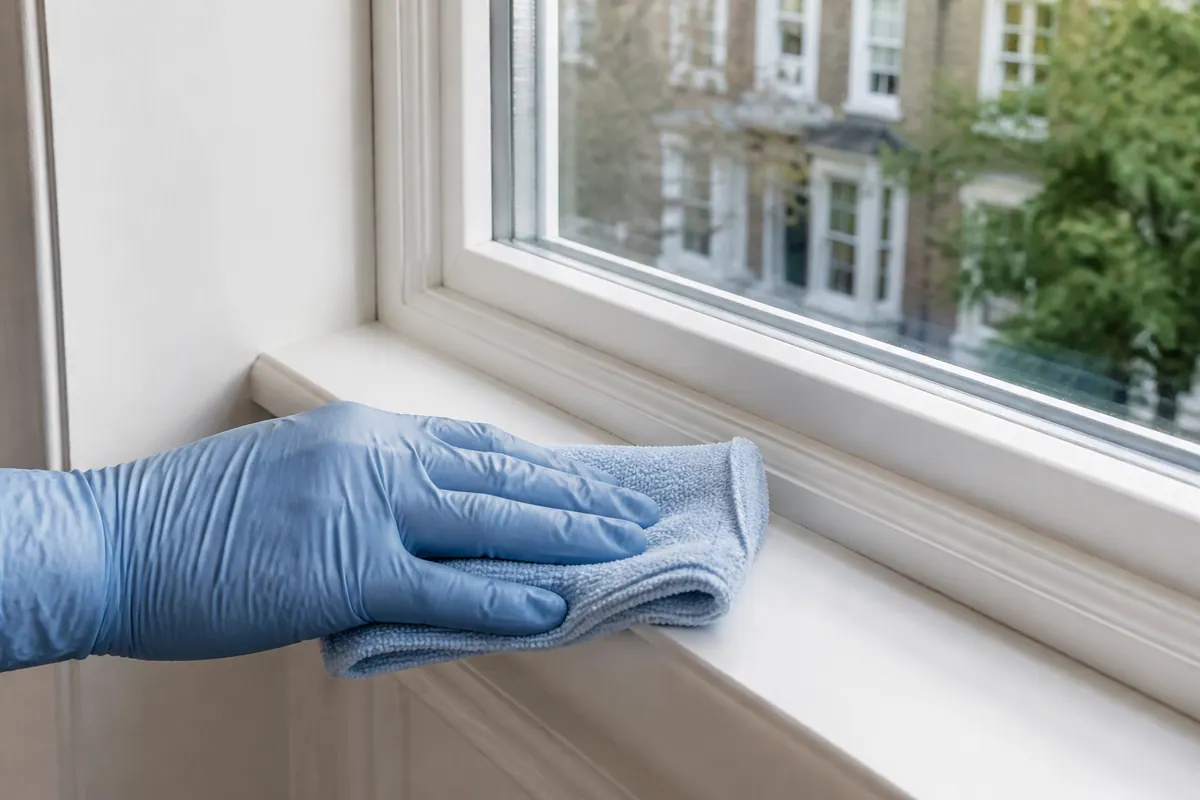
If retained glazing or frames need attention, describe their existing condition before the recent deposits. Cleaning new residue is not restoration of aged materials, and accessibility must be considered for the actual position.
Describe hardened material rather than promising a clear result in advance. The underlying glass condition remains part of the assessment.
Ask about the window scope ↗Address and access
The Hampstead location helps identify the enquiry, but access still depends on the building. No local office is implied.
For another property, use the main service enquiry and check that it can be served.
Questions for this project
Explain the deposit and its location around retained ledges and room edges, including anything you cannot identify. That separates ordinary dust from a question needing assessment.
Confirm the entrance and internal route for the team. Let Alesta know if possessions or building supplies affect retained ledges and room edges.
A new appearance does not prove older timber coatings can be cleaned immediately. Check the product advice and flag resistant deposits separately.
Add adjoining areas if deposits are visible and you want them assessed. Their connection to retained ledges and room edges does not automatically include them.
Use the advertised £29/hour only as a starting rate. Equipment and materials form part of the service, but the final quote depends on the brief.
It is better to discuss the sequence than presume work can overlap. Access and the readiness of finishes still matter.
Leftover timber or boards should not be treated as cleaning residue. Separate disposal arrangements may be needed before surfaces can be reached.
List windows or carpets explicitly when contacting Alesta. Do not assume specialist equipment or time is included in the general visit.
The proposed return or delivery date is useful context, not a guarantee. Alesta needs to consider the real scope and any drying restrictions.
Where ordinary cleaning is unsuitable for older timber coatings, specialist advice may be needed. Complete removal of all building marks is not an assurance.
Hampstead / next conversation
Start with the actual rooms rather than an expectation that everything is included. Discuss any separate treatment or clearance requirements explicitly.
