
Kitchen
Compare the kitchen exteriors with the floor around them. Both may be affected, but their materials can need different methods.
Golders Green · The kitchen clean includes a route
The kitchen clean includes a route
A clear brief for using the kitchen entrance route.
A kitchen and hallway refurbishment joins cleaning detail with a heavily used route. For Golders Green, describe the new stone tiles and thresholds before discussing the dust left between the entrance and kitchen.
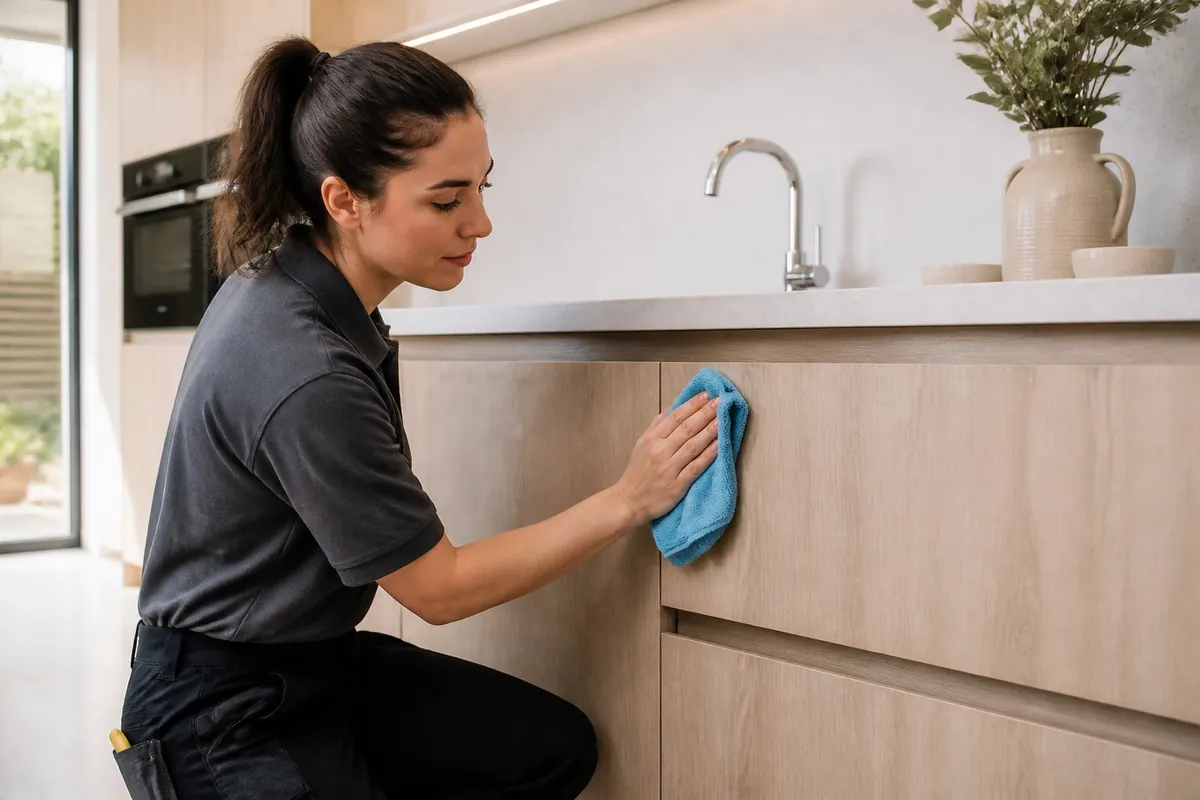
The image is illustrative and does not depict a customer job.
Prepare a conversation, not a booking
The room details support a better first conversation.
Use the selections to outline the rooms, then supply stone and threshold details separately. This note cannot choose a treatment and does not submit a booking or produce a price.
Provide the stone specification and threshold condition. A room count does not establish suitable treatment for those details.
Talk through the room list: 020 3608 3976At your Golders Green property
Separate widespread dust from isolated deposits on stone or glass.
Describe the entrance threshold and any steps on the equipment route. Remove loose materials that obstruct it and explain where the clean should begin within the property.
Check whether tile work or sealing is still outstanding. The cleaning sequence should respect those finishes as well as the kitchen installer’s final visit.
Review the hallway-to-kitchen route and any remaining stone residue separately. A specialist treatment or installer query may be appropriate where ordinary cleaning would risk the surface.
Name rooms, not an unlimited checklist
Compare the kitchen exteriors with the floor around them. Both may be affected, but their materials can need different methods.
List sanitaryware, tile surfaces and suitable flooring where wanted. Fresh sealing or unusual residue needs a readiness question before cleaning.
Name the bedroom finishes recently changed and any dust beyond those areas. This gives a clearer brief than an identical checklist for every room.
Explain which living surfaces were protected and what remains visible now. A protected central area does not settle the condition at its edges.
A sequence, not a completion guarantee
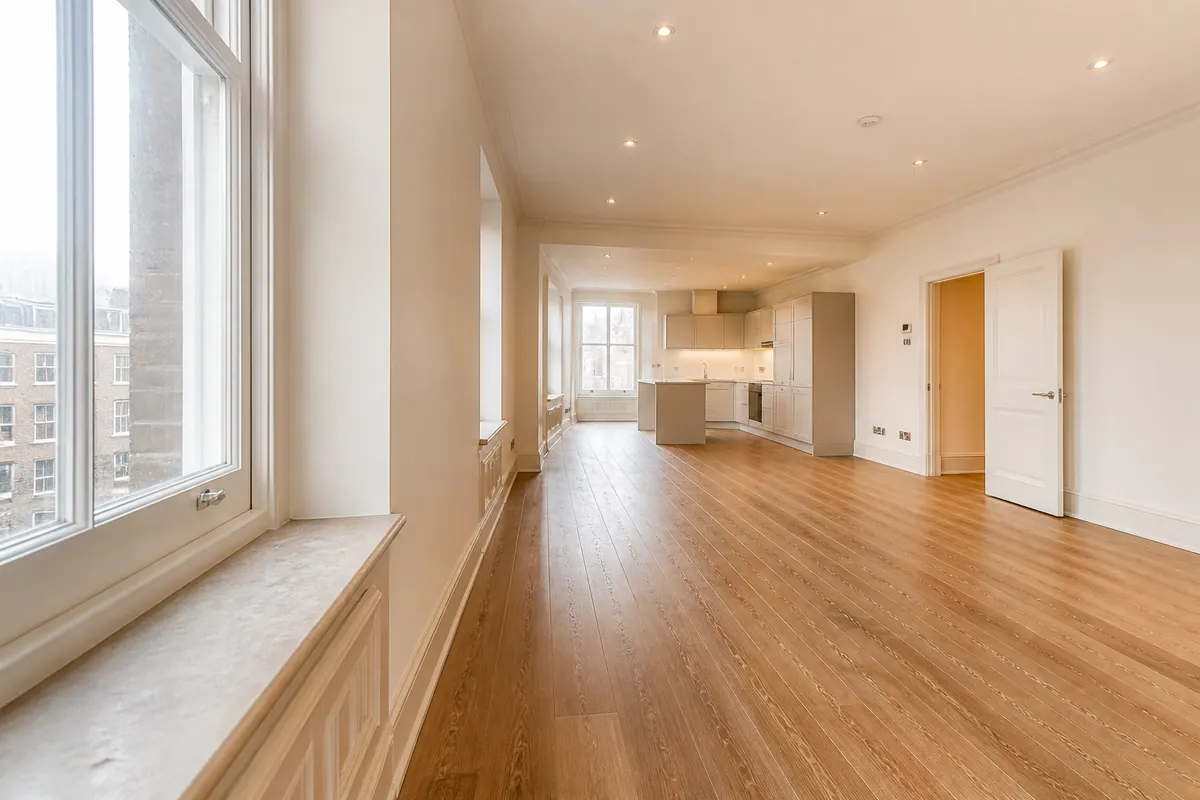
Check that tools are removed and surfaces permit cleaning.

Address the named deposits and suitable floor areas.
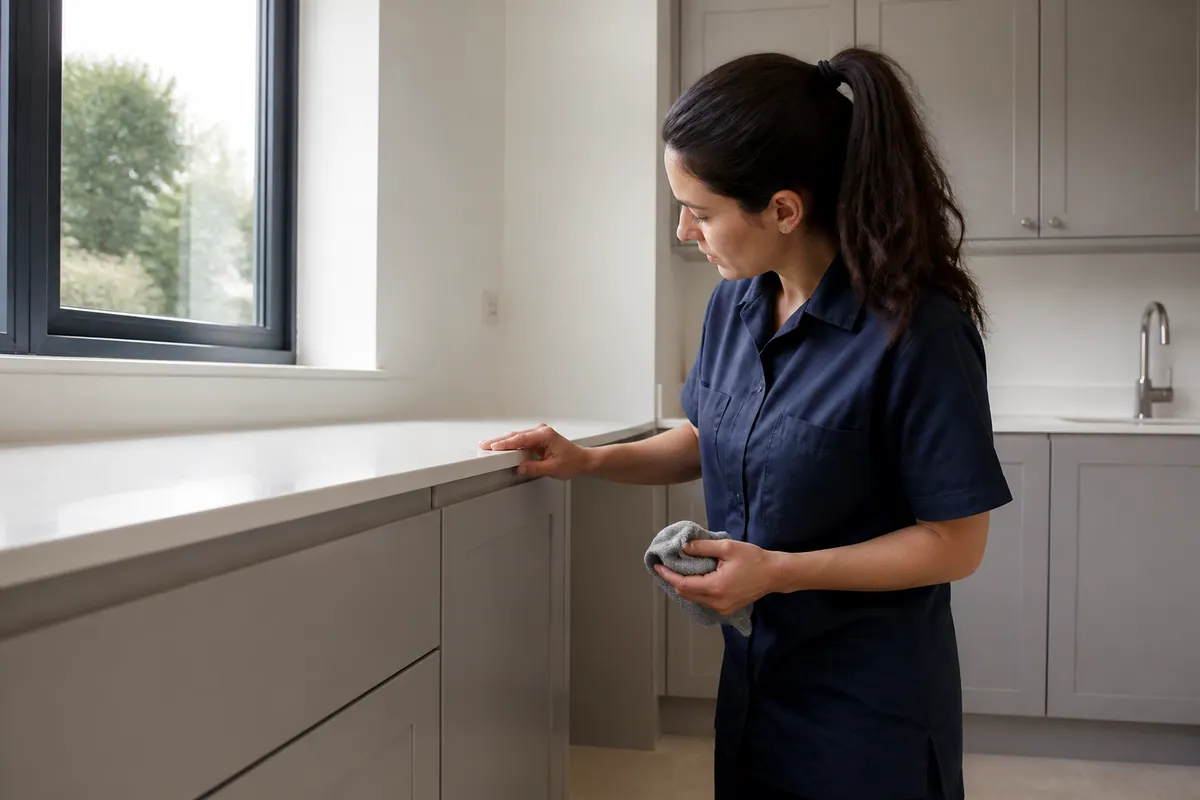
Discuss the remaining residue rather than promise universal removal.
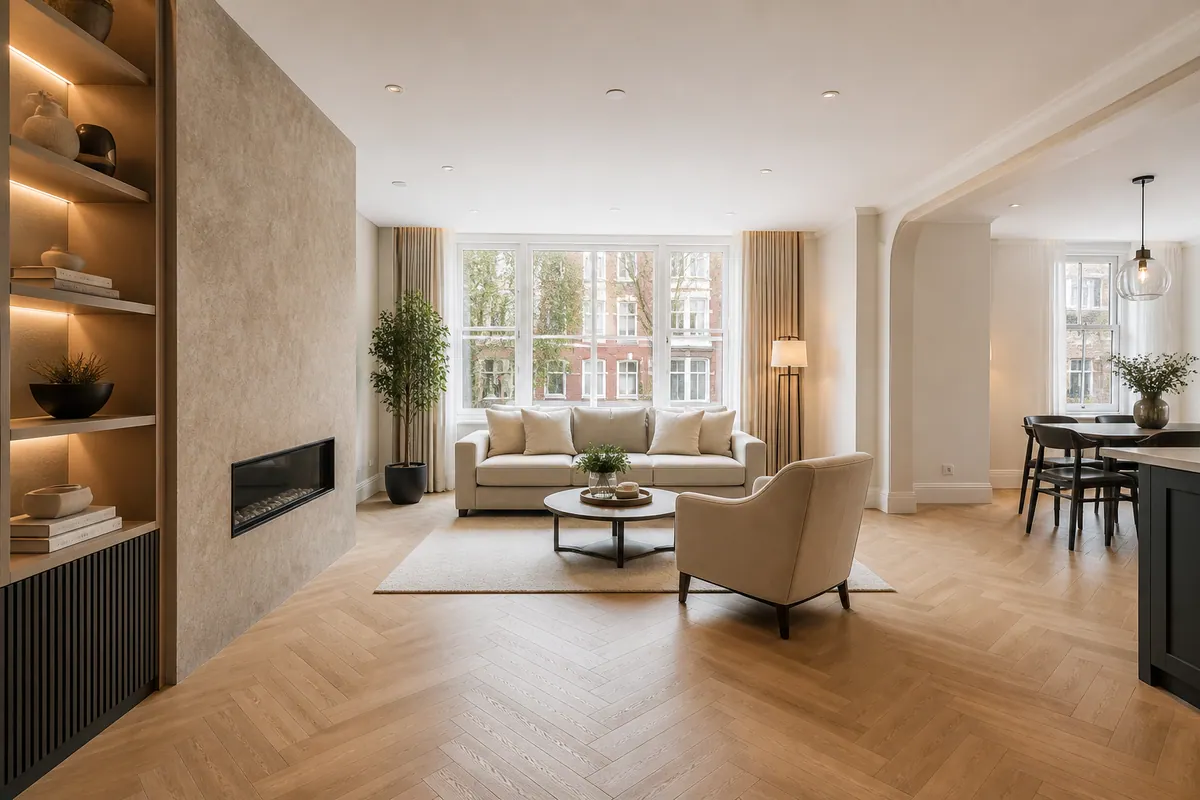
Use the review to clarify what still needs attention.
No measured result is represented by the stage images.
Quoting the Golders Green work
From £29/ hour
The published service includes cleaning equipment and materials. Check the applicable rate and tasks with Alesta before proceeding.
A lightly affected room and one with many installed surfaces present different workloads. Explain the difference before discussing a total.
| Enquiry type | Quote approach | Explain these points |
|---|---|---|
| One affected space | Guide from £29/hour, not a total | Condition of the hallway thresholds into the kitchen |
| New room fittings | Hourly guide from £29 | Readiness of new stone tiles |
| A broader interior project | Price depends on the specified tasks | Room access before using the kitchen entrance route |
| A premises-specific request | Specific commercial quote required | Site contact and proposed tasks |
Based on Alesta’s published after builders cleaning rate. Building waste is a separate service enquiry.
Describe the Golders Green work
Describe the project through a category if useful, but do not assume all suggested tasks are included.
A whole-property enquiry should separate routine deposits from difficult individual marks. Include the areas not yet ready so the timing is realistic.
Inspect the affected route
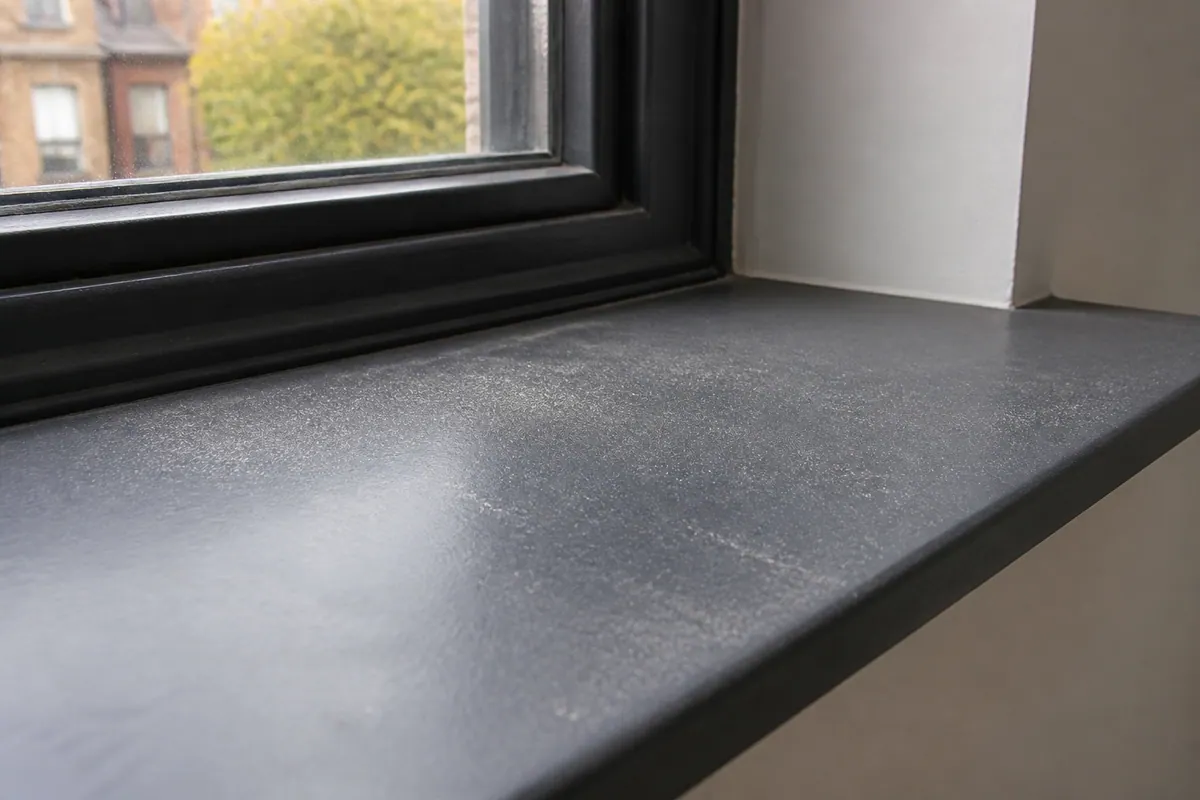
The visible condition sets the useful boundary.
Follow visible deposits through the hallway into the kitchen. Threshold corners and accessible skirting may need attention even when the central floor appears relatively clear.
Show the accessible surfaces on which deposits remain. Appropriate equipment and products can then be discussed around the actual finish rather than one universal treatment.
Do not confuse a planned completion date with actual readiness.
Draw the cleaning boundary
Use the room diagram to spot missing questions; it is not a measured customer floor plan.
Dust may be visible on exposed ledges after the central floor looks tidy; name those needing attention.
Explain which room edges can be reached without relocating furniture or building supplies.
Fittings should be named where they require particular care; a general dust description may not be enough.
The carrying route may cross materials with different care requirements; describe each transition.
Identify before treating
| Remaining material | Observation | Next consideration |
|---|---|---|
| Accessible dust | hallway thresholds into the kitchen | Agree the accessible surfaces carrying these deposits. |
| Surface remnants | Small deposits after work | Treat as cleaning only where included in the scope. |
| Labels or adhesive | Labels or marks beside new stone tiles | Keep uncertain protection materials as an enquiry question. |
| Hardened fitting deposits | Isolated spots near the hallway thresholds into the kitchen | The finish limits treatment; full removal is not assured. |
| Attached protection | Film around newly fitted detail | Agree handling with suitable care information available. |
Keep clearance outside the dust brief
A finishing visit addresses the named room detail rather than taking over the contractor’s removal list.
A waste enquiry should explain volume, weight and collection access. The cleaning quotation cannot substitute for those details.
Ask about separate building waste collection ↗Different work leaves different detail
A flat enquiry should give the usable entrance and the affected rooms. A locked or obstructed area cannot be assumed available just because its renovation has finished.
Describe the floor at the kitchen entrance as well as the fitted units. Dust from the work may reach surfaces beyond the new cabinetry.
Check whether dust has reached the bathroom approach. That short connecting area can need a different description from the fixtures inside.
Keep surface instructions with the room they concern. This avoids a general care note being applied to unrelated finishes elsewhere in the property.
A handover deadline is worth discussing early, but timing still depends on condition and readiness. Do not assume a fixed-duration visit from the date alone.
Site rules and the scope of a commercial visit require confirmation. This example is not evidence of an existing contract or specialist site service.
Check the conditions for arrival
Before the clean
For the appointment
A finish is not just a colour
Illustrated material assessment.
Cleaning does not correct installation damage.
Identify the stone rather than describing it only as a new tile. Sealers, installation residue and care restrictions can affect what is suitable; complete removal of hard deposits is not assumed.
Check the newest application before planning the method.
Specialist coatings may change what can be attempted.
Identify delicate detail before any treatment is discussed.
Brief answers, clear limits
Make the responsible contact clear
Keep the stone information with the hallway and kitchen priorities. The route may look continuous while the finish or condition changes at the doorway, which matters to the proposed method.
A rental-property request should explain the renovation itself, not only the next tenancy date. Any additional tenancy service must be confirmed.
Contractors should ask whether the project is suitable and explain access responsibilities. Commercial coordination is not an implied agreement.
Glazing is an explicit request
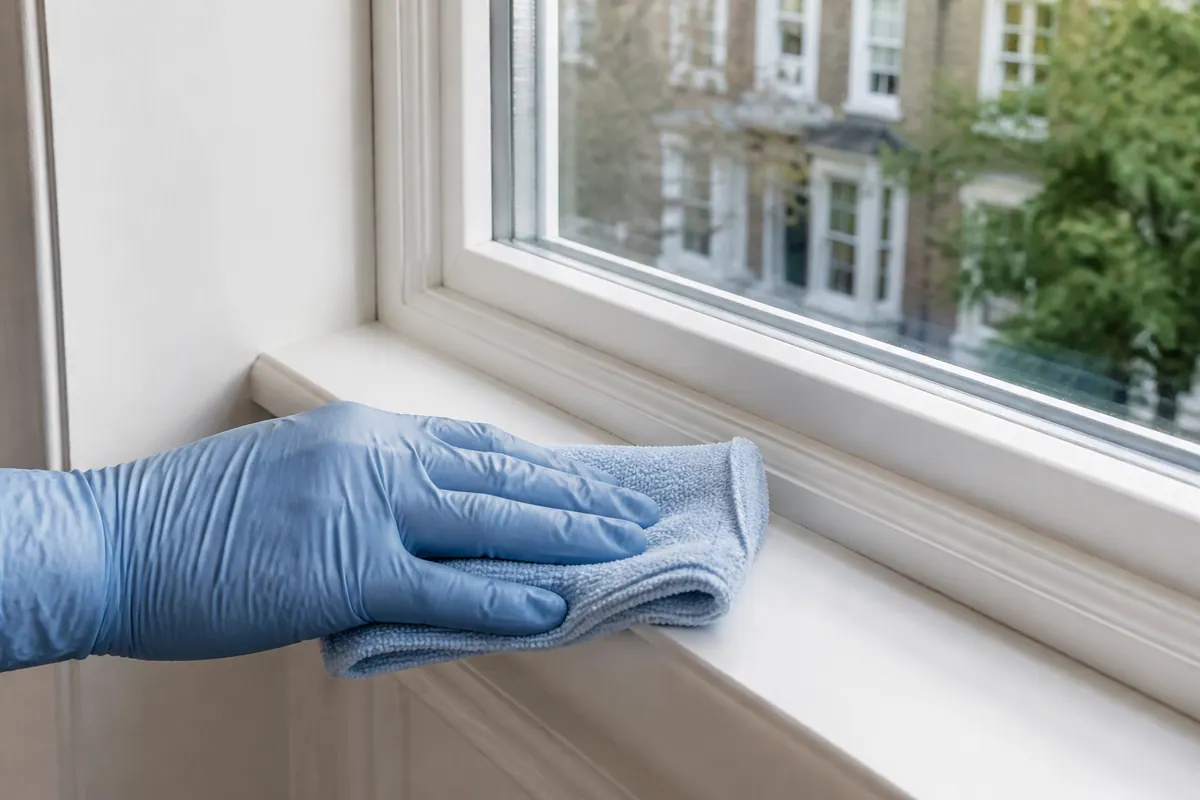
If glass is requested near the new stone, explain each surface independently. A residue that crosses a window surround and tiled area should not be treated as one material or one automatic addition.
Glazing with building residue should be reviewed for a suitable method. A clean request does not override the manufacturer’s restrictions.
Ask about the window scope ↗Address and access
The Golders Green location helps identify the enquiry, but access still depends on the building. No local office is implied.
If the address differs, ask Alesta directly and confirm availability.
Questions for this project
Tell Alesta what changed around hallway thresholds into the kitchen. Identify surfaces that remain blocked or protected so the proposed work reflects real access.
Confirm the entrance and internal route for the team. Let Alesta know if possessions or building supplies affect hallway thresholds into the kitchen.
A new appearance does not prove new stone tiles can be cleaned immediately. Check the product advice and flag resistant deposits separately.
There is no automatic rule based on the doorway. Include relevant adjoining deposits in the room list and confirm their scope.
No fixed total follows from the hourly guide. Alesta publishes from £29/hour and includes cleaning equipment and materials; the proposed tasks still need agreement.
The released areas and remaining work need to be distinguished. A single clean should not be expected to anticipate later cutting or sanding.
Leftover timber or boards should not be treated as cleaning residue. Separate disposal arrangements may be needed before surfaces can be reached.
Window and carpet services should be distinguished from ordinary finishing detail. The property condition and availability govern any arrangement.
The time discussion needs the reachable areas and their condition. Newly applied finishes retain their own readiness requirements.
Some deposits cannot be treated safely without risking new stone tiles. Record the issue separately instead of assuming a stronger product must solve it.
Golders Green / next conversation
Start with the actual rooms rather than an expectation that everything is included. Discuss any separate treatment or clearance requirements explicitly.
