
Kitchen
A kitchen list should identify new finishes and visible residue, not merely say deep clean. Cabinet interiors require explicit discussion.
Maida Vale · From the bathroom to the front door
From the bathroom to the front door
A clear brief for reopening the bathroom.
Bathroom work often leaves a trail through a flat’s corridor. A Maida Vale finishing brief should cover that connection deliberately, with sanitaryware detail distinguished from the shared hallway outside your own door.
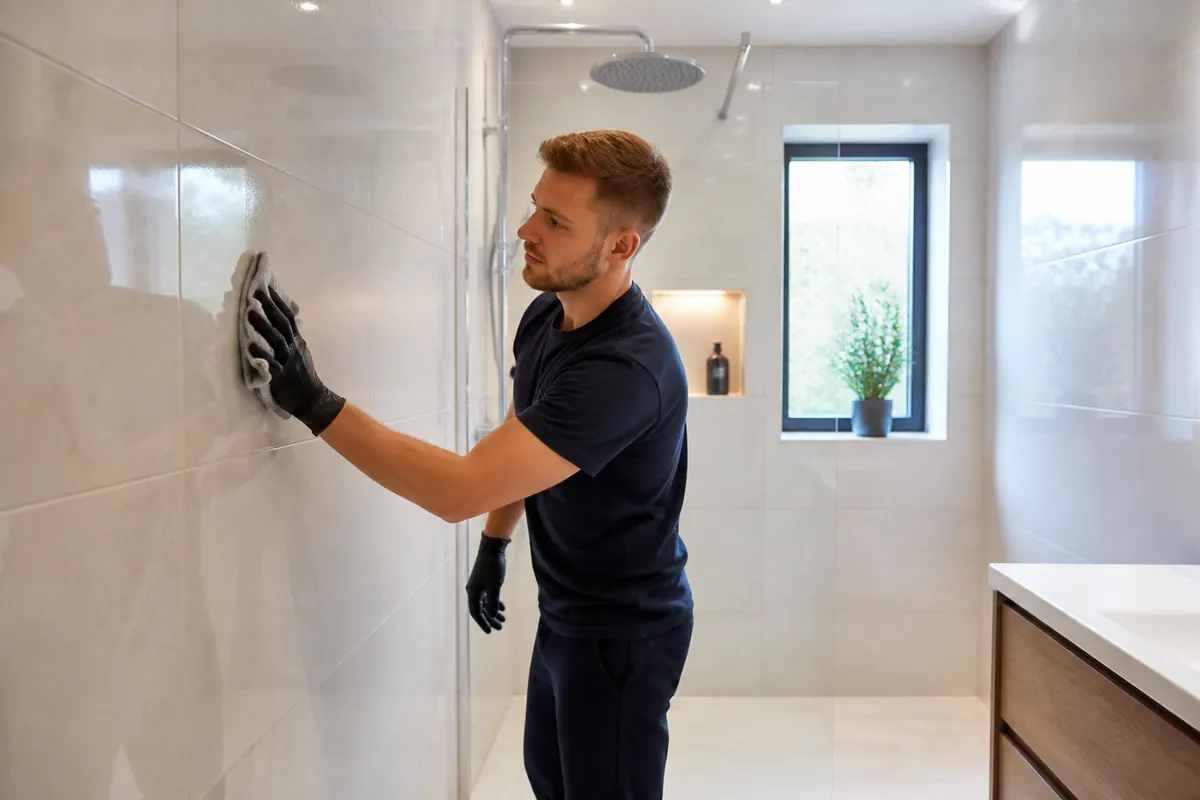
This project image is not a live customer photograph.
Prepare a conversation, not a booking
Describe the work without assuming a fixed package.
The form cannot mark the boundary at your flat door. Use the note to start a conversation about bathroom and corridor scope; it makes no booking, sends no details and provides no price.
Include the affected corridor explicitly and distinguish the shared entrance. The options do not establish that cleaning boundary.
Talk through the room list: 020 3608 3976At your Maida Vale property
The bathroom approach deserves its own line in the room list.
Clarify any shared-hallway rules before the visit. Tell the team which entrance serves the flat and where equipment may pass; communal cleaning requires its own agreement.
Ask the bathroom installer about drying and any final snagging. The fact that the fittings are connected does not establish that every surrounding finish is ready for cleaning.
Check the agreed corridor and bathroom areas as a connected route. Any installation defect should be recorded for the fitter, not described as a missed cleaning task.
Name rooms, not an unlimited checklist
A kitchen list should identify new finishes and visible residue, not merely say deep clean. Cabinet interiors require explicit discussion.
Describe bathroom fittings by condition and material rather than assuming new means ready. Follow the relevant drying guidance.
List reachable ledges and floor margins in affected bedrooms, with any specialist surface questions kept explicit.
A connected living space can carry dust from neighbouring work. Agree the affected ledges and floor rather than adding an undefined whole-room package.
A sequence, not a completion guarantee
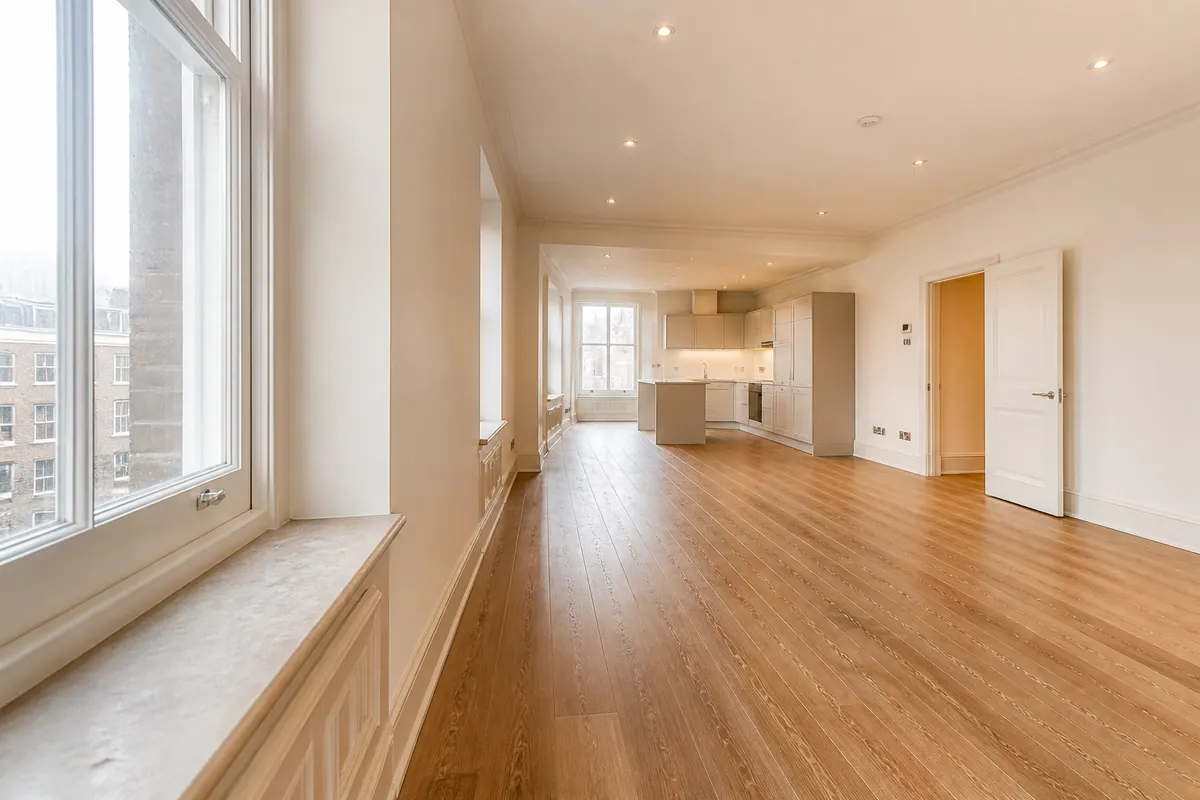
Identify the areas released after the last dusty task.
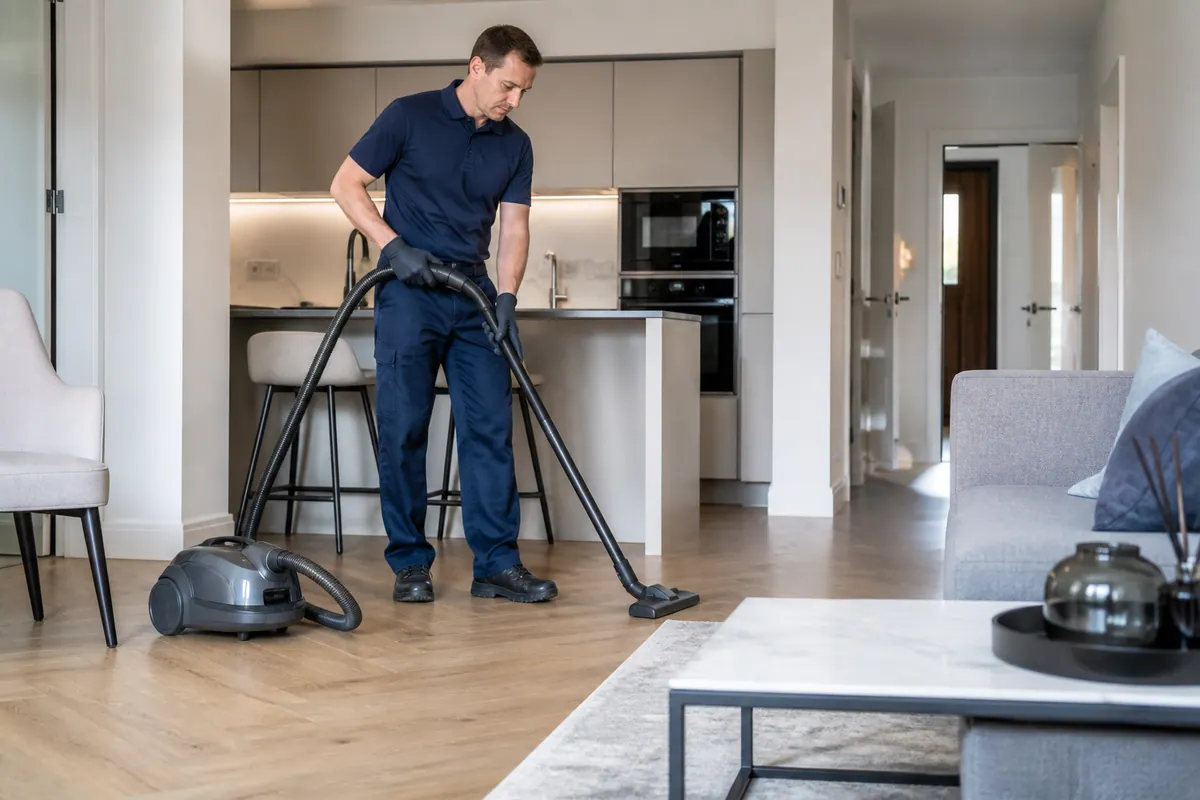
Apply the scoped detail with methods suited to the finish.
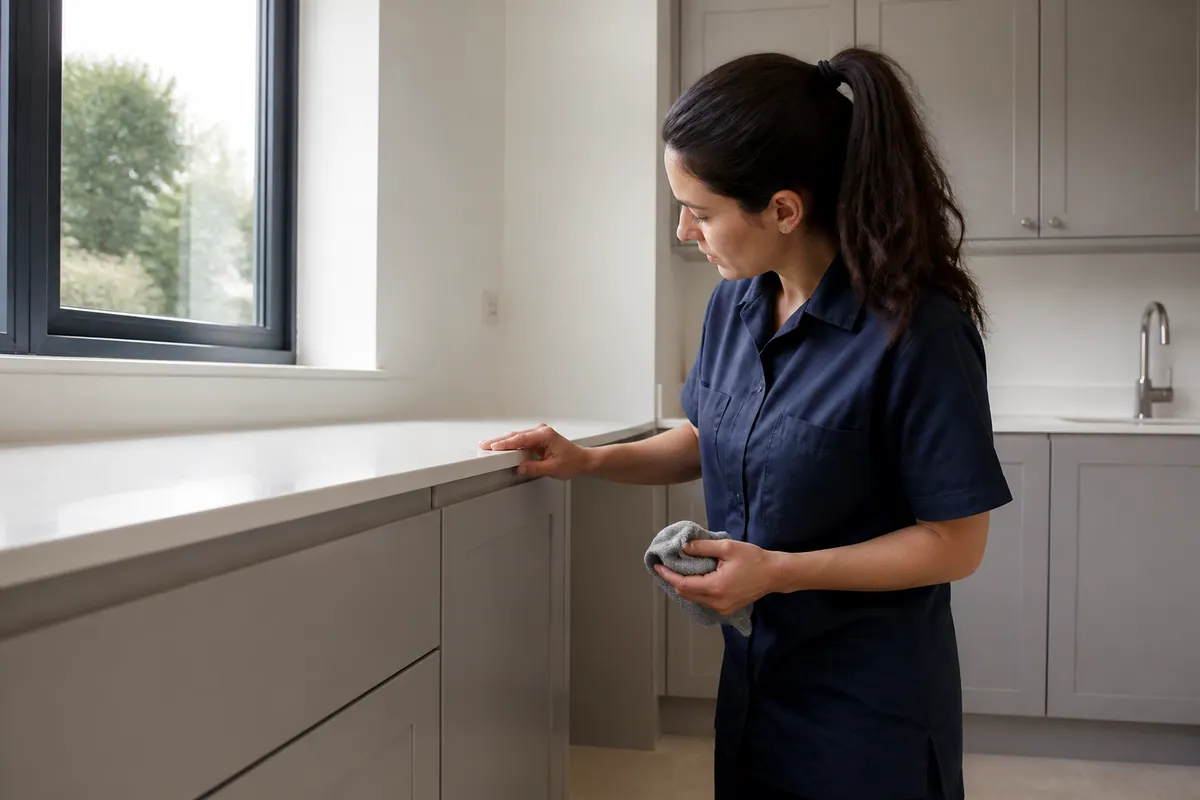
Explain limitations where treatment could risk a finish.
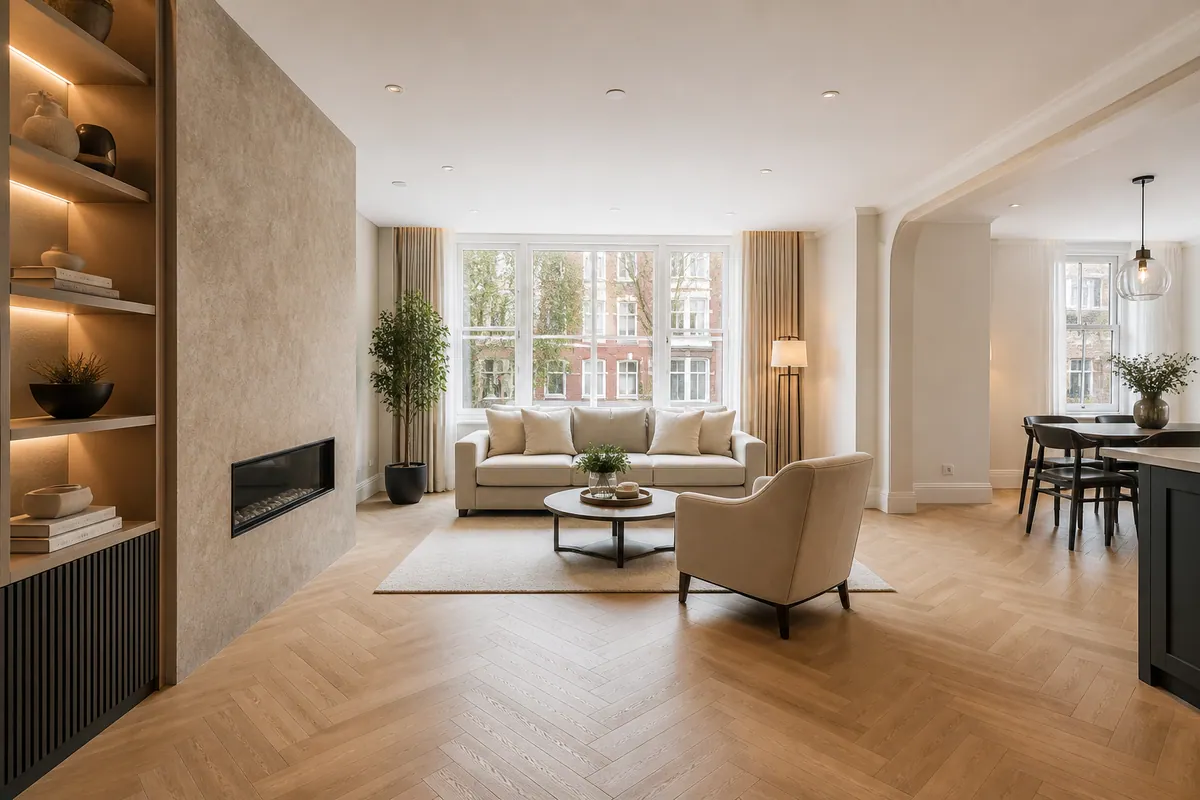
Confirm any remaining specialist follow-up before relying on the space.
These are illustrative scenes, not successive photographs of a customer project.
Quoting the Maida Vale work
From £29/ hour
Materials and equipment are included for the cleaning service. The hourly starting figure does not replace an individual quotation.
Describe obstructions and difficult residues rather than relying solely on room numbers. Those facts influence the work that can be quoted.
| Enquiry type | Cost discussion | Condition to describe |
|---|---|---|
| Limited room work | £29/hour starting guide only | Condition of the bathroom-to-entrance corridor |
| New room fittings | Discuss work from £29/hour | Readiness of new sanitaryware |
| A broader interior project | Price depends on the specified tasks | Room access before reopening the bathroom |
| Proposed commercial work | Ask about the premises involved | Release arrangements and access |
Based on Alesta’s published after builders cleaning rate. Collection of building materials requires its own quote.
Describe the Maida Vale work
The work type helps start the brief. Alesta still needs to know what remains and which areas can be reached.
A wider renovation needs a released-room list with material information. Show the connecting routes and distinguish any area still holding tools or supplies.
Inspect the affected route
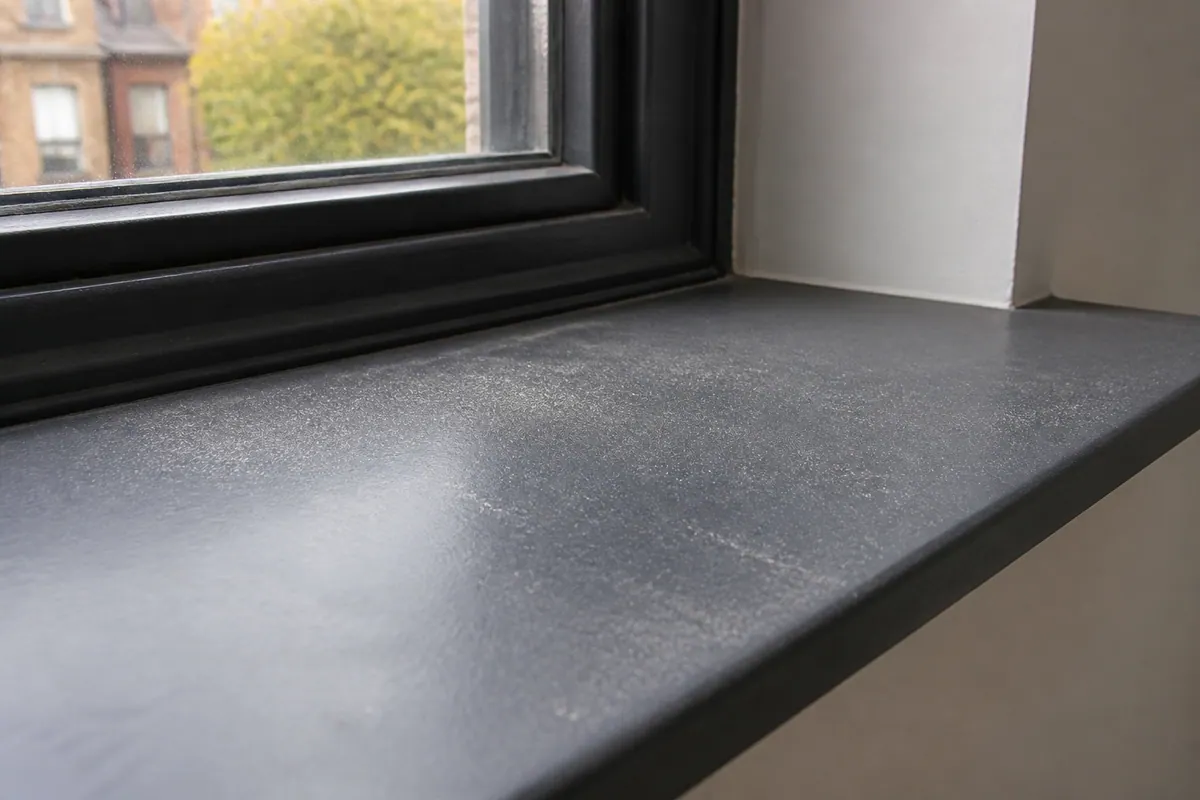
Inspect the route before ruling areas out.
Compare the bathroom floor with the corridor used during installation. Describe the spread you can actually see, including door-frame ledges, rather than automatically adding unaffected rooms.
A room description is stronger when it names the ledges, fittings and floor edges involved. Those details help separate general dust from individual difficult spots.
New deposits created afterwards need a separate scope discussion.
Draw the cleaning boundary
The diagram is a planning illustration, not a survey of this property. Agree the reachable surfaces with Alesta.
Check accessible tops and lips beside fitted items, including surfaces not obvious from the doorway.
Skirting lines should be considered with the adjacent floor finish and access available.
Fittings should be named where they require particular care; a general dust description may not be enough.
Identify the route the trades used when explaining dust outside the renovated rooms.
Identify before treating
| Observed residue | What to identify | Before treatment |
|---|---|---|
| Fine deposits | bathroom-to-entrance corridor | List the exposed detail for the quotation. |
| Loose ordinary material | Non-bulky cleaning residue | Ask about the small deposits described. |
| Possible sticky residue | Labels or marks beside new sanitaryware | Keep uncertain protection materials as an enquiry question. |
| Hard construction spots | Isolated spots near the bathroom-to-entrance corridor | Avoid a guaranteed result where damage is possible. |
| Protection on new items | Factory protection left in place | Check responsibility with the installer before removal is agreed. |
Keep clearance outside the dust brief
Define the cleaning work by the surfaces affected and their condition; bulk collection is not part of that definition.
Large packaging and building materials need a distinct agreement, even when clearing them first would help the cleaning sequence.
Ask about separate building waste collection ↗Different work leaves different detail
A flat enquiry should give the usable entrance and the affected rooms. A locked or obstructed area cannot be assumed available just because its renovation has finished.
Protective labels or film on new kitchen items need a responsibility check. Their removal is not automatically part of cleaning around the installation.
Describe bathroom glass separately where wanted, including visible construction deposits. A standard finish clean should not be interpreted as unlimited glazing treatment.
Explain where possessions or spare materials prevent access. The quotation should reflect reachable detail rather than a theoretical empty property.
Record outstanding repairs before the finishing clean. A clean surface is not confirmation that the installation or refurbishment contract has been completed.
Discuss the actual commercial task directly with Alesta. Contractor coordination is not assumed simply because the project is called a refurbishment.
Check the conditions for arrival
Before the clean
For the appointment
A finish is not just a colour
Illustrated material assessment.
The deposit cannot be assessed without the finish.
New sanitaryware needs its installation condition recorded. Sealant edges, protective labels and scratches are different issues; none should be treated as an ordinary wipe-down without identification.
Recently sealed joints need the relevant waiting guidance.
Explain where one flooring type meets another.
Check coating information on newly installed hardware.
Brief answers, clear limits
Make the responsible contact clear
Distinguish your flat’s corridor from the shared hallway. Both may be on the route to the bathroom, but permission to pass through one does not automatically authorise cleaning it.
Share the room condition and responsibility for admission. The person with keys may still need another contact to clarify surface care.
Describe the proposed handover stage without treating this page as a contract offer. Availability and coordination must be checked.
Glazing is an explicit request
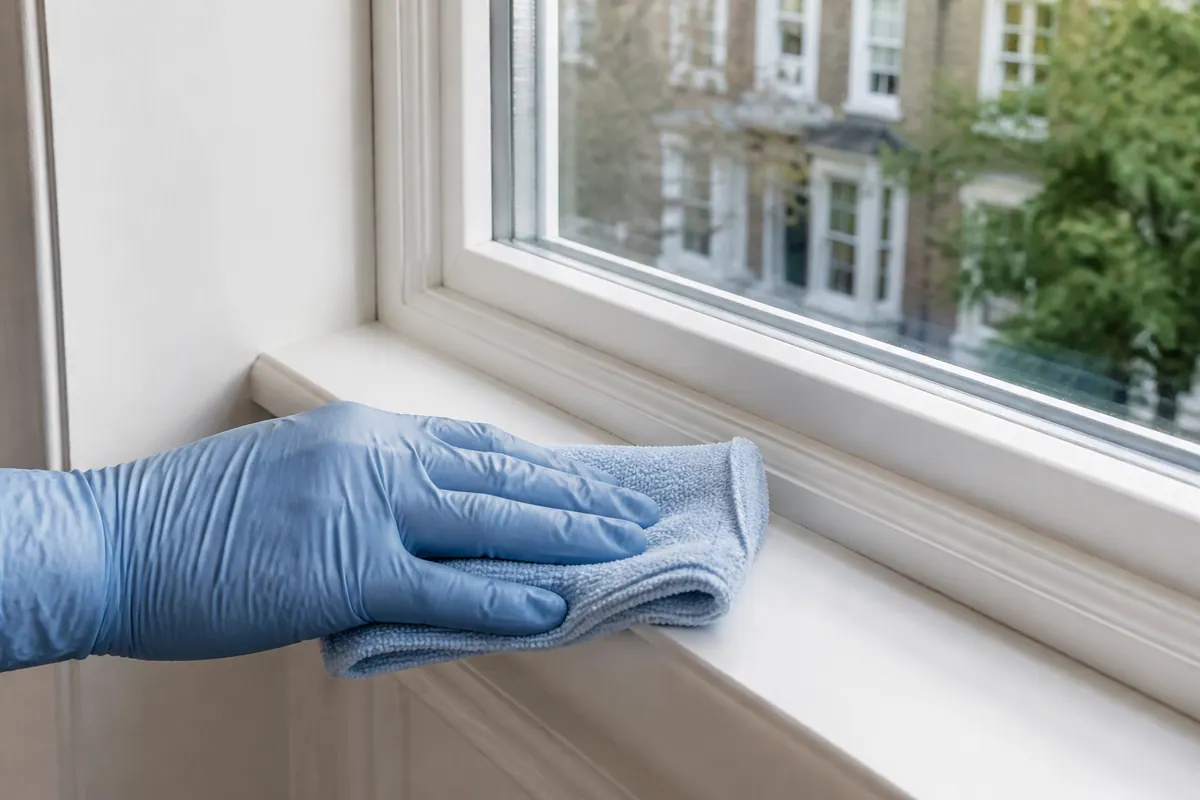
A bathroom screen and the flat’s windows are separate descriptions. If either is wanted, explain the surface condition and reachable side without extending the request to shared-hallway glazing by assumption.
Identify installation residue separately from general dust on glass. Safe removal and its inclusion must be confirmed.
Ask about the window scope ↗Address and access
For attendance in Maida Vale, tell Alesta the full address and the route to the rooms. This page does not represent a separate local branch.
If the address differs, contact Alesta about the service to clarify the arrangements.
Questions for this project
Explain the deposit and its location around bathroom-to-entrance corridor, including anything you cannot identify. That separates ordinary dust from a question needing assessment.
The contact should clarify both entry and the affected rooms. Describe any lift, stair or carrying restriction relevant to bathroom-to-entrance corridor.
Describe the actual coating or material behind the visible residue. With new sanitaryware, safe treatment must be established rather than promised.
Add adjoining areas if deposits are visible and you want them assessed. Their connection to bathroom-to-entrance corridor does not automatically include them.
Use the advertised £29/hour only as a starting rate. Equipment and materials form part of the service, but the final quote depends on the brief.
The released areas and remaining work need to be distinguished. A single clean should not be expected to anticipate later cutting or sanding.
No automatic bulk clearance forms part of the finishing visit. Give the type and amount of material remaining for a distinct quotation.
Ask about the actual glass faces or carpet areas wanted. Confirmation of the extra work is needed before relying on it.
Ask about timing with the full brief rather than selecting a fixed slot from the page. Different fittings and deposits create different workloads.
A finishing clean cannot promise to restore new sanitaryware. Any unresolved mark should be identified with the relevant limitation.
Maida Vale / next conversation
Tell Alesta which spaces are released and how they can be reached. The final cleaning plan should match those facts.
