
Flat refurbishment detail
The final carrying route can hold deposits after the work room is cleared. Check the doorway and passage before deciding the apartment brief is complete.
Shoreditch · Inspect the fit-out marks first
Inspect the fit-out marks first
A clear brief for occupying the fitted-out flat.
A flat fit-out can leave installation marks that look unlike ordinary dust. For Shoreditch, identify the coated metal details, exposed fittings and building access procedure before agreeing the final cleaning scope.
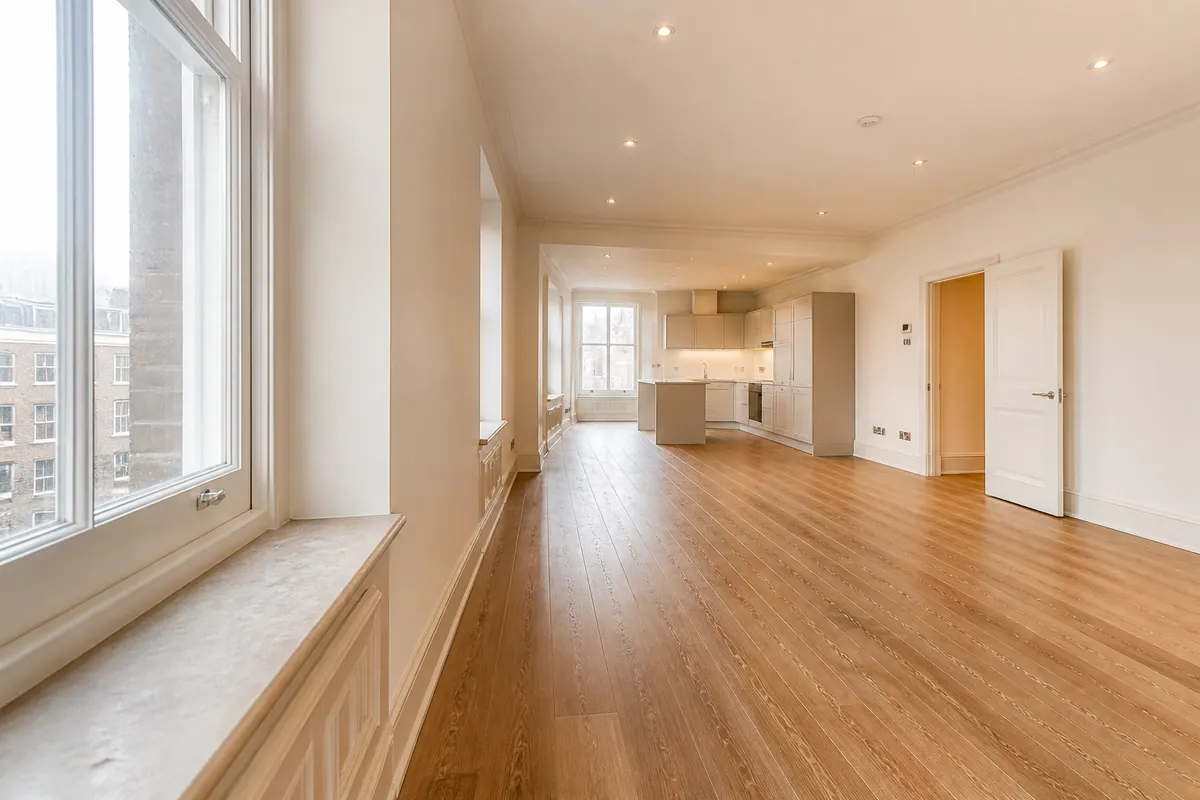
The scene provides context without claiming a real job.
Different work leaves different detail
The final carrying route can hold deposits after the work room is cleared. Check the doorway and passage before deciding the apartment brief is complete.
Kitchen detail should distinguish accessible fronts from the contents and interiors of cupboards. List additional work explicitly before the quotation is agreed.
Sanitaryware can carry both loose deposits and installation damage. Explain what is visible without assuming every mark is safely removable.
Whole-property scope needs the route between rooms as well as their names. Include the spaces used for equipment and material removal.
Keep the refurbishment description separate from any tenancy inspection list. The intended handover helps planning but does not automatically expand the cleaning tasks.
Discuss the actual commercial task directly with Alesta. Contractor coordination is not assumed simply because the project is called a refurbishment.
Check the conditions for arrival
Before the clean
For the appointment
At your Shoreditch property
Look closely at marks around newly fitted hardware.
Check the building entry procedure and the contact who can admit the team. Give the route to the flat and any carrying restrictions with the project details.
Ask the fitter whether adjustments or protective-film removal remain their responsibility. Those points should be resolved before treating the clean as the last action on the fit-out.
Review individual marks with their location and material. Where safe treatment cannot be established, record the limitation rather than expecting a more aggressive product.
Quoting the Shoreditch work
From £29/ hour
You do not need to infer a separate charge for ordinary cleaning materials from the guide. The scope and rate still require confirmation.
The extent of fitting detail can matter as much as the floor area. Additional services remain separate considerations.
| Room brief | Quote approach | What informs the quote |
|---|---|---|
| Local interior works | From £29/hour with scope agreed | Condition of the new fittings and nearby surfaces |
| Kitchen or bathroom installation | Hourly guide from £29 | Readiness of coated metal details |
| Multiple renovated rooms | Quote the actual cleaning requirement | Room access before occupying the fitted-out flat |
| Business-space enquiry | Availability and scope to agree | Site contact and proposed tasks |
Based on Alesta’s published after builders cleaning rate. Waste arrangements are quoted apart from cleaning.
Describe the Shoreditch work
Describe the project through a category if useful, but do not assume all suggested tasks are included.
A whole-property enquiry should separate routine deposits from difficult individual marks. Include the areas not yet ready so the timing is realistic.
Inspect the affected route
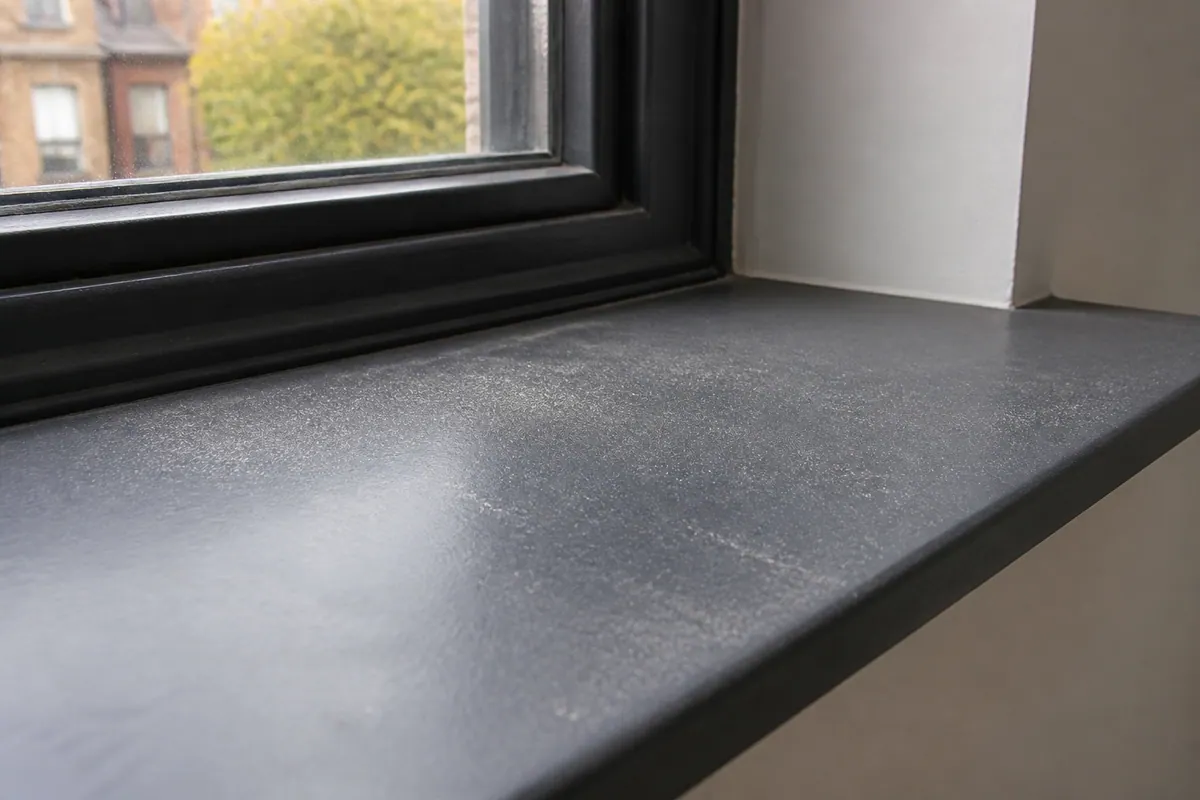
Dust patterns do not always match room names.
Look around the new fittings and the surfaces beneath them. Separate loose deposits from isolated marks so the quotation does not treat every visible issue as the same cleaning task.
Reachability matters as well as dust level. Explain what is hidden by belongings so the proposed work reflects the condition the team will meet.
Discuss any later dust-producing visit before fixing the cleaning sequence.
Draw the cleaning boundary
A diagram cannot show every obstruction or finish. Provide those differences when arranging the scope.
Dust may be visible on exposed ledges after the central floor looks tidy; name those needing attention.
Door surrounds and low corners can need attention separately from the open floor.
Describe the accessible fixture detail and any recently applied coatings before methods are selected.
Check the passage beyond the work area and ask whether affected floor sections should be included.
Identify before treating
| Observed residue | Location | Next consideration |
|---|---|---|
| Loose fine dust | new fittings and nearby surfaces | Describe coverage through the affected room. |
| Minor loose residue | Ordinary residue at edges | Confirm inclusion among the surface tasks. |
| Label-related marks | Labels or marks beside coated metal details | Check what the installer says about the material. |
| Hardened fitting deposits | Isolated spots near the new fittings and nearby surfaces | Avoid a guaranteed result where damage is possible. |
| Attached protection | Protection still on the fitting | Ask whether the fitted surface is ready to be uncovered. |
Keep clearance outside the dust brief
Discuss the deposits left on floors and fittings after work ends. Large materials should not be hidden inside that description.
Provide the type and approximate amount of leftover boards, rubble or packaging for a separate collection discussion. Explain the route out as well.
Ask about separate building waste collection ↗Name rooms, not an unlimited checklist
A kitchen list should identify new finishes and visible residue, not merely say deep clean. Cabinet interiors require explicit discussion.
Flag the surfaces most recently installed in the bathroom. A visible spot is not proof that a safe routine removal method exists.
A bedroom kept closed during renovation may still need a check at its doorway. Describe what is visible before expanding the scope.
A connected living space can carry dust from neighbouring work. Agree the affected ledges and floor rather than adding an undefined whole-room package.
A finish is not just a colour
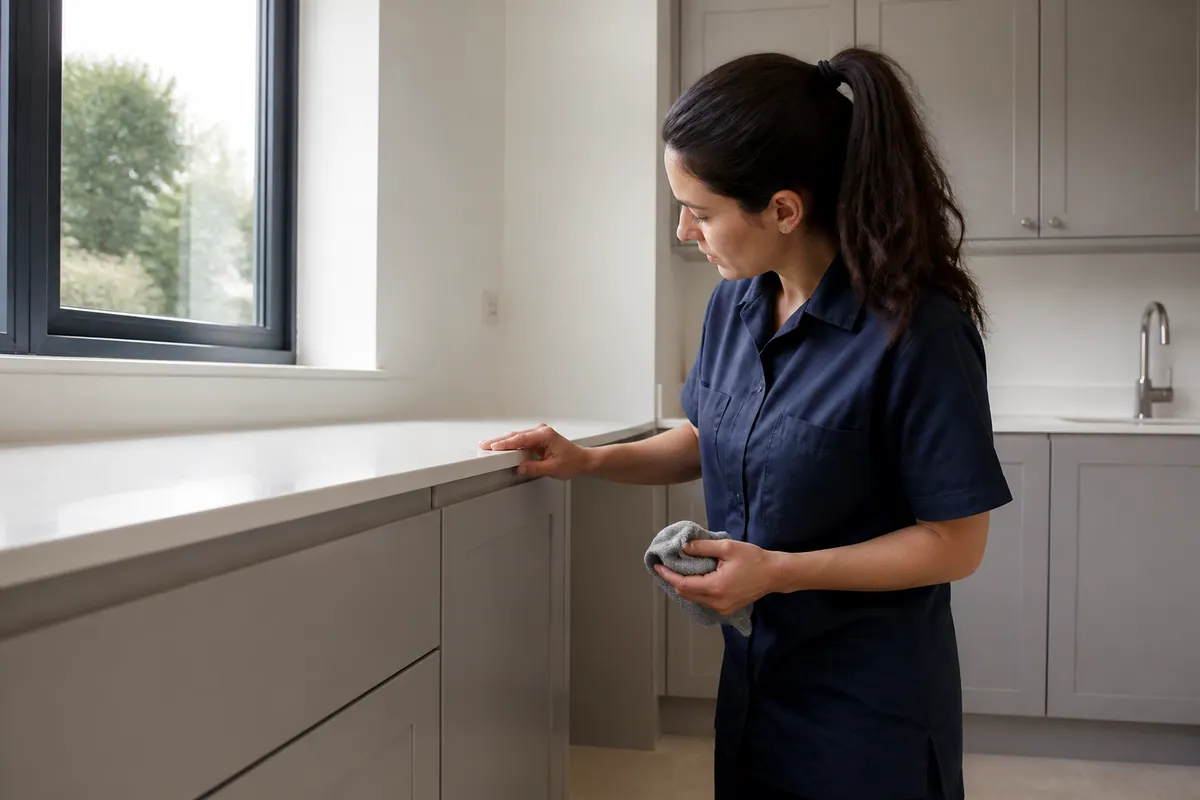
Illustrated material assessment.
Readiness and residue are separate questions.
Coated metal needs its finish specified before label or adhesive treatment. A scratch, film edge and removable deposit can look similar from a distance but require different decisions.
Different finishes can require different release times.
Explain where one flooring type meets another.
Record damage independently of removable deposits.
A sequence, not a completion guarantee
Identify the areas released after the last dusty task.
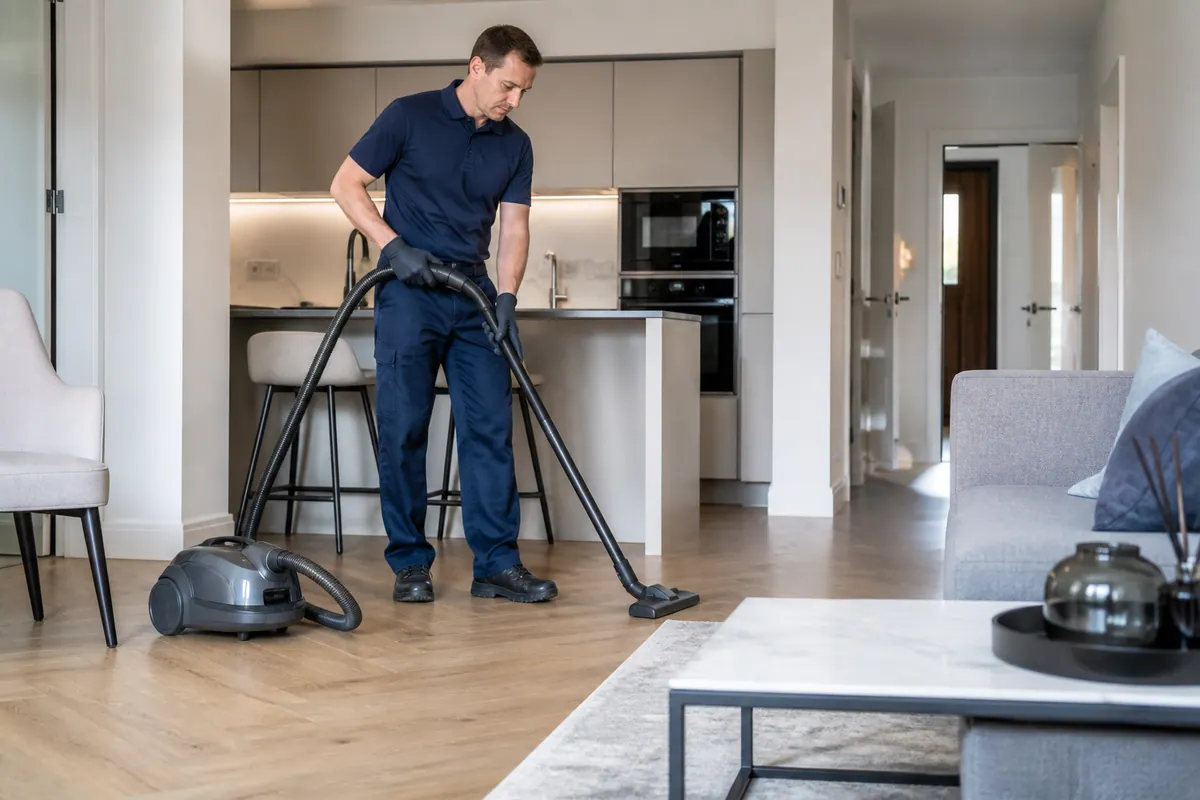
Follow the agreed room priorities and access limits.
Discuss the remaining residue rather than promise universal removal.

Arrange the next use around any outstanding guidance.
The sequence is explanatory; the images do not promise an outcome.
Brief answers, clear limits
Prepare a conversation, not a booking
Describe the work without assuming a fixed package.
The controls cannot distinguish a coating defect from a deposit. Describe the marked fittings directly with the note; it is not sent and does not generate a reservation or quotation.
Describe each uncertain fitting mark and its material. The tool cannot distinguish coating damage from removable residue.
Talk through the room list: 020 3608 3976Make the responsible contact clear
Keep a record of the coated fitting’s condition before requesting adhesive treatment. A scratch in the coating and material resting on it should not be presented as the same issue.
A managing contact should identify remaining trade work before arranging handover. Cleaning does not certify the construction project.
Contractors should ask whether the project is suitable and explain access responsibilities. Commercial coordination is not an implied agreement.
Glazing is an explicit request
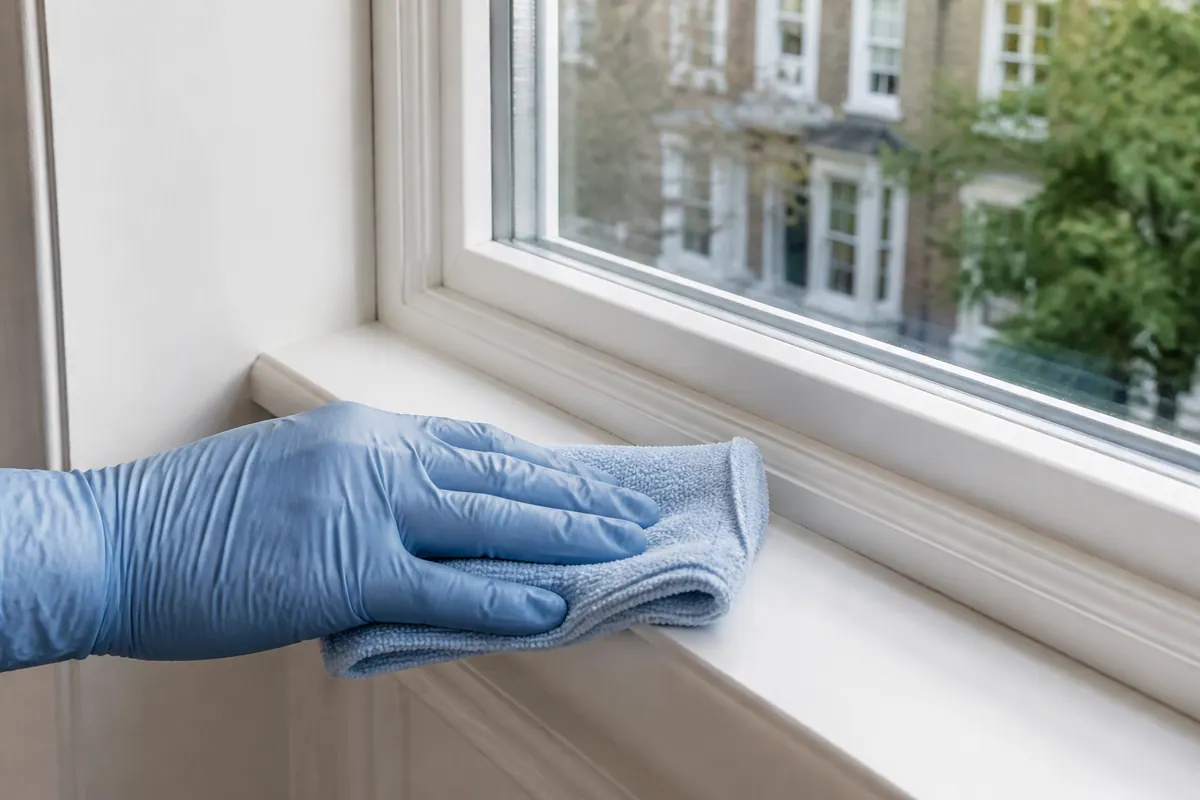
Glass beside coated metal needs its own description. If the same fitting carries both surfaces, identify where the mark sits before discussing window work or assuming a treatment suited to the metal also suits the pane.
Describe hardened material rather than promising a clear result in advance. The underlying glass condition remains part of the assessment.
Ask about the window scope ↗Address and access
Ask about service at your particular Shoreditch address before relying on a date. The area marker does not indicate an Alesta premises.
If your area is elsewhere, visit the main after builders page and confirm availability.
Questions for this project
Explain the deposit and its location around new fittings and nearby surfaces, including anything you cannot identify. That separates ordinary dust from a question needing assessment.
A postcode is not the whole access brief. Share the route inside and any preparation needed around new fittings and nearby surfaces.
A new appearance does not prove coated metal details can be cleaned immediately. Check the product advice and flag resistant deposits separately.
Explain where dust appears outside the original work area. Alesta can discuss that extension without turning new fittings and nearby surfaces into an unlimited whole-home brief.
£29 per hour is the published starting figure rather than a complete-property charge. Confirm the actual work, with materials and equipment included for cleaning.
The released areas and remaining work need to be distinguished. A single clean should not be expected to anticipate later cutting or sanding.
Building waste is a separate enquiry. Describe boards, rubble or packaging and the access for collection; cleaning does not automatically remove them.
List windows or carpets explicitly when contacting Alesta. Do not assume specialist equipment or time is included in the general visit.
The time discussion needs the reachable areas and their condition. Newly applied finishes retain their own readiness requirements.
A finishing clean cannot promise to restore coated metal details. Any unresolved mark should be identified with the relevant limitation.
Shoreditch / next conversation
A useful enquiry connects the work done, the accessible surfaces and the intended timing. Confirm the quote before arranging the visit.
