
Rooms in a refitted flat
Describe how equipment reaches the property without assuming parking or a particular unloading space is available.
St Albans · Finishing the renovation
Retained materials deserve their own condition record
Plan the renovated interior around original materials.
Older stone and timber can sit alongside new work after an internal renovation. A finishing clean should address deposits without promising to erase age, wear or historic marks.
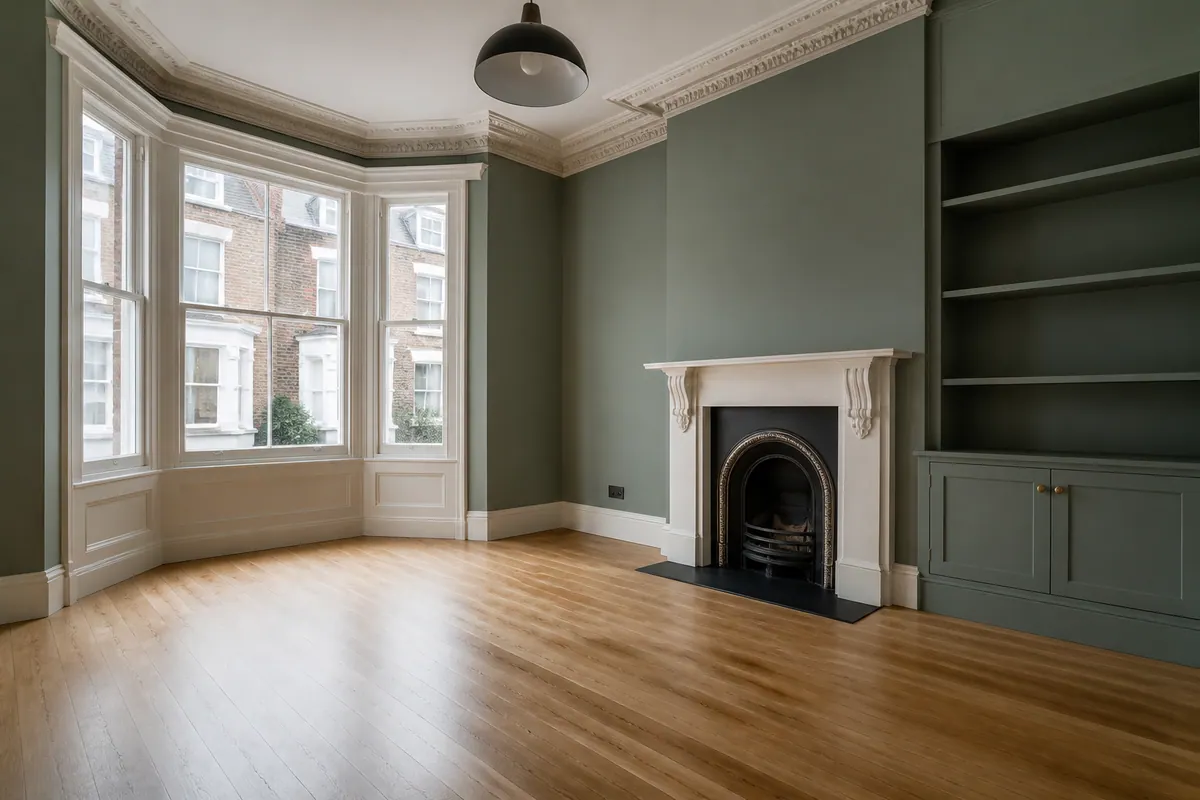
Illustrative interiors are shown rather than documented completed jobs.
Before making the enquiry
Other renovation contexts
Describe how equipment reaches the property without assuming parking or a particular unloading space is available.
List reachable cupboard exteriors and worktop detail, including the material and any visible fitting residue. Internal compartments or appliance tasks need an explicit request. For the renovated interior around original materials in St Albans, kitchen project note starts at retained stone edges and older timber surfaces. The notes must also distinguish older stone and timber and explain how to describe access without assuming parking space.
Check which bathroom surfaces are accessible and ready. Newly installed sanitaryware, tiles and seals may call for different considerations in the same small room. Make retained stone edges and older timber surfaces the reference point for bathroom project note at this St Albans address. Describe the renovated interior around original materials, flag older stone and timber, and describe access without assuming parking space.
Wait until repairs around retained features are complete and ask about any remaining work that would disturb settled dust. A useful multi-room description for St Albans explains the renovated interior around original materials through retained stone edges and older timber surfaces. Surface decisions concern older stone and timber; practical arrival means describe access without assuming parking space.
State the handover plan without adding an automatic tenancy checklist. The agreed work should remain tied to the renovation and its accessible effects.
Do not infer commercial acceptance from the project selector. Ask about the specific fit-out, its access limitations and the service required.
Inspect the settled deposits
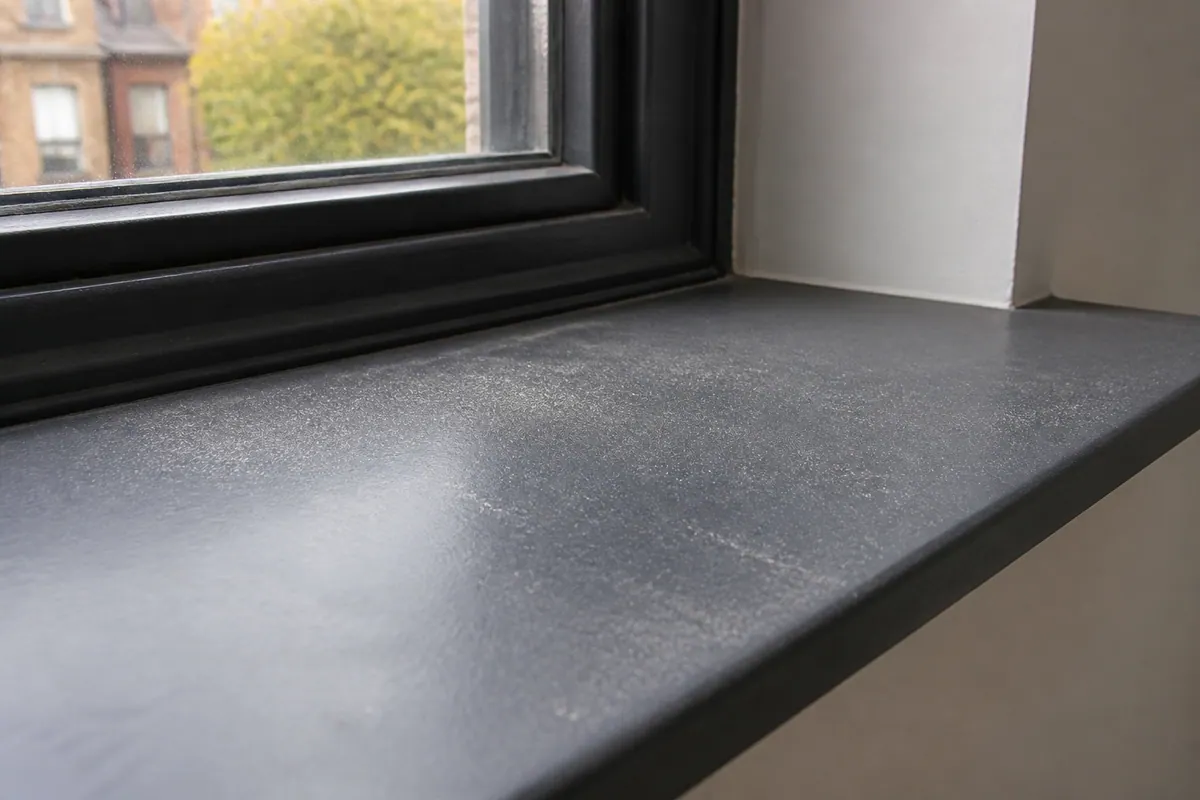
Retained materials deserve their own condition record
Check accessible junctions where new work meets older surfaces; identify the actual material before grouping the residue together.
Look at the work from above the floor line as well as at the floor itself. External fitting detail and ledges can need attention after the main building materials have left. For the renovated interior around original materials in St Albans, dust inspection starts at retained stone edges and older timber surfaces. The notes must also distinguish older stone and timber and explain how to describe access without assuming parking space.
Wait until repairs around retained features are complete and ask about any remaining work that would disturb settled dust.
Quotation context
From £29/ hour
A full quotation needs the remaining cleaning work described. The advertised rate starts at £29 per hour and includes cleaning supplies and equipment, with the current proposal confirmed directly.
Retained detail may need more assessment than a bare new room. Explain material uncertainty and reachable surfaces before using the hourly figure for budgeting. At the St Albans property, use retained stone edges and older timber surfaces to frame quotation brief. Follow it through the renovated interior around original materials, naming older stone and timber and the need to describe access without assuming parking space. A useful cost-factor explanation for St Albans explains the renovated interior around original materials through retained stone edges and older timber surfaces. Surface decisions concern older stone and timber; practical arrival means describe access without assuming parking space.
| Renovation context | Pricing information | Useful scope notes |
|---|---|---|
| One-room improvements | From £29 an hour; enquire first | retained stone edges and older timber surfaces |
| Fitted-room improvements | From £29/hour, work to confirm | Materials, fittings and access in the renovated interior around original materials |
| Property-wide improvements | Property-specific quotation | Scale of deposits and detail |
| Commercial premises request | Enquire before assuming availability | Business context and arrangements |
Based on Alesta’s published after builders cleaning rate. Building waste removal is quoted separately.
If glass needs attention
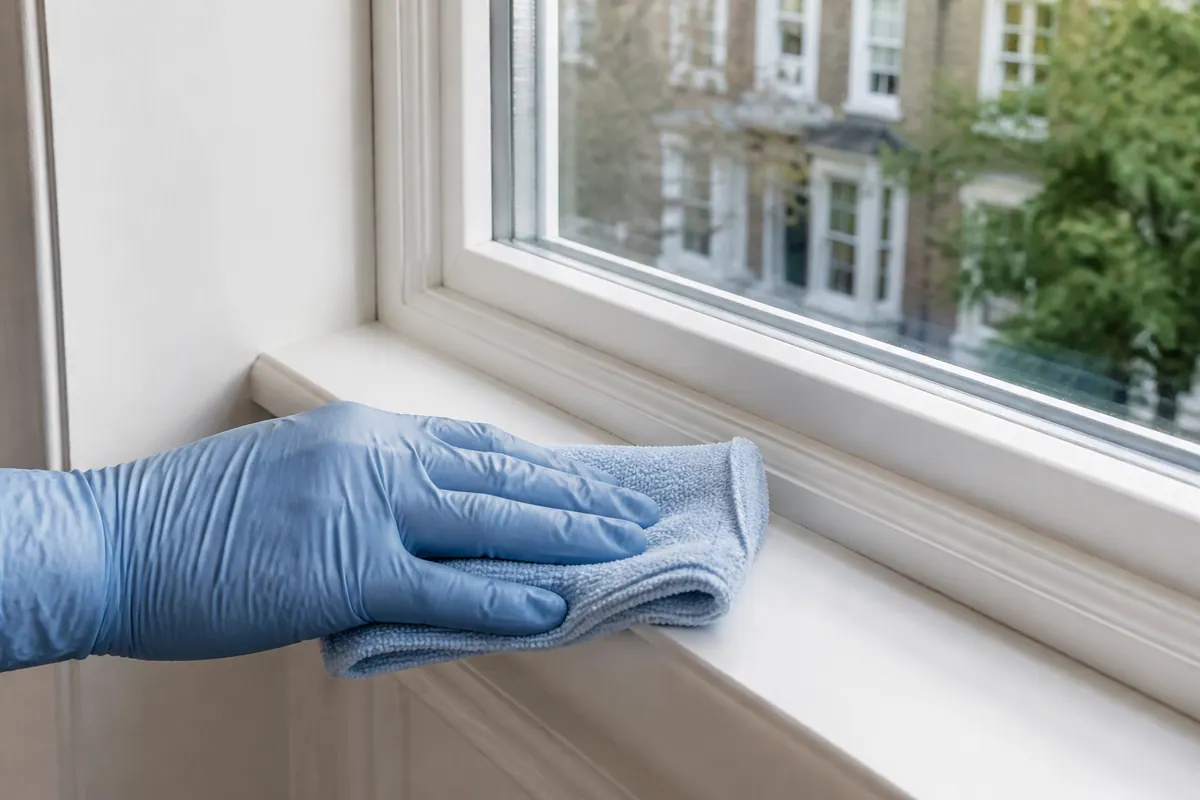
Older glazing and surrounds should have their condition described before extra window work is arranged. Existing imperfections are not a removal guarantee. The St Albans glazing request should identify retained stone edges and older timber surfaces inside the renovated interior around original materials. It also needs material context for older stone and timber and a plan to describe access without assuming parking space.
Hardened material on glazing needs assessment before treatment; an ordinary window service does not guarantee it will be removed.
Enquire about additional window work ↗Describe what changed
Choose an example to organise the enquiry, not to book a standard package. The local brief here concerns the renovated interior around original materials.
Check accessible junctions where new work meets older surfaces; identify the actual material before grouping the residue together. Look at the work from above the floor line as well as at the floor itself. External fitting detail and ledges can need attention after the main building materials have left. A useful project selection for St Albans explains the renovated interior around original materials through retained stone edges and older timber surfaces. Surface decisions concern older stone and timber; practical arrival means describe access without assuming parking space.
A practical brief for St Albans
Start with the renovated interior around original materials.
Older stone and timber can sit alongside new work after an internal renovation. A finishing clean should address deposits without promising to erase age, wear or historic marks. Check accessible junctions where new work meets older surfaces; identify the actual material before grouping the residue together. The St Albans affected-room account should identify retained stone edges and older timber surfaces inside the renovated interior around original materials. It also needs material context for older stone and timber and a plan to describe access without assuming parking space.
Give any available care information and point out pre-existing wear. Cleaning new residue is not stone restoration or timber refinishing.
Describe how equipment reaches the property without assuming parking or a particular unloading space is available. Wait until repairs around retained features are complete and ask about any remaining work that would disturb settled dust.
Where the detail sits
Actual room access and condition determine the brief; the diagram is only an explanatory aid.
Look at exposed ledges near retained stone edges and older timber surfaces. Explain what is reachable rather than assuming every high surface is included.
Connect the room margins to the renovated interior around original materials. A blocked corner needs to be mentioned before attendance.
Name newly fitted items and their materials, including older stone and timber where relevant.
Inspect where new work meets old stone or timber. Do not treat every difference in colour or texture as construction residue.
Different deposits need different decisions
| Observed material | Describe its position | What must be confirmed |
|---|---|---|
| Fine dust | retained stone edges and older timber surfaces | Keep routine dust removal distinct from marks that require another assessment. |
| Loose cleaning remnants | Unbonded post-work deposits | Include only where specifically scoped |
| Adhesive or labels | Marks beside older stone and timber | Confirm the substrate and a suitable method; removal is not assured. St Albans: adhesive-mark decision should connect retained stone edges and older timber surfaces with the renovated interior around original materials. Keep older stone and timber identifiable and describe access without assuming parking space. |
| Paint, plaster or cement spots | A deposit that may resist routine cleaning | Keep restoration expectations outside the ordinary clean. Identifying the substrate and existing condition makes the residue discussion more accurate. Confirm the substrate and a suitable method; removal is not assured. The St Albans residue assessment should identify retained stone edges and older timber surfaces inside the renovated interior around original materials. It also needs material context for older stone and timber and a plan to describe access without assuming parking space. |
| Protective film | Covering left after fitting | A separate decision is needed on removing protection from the fitted surface. |
Cleaning versus collection
Look at the work from above the floor line as well as at the floor itself. External fitting detail and ledges can need attention after the main building materials have left.
Bulky materials near retained features need a planned exit before cleaning. Ask separately about collection without presuming parking or unrestricted unloading access.
Ask separately about building waste ↗Check the final trade stage
Before the appointment
For the finishing visit
Name the affected spaces
List reachable cupboard exteriors and worktop detail, including the material and any visible fitting residue. Internal compartments or appliance tasks need an explicit request. When discussing St Albans, link kitchen-room detail to retained stone edges and older timber surfaces and the renovated interior around original materials. Add the care information for older stone and timber; then describe access without assuming parking space.
Check which bathroom surfaces are accessible and ready. Newly installed sanitaryware, tiles and seals may call for different considerations in the same small room. A useful bathroom-room detail for St Albans explains the renovated interior around original materials through retained stone edges and older timber surfaces. Surface decisions concern older stone and timber; practical arrival means describe access without assuming parking space.
Keep the bedroom request focused on exposed post-work surfaces. Personal possessions and hidden compartments require a different agreement. When discussing St Albans, link bedroom boundary to retained stone edges and older timber surfaces and the renovated interior around original materials. Add the care information for older stone and timber; then describe access without assuming parking space.
Inspect where new work meets old stone or timber. Do not treat every difference in colour or texture as construction residue. A useful living-area scope for St Albans explains the renovated interior around original materials through retained stone edges and older timber surfaces. Surface decisions concern older stone and timber; practical arrival means describe access without assuming parking space.
Identify the substrate
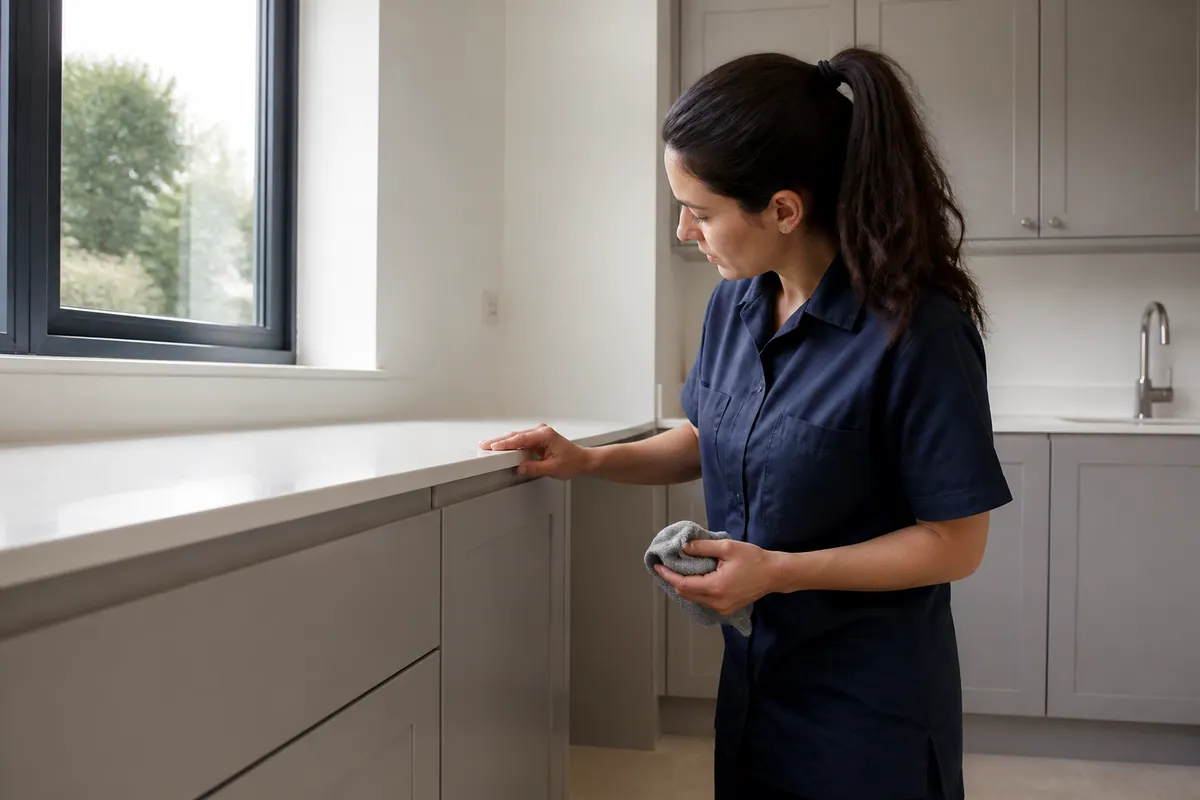
An illustration of reviewing a finish.
Confirm the substrate and a suitable method; removal is not assured.
Give any available care information and point out pre-existing wear. Cleaning new residue is not stone restoration or timber refinishing. Make retained stone edges and older timber surfaces the reference point for surface-care decision at this St Albans address. Describe the renovated interior around original materials, flag older stone and timber, and describe access without assuming parking space.
Ask the installer about cleaning readiness after the final application.
For the renovated interior around original materials, list material changes as well as room names.
Keep restoration expectations outside the ordinary clean. Identifying the substrate and existing condition makes the residue discussion more accurate.
A sequence, not a completion promise
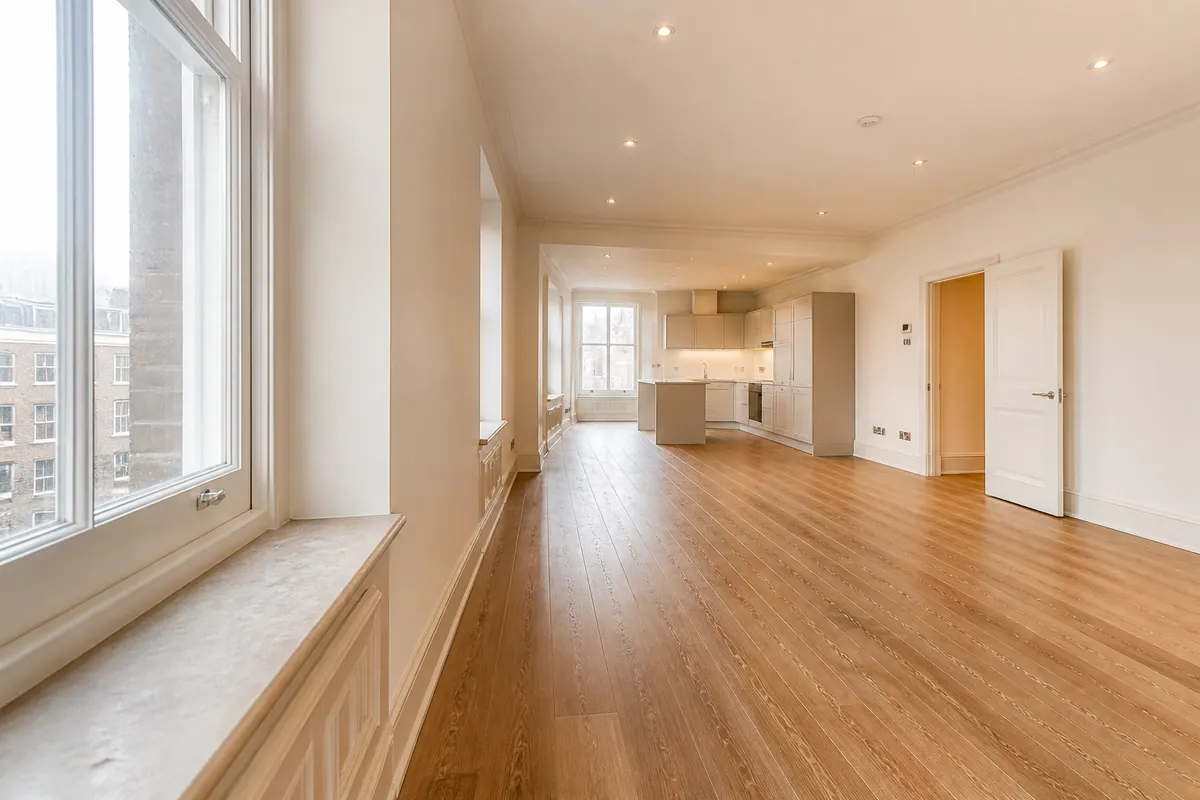
Wait until repairs around retained features are complete and ask about any remaining work that would disturb settled dust.
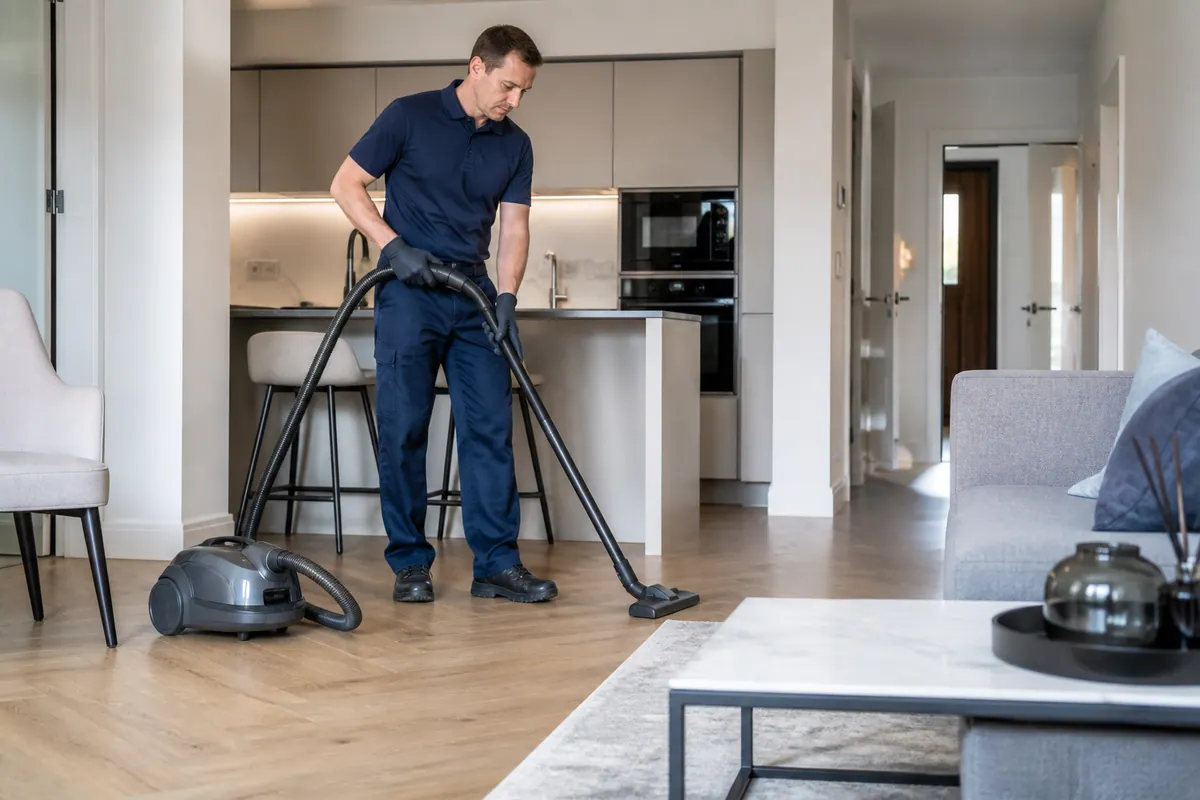
Keep routine dust removal distinct from marks that require another assessment.
Review deposits in the context of recorded wear. A cleaned old surface is not represented as newly restored or free of historic marks. For the renovated interior around original materials in St Albans, completion review starts at retained stone edges and older timber surfaces. The notes must also distinguish older stone and timber and explain how to describe access without assuming parking space.

Review the agreed deposits against the original condition recorded, not against an expectation that retained features become new.
No single customer project is documented by this sequence of images.
Prepare your enquiry notes
Include the renovated interior around original materials in the room description.
No enquiry leaves this page when you prepare the summary. It is a device-local planning step, with price and appointment confirmation still to follow separately.
Retained detail may need more assessment than a bare new room. Explain material uncertainty and reachable surfaces before using the hourly figure for budgeting. For the renovated interior around original materials in St Albans, planning summary starts at retained stone edges and older timber surfaces. The notes must also distinguish older stone and timber and explain how to describe access without assuming parking space.
Talk through the notes: 020 3608 3976Choose the scope contact
Review deposits in the context of recorded wear. A cleaned old surface is not represented as newly restored or free of historic marks. A useful homeowner handover for St Albans explains the renovated interior around original materials through retained stone edges and older timber surfaces. Surface decisions concern older stone and timber; practical arrival means describe access without assuming parking space.
State the handover plan without adding an automatic tenancy checklist. The agreed work should remain tied to the renovation and its accessible effects.
Do not infer commercial acceptance from the project selector. Ask about the specific fit-out, its access limitations and the service required.
The address matters
The map identifies St Albans as an enquiry area, not a local Alesta office. Describe how equipment reaches the property without assuming parking or a particular unloading space is available. Availability is confirmed for the actual property.
For coverage beyond this address, ask the main after builders cleaning team about a suitable appointment.
Questions before confirming the work
Older stone and timber can sit alongside new work after an internal renovation. A finishing clean should address deposits without promising to erase age, wear or historic marks. Describe the visible condition rather than treating the project name as a complete cleaning checklist.
Describe how equipment reaches the property without assuming parking or a particular unloading space is available. Wait until repairs around retained features are complete and ask about any remaining work that would disturb settled dust.
Give any available care information and point out pre-existing wear. Cleaning new residue is not stone restoration or timber refinishing. The request should identify uncertain residues early. A standard finishing clean is not an agreement to use any method necessary regardless of the underlying material.
Check accessible junctions where new work meets older surfaces; identify the actual material before grouping the residue together.
A full quotation needs the remaining cleaning work described. The advertised rate starts at £29 per hour and includes cleaning supplies and equipment, with the current proposal confirmed directly. Tell Alesta whether dust is widespread or concentrated around new installations. That distinction, together with access, helps frame the work required.
Wait until repairs around retained features are complete and ask about any remaining work that would disturb settled dust. Use a released-room list after the final dusty movement has taken place.
Surface cleaning and removal of construction material solve different problems. Explain both when they occur together rather than merging them into one package.
Explain whether the priority is a dusty pane, frame detail or a fixed construction spot. These are different descriptions within a separately discussed glazing requirement. Carpet treatment is another separately agreed service; availability and the required work must be confirmed.
The condition after the final trade visit is relevant to estimating the clean. Explain what will genuinely be finished and what will still limit access. At the St Albans property, use retained stone edges and older timber surfaces to frame timing discussion. Follow it through the renovated interior around original materials, naming older stone and timber and the need to describe access without assuming parking space.
Review the agreed deposits against the original condition recorded, not against an expectation that retained features become new. The request should identify uncertain residues early. A standard finishing clean is not an agreement to use any method necessary regardless of the underlying material.
Finish with an agreed brief
Review the agreed deposits against the original condition recorded, not against an expectation that retained features become new. Describe how equipment reaches the property without assuming parking or a particular unloading space is available. At the St Albans property, use retained stone edges and older timber surfaces to frame final contact brief. Follow it through the renovated interior around original materials, naming older stone and timber and the need to describe access without assuming parking space.
