
Mice in the Walls: The Sounds, Smells and Entry Points to Check
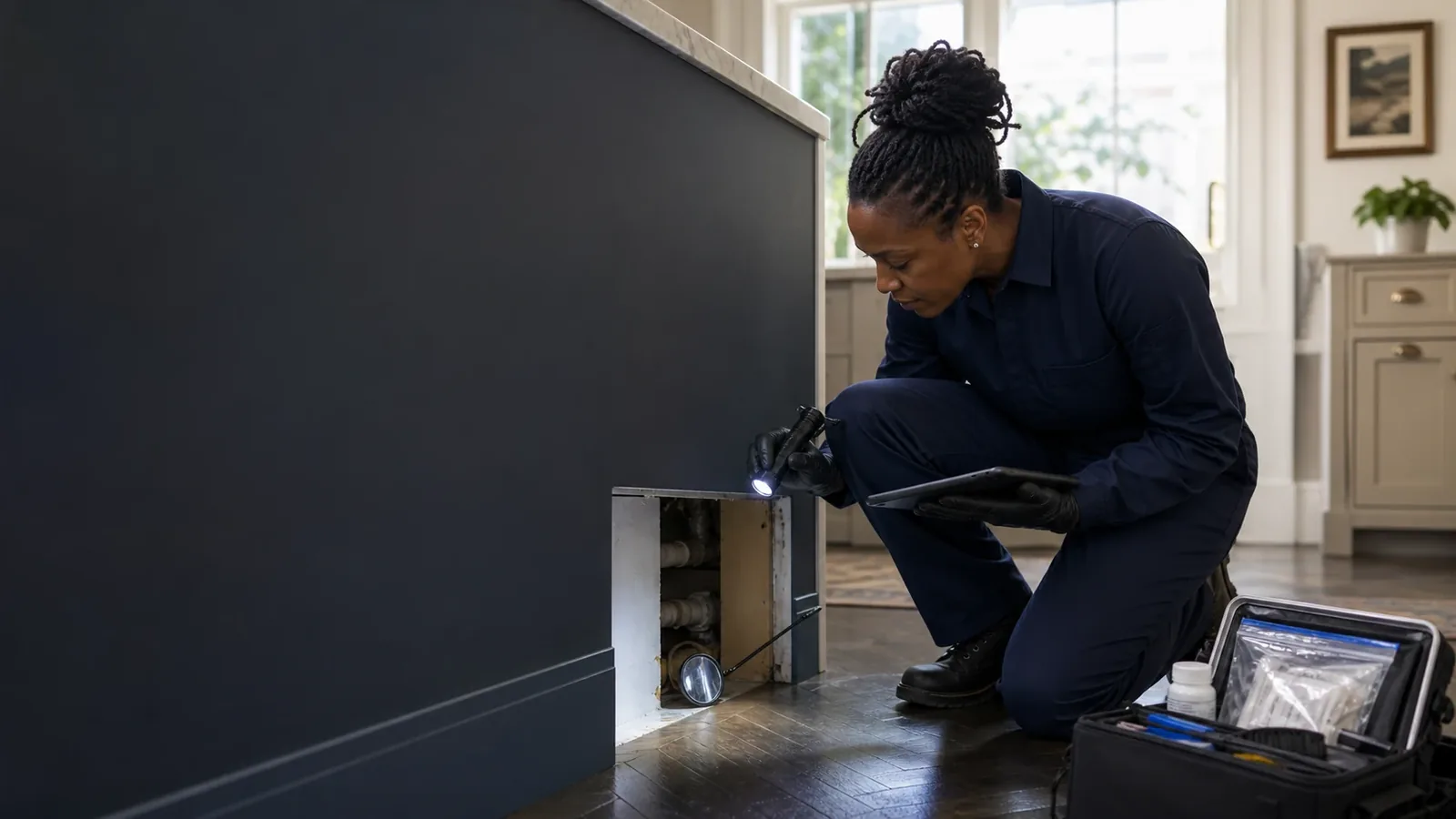
Light scratching or scurrying inside a wall at night, small dark droppings near skirting edges and an ammonia-like smell can indicate mice, but sound alone is not proof. Pipes click as they cool, birds enter roof voids and insects can make surprisingly loud noises in plasterboard. Look for two or more signs and map where they occur before setting traps or sealing holes.
What mouse movement in a wall actually sounds like
Mice are light. Their movement tends to be quick, intermittent scratching, nibbling or faint running rather than heavy thuds. Activity is often stronger after the house becomes quiet. Rats generally sound heavier, although building construction can amplify a mouse until it seems much larger.
Record the time, wall and duration for three nights. A sound that follows heating cycles may be pipe expansion. Regular fluttering near an eave during daylight may be a bird. Gnawing plus droppings is much stronger evidence of a rodent than a phone recording of noise alone.
Follow the room edge, not the middle of the floor
Mice prefer covered routes. Inspect behind movable appliances, under the sink, inside the boiler cupboard and along skirting boards using a torch. Do not pull out a gas appliance or dismantle fitted units. Look for rice-sized droppings, shredded paper or insulation, gnaw marks and greasy smears at repeated gaps.
Fresh droppings are not safely judged by colour alone. Do not touch or crush them. Ventilate the area, keep children and pets away, wear disposable gloves and dampen contamination with an appropriate disinfectant before wiping it up. Sweeping or vacuuming dry droppings can spread contaminated dust.
Smells: urine, nesting material or something dead?
An active mouse area may smell stale or ammonia-like, especially in an enclosed cupboard. A dead rodent produces a stronger, localised decay odour that can intensify and attract flies. Air freshener will not solve either source. If the carcass is accessible without opening a hazardous void, use gloves and sealed bags in line with local disposal advice. Otherwise arrange safe dead-animal removal.
A widespread drain smell, damp or electrical overheating must not be labelled as mice. If the odour is fishy, burning or accompanied by a warm socket, isolate the electrical danger and call an electrician.
Entry points worth checking from both sides
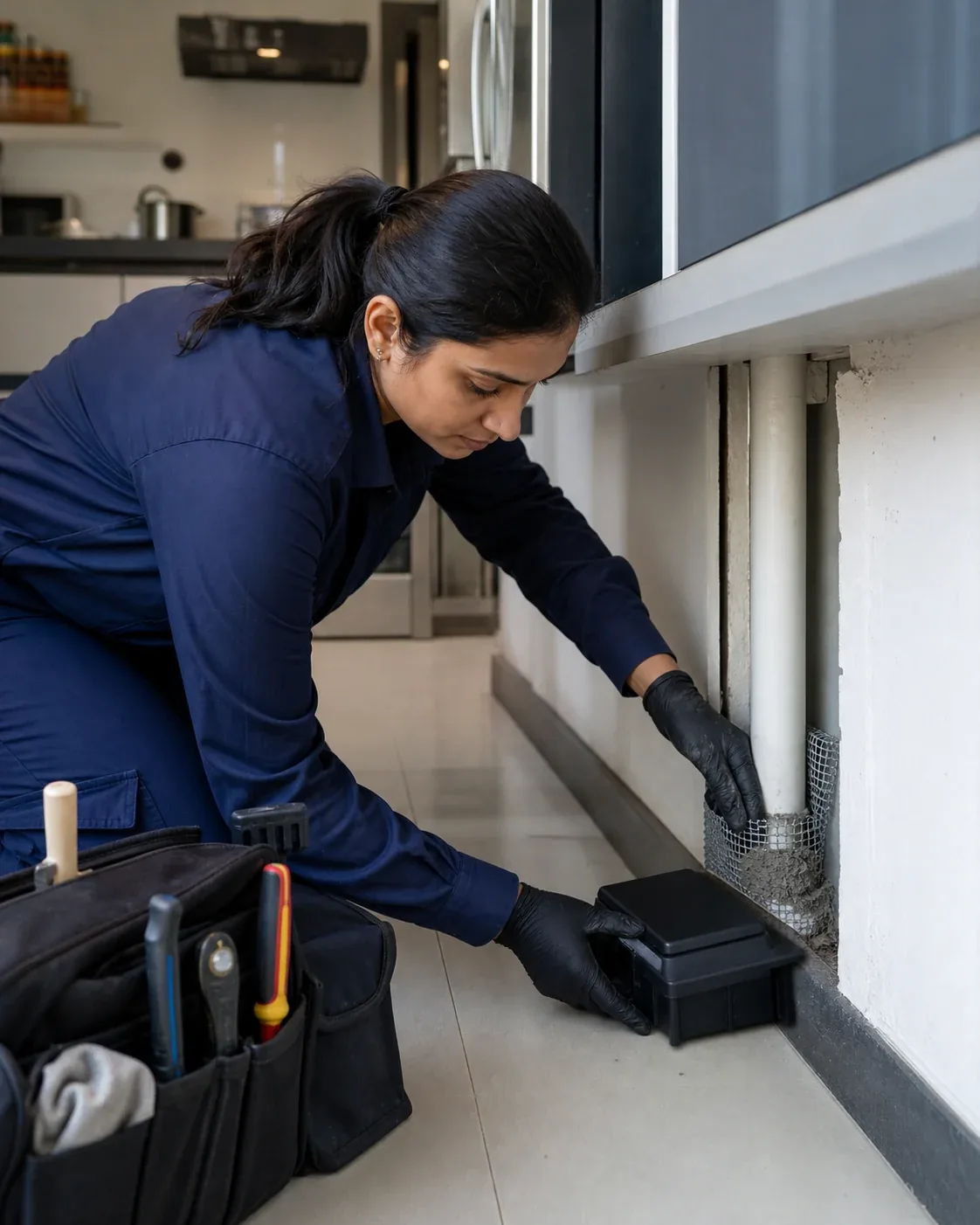
Inspect gaps around waste pipes, radiator pipes, cable entries, damaged air bricks, door thresholds and the junction between extensions and the original building. Mice can exploit very small openings. The useful question is not whether a gap looks tiny, but whether it has rub marks, droppings or a continuous route to food and shelter.
Never block boiler flues, ventilation grilles, weep holes or air bricks indiscriminately. Suitable mesh or a building repair may preserve ventilation while excluding rodents. Broad rodent-proofing work should address connected routes, not simply fill the first visible hole with foam.
Why sealing everything immediately can backfire
If mice are active inside, sealing the only obvious exit may trap them in a wall or divert them into another room. Control and proofing need sequencing. A technician can identify active routes, position monitoring devices and close openings once the risk of trapping animals in inaccessible voids is managed.
Expanding foam alone is rarely a durable barrier where rodents can gnaw its edges. Proofing materials must suit the gap, resist gnawing and avoid damaging pipes, cables or ventilation.
Traps: placement matters more than quantity
Where legal and safe, traps belong along established wall routes, protected from children, pets and non-target wildlife, and checked frequently. Random traps in the centre of a room tell you little. Poison placed casually inside wall voids can create inaccessible carcasses and expose other animals. Professional products and methods have label conditions for a reason.
If you rent, report the problem in writing and include photographs. Responsibility can depend on whether entry arose from a structural defect, communal area or tenant behaviour. Do not delay urgent action while arguing about blame; preserve evidence and request inspection.
What a proper inspection should establish
A professional mouse-control inspection should identify the species, level of activity, food and water sources, likely harbourage, entry route and risks to people or pets. Ask how monitoring will show whether activity has stopped, when proofing is completed and what follow-up is included.
Photograph droppings beside a ruler without handling them, note noises and keep food in sealed containers. Remove accessible crumbs, animal feed and overflowing rubbish. Those steps make evidence easier to interpret; they are not a substitute for closing entry routes.
The wall may be hiding a cable risk
Rodents can damage wiring. Flickering, tripping, a burning smell or a hot fitting needs electrical attention, not exploratory drilling into the wall. Do not cut plasterboard where services may run. If you cannot confirm the pest, start with the broader pest-control service guide and describe the evidence rather than naming the animal.
Begin with a quiet inspection and mark each sound, dropping and suspected route on a simple floor plan. Confirm the signs, remove accessible food, protect people from contamination and plan control with proofing. That solves the route as well as the animal you happen to hear tonight.
Use a tracking patch before opening a wall
Where it is safe and clean, place a small sheet of plain paper beside a suspected skirting route overnight and photograph any droppings or disturbed non-toxic monitoring material in the morning. Do not use loose powders that children or pets can contact. The aim is to learn direction and frequency, not to lure rodents further into the room.
A cheap motion camera can also confirm timing, but position it only in your own accessible space. It does not replace inspection behind service voids. Avoid recording neighbours or communal areas without considering privacy.
Food hygiene after evidence in a kitchen
Discard food with gnawing, droppings or damaged packaging. Do not simply wipe a contaminated cardboard box and return it to the cupboard. Empty the affected shelf, damp-clean it with a food-area disinfectant used exactly as labelled and transfer unaffected dry goods into sealed containers. Check the backs of drawers and the warm void near appliances.
If droppings appear on worktops or inside food equipment, suspend food preparation until cleaning is complete. A business kitchen has additional legal and documentation duties and should use commercial pest-control procedures rather than household improvisation.
Keep a room log that another person can use
Mark each sign on a simple floor plan and date it. Include neighbouring cupboards, loft access and service risers because wall voids connect spaces that look separate. After cleaning, a new dropping in a known location is stronger evidence than an old mark rediscovered weeks later. This log also helps a landlord or technician avoid placing devices where no activity exists.
