Do Crouch End’s steep streets change cleaning arrangements?
They can affect unloading and the safe movement of heavy equipment, especially where exterior steps continue up to the entrance. Describe the slope, handrails and distance from legal parking. A routine cleaner travelling lightly may need no adjustment, while carpet machinery could require two people or a different approach. Clear leaves, ice or obstructions from private steps before the booked arrival.
What parking information should I give a Crouch End cleaner?
Supply the exact controlled-zone hours, visitor-permit method and any bay restrictions for your street. Arrange the permit for the full likely duration rather than an optimistic minimum. If the cleaner cannot park nearby, identify a lawful alternative and the walk to the property. Ask whether parking costs are included, reimbursed separately or likely to reduce an hourly appointment’s working time.
Can a cleaner arrive by bus with all necessary supplies?
Many regular cleaners can carry a compact domestic kit, but the answer depends on what you expect them to provide. Confirm whether your vacuum, mop or products will be used and whether stairs follow the bus journey. Oven or carpet equipment is much bulkier and may require a vehicle. Agree the equipment plan instead of assuming transport choice has no effect on the service.
How should I describe stairs in a converted house?
Count the flights from pavement to front door and those inside the flat, noting tight bends, low ceilings or missing handrails. Explain whether the staircase is communal and where equipment may rest without blocking neighbours. Remove shoes and bags before arrival. This information lets the company choose a suitable vacuum and decide whether any specialist machine can be moved safely.
Who is responsible for cleaning a mansion block entrance?
Check your tenancy, lease or managing agent’s arrangements rather than assuming the domestic booking includes communal space. Give the cleaner a clear boundary at the flat door unless shared areas are authorised and priced. Residents should not direct private contractors to interfere with another management contract. Even when the corridor is excluded, it must remain clear enough for safe access with supplies.
Can a cleaner remove soot from a period fireplace?
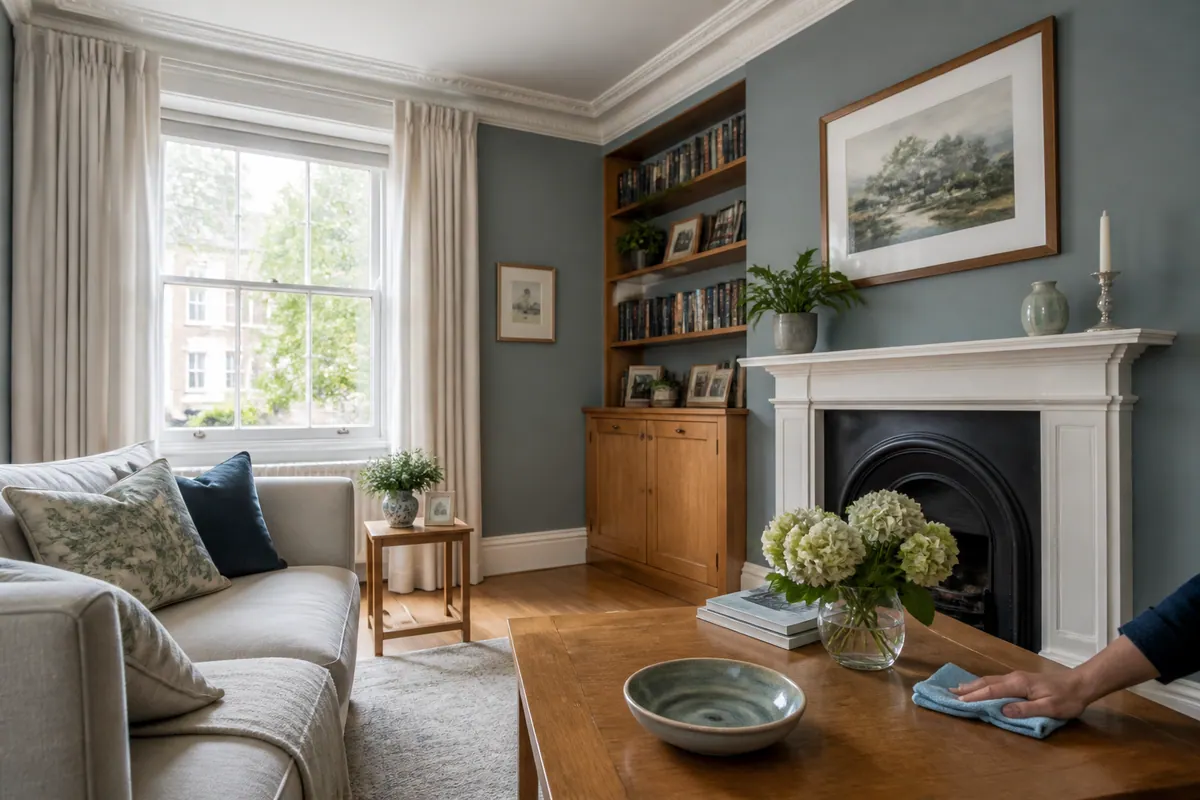
Light dusting of a cold decorative surround may be possible after the material is identified, but loose soot, ash, chimney deposits and historic staining need separate discussion. Do not ask a domestic cleaner to handle a recently used grate or investigate a flue. Protect nearby furnishings and seek a chimney or restoration specialist when the task involves combustion residue or conservation work.
What care do original timber floors need?
Share what you know about whether the boards are sealed, waxed, oiled or unfinished, along with any established care method. Excess water, steam or a strong degreaser may mark timber or enter gaps. Loose grit should be removed gently before limited damp treatment. Existing scratches and colour variation should be recorded because routine cleaning cannot restore worn coatings or repair movement.
How can wet-weather entrance dirt be managed?
Move shoes, umbrellas and pushchairs so the full entrance route can be reached. Identify transitions between tile, wood and carpet because each may require a different method. Vacuuming grit before moisture is introduced helps limit scratching. If damp repeatedly enters beneath flooring or stains a wall, address the building cause; stronger cleaning alone will not solve continuing water ingress.
How should a family kitchen be prioritised?
Clear food, school papers and small loose objects from the surfaces that matter most. Decide whether the sink, hob, worktops, cupboard fronts and floor all fit the available time, then rank them. Inside cupboards, refrigerators and ovens are additional jobs unless listed. Tell the cleaner about stone, timber or specialist worktops rather than leaving them to guess from appearance.
Is carpet washing suitable for an upper-floor conversion?
It may be, but access for the extraction machine, water supply, noise and drying ventilation all need assessment. Give the floor level, stair dimensions and carpet fibre if known. Ask about colour testing and furniture movement. Neighbours should not face blocked stairs or leaking equipment. Routine vacuuming can continue even when wet extraction is judged impractical or unsafe.
Can exterior windows be cleaned from inside the flat?
Only opening designs that allow safe, manufacturer-intended access should be considered, and the provider must agree the method. Nobody should lean out, stand on furniture or improvise with an unsuitable ladder. Send photographs showing the storey and window type. External panes may need a specialist pole system or managed-block arrangement, while accessible internal glass can be quoted independently.
Why might the first detailed clean take longer?
Edges, skirtings, fittings and less accessible surfaces often need extra attention before a simpler maintenance rhythm is possible. Describe accumulated grease, limescale or dust honestly and choose priorities if the initial hours are limited. The first visit should not promise restoration or every specialist task. After seeing the property, the cleaner can propose a repeat schedule based on actual use and condition.

 020 3608 3976