
An absent household
If nobody will be home during working hours, confirm how entry and departure will happen. Highlight the areas that carry the household routine when you return.
Chiswick / Keep the indoor route from the garden in the brief
Care for the floors your household uses every day.
If the garden door is a regular entrance, explain the indoor route from it to the kitchen and living rooms. Those floors can be considered in domestic upkeep; outdoor work remains a separate request.
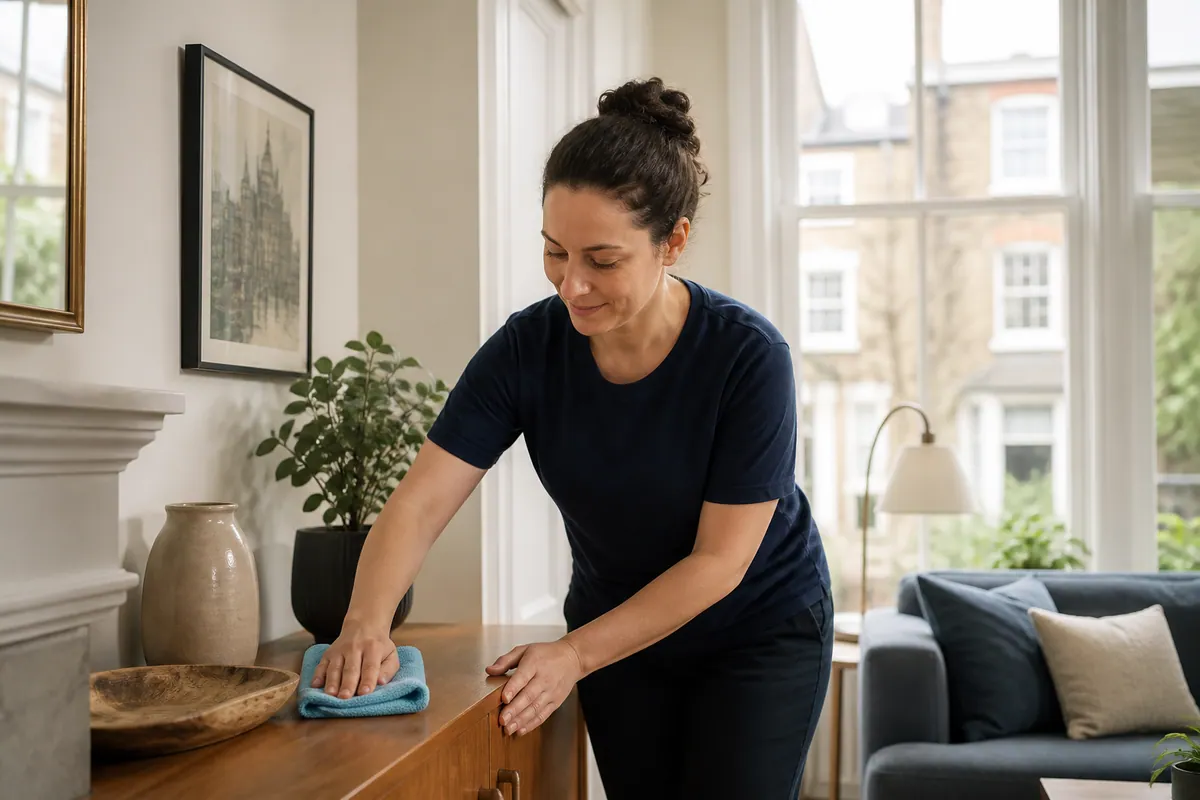
Kitchen · Bathroom
Living areas · Bedrooms
A brief for a lived-in home
Household circumstances affect how a visit can be organised. They do not replace a conversation about the current condition and realistic amount of work.
If nobody will be home during working hours, confirm how entry and departure will happen. Highlight the areas that carry the household routine when you return.
For families, a prepared room is more useful than a very broad request. Keep the core cleaning areas accessible and the personal sorting with the household.
Tell us where pets will be settled and any spaces to avoid. Their presence may affect the order, so raise it while arranging the visit.
An active desk needs a clear boundary and available window. Explain whether the surrounding room is also occupied rather than leaving the cleaner to infer it.
Rental households should identify the decision-maker for ordinary maintenance. A future departure or inspection needs its own service discussion.
Where a third party manages the home, keep the instructions current and consistent. The person arranging access should know which room priorities have been agreed.
Useful points at a glance
Chiswick / a household scenario
Care for the floors your household uses every day.
The useful cleaning boundary is the agreed indoor space. A garden-facing room does not make patios, paths or outdoor furniture part of household maintenance.
For Chiswick, describe which door the household uses and where the indoor traffic goes. That is more informative than assuming every floor receives the same use.
Different finishes along the route may need different care. Identify timber, stone or other sensitive areas and discuss compatible products before the visit.
The route should be accessible without rearranging stored items. Put shoes and household objects away, then retain time for the kitchen and bathroom tasks alongside floor care.
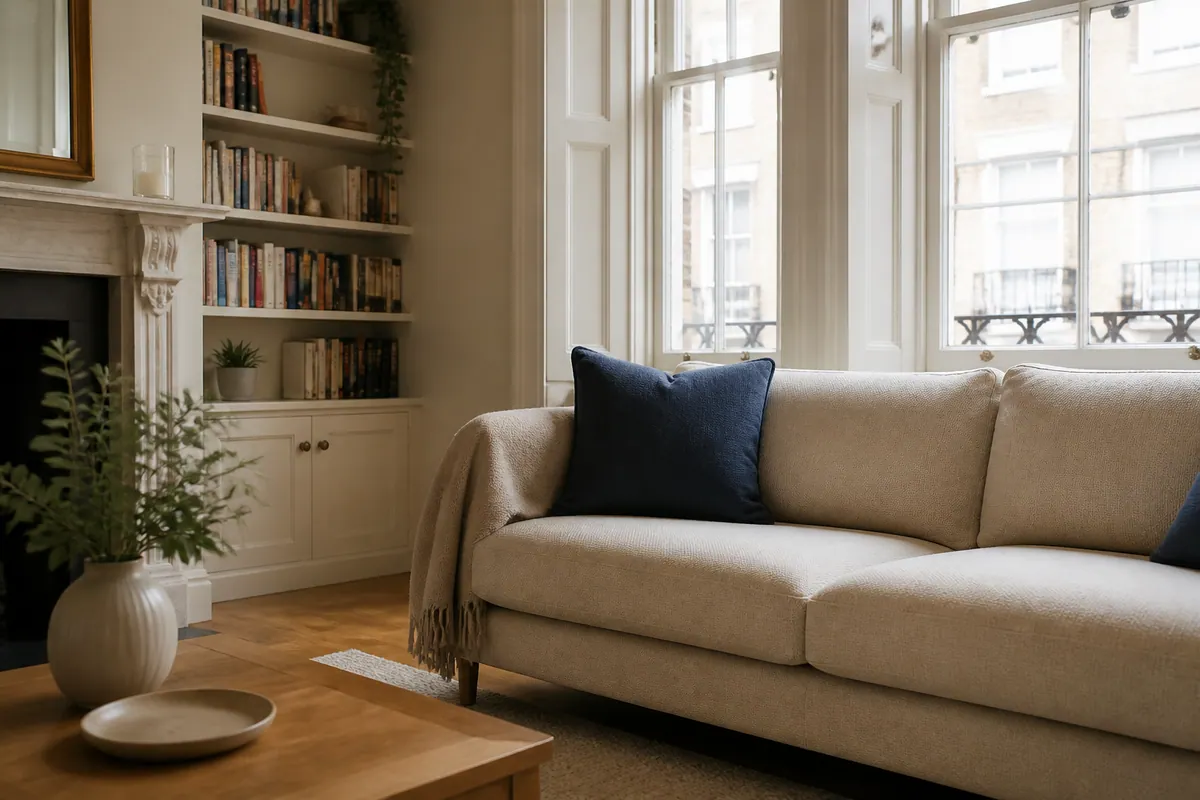
What the starting figures mean
The guide distinguishes regular upkeep from the first or one-off appointment. The actual agreement must confirm time, minimum visit and what is supplied for the home.
| Service | Price | Main factors |
|---|---|---|
| Regular domestic cleaning | From £20/hour | Confirmed frequency and minimum visit, property size and supply/access needs |
| First / one-off domestic visit | From £90 | Starting state, number of rooms and the priority level agreed |
| Specialist / intensive scope | Quoted separately | Separate service needs, difficult access or intensive equipment requirements |
Explain room count and condition together with frequency, equipment needs and access. Parking and extra tasks may affect the quotation, so check the inclusions rather than assuming a fixed duration from the starting figure.
From enquiry to upkeep
Begin with occupied rooms, present condition and any pets or work-at-home constraints. This gives the enquiry a practical starting point.
Choose the preferred interval and identify the essential tasks, with appointment availability still to be confirmed.
Settle the supplies and entry plan, including keys, alarms, parking and material guidance.
The visit follows the agreed core rooms using methods compatible with the surfaces involved.
At handover, review the priorities completed and anything needing more time, specialist attention or repair.
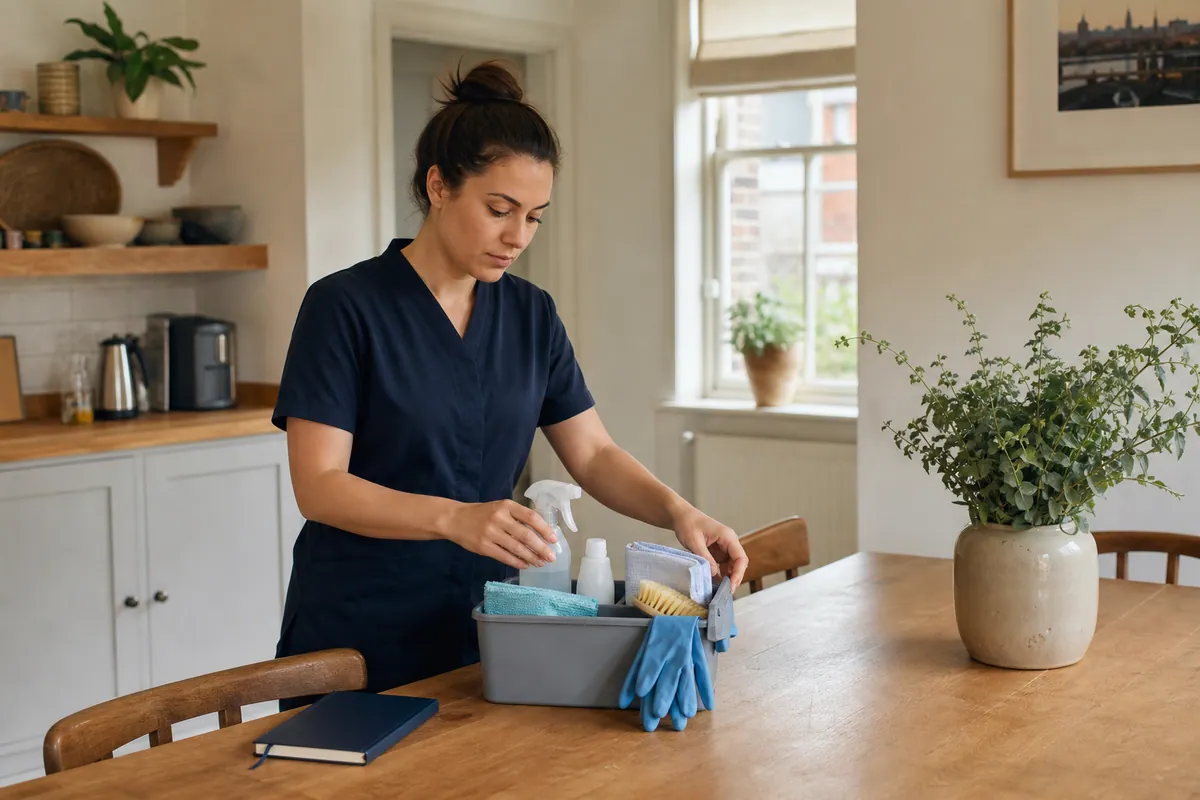
A prepared list of rooms and boundaries.
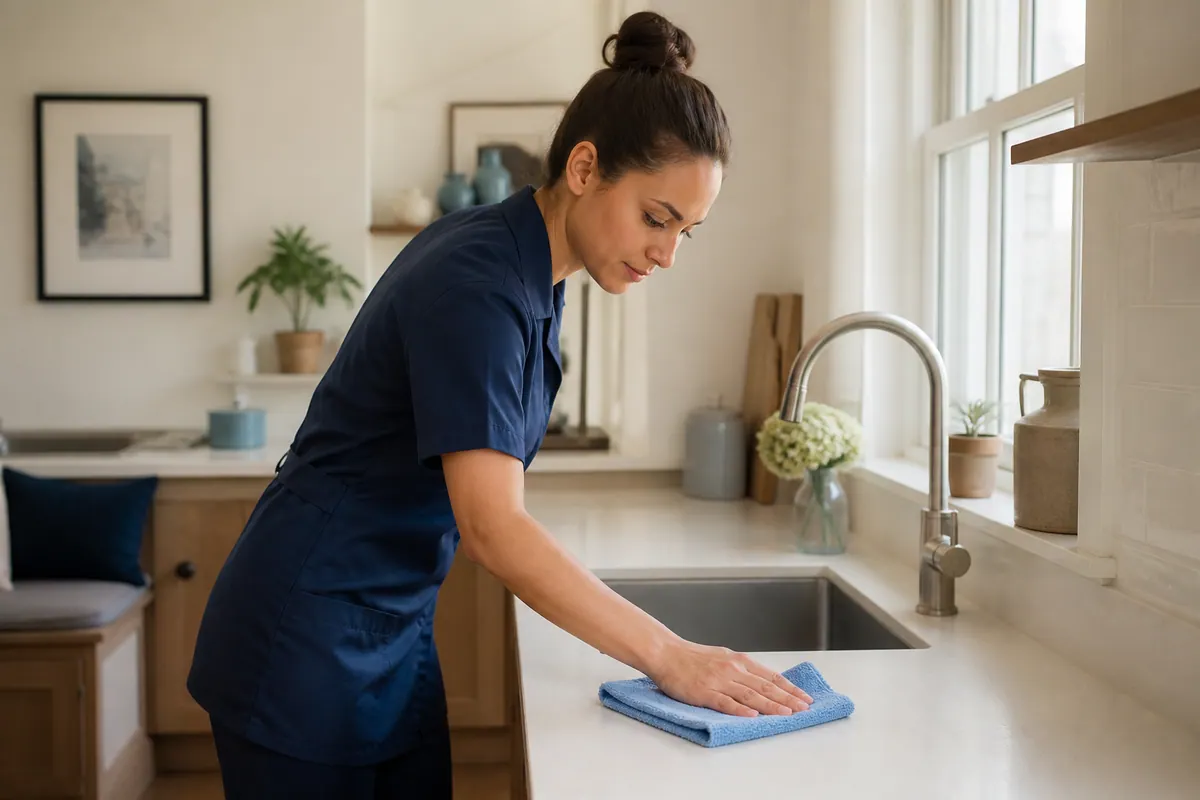
The agreed tasks addressed in a practical sequence.
A clearer basis for the next maintenance visit.
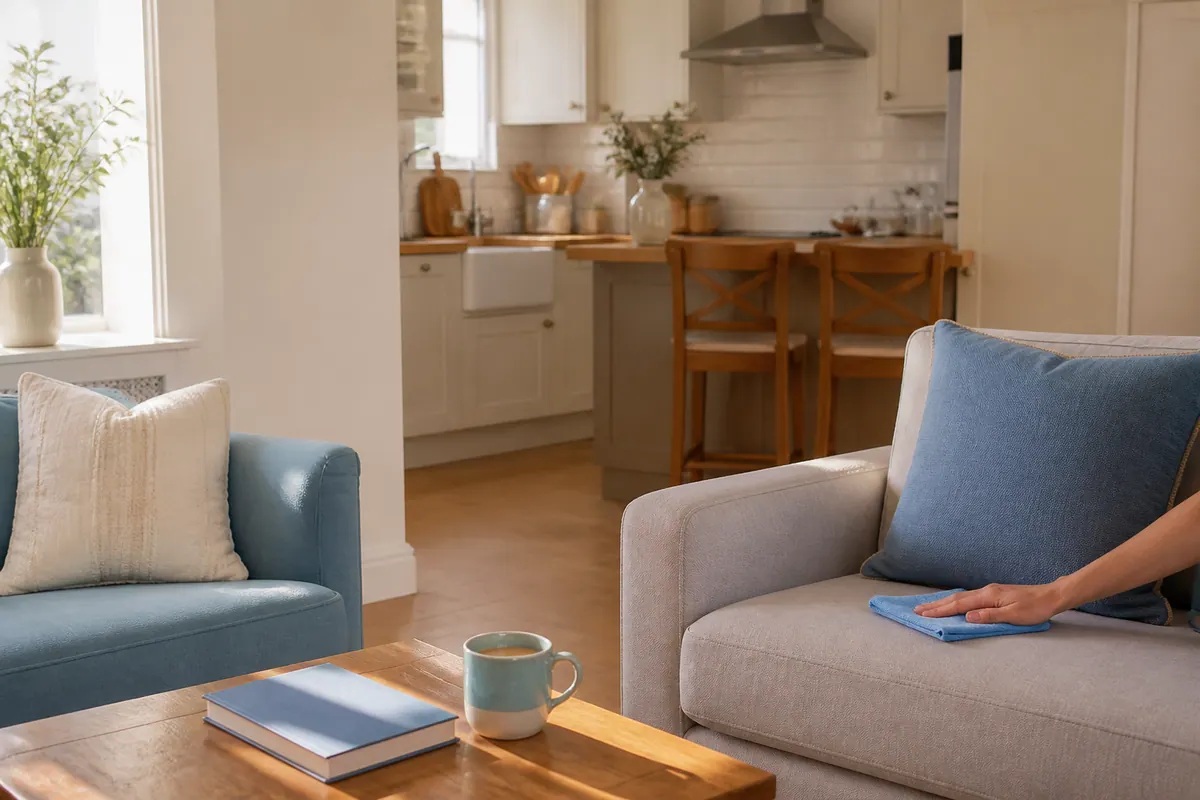
Illustrative scenes show a possible routine, not a recorded customer result.
A closer look indoors
A kitchen or bedroom on a list still needs a defined scope. These examples help separate accessible household cleaning from storage, specialist equipment and tasks not agreed.
Kitchen
The kitchen can include accessible worktops, splashbacks and the sink, alongside agreed cupboard fronts and appliance exteriors. Routine wiping is distinct from specialist internal cleaning.
Prepare the cooking surfaces by putting belongings and food away; list oven internals separately.
Bathroom
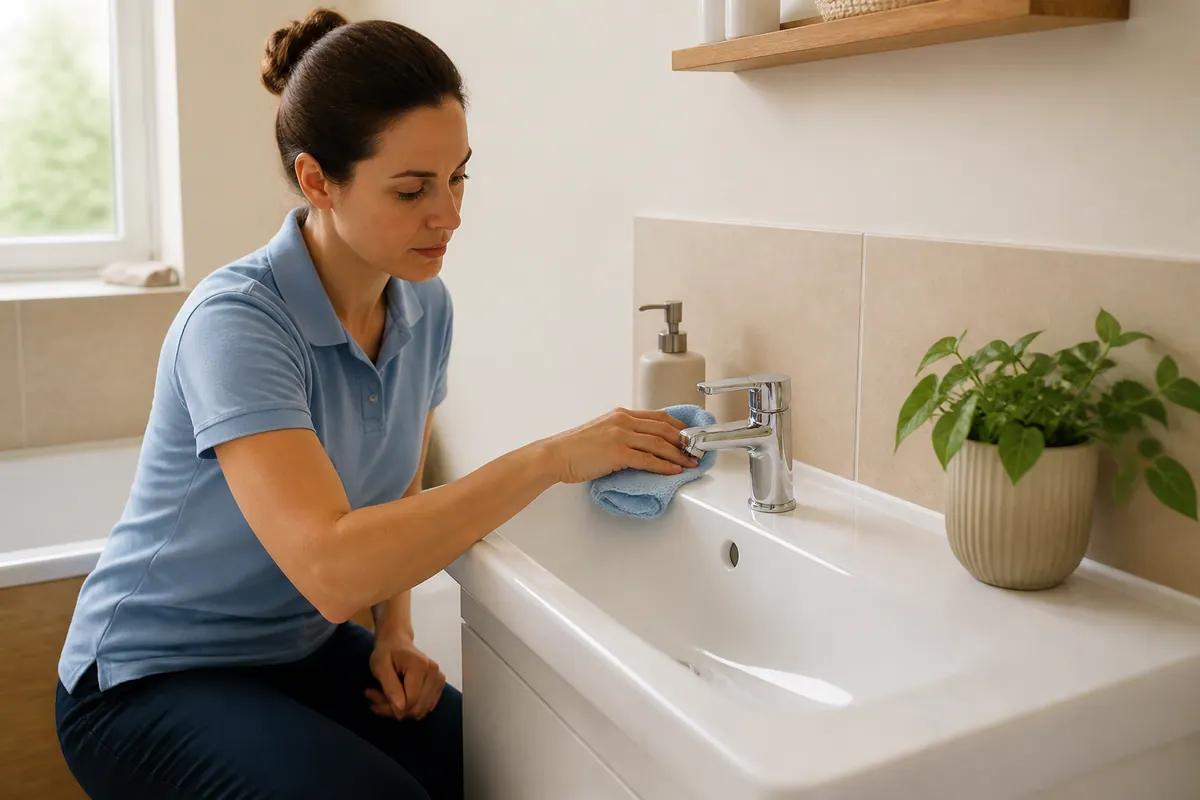
For bathroom care, name the shower, mirrors, taps, sanitaryware and reachable tiles included. A room containing different materials should not receive one indiscriminate treatment.
Describe known damage and provide any relevant surface guidance, particularly for sensitive finishes.
Living areas
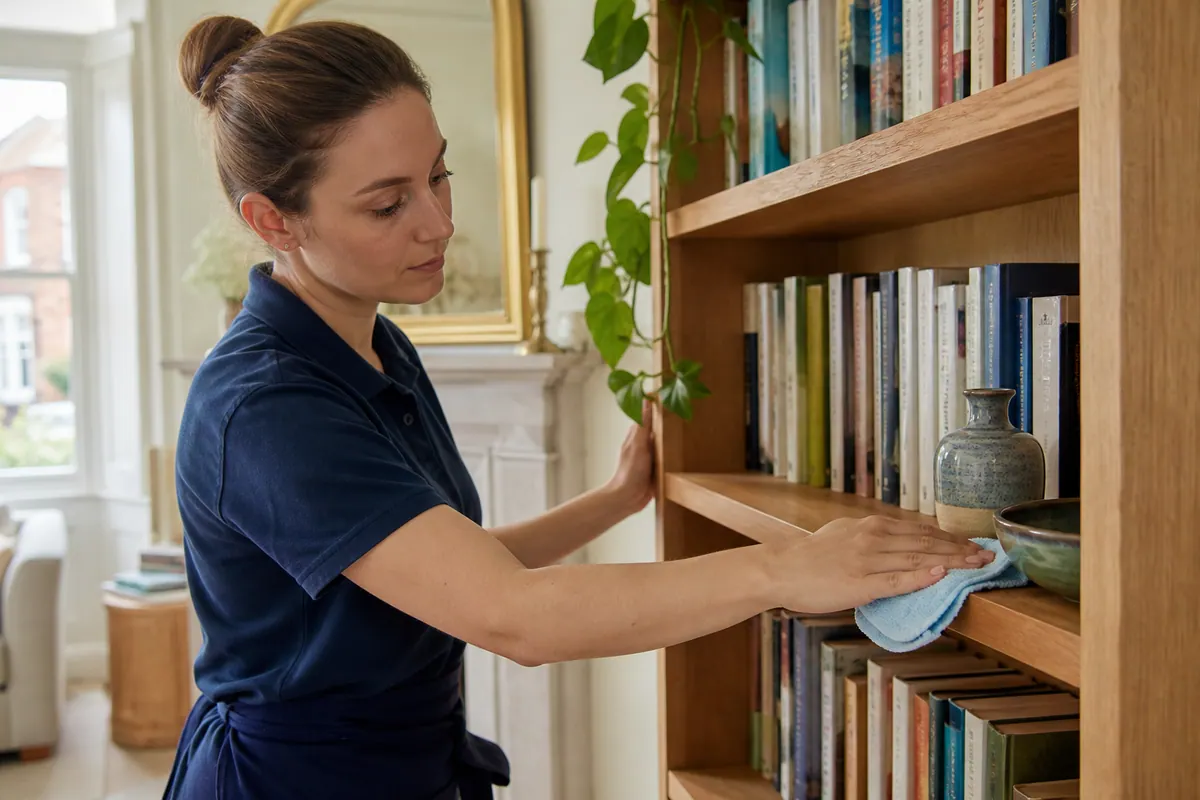
Available furniture can be dusted, followed by the vacuuming and floor care agreed for the living space. The route should not depend on lifting heavy furnishings.
Remove delicate ornaments and work documents yourself, or identify the area as excluded.
Bedrooms
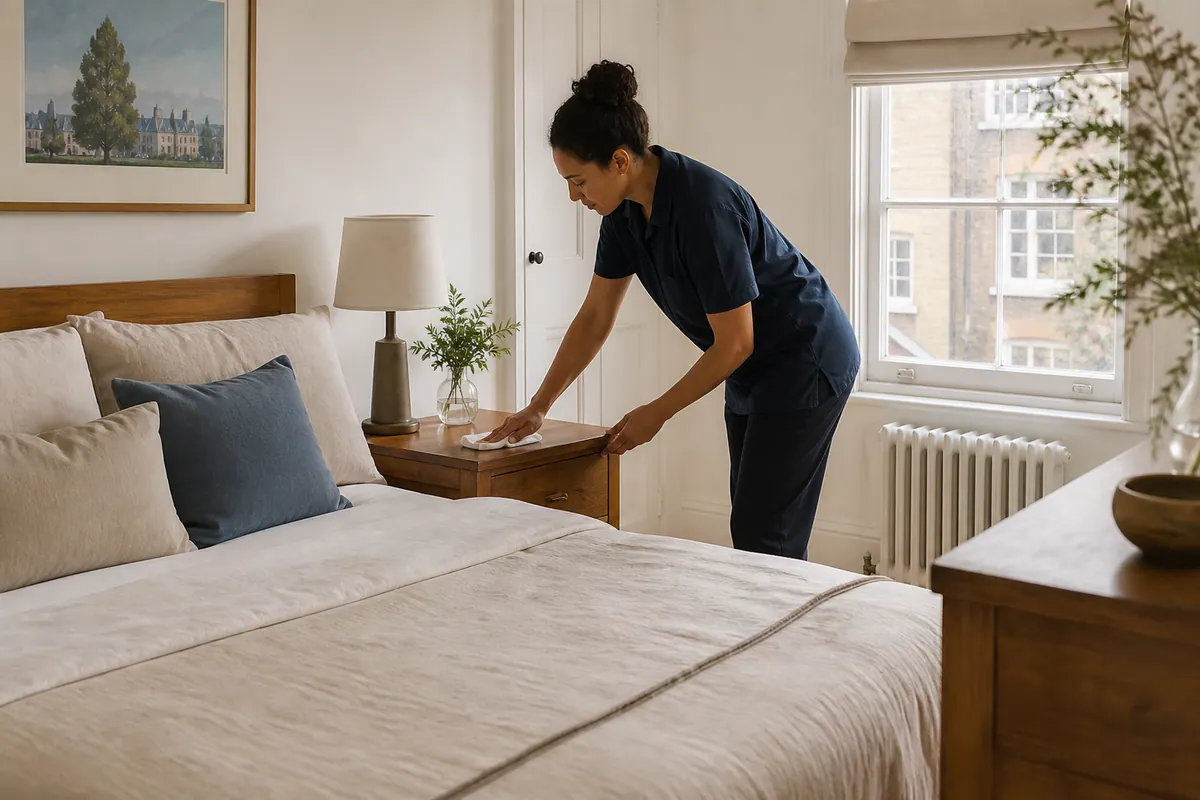
Specify included bedrooms and the accessible furniture and floor areas in each. Routine care does not authorise sorting belongings or opening personal storage.
Keep medication protected and identify private or unused bedrooms that are not part of the visit.
A repeatable schedule
The useful question is what happens in the home between appointments. Explain the occupied rooms, their condition and the priorities instead of choosing a frequency as an automatic package.
| Planning point | Weekly | Fortnightly |
|---|---|---|
| Best suited for | Busy room use that may suit a shorter interval | Periodic upkeep where a fortnightly gap may be suitable |
| Core focus | Maintain the agreed everyday surfaces and floors | Consider accumulated work without assuming unlimited time |
| Priority planning | A manageable recurring task order | Stronger selection may be needed after the gap |
| Visit scope | The booking defines the work | The booking defines the work |
A first booking establishes what needs attention now. It may require longer than later visits, so be clear about accumulated work rather than borrowing a duration from a future routine.
The regular stage is for upkeep of the agreed spaces. Keep its boundaries visible and revisit them when extra rooms or different conditions change the amount of work.
A planning aid for ordinary upkeep
Try the options to organise property, interval and priority information. The resulting brief is a starting point for contact, not an automatic booking or price calculation.
The recurring essentials
Decide which everyday tasks the booking must serve before adding the interesting extras. The used kitchen, bathroom, accessible furniture and floors should retain their agreed place.
A detail belongs on the list only when it is named and there is room for it. If a selected task becomes substantial, discuss the effect on the rest of the work.
A finish-aware routine
A suitable approach depends on the actual material, not simply whether it sits in a bathroom or kitchen. Share guidance and point out wear before the cleaner begins.
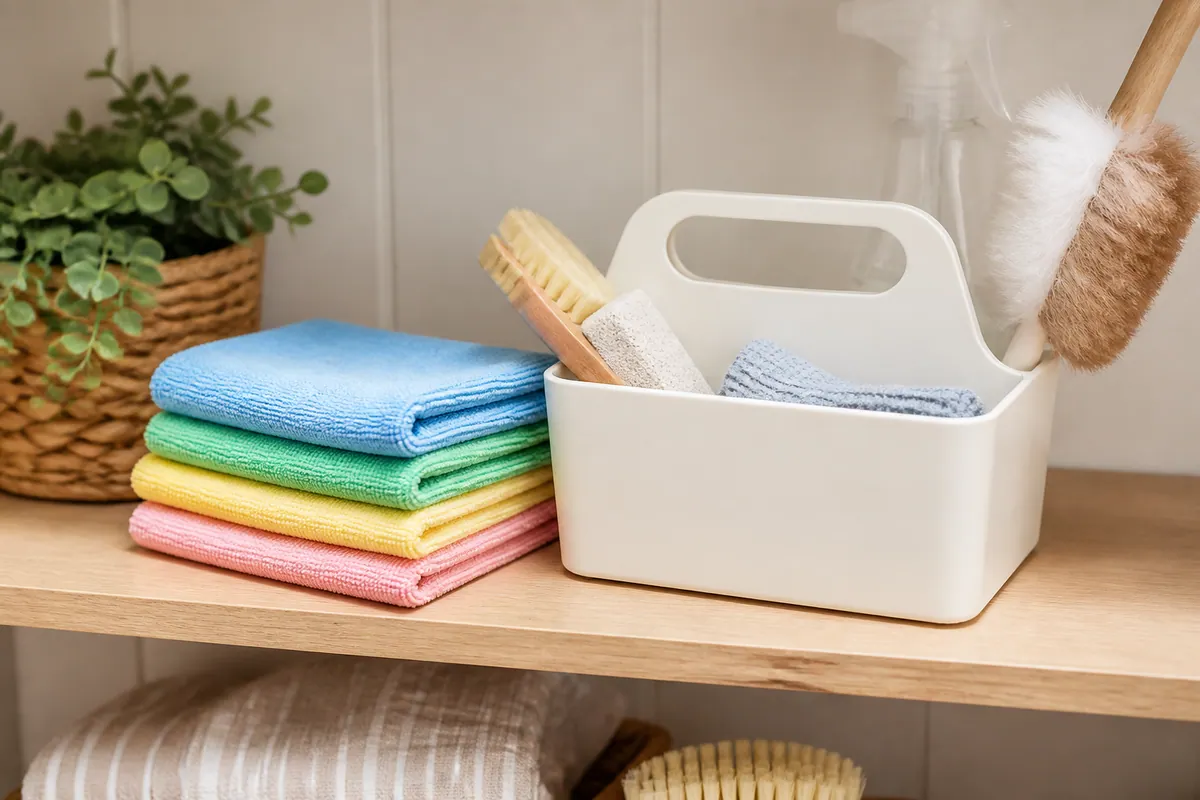
Identify natural stone and any known restrictions on its care.
Timber flooring or furniture needs cleaning compatible with its particular finish.
Flag coated pieces that require a cautious material-specific approach.
Steel exterior care should not be confused with servicing the inside of an appliance.
Explain areas with damaged paint so cleaning is not mistaken for repair.
Keep the list understandable
Use the up and down controls to express a preference. The sample remains a planning aid, with the real workload and duration subject to the agreement made with the team.
Arrival without assumptions
Confirm who provides the key and how it is returned; keep those instructions in direct communication.
Check whether building staff can authorise entry rather than assuming they will handle it.
Explain the alarm procedure needed for a complete arrival and leaving arrangement.
Discuss the animal’s location and internal boundaries before the cleaner starts moving between rooms.
Identify the occupied workspace and when it may be released for cleaning.
Tell the team about any known restrictions affecting parking or unloading.
Keep exclusions specific: a private room or item should not depend on a guessed boundary.
The visit works from the tasks and access agreed. If the brief includes something beyond household maintenance, clarify it in advance instead of relying on an unlimited checklist.
Beyond the household list
Some requests change the equipment, access or process involved. Raise those separately, including heavy lifting, high-level work and restoring damaged or worn materials.
Vacuuming can form part of domestic upkeep; extraction requires another agreed service.
Cleaning an oven’s outside is not a substitute for arranging its internal cleaning.
A mould problem should not be folded into the ordinary bathroom or wall list.
Outdoor-facing glass needs a separate access and cleaning scope.
Building-work dust and residue require a different brief from lived-in household maintenance.
Where condition calls for intensive work, discuss a one-off arrangement before planning ongoing upkeep.
Your questions about upkeep
Describe the floor areas inside the home that form that route and the finishes involved. They can be considered within the domestic brief without implying that outside paths or patio areas are included.
Yes, share known material or care information for each relevant area. One route may cross more than one finish, so suitable floor maintenance should not depend on treating them all identically.
No. From £20/hour is the starting guide for regular domestic work. The minimum visit, size, frequency, supplies and access need to be confirmed for an actual quotation.
No. A rarely used room and a busy kitchen can have very different needs. Discuss occupation, condition and available time when considering weekly or fortnightly appointments.
Explain its condition before the visit if possible. The team can discuss how it affects the agreed tasks and duration; the request does not automatically enlarge the booking or remove the core priorities.
A first or one-off domestic visit starts from £90, while regular care has an hourly starting rate. The initial condition may call for more time and a different agreed list from later maintenance.
The supply arrangement is confirmed as part of the booking. Explain preferences and any care instructions you have, particularly for sensitive or damaged finishes, before products are assumed suitable.
Name the space and the period when it is unavailable. Discuss another starting area or a clear handover, and put devices and personal items away before the room is released.
They are separately scoped services, not implied additions to kitchen or floor upkeep. Exterior appliance care and vacuuming can be discussed within the domestic list instead.
Send the address details and preferred arrangement to Alesta. Availability is confirmed against the schedule, and neither the map nor the routine planner reserves an appointment.
Chiswick / enquiry area
Give Alesta the Chiswick address details and the routine you want to explore. Availability and the final room work need confirmation for your property, with no slot reserved by the map below.
For the wider service scope, see Domestic Cleaning, or ask the team about your address.
Address planning
View the area while preparing the address and arrival details.
Open map in a new tabChiswick / the next conversation
Tell us about the rooms in your Chiswick home, their condition and the routine you want to arrange. Plan care for the daily route: share your preferred frequency and access details directly with the team.
