
Establish the initial priorities
Treat the first visit as a starting-condition conversation. A home returning to regular care may need additional time, with priorities chosen before assuming a settled recurring pattern.
Ealing / A clear list for each level of the home
Group the rooms before choosing the cleaning route.
When bedrooms and living spaces are on different floors, the useful brief names the included rooms on each level. Set the essential tasks first and explain which spaces are not part of this visit.
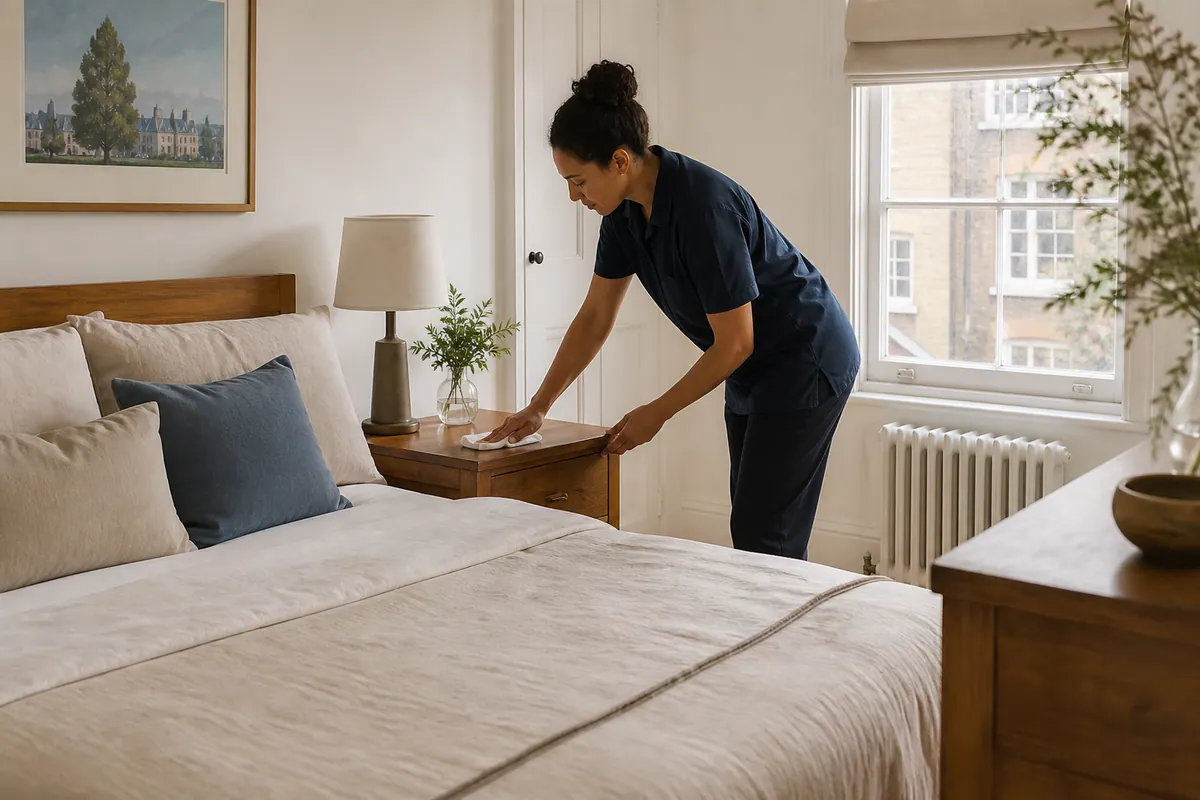
Kitchen · Bathroom
Living areas · Bedrooms
Ealing / a household scenario
Group the rooms before choosing the cleaning route.
A multi-level home needs more information than a single room total. Tell us where the main kitchen, bathrooms and bedrooms sit in relation to the areas being cleaned.
For Ealing, identify a sensible starting level based on use and availability. The route should support the agreed priorities rather than automatically beginning at the top or bottom.
Household items on stairs or landings should be moved before arrival. Domestic cleaning does not assume heavy lifting or the rearrangement of stored belongings.
Review the room list when occupation changes. An unused upper room can be discussed differently from a frequently used downstairs space without losing the overall maintenance plan.
Frequency follows use
A calendar interval only helps when it matches the household. Consider how quickly the used rooms need attention and how much practical preparation is possible before each booking.
| Planning point | Weekly | Fortnightly |
|---|---|---|
| Best suited for | Households wanting a shorter gap between maintenance visits | Households discussing care every other week |
| Core focus | Regular attention through the included daily-use rooms | Prioritise the work waiting after two weeks |
| Priority planning | Keep the repeat list focused and achievable | Allow for a different level of accumulation |
| Visit scope | Scope agreed for the actual home | Scope agreed for the actual home |
Treat the first visit as a starting-condition conversation. A home returning to regular care may need additional time, with priorities chosen before assuming a settled recurring pattern.
Later maintenance can be more consistent because the essentials are known. Review them whenever the household or room list changes; a recurring booking is not an unlimited scope.
Room choices, clear scope
The tabs show the household work to discuss, not a fixed package for every property. Explain condition and access so a room label translates into an achievable cleaning brief.
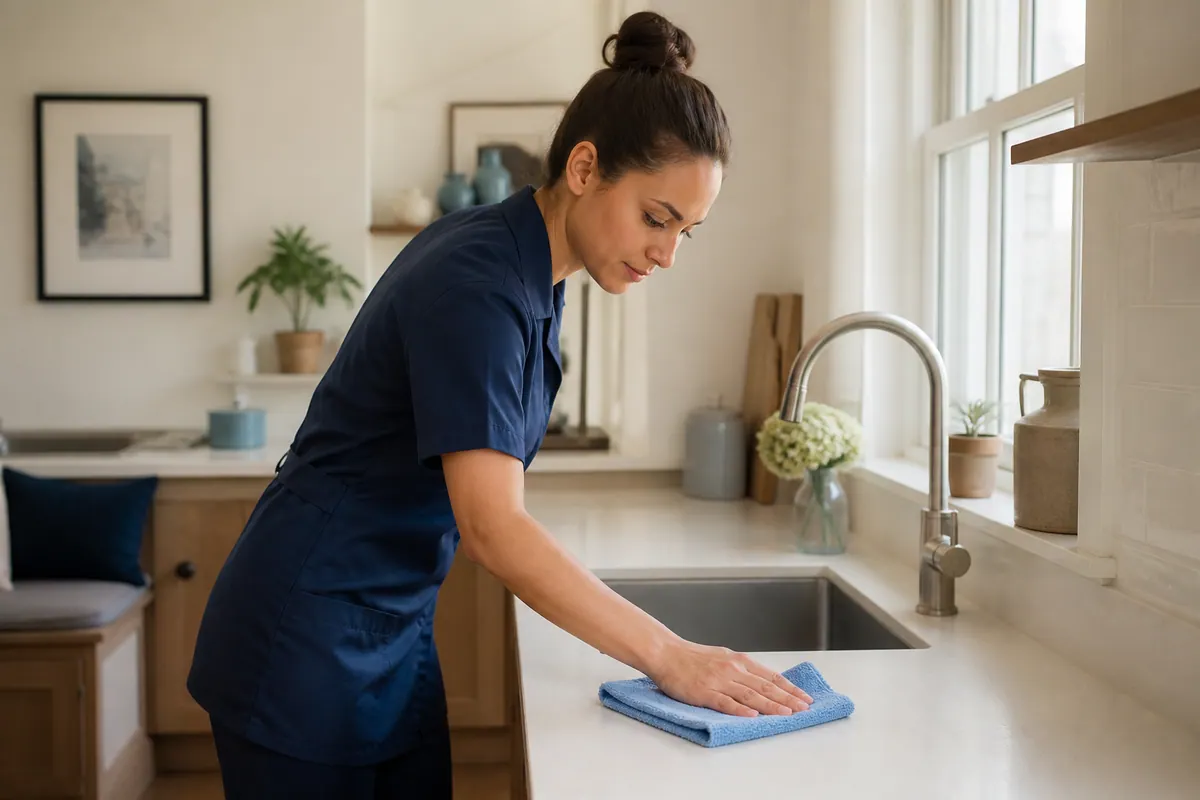
Kitchen
Kitchen upkeep may include the sink, available worktop, splashback and selected exterior fronts. Confirm the appliance surfaces you want wiped rather than treating the appliance as an all-in task.
Remove items covering the work area. Oven interiors do not follow automatically from kitchen inclusion.
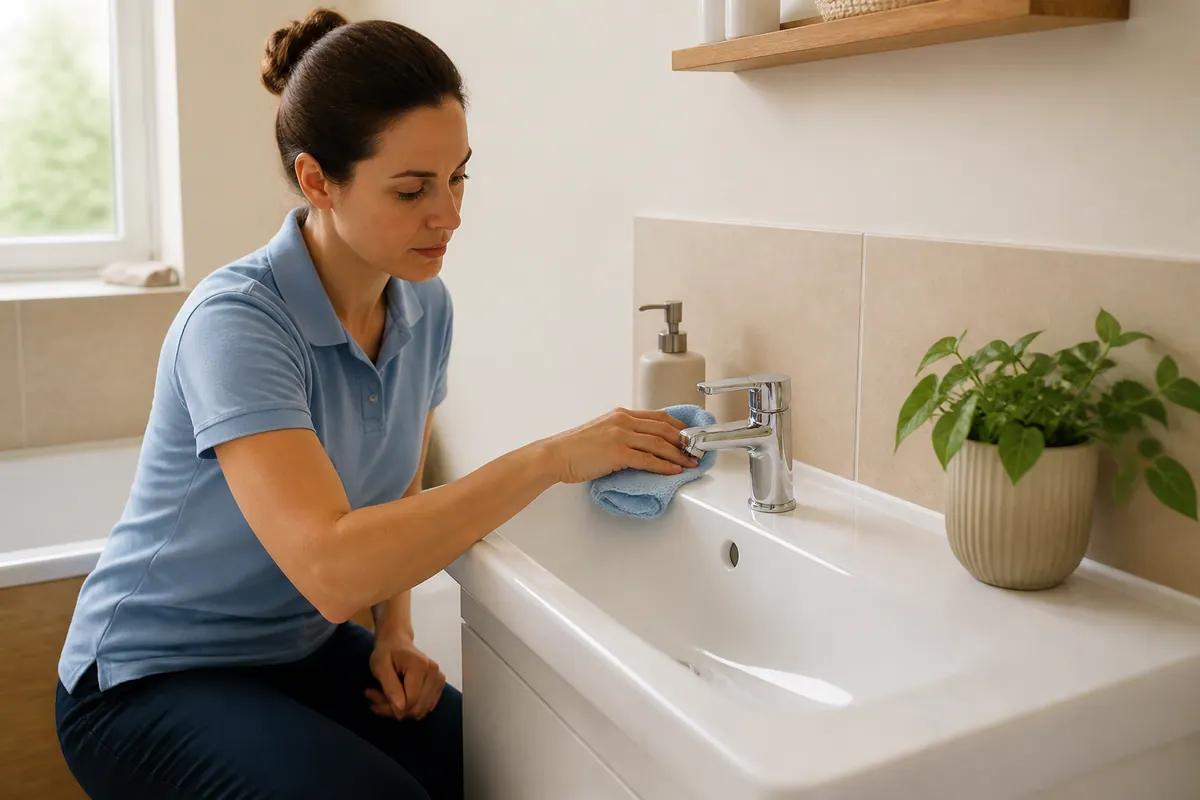
Bathroom
Bathroom surfaces may include the sanitaryware, taps, mirrors, shower and accessible tiles. Their material and existing condition guide the suitable cleaning approach.
Show sensitive finishes and any failing seals or damaged fittings before work begins.
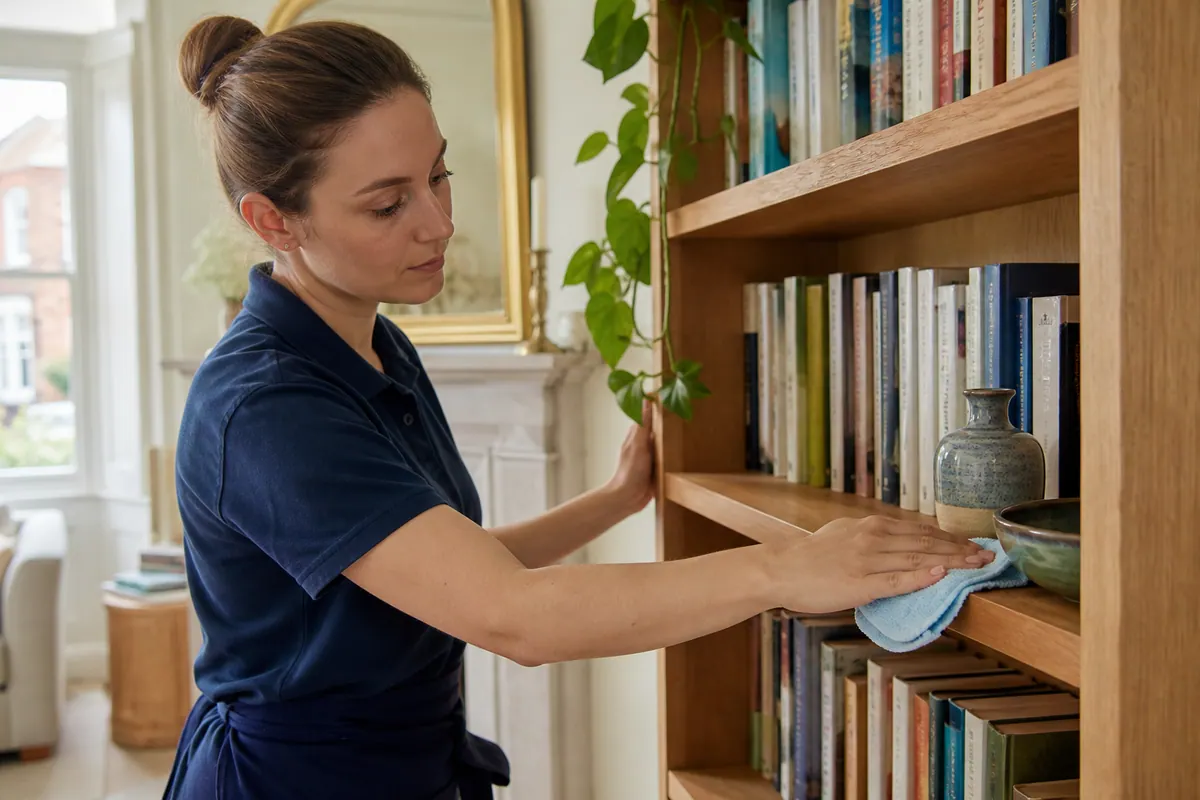
Living areas
Available furniture can be dusted, followed by the vacuuming and floor care agreed for the living space. The route should not depend on lifting heavy furnishings.
Remove delicate ornaments and work documents yourself, or identify the area as excluded.
Bedrooms
The agreed bedrooms receive reachable surface care and floor maintenance. Confirm the individual rooms so private or occasional spaces are not presumed included.
Put medication and personal possessions safely aside and identify bedroom exclusions before arrival.
Planning, cleaning, reviewing
Give the room list together with condition, occupants and any access or household constraint.
Discuss the first visit and recurring interval separately where the starting work differs from upkeep.
Confirm materials, supplies, keys and other arrival information before the day.
The agreed rooms are cleaned with the core priorities and suitable surface care in mind.
At the end, identify what was addressed and whether anything falls beyond the routine scope.
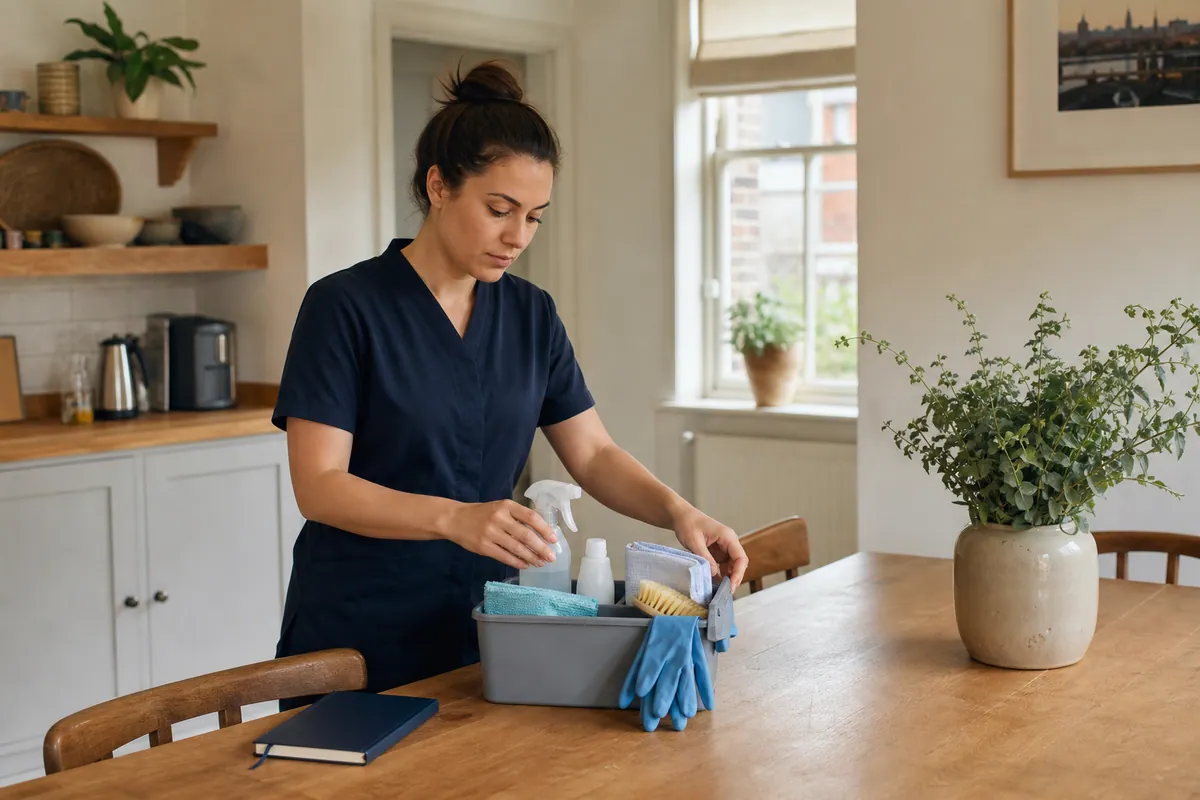
The rooms prepared for accessible work.
Domestic tasks followed in an agreed order.
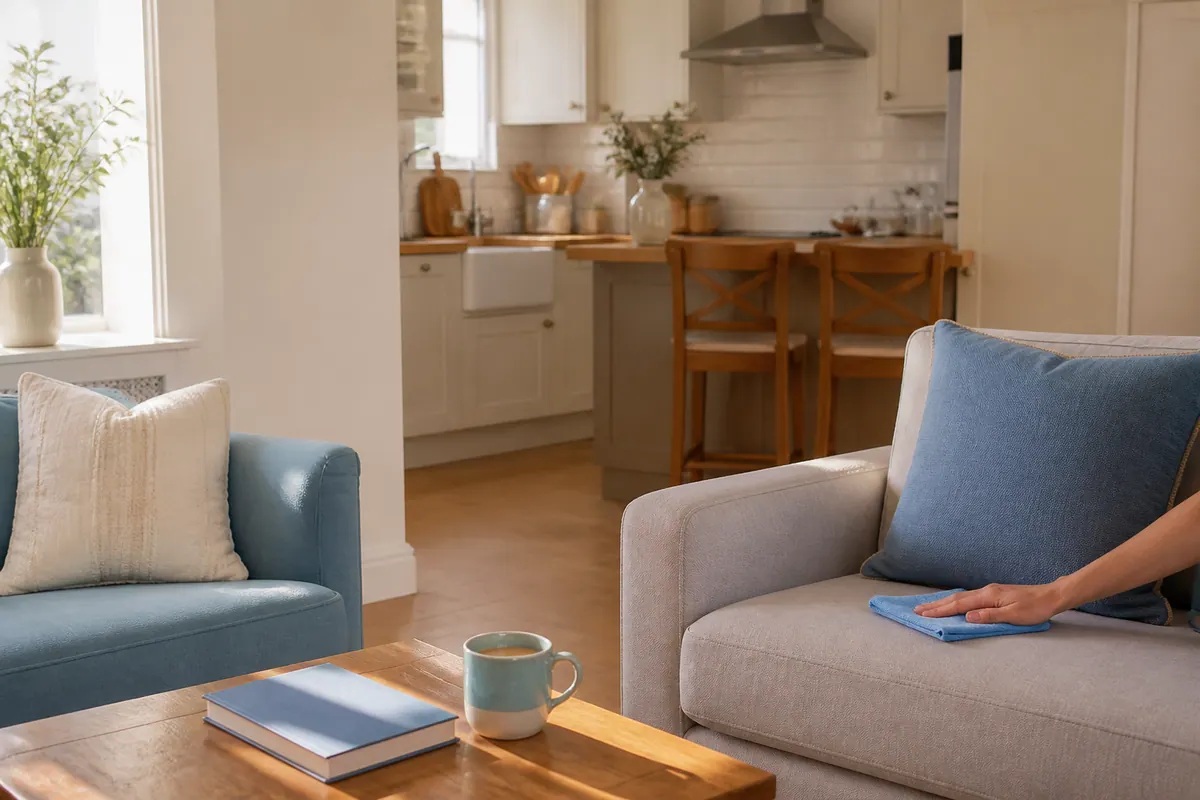
A maintained baseline, not a restoration claim.
Images illustrate the service setting and do not depict a verified customer project.
Ealing / enquiry area
Give Alesta the Ealing address details and the routine you want to explore. Availability and the final room work need confirmation for your property, with no slot reserved by the map below.
For the wider service scope, see Domestic Cleaning, or ask the team about your address.
Address planning
View the area while preparing the address and arrival details.
Open map in a new tabShape an enquiry, not a reservation
Choose the household options that best describe the proposed visit. This planner helps organise the conversation; it neither calculates your final price nor books a cleaner.
Keep the important tasks visible
Separate everyday maintenance from details that may be selected occasionally. This helps the cleaner understand what the household expects most from the available visit.
There is no unlimited rotating package hidden within a regular clean. Confirm the individual detail, its accessibility and its place alongside the essential work.
The way the home runs
These examples suggest what to mention, not what every household must book. Use them to explain the circumstances that affect your included rooms.
For someone out through the working day, a confirmed entry plan is essential. Name the frequently used rooms instead of assuming all spaces are equally active.
Families can prepare the floor route and shared surfaces before arrival. The visit is easier to define when toys and personal belongings are already put away.
A pet arrangement should cover both the animal’s location and the doors involved. Explain it before the cleaner has to move between rooms.
Working from home may call for a different starting area. Identify the call period or private desk and agree the handover rather than interrupting work unexpectedly.
A regular clean in a rental does not become a tenancy-end service. Discuss the present rooms and keep separate requirements with their own scope.
In a managed home, clarity comes from a named person confirming changes. Coordinate the access instructions and latest priorities through that contact.
A finish-aware routine
A suitable approach depends on the actual material, not simply whether it sits in a bathroom or kitchen. Share guidance and point out wear before the cleaner begins.
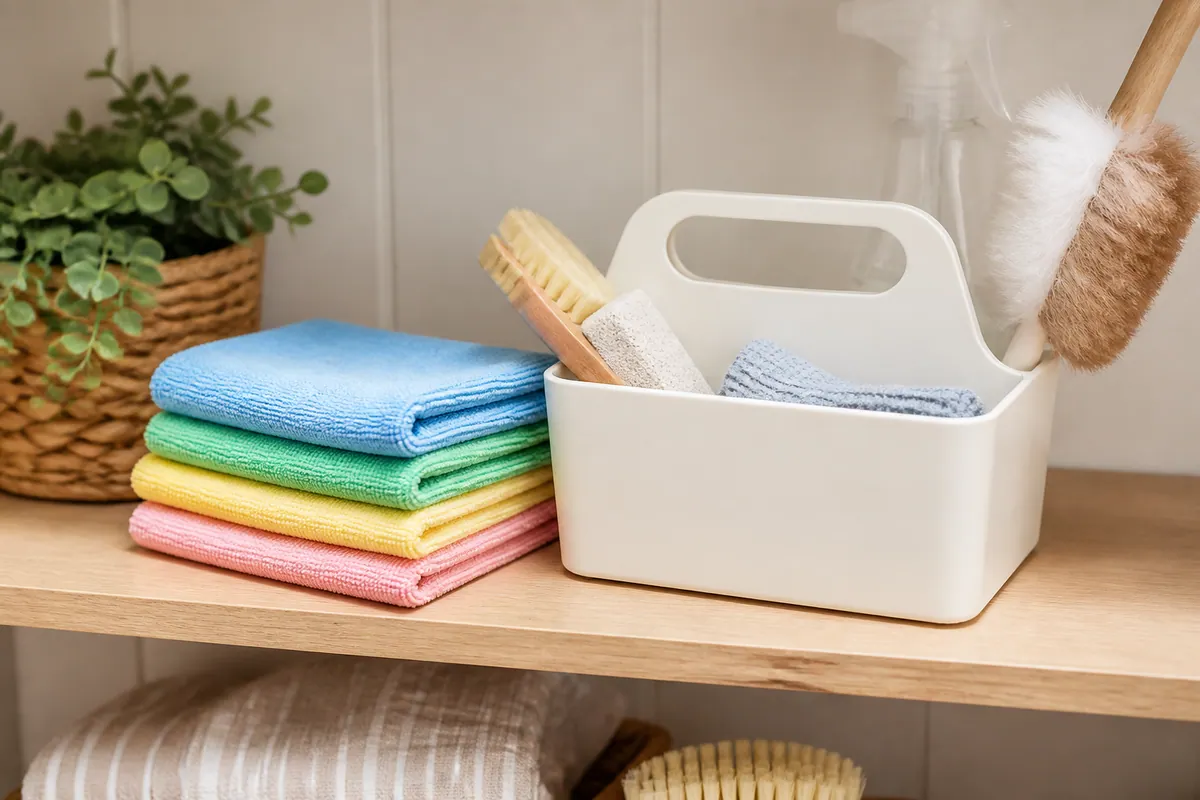
Identify natural stone and any known restrictions on its care.
Timber flooring or furniture needs cleaning compatible with its particular finish.
Flag coated pieces that require a cautious material-specific approach.
Steel exterior care should not be confused with servicing the inside of an appliance.
Explain areas with damaged paint so cleaning is not mistaken for repair.
A different task needs a different agreement
The room list should not imply specialist equipment or difficult access. Discuss restoration, high work and lifting separately, together with any service-specific requirements.
Extraction is a specialist carpet process, not another name for routine vacuuming.
An internal oven clean must be expressly discussed rather than inferred from exterior wiping.
Mould needs separate planning and assessment; it is not a standard rotating detail.
External glazing falls outside the everyday indoor maintenance route.
Post-construction cleaning addresses a different kind of residue from household use.
A separate intensive appointment may suit the initial need better than an overloaded recurring list.
The main questions, briefly
Agree the visit behind the rate
Use these published starting figures to begin the enquiry. The final domestic arrangement still needs a confirmed minimum visit, included supplies and realistic task list.
| Service | Price | Main factors |
|---|---|---|
| Regular domestic cleaning | From £20/hour | Property scale, frequency, minimum time and agreed supply/access arrangement |
| First / one-off domestic visit | From £90 | Initial workload, included rooms and selected starting tasks |
| Specialist / intensive scope | Quoted separately | Intensive condition or service-specific equipment and access needs |
A larger property or different starting condition can change the time required. Frequency, supplies, entry and parking also matter, while specialist requests need separate consideration rather than an implied inclusion.
Choose what should lead
Use the arrows to arrange the example tasks. This does not modify a booking or add time; the agreed core work still needs a realistic place in the visit.
The small instructions that matter
Agree key collection and return with the team rather than leaving sensitive details in a public message.
Confirm any concierge handover and who can permit access to the apartment.
Settle the alarm instructions for the beginning and end of the visit privately.
Tell the cleaner which spaces pets will occupy and which boundaries need care.
Explain calls or a private desk and discuss the sequence around the occupied area.
Share the parking or loading information you know before timing is agreed.
Make room exclusions and untouched belongings part of the actual brief.
Useful preparation combines ready rooms with suitable products and confirmed access. A broad request for everything to be cleaned cannot replace those practical decisions.
Before we arrange the visit
Name the included rooms on each level and how they are reached. Explain which are occupied or excluded so the proposed route reflects both actual use and the work the household wants arranged.
Prepare the route needed to reach the agreed rooms and identify any remaining obstacle. The cleaner should not need to reorganise stored household items or undertake unagreed lifting just to begin the planned work.
Regular work starts from £20/hour. The final price requires a defined minimum visit, property details, supply arrangement and access information; the hourly guide is not a fixed whole-home total.
Describe the way rooms are occupied and what accumulates in the interval. The appropriate visit length and available schedule matter too; frequency is not a substitute for a realistic task list.
Explain its condition before the visit if possible. The team can discuss how it affects the agreed tasks and duration; the request does not automatically enlarge the booking or remove the core priorities.
The £90 figure is a starting rate for first or one-off domestic work, not a promise regardless of condition. Rooms, priorities and time are confirmed, with specialist requirements considered separately.
The method should suit the material. Share known instructions and damage for timber, stone, lacquer, steel or painted areas, and confirm the supply arrangement before the appointment.
Yes, make the exclusion explicit while planning. If the room will become available later, discuss that handover without assuming the cleaner can wait or extend the visit.
Detailed oven internals need separate scope, just as carpet extraction does. Routine exterior wiping or vacuuming should not be mistaken for those specialist processes.
Only once availability has been confirmed directly. Give Alesta the postcode, preferred rhythm and household arrangements; selecting an option here is not a commitment from the scheduling team.
Ealing / the next conversation
Tell us about the rooms in your Ealing home, their condition and the routine you want to arrange. Organise a floor-by-floor brief: share your preferred frequency and access details directly with the team.
