
Workday arrangements
If the home is empty during working hours, settle entry and a contact before arrival. Name the rooms that matter between workdays.
Greenwich / A home ready for the ordinary evening
Keep the daily living spaces at the centre of the visit.
The most useful result may be a workable kitchen, maintained bathroom and a living space ready for the evening.
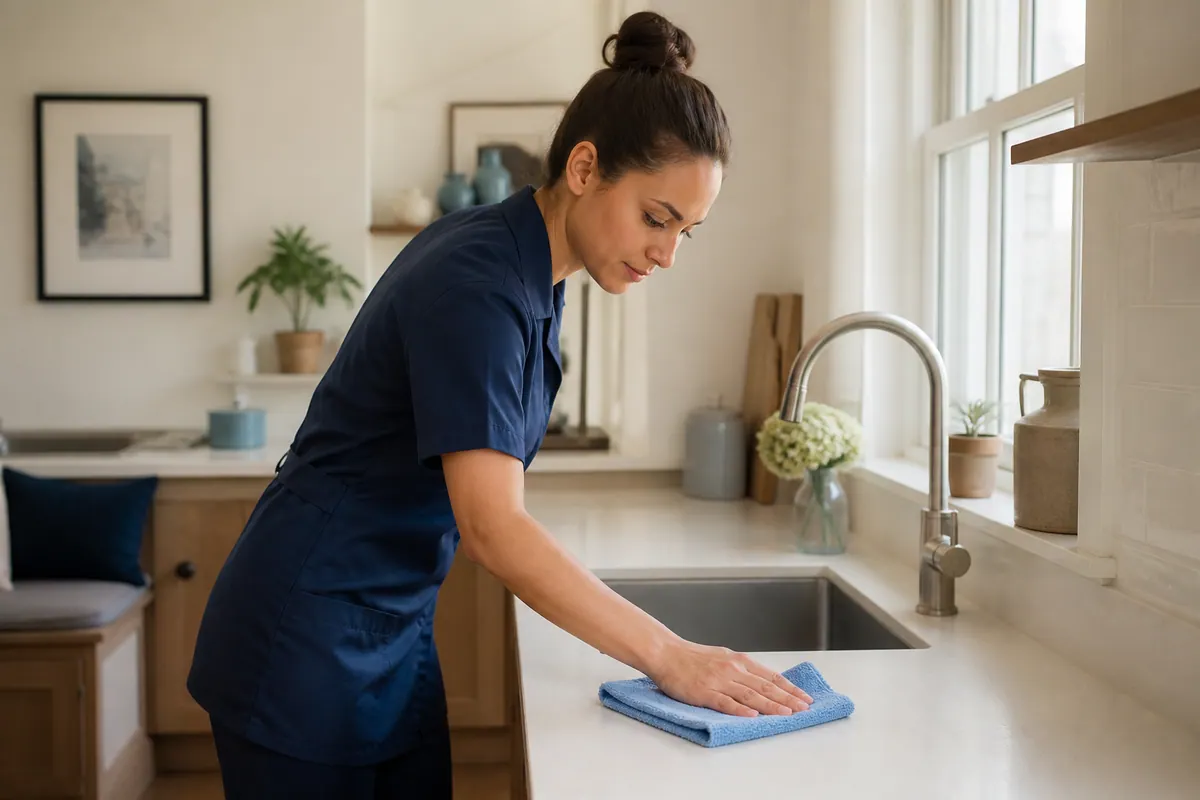
Kitchen · Bathroom
Living areas · Bedrooms
Practical planning
A clear scope
Household use can affect the practical sequence.
If the home is empty during working hours, settle entry and a contact before arrival. Name the rooms that matter between workdays.
Name the everyday rooms first, then explain occupancy during the visit. Loose items should be put away by the household before cleaning.
Put the pet’s practical arrangements in the brief. A room that cannot be entered should be identified before the appointment starts.
Explain the occupied workspace without assuming the rest of that room is available. Confirm a workable sequence.
A tenancy does not change ordinary maintenance into handover work. Discuss any separate move-out requirement as another scope.
A nominated contact should confirm access and updates. Keep the cleaner’s room list consistent with that person’s instructions.
A home ready for the ordinary evening
The most useful result may be a workable kitchen, maintained bathroom and a living space ready for the evening.
Name the surfaces that matter when the household returns home. Agree access if everyone will be out during the visit.
Put away personal items from the seating area and side tables. Give occupied rooms priority over a decorative detail chosen at the last minute.
Tell the team when the household’s return time affects room availability.
The brief should describe practical upkeep without promising an unlimited whole-home transformation. What would make the everyday evening easier after this visit?
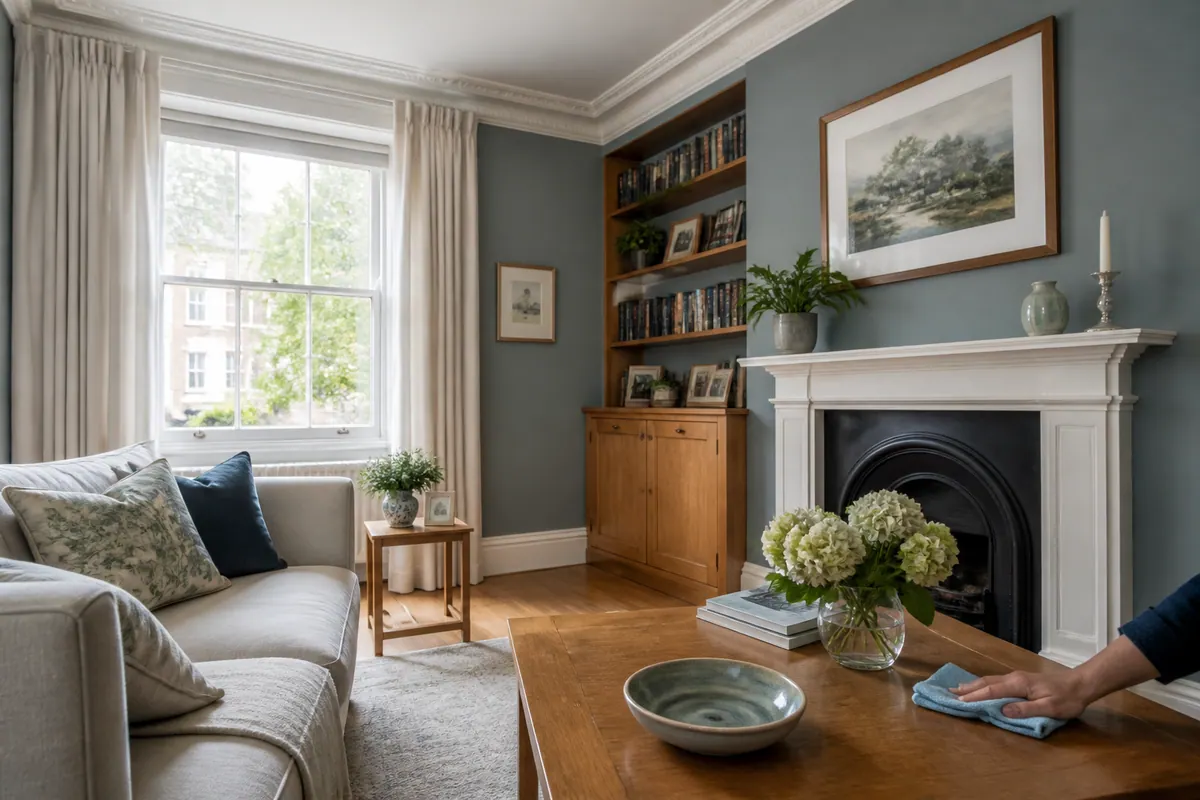
Before booking
A ranked list can expose competing priorities. Use it to decide what needs discussion before the booked work begins.
Practical planning
These are service starting guides. Confirm the included work, supplies and appointment before treating any figure as the final cost.
| Service | Price | Main factors |
|---|---|---|
| Regular domestic cleaning | From £20/hour | Address and access, room coverage, recurring frequency, equipment and minimum visit |
| First / one-off domestic visit | From £90 | Initial condition, included rooms and the priority work agreed for the available time |
| Specialist / intensive scope | Quoted separately | Treatment requirements, difficult access, heavy soil and specialist equipment needs |
Explain the rooms needed for everyday use and their condition. The final quote also needs duration, frequency, minimum booking, supplied products and access or parking details; an evening deadline does not set the cleaning allowance.
Practical planning
Choose the property, interval and first task to frame your enquiry. The options do not calculate a price.
Worth discussing
Keep the rooms used during an ordinary day ahead of decorative details. Agree kitchen surfaces, sanitaryware, reachable dusting and floors as a practical recurring list.
Name any selected skirting, switches or internal glass before the visit. Discuss the actual area and its time requirement rather than assuming the whole home receives every finishing task.
Your home routine
What would make the everyday evening easier after this visit? Explore the included room categories below.
Kitchen
Food-preparation worktops, the sink and splashback are useful core tasks. Name reachable cupboard fronts and external appliance panels in the agreed kitchen scope.
Leave ingredients and personal belongings put away; the oven interior needs a different booking scope.
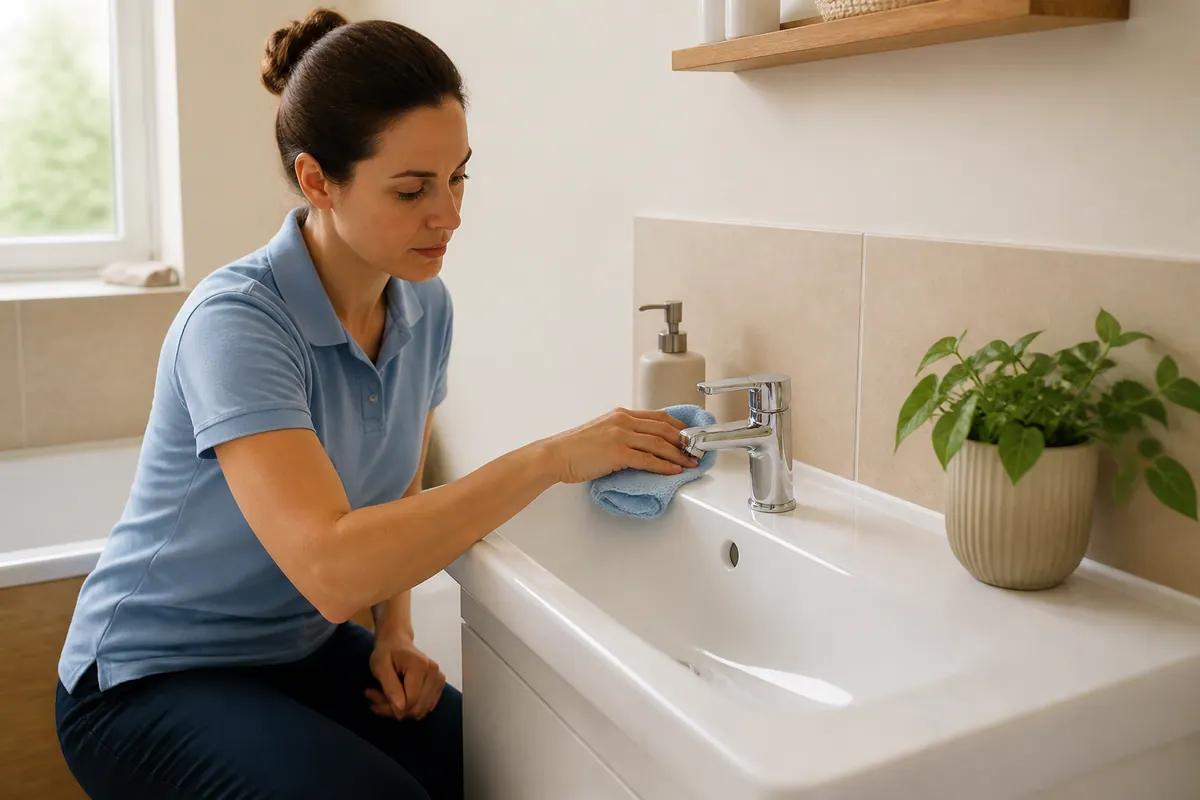
Bathroom
Describe the shower and sanitaryware, then the mirrors, taps and reachable tiles to include. Confirm the scope and surface instructions before arrival.
Loose toiletries should not obscure the areas you expect to be cleaned.
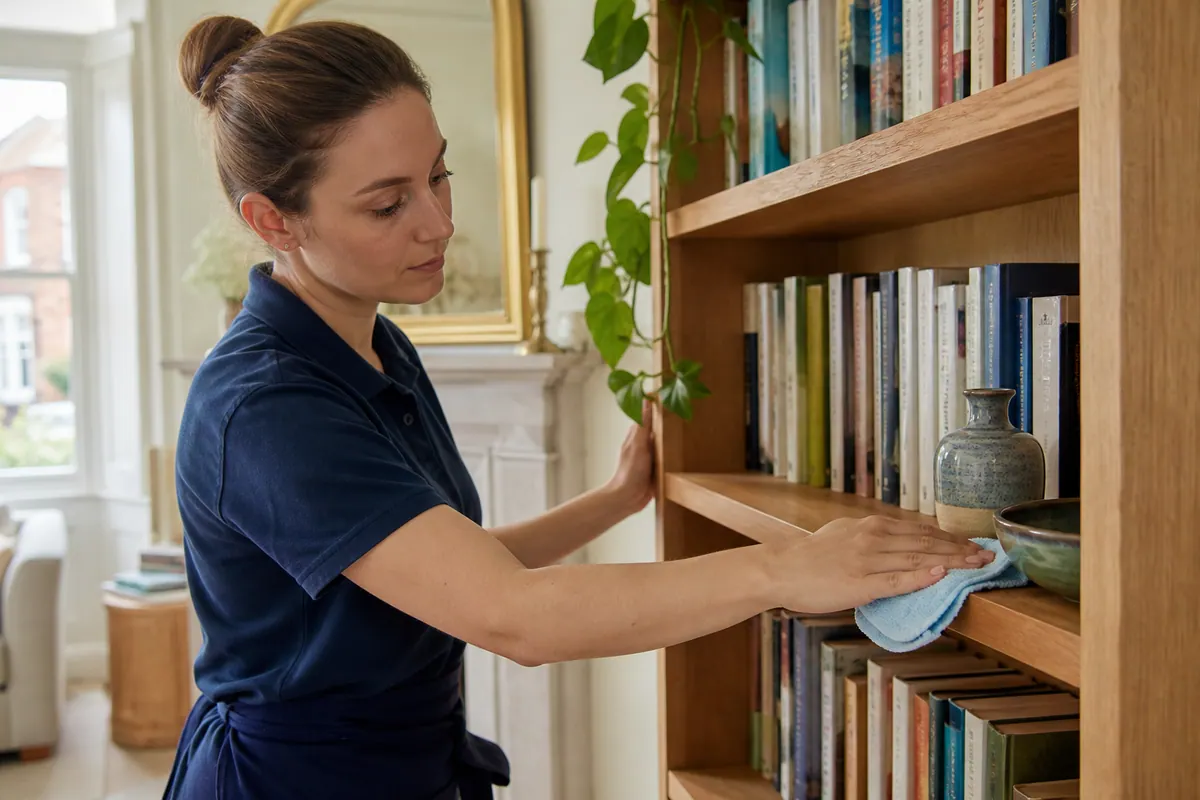
Living areas
Name accessible tables and furniture surfaces before the floor tasks. Vacuuming and suitable floor care apply to the living areas agreed for the appointment.
Heavy furniture and private belongings should not be moved on an assumption.
Bedrooms
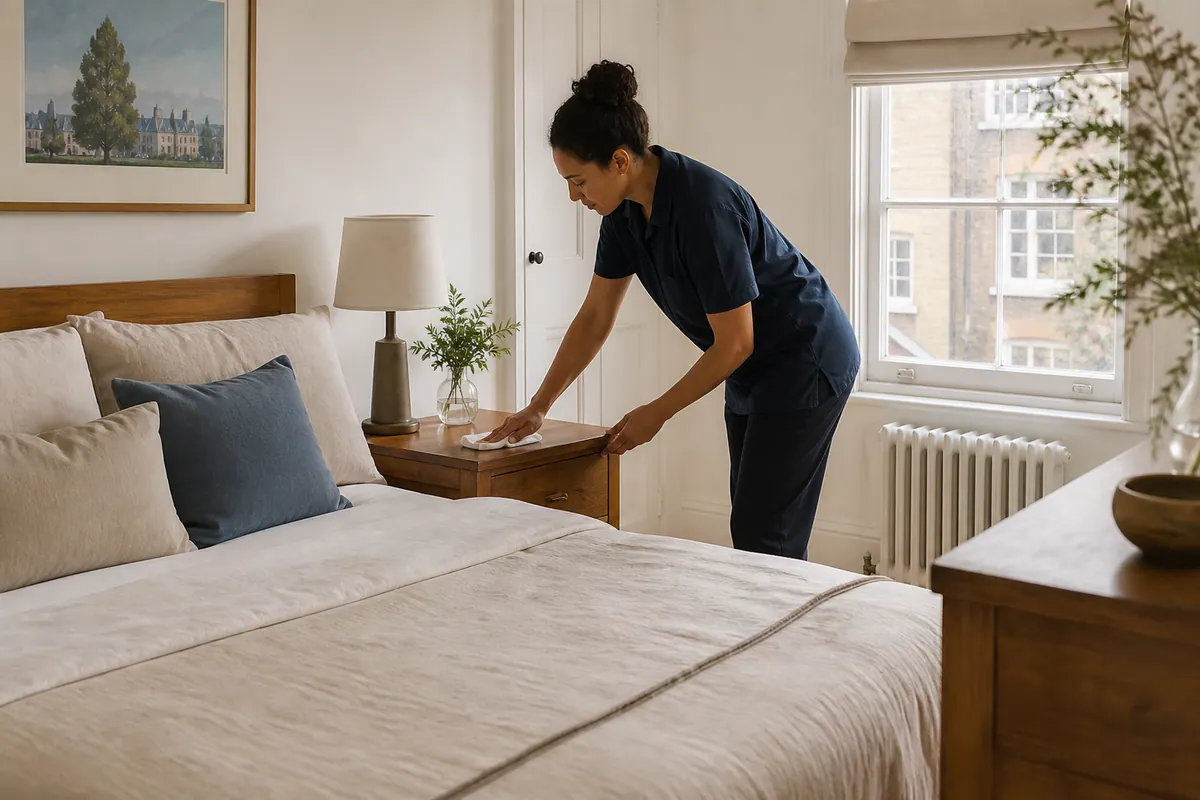
Discuss reachable surfaces, dusting and the available floor. Vacuuming and compatible floor cleaning do not require the cleaner to organise personal belongings.
Keep medicines and personal papers in a place you have chosen.
A clear scope
The useful interval follows use and condition. Compare what happens during one week with what accumulates over two.
| Planning point | Weekly | Fortnightly |
|---|---|---|
| Best suited for | Frequently used rooms needing a shorter upkeep interval | A household able to maintain the basics between visits |
| Core focus | Return to the agreed everyday surfaces | Prioritise the work built up between appointments |
| Priority planning | A repeatable household brief | Rank the tasks against available time |
| Visit scope | Time and scope confirmed | Duration and tasks agreed |
Starting work and repeat work are different lists. Tell the team whether the first appointment needs to catch up before a recurring routine can begin.
After the starting work, decide what genuinely repeats. Additions should be discussed rather than silently carried into the existing appointment.
Before booking
Everyday living areas may contain different materials close together. Give the cleaner the existing care information so room convenience does not override finish compatibility.
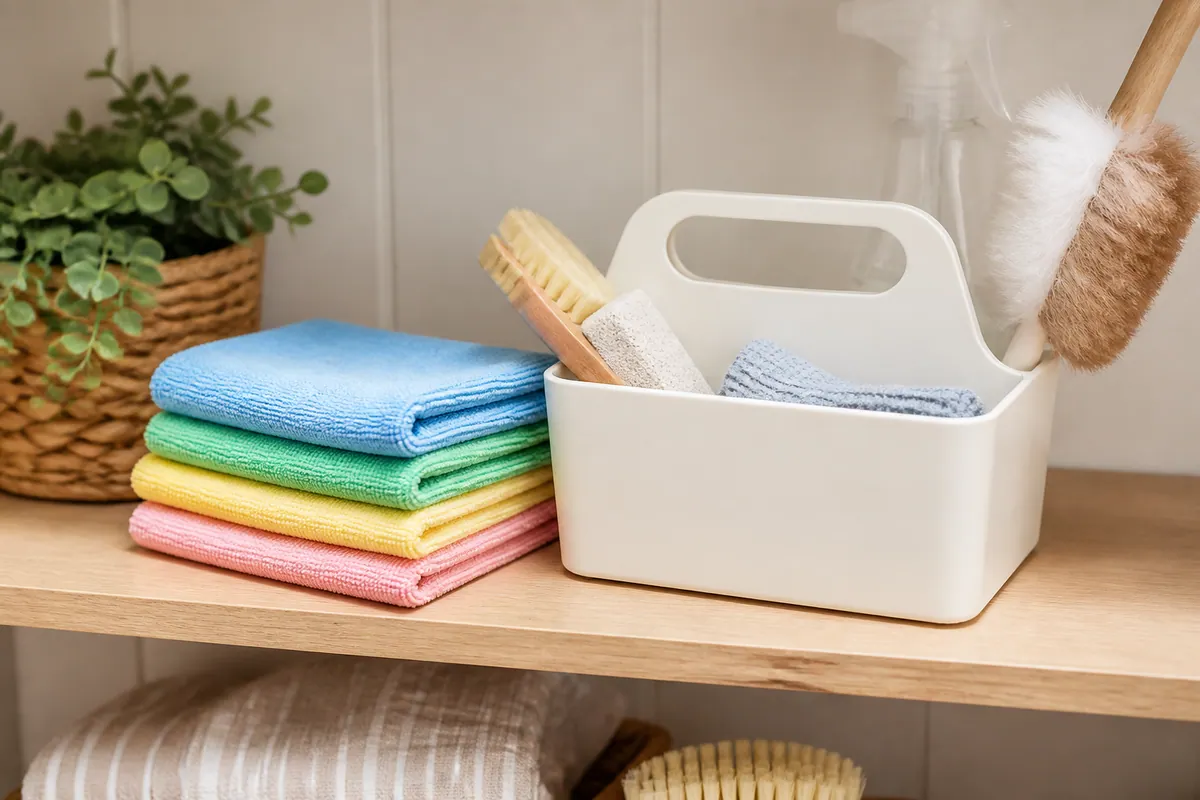
Identify any natural-stone surface included in the room work. Explain the guidance provided for its care before products are agreed.
Describe the timber finish and known wear in the available floor or furniture. Suitable moisture and method depend on that condition.
A lacquered side table needs its coating recognised even when adjacent furniture looks similar. Flag sensitivity or damage before wiping is planned.
Stainless-steel fittings or panels need appropriate surface care. Confirm the exteriors to include rather than assuming every appliance task.
Painted surfaces should be described with any damaged or delicate areas noted. Ordinary maintenance is not a promise to restore the coating.
For this visit
The regular brief has boundaries. Specialist treatment, restoration, heavy lifting and high access are not automatic additions.
Domestic vacuuming and professional extraction solve different tasks. Confirm the carpet service independently if extraction is required.
Separate the external kitchen wipe from detailed oven treatment. The internal appliance service is not a routine assumption.
A normal domestic brief is not an assessment of mould. Discuss that concern through the separate treatment service.
The exterior side of glazing is not a routine room task. Discuss window scope and practical access independently.
A home after building works may require a different cleaning process. Raise construction residue as a separate service.
A concentrated reset is not automatically part of a regular visit. Ask whether a separate one-off scope is appropriate.
Practical planning
Give the household context: rooms, current upkeep and who may be home during the visit.
A selected switch, skirting section or internal-glass task belongs in the agreed scope. More optional work may require a longer appointment.
Ask which items are included and which the household should have ready. Surface information helps make that agreement useful.
Room maintenance follows the agreed order with material-compatible care.
Review the maintenance list against everyday use. Keep occasional details separate so they do not displace the rooms the booking was intended to maintain.
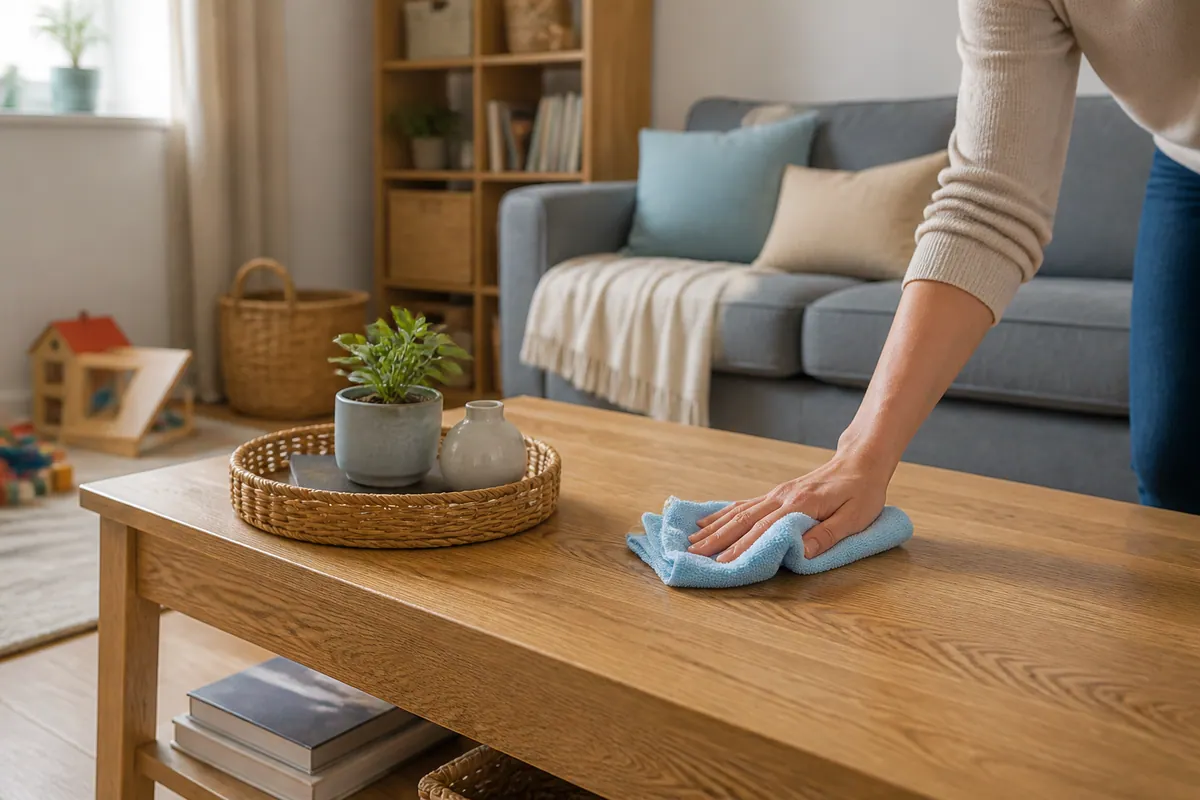
Rooms prepared for the brief.
Surface-aware work within scope.
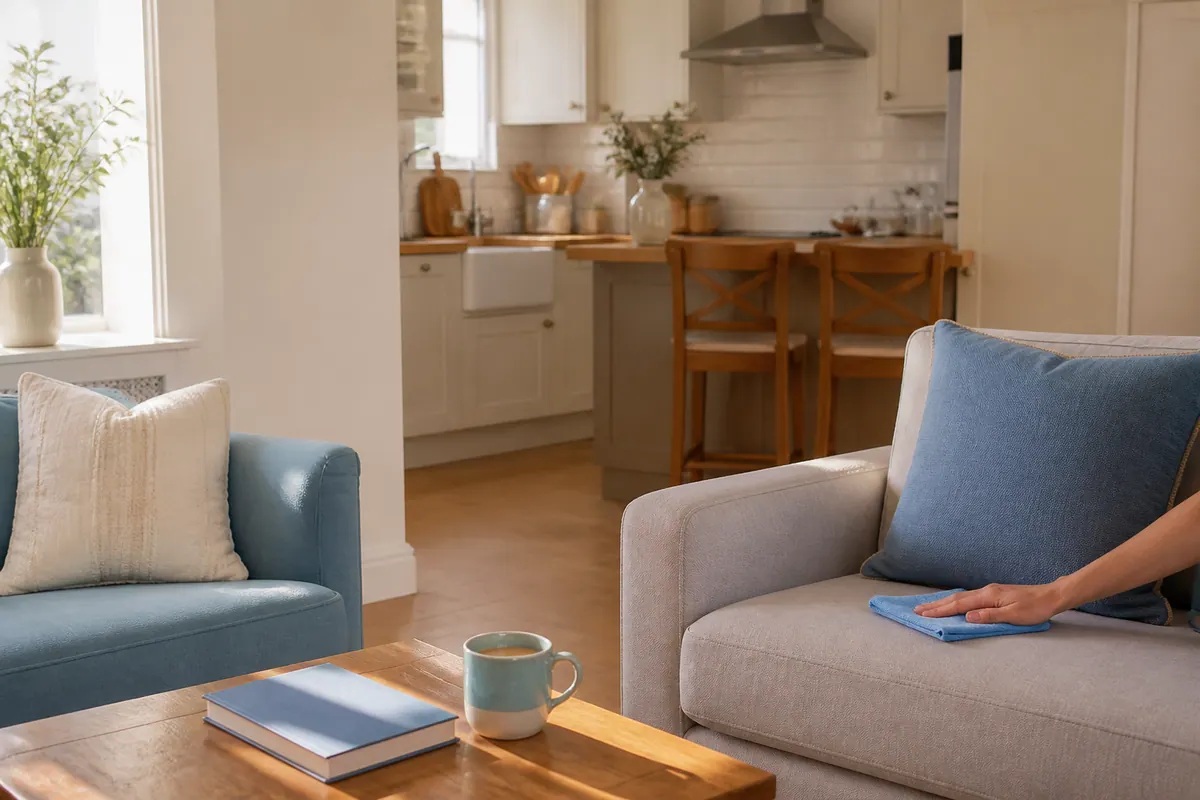
An upkeep pattern to revisit.
Illustrative household scenes; no customer job is depicted.
Your home routine
A key plan includes both arrival and departure. Confirm it directly so access does not depend on an assumption.
Explain any managed entrance and the permission needed to pass it. The household should establish that arrangement before arrival.
Explain any arrival or departure steps involving the alarm. The cleaner should not be expected to guess the procedure.
Name any room reserved for the animal and prepare another starting space. The visit still follows its confirmed cleaning scope.
Name rooms needed for meetings and prepare other spaces first. Changed call times should be communicated promptly.
Include relevant parking information with the address. The team can then discuss the practical access arrangement.
The room list should identify what is out of scope as clearly as what is included. State private-space boundaries beforehand.
An agreed entry plan and prepared room list support the visit. Ask about anything outside normal maintenance rather than assuming it is included.
The household brief
The brief should describe practical upkeep without promising an unlimited whole-home transformation. Tell the team when the household’s return time affects room availability.
Make exclusions explicit, including private rooms and objects left untouched. Do not rely solely on a closed door. A busy family routine can leave little clear space. Prepare the agreed kitchen and bathroom surfaces so the appointment remains focused on cleaning.
Room coverage and condition establish part of the cost conversation. Ask about the booked time, frequency, supplies, parking and minimum visit, plus anything outside domestic upkeep.
An hourly starting figure does not reserve a set amount of work. Regular visits start from £20/hour; confirm the usable appointment and its total.
For an initial catch-up, identify the rooms that would make daily use easier. The first/one-off domestic guide starts at £90, with time agreed for the current condition rather than an unspecified whole-home result.
Compare the normal use of kitchen, bathroom and living space over one and two weeks. Confirm the schedule after that discussion; a preferred return-home time does not determine the interval.
An occasional evening event may change the order of rooms. If it adds work as well, discuss the size of that change rather than expecting the same appointment to cover every request.
Supplies are a booking detail, not a universal assumption. Explain existing product guidance before confirming what will be used.
A vacuuming request is not an extraction booking. Professional carpet treatment needs its own scope, equipment and time. Separate the external kitchen wipe from detailed oven treatment. The internal appliance service is not a routine assumption.
Send an enquiry with the address, room coverage and preferred interval. Wait for direct confirmation rather than relying on the planner.
Worth discussing
For Greenwich, provide the postcode and included rooms so the team can confirm the actual address and schedule. A map is not evidence of a reserved slot.
The main service is explained under Domestic Cleaning, or contact Alesta.
Area reference
Check the area reference before discussing the address.
Open map in a new tabA practical Greenwich enquiry
Keep the daily living spaces at the centre of the visit. Contact the team to discuss a suitable appointment for the home.
