
Agreed everyday work
- The accessible sink and kitchen surfaces
- Included sanitaryware and bathroom tasks
- Dusting where furniture is ready
- Vacuuming the planned room route
- Suitable cleaning for each floor
King’s Cross / Start with an entrance the cleaner can use
Leave a clear path to the rooms that need care.
Bikes, deliveries and shoes can narrow the route before cleaning has begun. Prepare the entrance, agree where equipment can be placed, and then prioritise the kitchen, bathrooms and floors inside your home.
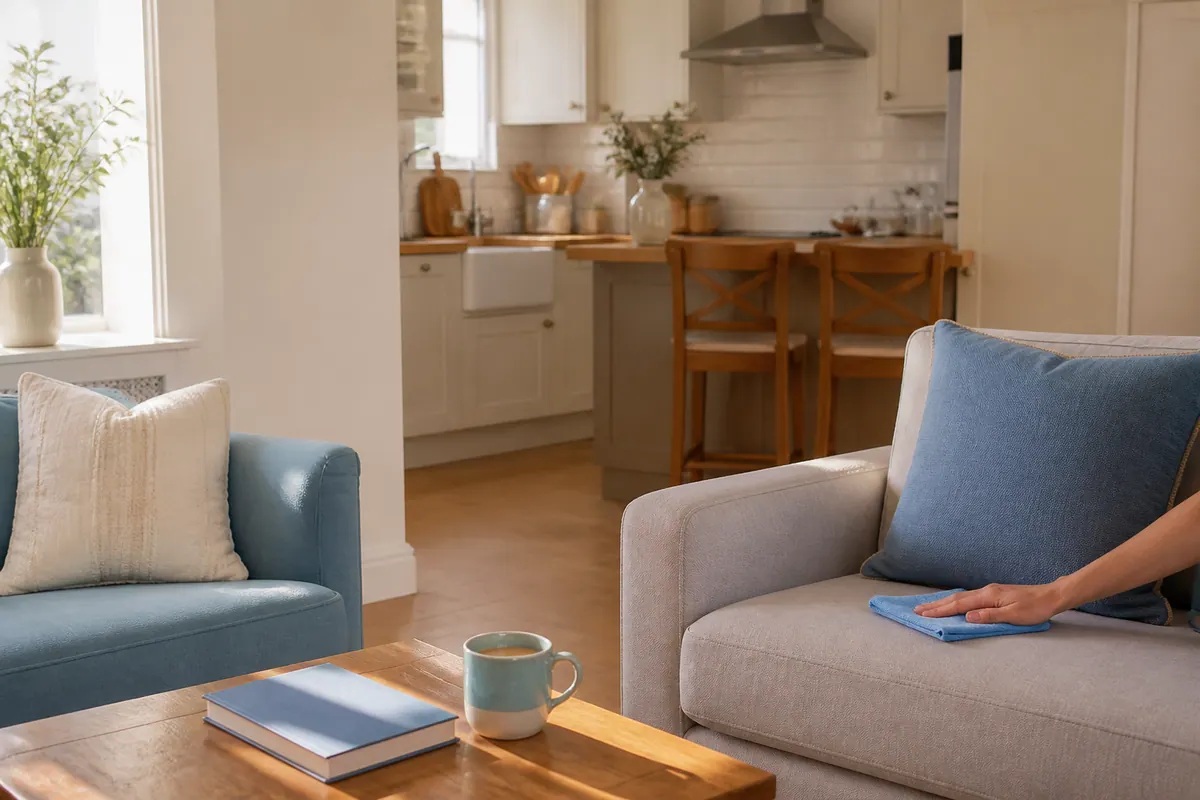
Kitchen · Bathroom
Living areas · Bedrooms
Start with the home you use
Select a property type, preferred interval and priority to see a simple outline. Treat it as a discussion aid rather than a quotation or confirmed appointment.
King’s Cross / a household scenario
Leave a clear path to the rooms that need care.
The entrance is part of the practical brief even when it is not the main cleaning priority. A blocked route can prevent equipment reaching rooms that are otherwise ready.
For your King’s Cross address, explain the handover at the building and at your door. These can be separate arrangements; neither should depend on an unconfirmed assumption.
Household storage remains yours to organise. Move bicycles and parcels yourself rather than adding heavy lifting or rearrangement to an ordinary domestic request.
Once access works, keep a modest recurring list. The first few minutes should not be spent deciding which room matters most or which belongings can be touched.
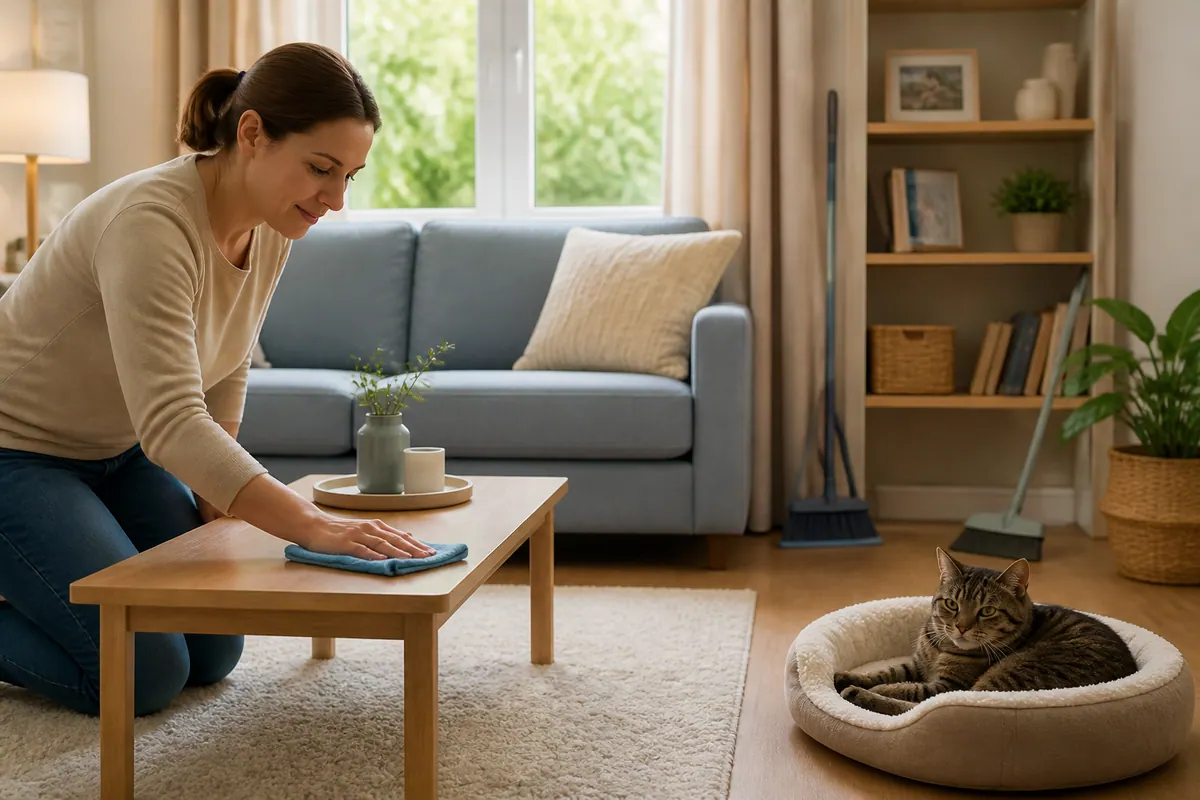
A list with useful boundaries
The point of regular upkeep is lost if optional work repeatedly displaces the kitchen or sanitaryware. Agree the dependable room tasks first, then consider a limited detail list.
An extra ledge, switch or section of skirting still requires time. Raise additions early so the team can explain what fits and what needs another arrangement.
A realistic indoor brief
Room selection is only the beginning. Discuss what can be reached, what needs a specialist and what the visit is intended to maintain before the room list is finalised.
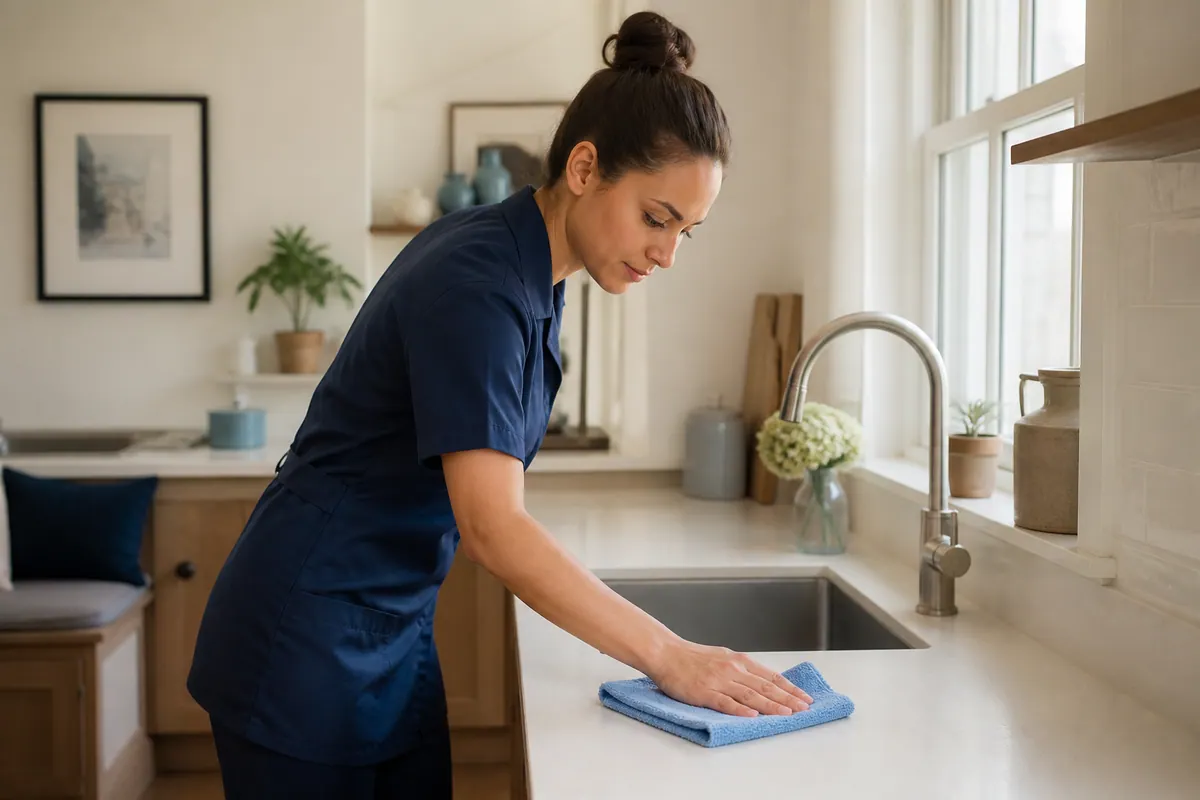
Kitchen
For the kitchen, discuss the sink, reachable worktops and splashback, then any cupboard fronts or appliance exteriors in scope. Detailed interior work is a different request.
Remove food and small personal items from the cleaning area; do not assume oven internals are covered.
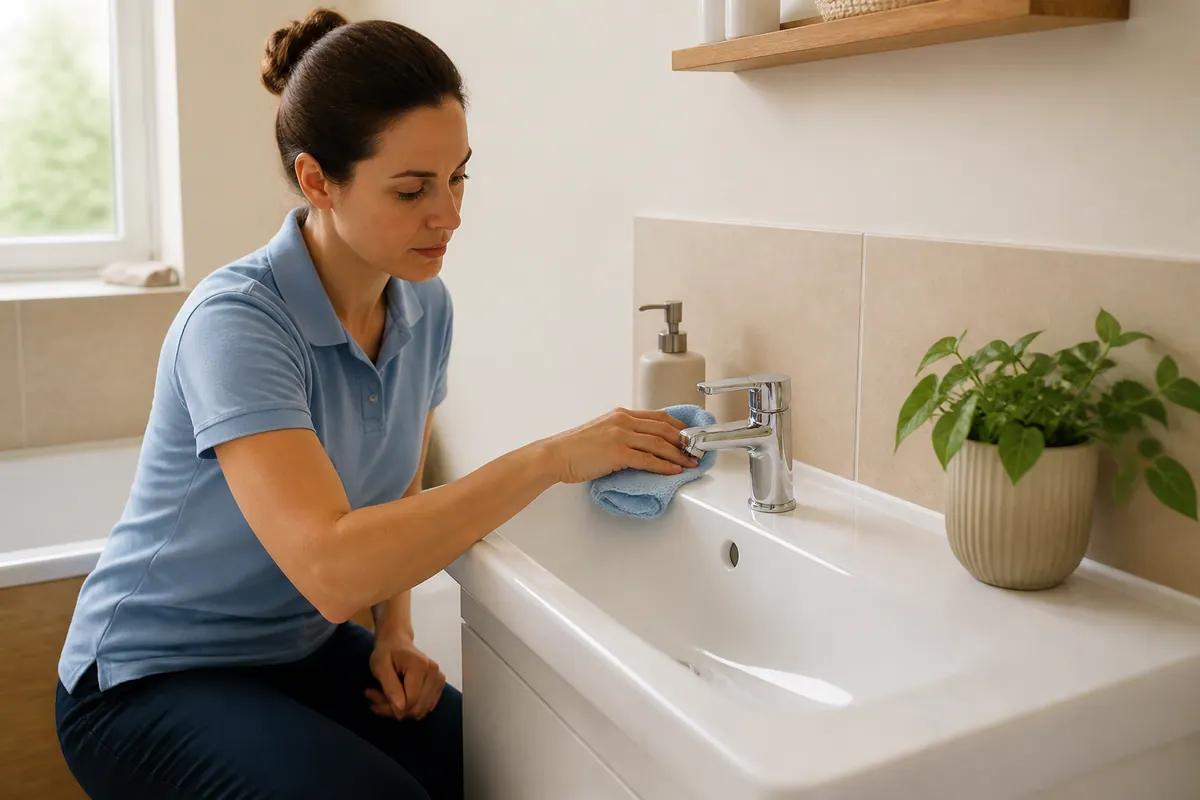
Bathroom
The bathroom list can cover sanitaryware, taps, shower areas, mirrors and reachable tiles. Products need to match those surfaces rather than being chosen for the room name alone.
Point out stone and any damaged seals or fittings before the work starts.
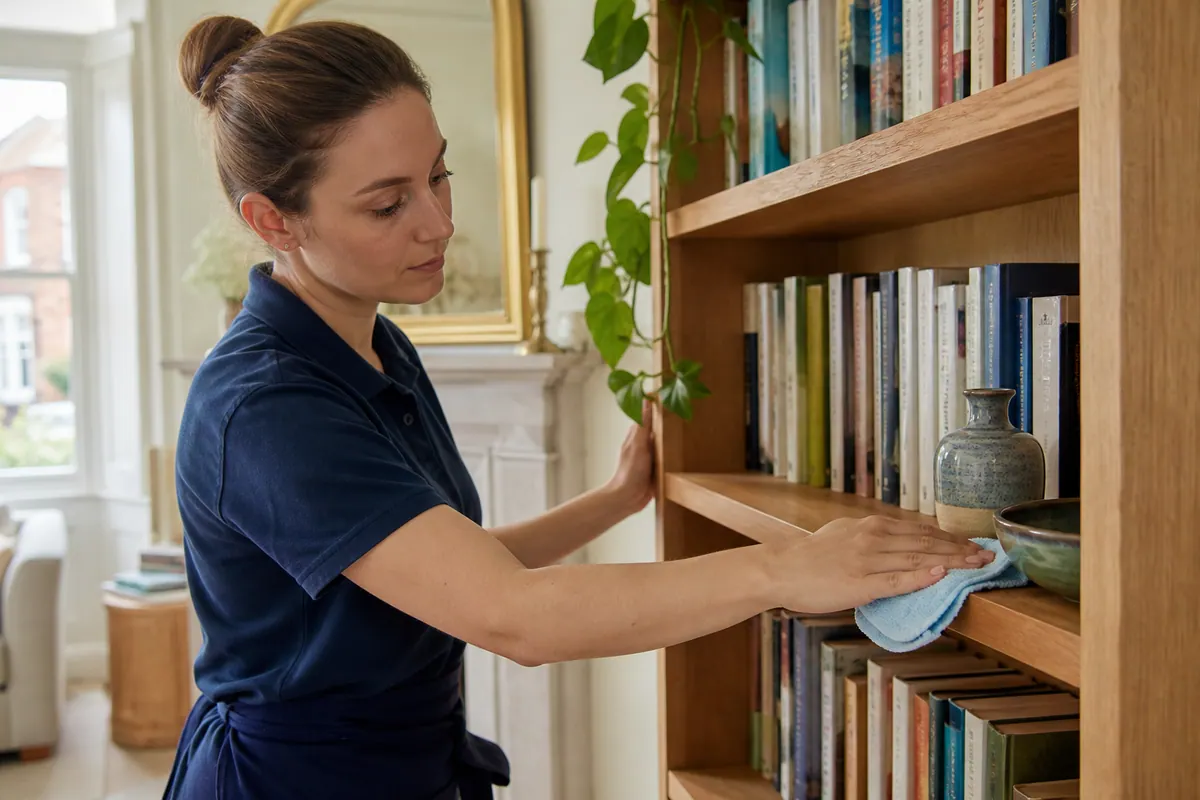
Living areas
Available furniture can be dusted, followed by the vacuuming and floor care agreed for the living space. The route should not depend on lifting heavy furnishings.
Remove delicate ornaments and work documents yourself, or identify the area as excluded.
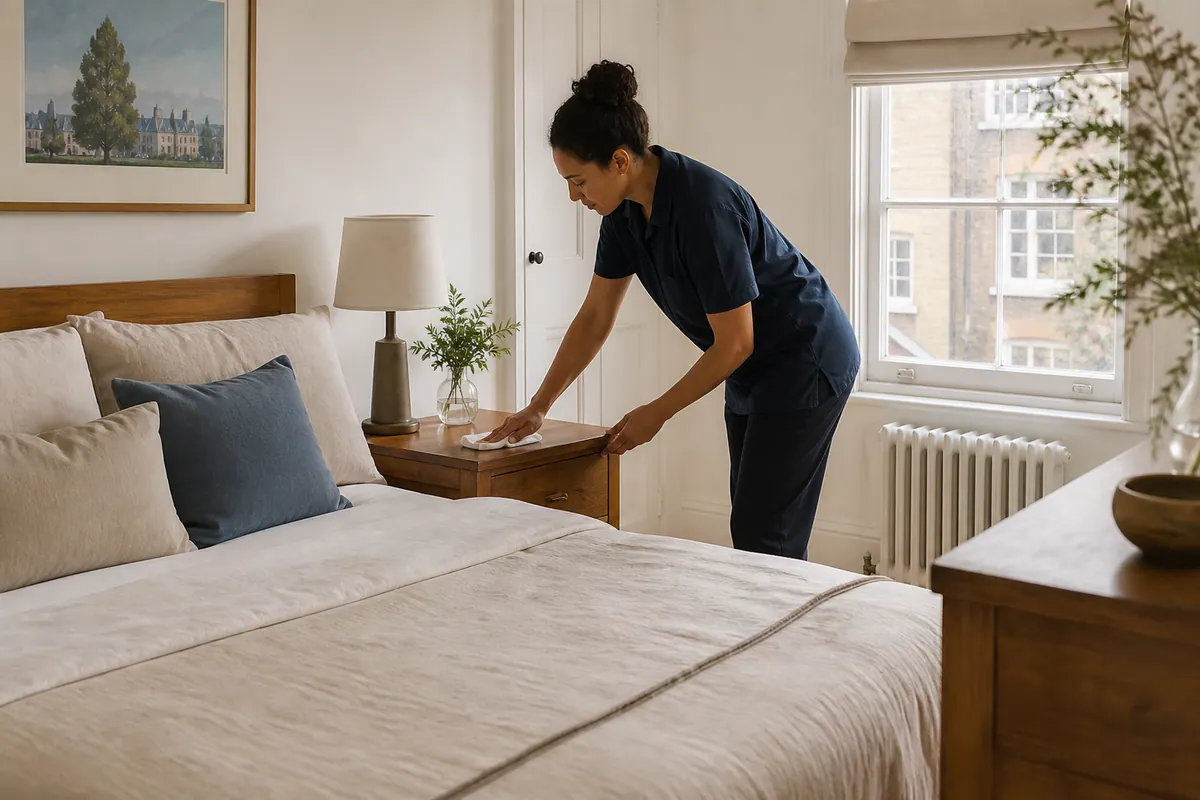
Bedrooms
Accessible surfaces, dusting and floors can be included for the bedrooms you name. A room kept out of use need not automatically enter every recurring visit.
Secure medication and other private belongings, and confirm any door that should remain closed.
A schedule with a reason
Frequency is a planning choice, not a guarantee about how much can fit into a visit. Consider use and condition alongside the rooms and time being discussed.
| Planning point | Weekly | Fortnightly |
|---|---|---|
| Best suited for | Used spaces needing more frequent maintenance consideration | Spaces needing a periodic rather than weekly discussion |
| Core focus | A shorter cycle for the core room work | A longer cycle with different accumulation to consider |
| Priority planning | Retain a clear, repeatable list | Select carefully from the work needing attention |
| Visit scope | No assumed package or duration | No assumed package or duration |
At the beginning, there may be tasks that do not recur in the same way. Identify them for the first appointment and ask how they affect the time, rather than treating initial work as ordinary upkeep.
For subsequent visits, review what actually needs repeating. Keep new or additional requests explicit so the core routine remains realistic for the arrangement confirmed.
The household behind the rooms
These situations help explain access and priorities; they are not packages with a fixed room count or duration.
If work keeps you out, settle entry and identify the rooms used between working days. Do not assume an empty home means every room needs equal attention.
For family life, keep the used kitchen, bathrooms and floors prominent. Preparing small personal items makes the intended surfaces reachable.
Arrange where an animal will be during cleaning and which doors need to remain shut. The room sequence should reflect that plan.
Name the workspace and periods that cannot be interrupted. Another ready room may provide a starting point if the arrangement is agreed.
An occupied rental needs a maintenance brief, not an assumed end-of-tenancy service. Confirm who is giving the final instructions.
Where someone manages the booking, use a clear contact for changes and keys. The cleaner should receive one current set of priorities.
A finish-aware routine
A suitable approach depends on the actual material, not simply whether it sits in a bathroom or kitchen. Share guidance and point out wear before the cleaner begins.
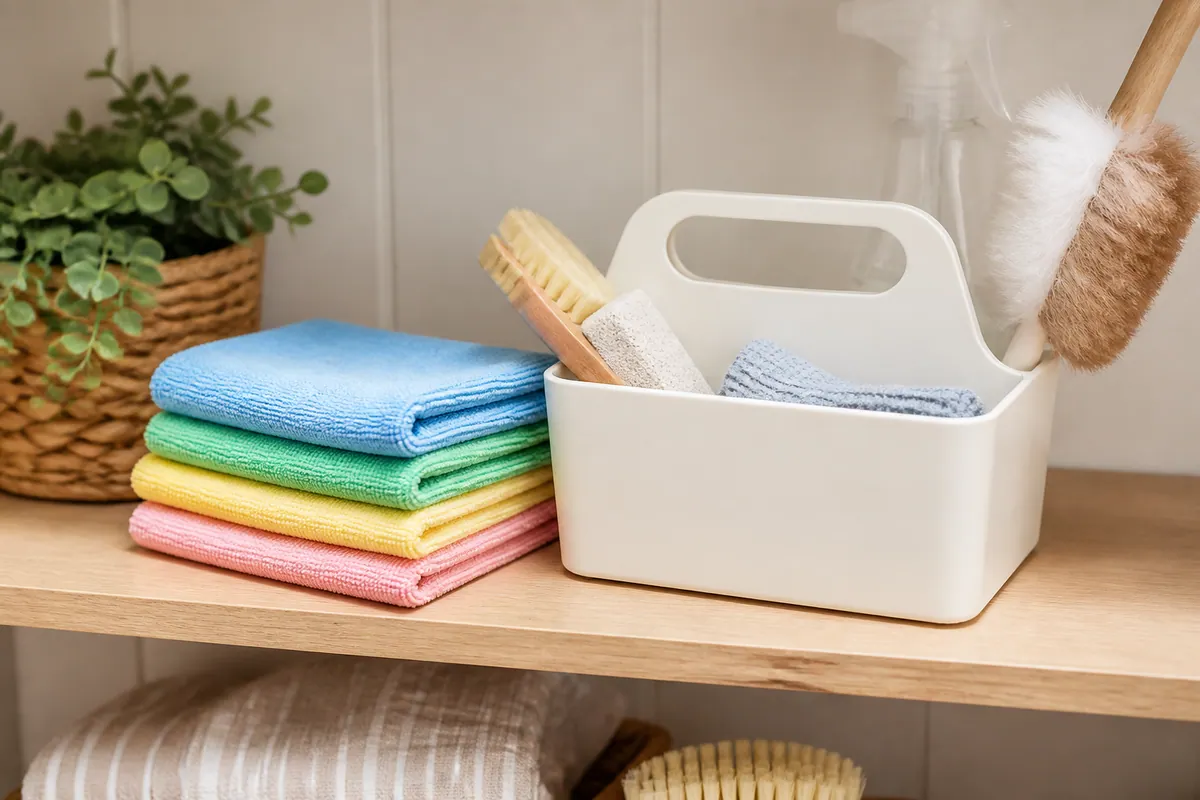
Identify natural stone and any known restrictions on its care.
Timber flooring or furniture needs cleaning compatible with its particular finish.
Flag coated pieces that require a cautious material-specific approach.
Steel exterior care should not be confused with servicing the inside of an appliance.
Explain areas with damaged paint so cleaning is not mistaken for repair.
Keep the service boundaries useful
Domestic care does not include everything found inside a home. Explain specialist tasks, restoration, high access or heavy lifting so the right scope can be considered.
A carpet’s routine vacuuming and its professional extraction are separate cleaning tasks.
Detailed oven interiors are not included merely because the kitchen is a priority.
Mould treatment needs its own assessment and should not be assumed within a wipe-down.
Exterior windows require arrangements distinct from accessible indoor glass.
Construction residue belongs in a post-building discussion with its own requirements.
A substantial reset can be considered as a separate one-off request rather than an unlimited regular clean.
The short booking guide
Set the scope before the total
The regular and initial prices are starting points rather than a guarantee for every home. The booking conversation confirms included supplies, minimum visit and the room priorities.
| Service | Price | Main factors |
|---|---|---|
| Regular domestic cleaning | From £20/hour | Minimum time, home size, frequency and supplies plus postcode/access |
| First / one-off domestic visit | From £90 | Current state and included rooms, with initial task priority and time |
| Specialist / intensive scope | Quoted separately | Specialist surfaces or heavy soil, equipment and separate access planning |
Explain the present condition and size of the property, preferred frequency and access arrangements. Products, parking and added services may affect the final figure; ask about time rather than assuming it from the guide.
Make the priority visible
Move an item to show what matters most for the proposed clean. The demonstration is not linked to a reservation, and the amount of work still needs to fit the time agreed.
The steps behind recurring care
Start with the rooms, their condition and practical household circumstances such as pets or an active office.
Identify the preferred rhythm and tasks that make the visit useful; confirm availability with the team.
Agree what supplies are needed and how the cleaner will arrive, enter and leave.
Work stays focused on the included domestic tasks, with methods appropriate to the material.
Review completed priorities and separate anything requiring repair, specialist work or additional time.
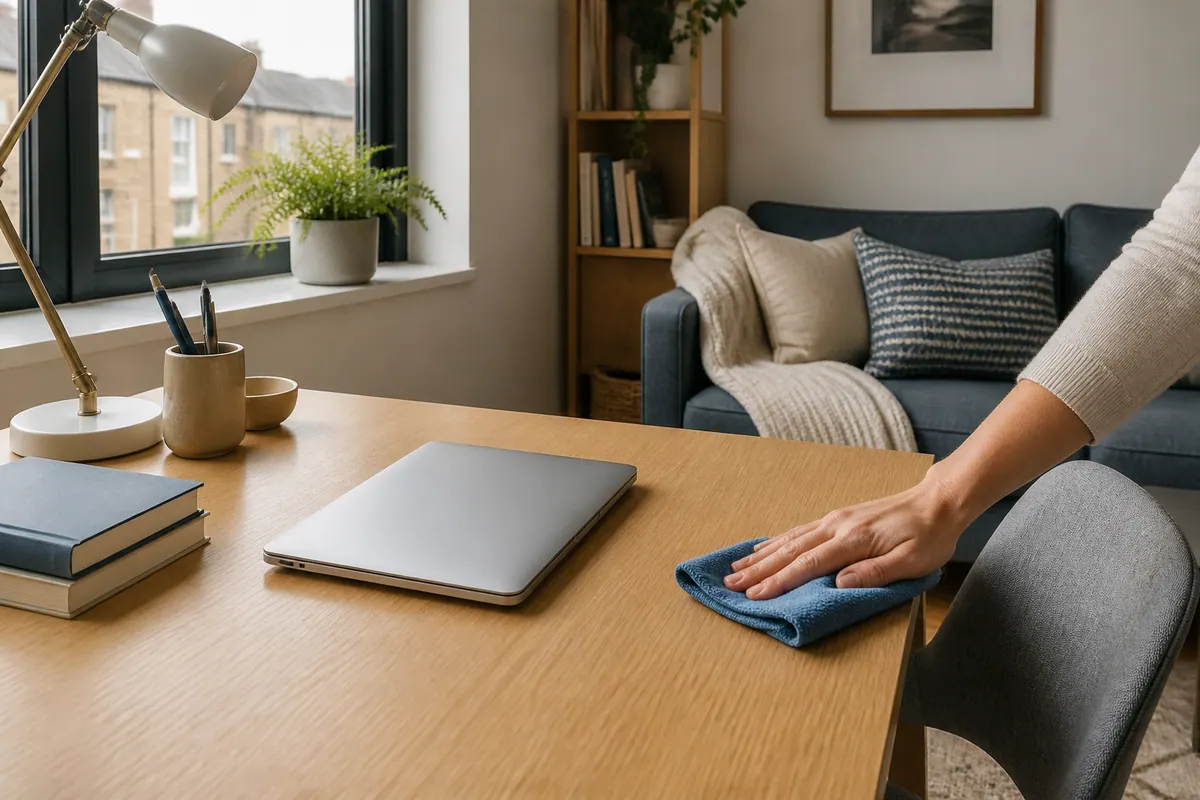
A clear starting instruction.
Care through the selected room route.
Useful information for the next booking.
Visual examples of home care only, not a before-and-after customer case study.
Before arrival
Agree who hands over the key and how it comes back; share the details only with the appropriate contact.
A building reception is not an automatic entry solution. Confirm the process and permissions involved.
Provide necessary alarm instructions privately for the whole visit, including departure.
Explain pet boundaries and where the animal will remain while rooms are cleaned.
Identify quiet working periods and the room that can be considered first.
Pass on any parking or loading restriction that could affect the proposed arrangement.
State which rooms and belongings are not included so the boundary is unambiguous.
Good preparation makes the agreed cleaning accessible. Products, room priorities and entry should be settled together, with separate work identified rather than added by assumption.
The booking conversation
Leave a practical route from the door to the included rooms, with parcels and personal belongings put away. Explain any building entry steps separately so the cleaner is not relying on access being improvised on arrival.
Do not include that movement by assumption. Prepare the intended floor area yourself and flag any obstacle that remains. Ordinary domestic scope should not quietly acquire heavy lifting or storage rearrangement because the route is blocked.
Regular care is advertised from £20/hour. Ask about the minimum booking, included supplies, interval and scope for your property, including access and postcode considerations, before treating that guide as a final quote.
Explain what happens in the rooms during the gap between visits. The useful interval depends on occupation and condition as well as the time available, with scheduling confirmed for the address.
Explain its condition before the visit if possible. The team can discuss how it affects the agreed tasks and duration; the request does not automatically enlarge the booking or remove the core priorities.
It may, particularly where regular upkeep has lapsed. First or one-off domestic work starts from £90; the actual room list, condition and priorities determine what is agreed for that appointment.
Share known finishes, existing damage and any care instructions you already hold. Product and equipment arrangements should be confirmed so compatible care is planned rather than assumed.
Name the occupied room and any period that needs quiet. Agree a practical starting area or release point so the cleaner does not have to negotiate access room by room on arrival.
No. Detailed oven work, extraction and other specialist processes remain separate, as do high access, restoration or heavy lifting. The agreed room list defines accessible domestic maintenance, not unlimited work.
No; it is a page-based planning aid, not a booking confirmation. Share the relevant room choices, postcode and access arrangements directly when asking Alesta about availability.
King’s Cross / enquiry area
Give Alesta the King’s Cross address details and the routine you want to explore. Availability and the final room work need confirmation for your property, with no slot reserved by the map below.
For the wider service scope, see Domestic Cleaning, or ask the team about your address.
Address planning
View the area while preparing the address and arrival details.
Open map in a new tabKing’s Cross / the next conversation
Tell us about the rooms in your King’s Cross home, their condition and the routine you want to arrange. Plan a clear arrival route: share your preferred frequency and access details directly with the team.
