
The dependable list
- Everyday kitchen surfaces within reach
- Confirmed bathroom maintenance
- Dust on prepared furniture surfaces
- Vacuuming through named rooms
- Appropriate care of included floors
Angel / A compact home with priorities that fit
Keep the everyday work area clear and the extras selective.
In a small apartment, a few accessible surfaces can matter more than an oversized checklist. Prepare the kitchen work area, identify the detail that can wait, and agree a focused domestic cleaning routine.
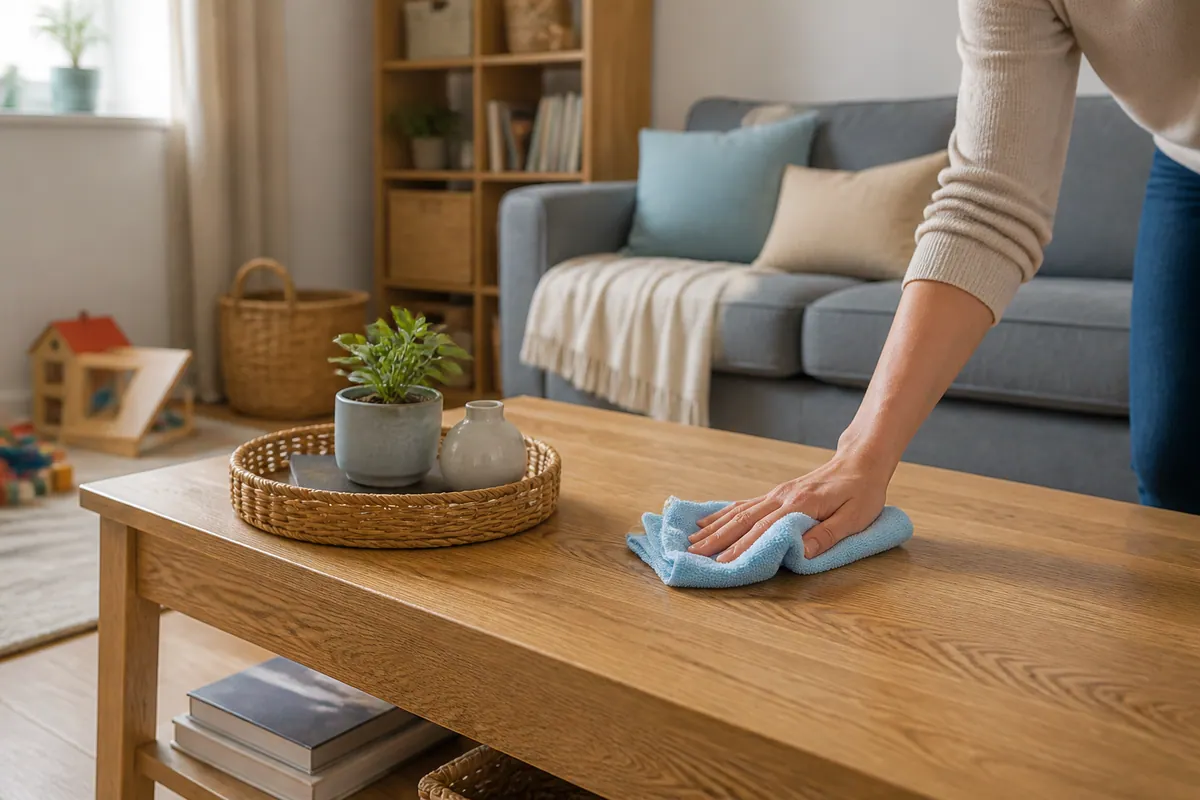
Kitchen · Bathroom
Living areas · Bedrooms
A planning aid for ordinary upkeep
Try the options to organise property, interval and priority information. The resulting brief is a starting point for contact, not an automatic booking or price calculation.
Angel / a household scenario
Keep the everyday work area clear and the extras selective.
A compact layout still needs boundaries. The objects covering a surface are not automatically part of the cleaning task, and closed storage does not become included because space is limited.
For Angel, describe what will be ready when the cleaner arrives. A short, concrete room list gives a better starting point than asking for everything without considering access.
Keep bathroom upkeep and used floors visible alongside the kitchen. A focused brief is not about ignoring the household essentials; it is about separating them from optional work.
Choose a weekly or fortnightly discussion based on actual use. The first visit may need a different allocation of time before the regular maintenance list settles.
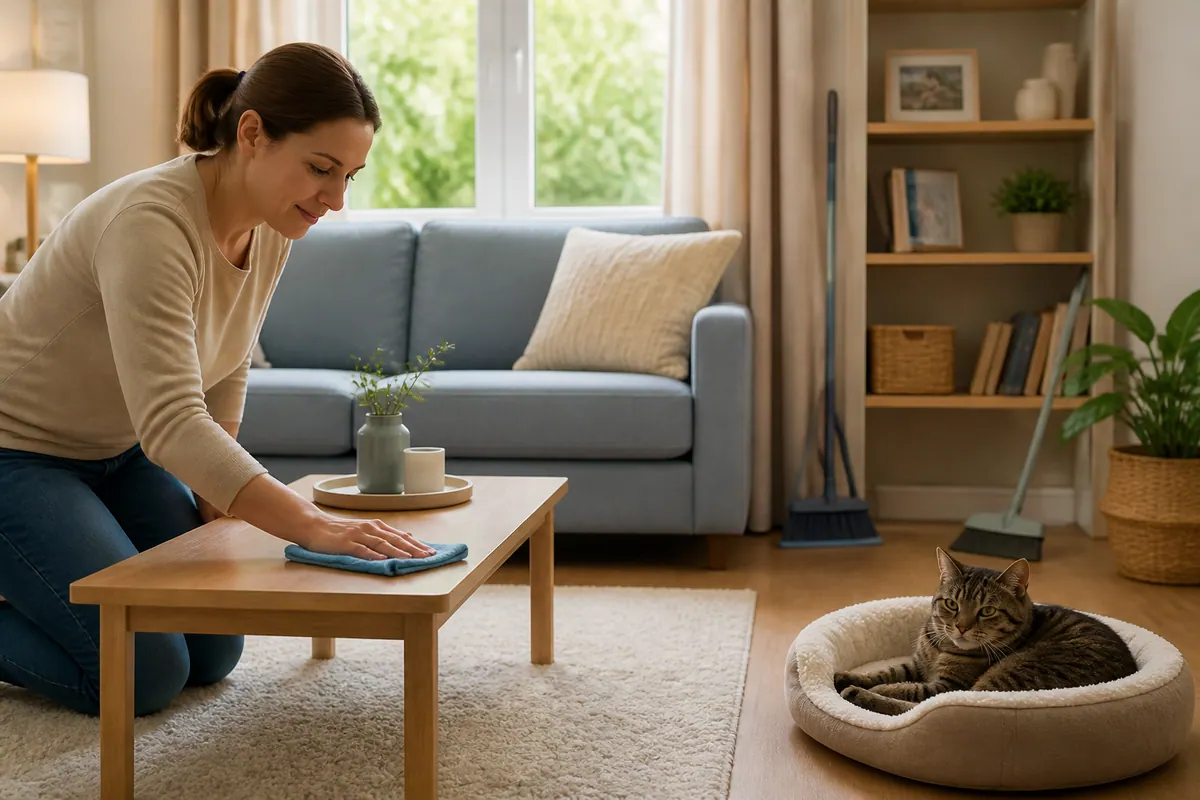
What returns, what rotates
Start with the household surfaces and floors that need repeated care. Occasional detail work is a separate decision, even when it sits in the same room as a recurring task.
Name the detail and its location when discussing the visit. That makes its scope clearer than adding a general instruction to be thorough everywhere.
A realistic indoor brief
Room selection is only the beginning. Discuss what can be reached, what needs a specialist and what the visit is intended to maintain before the room list is finalised.
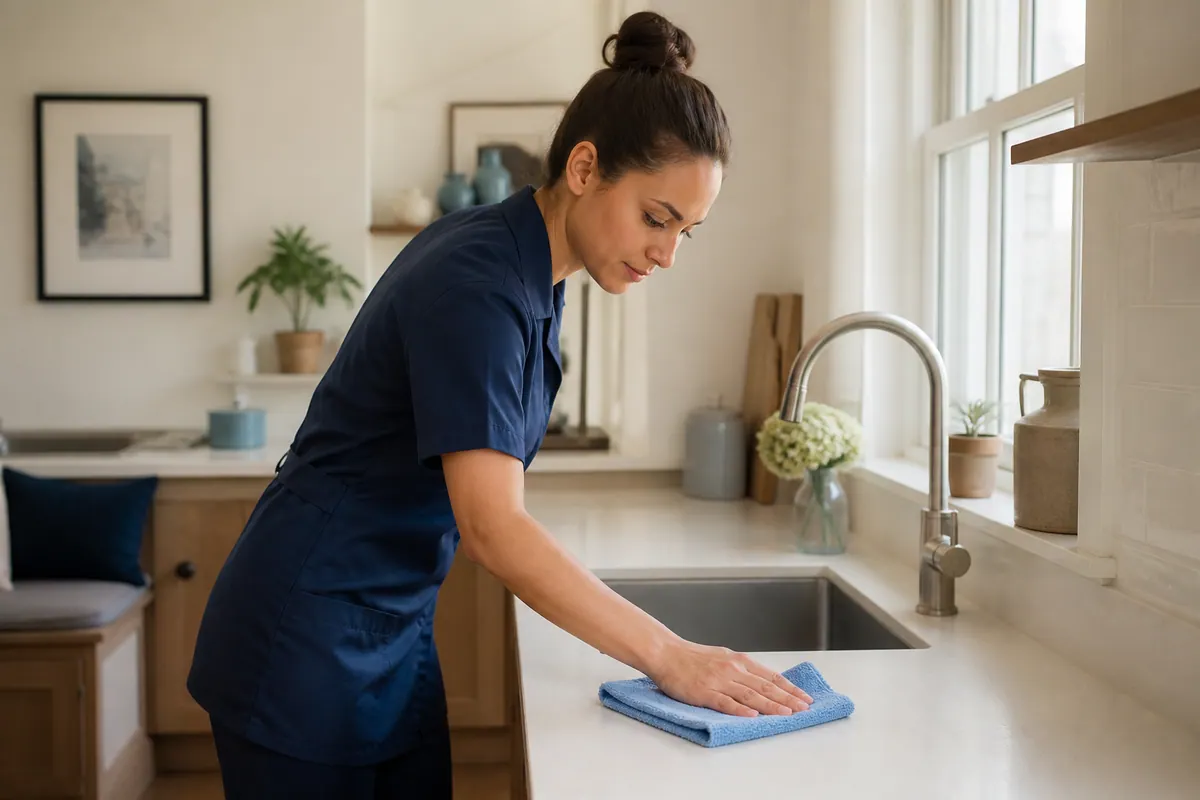
Kitchen
Worktops and sinks lead the accessible kitchen brief, with splashbacks, cupboard fronts and appliance exteriors included where agreed. The request is about working surfaces, not every hidden interior.
Clear food and personal belongings first. An internal oven service needs separate agreement.
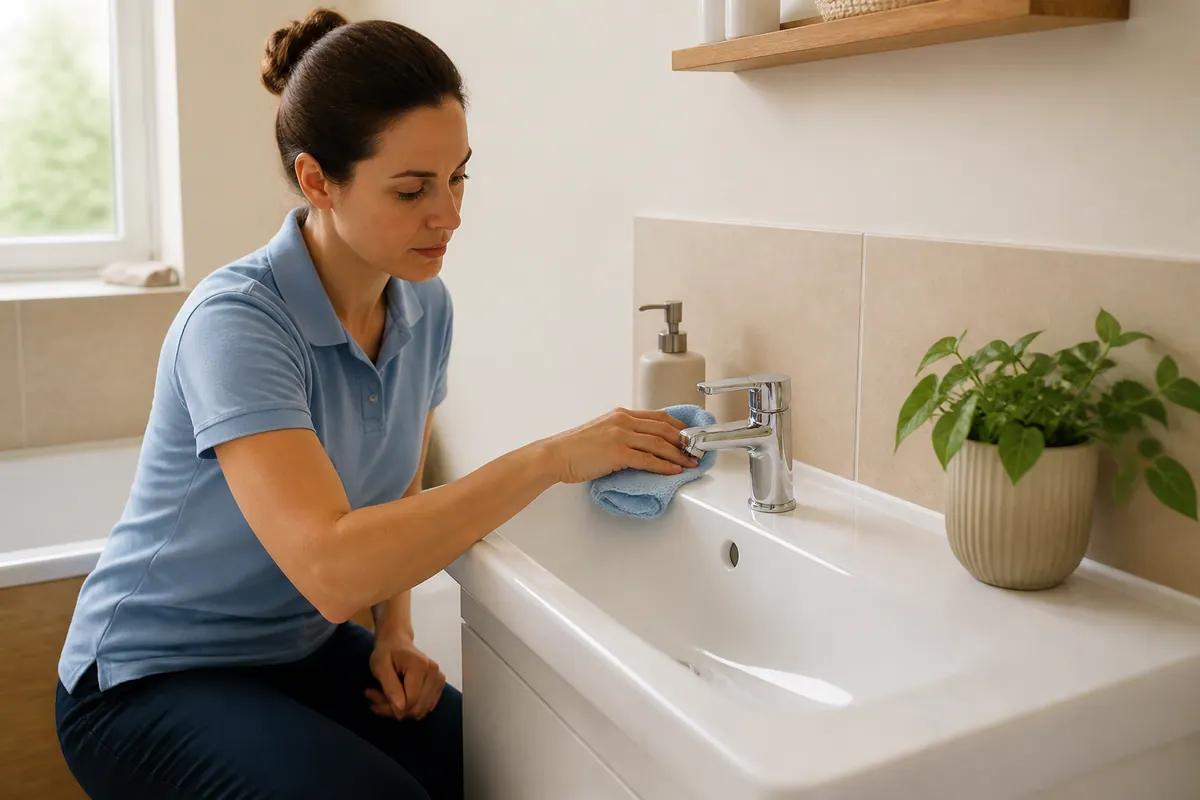
Bathroom
Bathroom surfaces may include the sanitaryware, taps, mirrors, shower and accessible tiles. Their material and existing condition guide the suitable cleaning approach.
Show sensitive finishes and any failing seals or damaged fittings before work begins.
Living areas
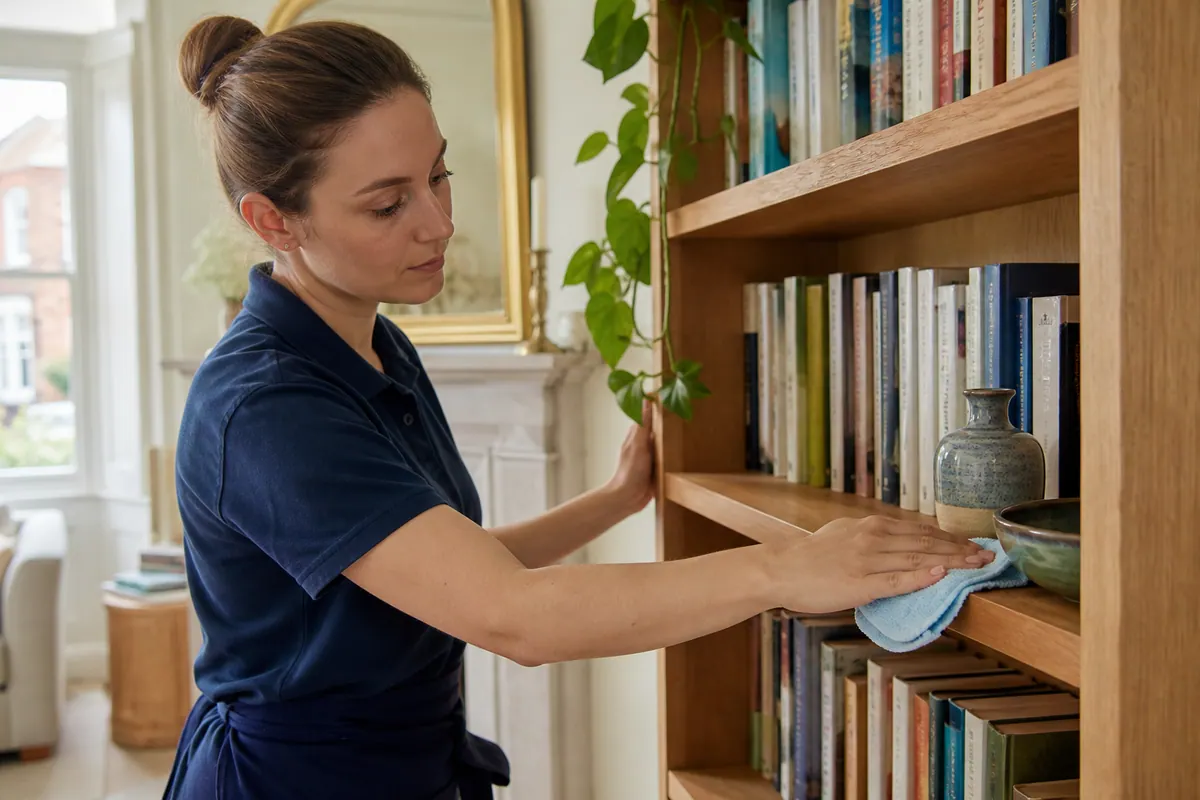
Living-room maintenance begins with reachable dusting and includes the agreed vacuuming and suitable floor cleaning. Personal storage does not become a cleaning task because it occupies that room.
Protect paperwork and fragile items in advance, and leave clear instructions about things that stay untouched.
Bedrooms
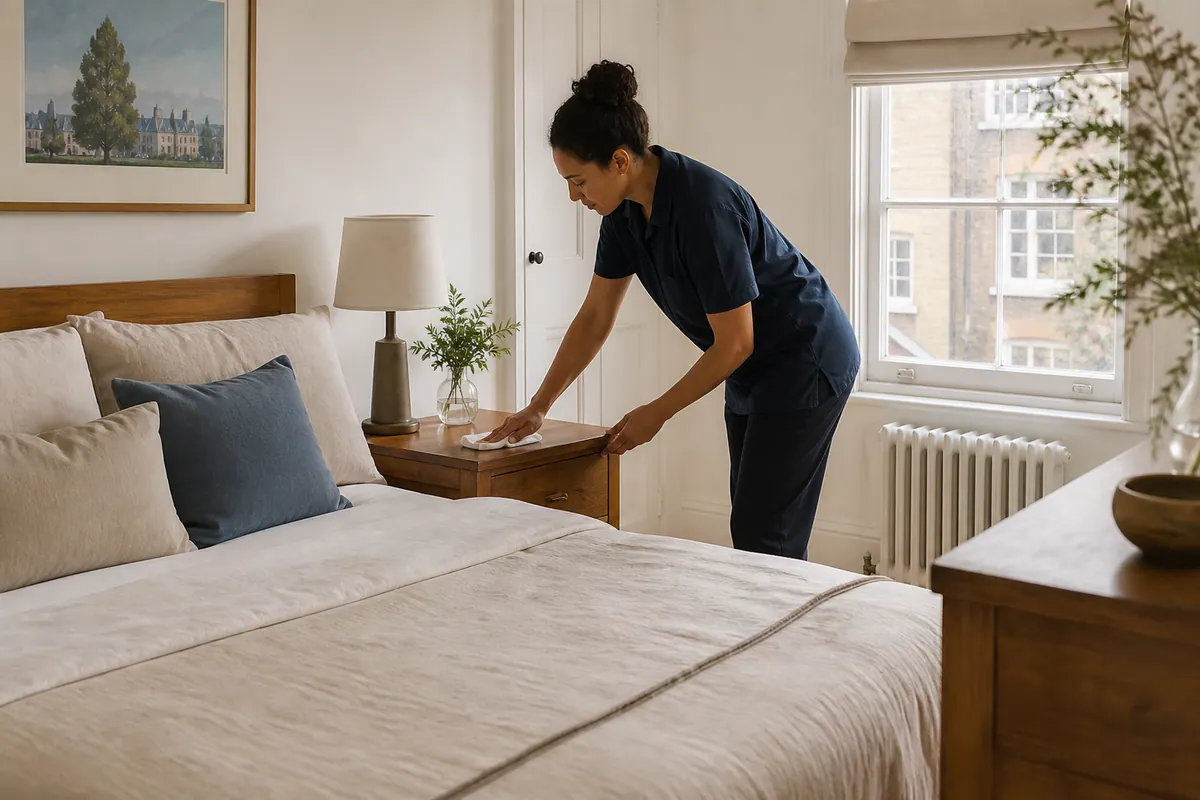
For bedrooms, identify the reachable surfaces and floors to be maintained. Closed storage and personal organisation are not implied by ordinary room cleaning.
Secure medication, valuables and belongings before the visit, and name any room that must stay private.
Finding the useful interval
Weekly and fortnightly are options to discuss, not measures of how well a household keeps its home. Look at room use, starting condition and the tasks building up between visits.
| Planning point | Weekly | Fortnightly |
|---|---|---|
| Best suited for | More frequent attention to heavily used spaces | A wider interval for homes with periodic upkeep needs |
| Core focus | Maintain the named core on a shorter cycle | Review what has built up over the longer gap |
| Priority planning | Repeat a defined set of essential tasks | Choose the most useful tasks from the accumulated list |
| Visit scope | Confirm the rooms and time first | Confirm the rooms and time first |
The initial clean may need a different amount of time from recurring upkeep. Explain what has accumulated and what matters first; the eventual maintenance list is not a promise to resolve every starting task.
Once the core work is established, retain it as a clear reference. New occupants, more rooms or a changed condition should prompt a fresh discussion rather than an assumed extension.
The way the home runs
These examples suggest what to mention, not what every household must book. Use them to explain the circumstances that affect your included rooms.
For someone out through the working day, a confirmed entry plan is essential. Name the frequently used rooms instead of assuming all spaces are equally active.
Families can prepare the floor route and shared surfaces before arrival. The visit is easier to define when toys and personal belongings are already put away.
A pet arrangement should cover both the animal’s location and the doors involved. Explain it before the cleaner has to move between rooms.
Working from home may call for a different starting area. Identify the call period or private desk and agree the handover rather than interrupting work unexpectedly.
A regular clean in a rental does not become a tenancy-end service. Discuss the present rooms and keep separate requirements with their own scope.
In a managed home, clarity comes from a named person confirming changes. Coordinate the access instructions and latest priorities through that contact.
Tell us what the surface is
Different materials may sit side by side. Useful instructions identify the finish and condition, allowing products and moisture to be considered for the surface being cleaned.
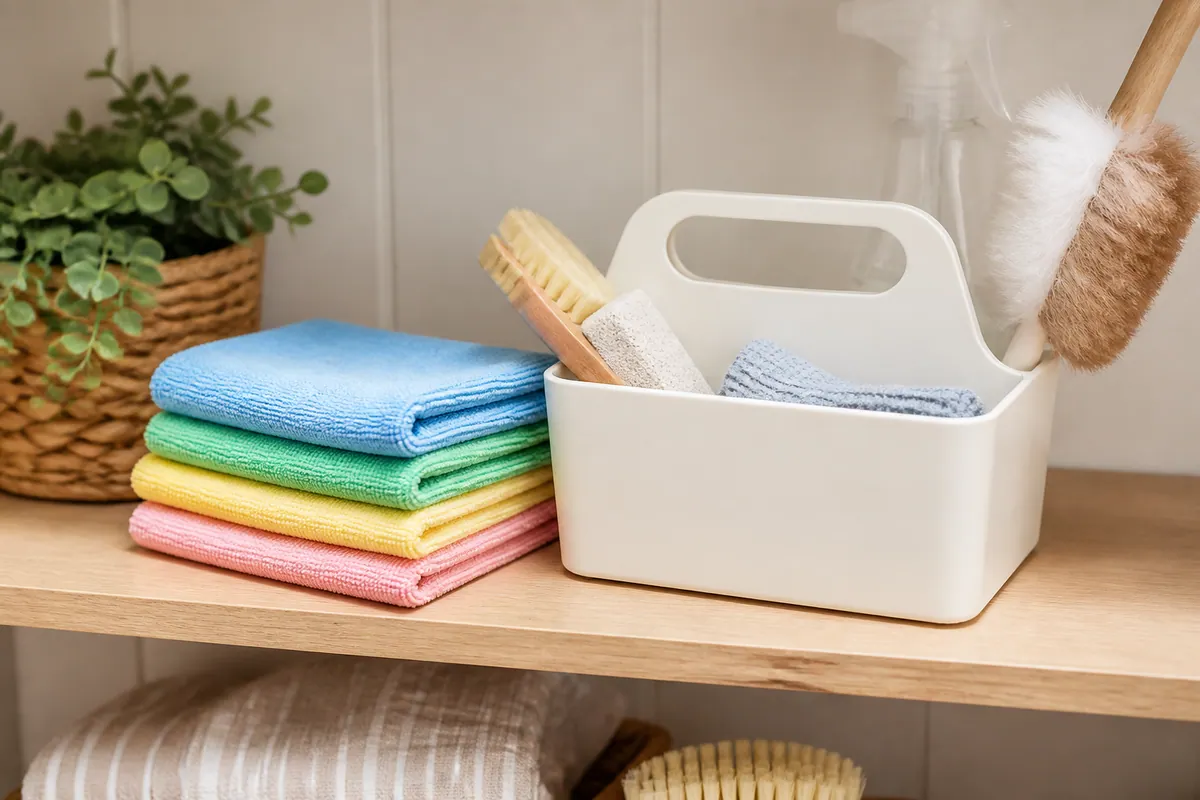
Pass on the stone-care instructions available rather than guessing at a product.
Wood surfaces need their coating and moisture sensitivity considered.
Make lacquered pieces visible in the brief before they are treated like ordinary furniture.
List the accessible stainless-steel outsides that need routine attention.
Highlight damaged painted areas and fittings; restoration remains separate.
A boundary around the regular clean
The domestic list concerns household maintenance. Anything needing high access, heavy lifting or restoration should be raised as another requirement, not assumed from the room name.
Carpet extraction is different from the vacuuming agreed in a routine floor list.
The kitchen being included does not authorise a detailed clean of oven internals.
Mould treatment requires a separate conversation about assessment and scope.
Window exteriors are not implied by indoor cleaning; access must be considered independently.
Building dust and residue call for the appropriate after-builders service discussion.
If the home needs intensive attention, explain that starting condition and consider a distinct one-off brief.
Answers before the enquiry
Set the scope before the total
The regular and initial prices are starting points rather than a guarantee for every home. The booking conversation confirms included supplies, minimum visit and the room priorities.
| Service | Price | Main factors |
|---|---|---|
| Regular domestic cleaning | From £20/hour | Minimum time, home size, frequency and supplies plus postcode/access |
| First / one-off domestic visit | From £90 | Current state and included rooms, with initial task priority and time |
| Specialist / intensive scope | Quoted separately | Specialist surfaces or heavy soil, equipment and separate access planning |
Explain the present condition and size of the property, preferred frequency and access arrangements. Products, parking and added services may affect the final figure; ask about time rather than assuming it from the guide.
Keep the list understandable
Use the up and down controls to express a preference. The sample remains a planning aid, with the real workload and duration subject to the agreement made with the team.
A practical sequence
Explain what needs attention, who will be home and which areas can be reached.
Agree the frequency discussion and the core task order rather than presenting an unlimited checklist.
Make access, supplied equipment and sensitive surfaces part of the same booking conversation.
The included rooms receive maintenance suited to their surfaces and agreed priorities.
Check the result against the brief, noting work needing another service or a different amount of time.
The starting condition described honestly.
A planned sequence through accessible rooms.
An agreed reference for ongoing care.
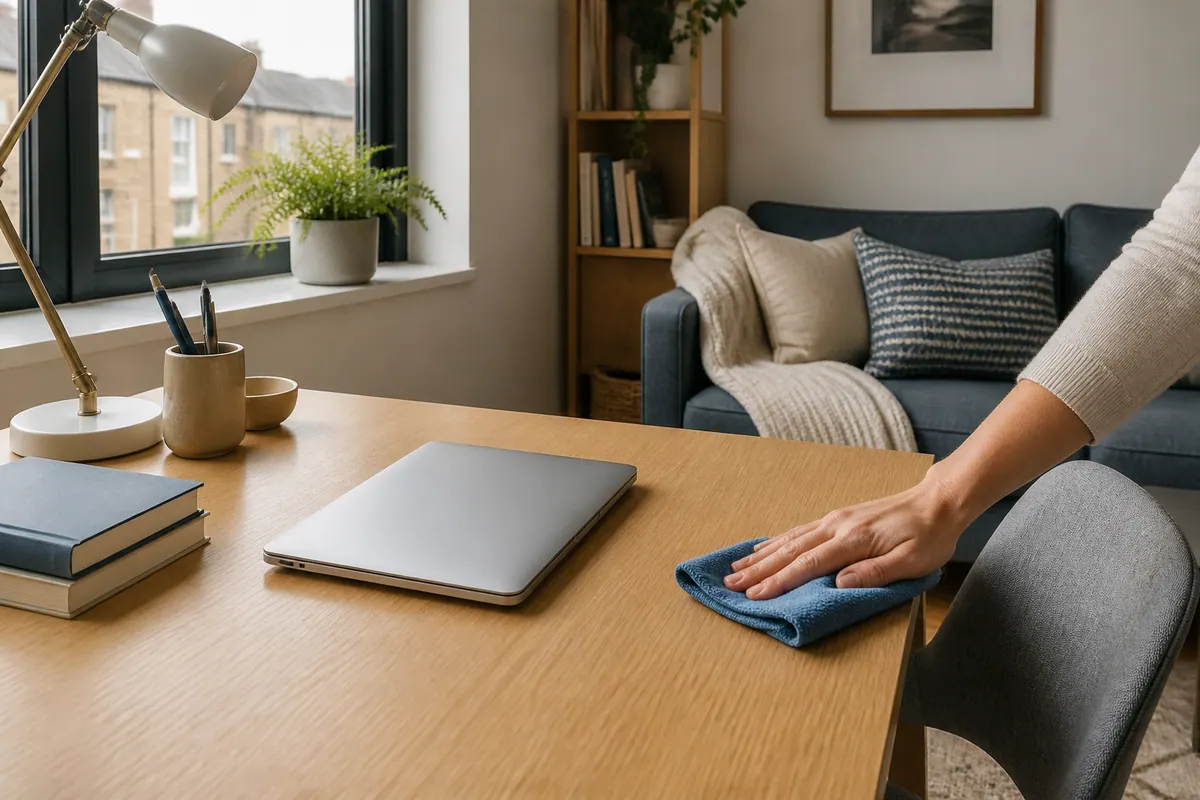
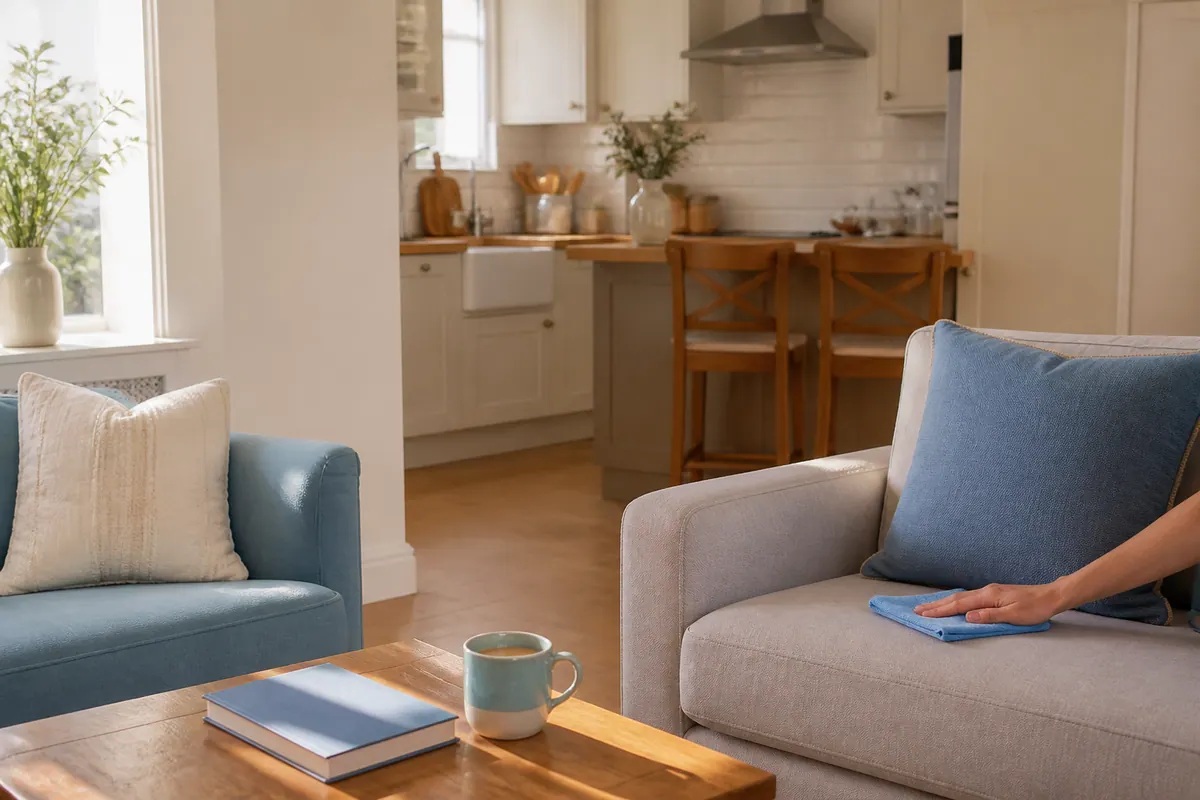
The photographs are illustrative scenes, not documentation of a completed customer job.
Before arrival
Agree who hands over the key and how it comes back; share the details only with the appropriate contact.
A building reception is not an automatic entry solution. Confirm the process and permissions involved.
Provide necessary alarm instructions privately for the whole visit, including departure.
Explain pet boundaries and where the animal will remain while rooms are cleaned.
Identify quiet working periods and the room that can be considered first.
Pass on any parking or loading restriction that could affect the proposed arrangement.
State which rooms and belongings are not included so the boundary is unambiguous.
Good preparation makes the agreed cleaning accessible. Products, room priorities and entry should be settled together, with separate work identified rather than added by assumption.
Your questions about upkeep
Identify the accessible everyday kitchen, bathroom and floor tasks first. Then name any optional detail you want to discuss, rather than treating a compact footprint as proof that every surface can fit the visit.
Put the items away before cleaning or explain the area that remains inaccessible. The domestic request should not depend on the cleaner deciding where personal possessions belong in order to reach the worktop.
It is the published starting rate, not a total for an unspecified home. Confirm the minimum visit, frequency, supplies and access so the quotation corresponds to the work being arranged.
Describe the way rooms are occupied and what accumulates in the interval. The appropriate visit length and available schedule matter too; frequency is not a substitute for a realistic task list.
The order can be discussed, preferably before arrival. A change that adds work or substantially expands a room’s demands should be reviewed for time and scope rather than treated as a simple reorder.
Not necessarily: the starting condition can require a different list and more time. First or one-off domestic visits begin from £90, with scope and inclusions confirmed before booking.
Share known finishes, existing damage and any care instructions you already hold. Product and equipment arrangements should be confirmed so compatible care is planned rather than assumed.
Name the space and the period when it is unavailable. Discuss another starting area or a clear handover, and put devices and personal items away before the room is released.
Only through a specific separate agreement. Those tasks differ from exterior kitchen wiping and ordinary vacuuming, with their own process and requirements.
Contact the team with the plan you want to discuss, including postcode and access. The page does not transmit a reservation, calculate the final price or confirm appointment availability.
Angel / enquiry area
A Angel enquiry should name the rooms and practical arrival arrangements as well as the postcode. The service is confirmed against the actual brief and schedule, not a generic area checklist.
For the wider service scope, see Domestic Cleaning, or ask the team about your address.
Geographic reference
Use this reference alongside the exact postcode you provide to the team.
Open map in a new tabAngel / the next conversation
Tell us about the rooms in your Angel home, their condition and the routine you want to arrange. Choose my compact-home priorities: share your preferred frequency and access details directly with the team.
