
The first group of tasks
- Reachable counters with the kitchen sink
- Accessible bathroom maintenance
- Routine dusting in agreed areas
- The selected rooms for vacuuming
- Finish-aware floor maintenance
New Malden / A practical home routine
One shared kitchen, one clear instruction
Different people using a New Malden kitchen can have different ideas about what matters first. Agree a single household brief so the cleaner does not receive competing requests.
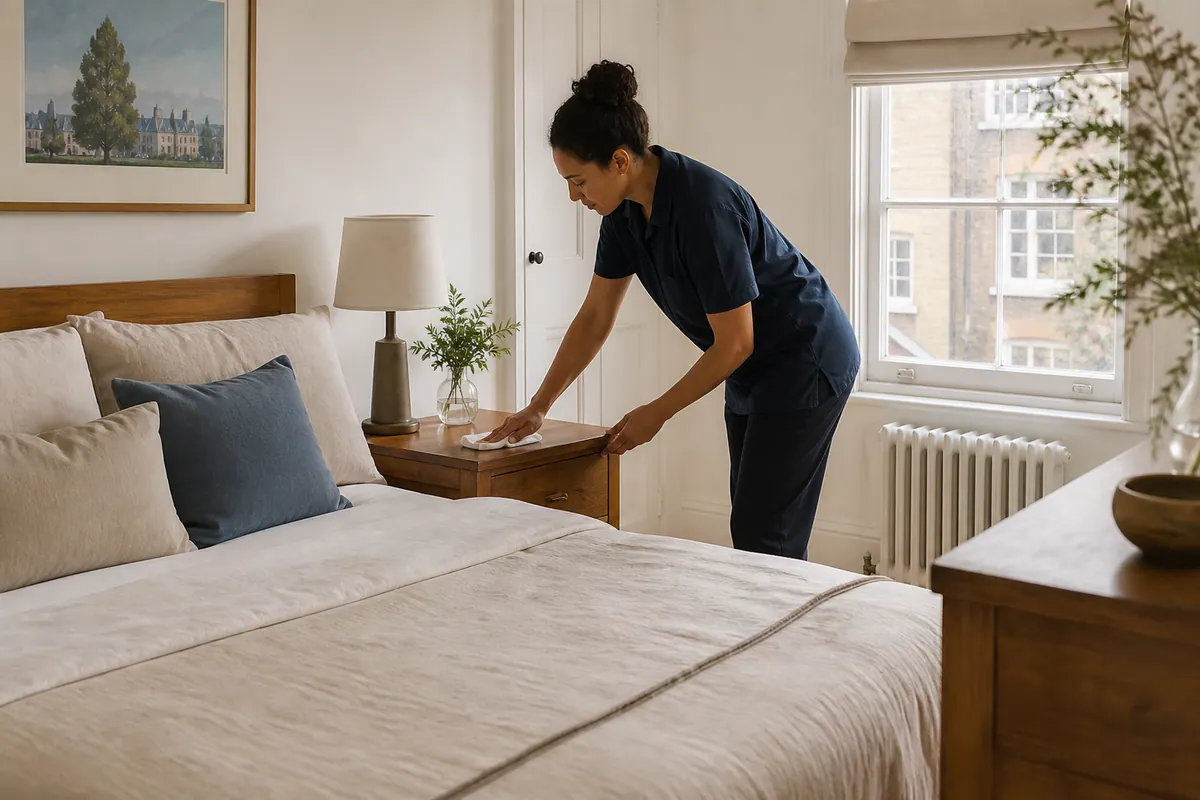
Kitchen · Bathroom
Living areas · Bedrooms
Essential upkeep
A good recurring brief separates the important room tasks from work that can be selected occasionally.
Review optional work whenever the household expands its list. Additional requests need a discussion about the time available.
New Malden / household planning
Different people using a New Malden kitchen can have different ideas about what matters first. Agree a single household brief so the cleaner does not receive competing requests.
A common list makes the task order clear without treating personal rooms as automatic inclusions.
Confirm who may alter the room list before the visit. Each occupant can prepare their own belongings while the agreed shared spaces remain the focus.
Separate the cooking surfaces everyone uses from individual storage or belongings. The cleaning brief concerns agreed accessible areas, not a reorganisation of the household.
Make room exclusions part of the shared instruction. A closed bedroom should not become accessible merely because another resident has asked for general cleaning.
Visit frequency
The relevant question is how the home is used during the gap. Frequency alone does not establish a suitable duration.
| Planning point | Weekly | Fortnightly |
|---|---|---|
| Best suited for | Busy everyday spaces | A longer gap with planned priorities |
| Core focus | Follow the established core work | Review the workload created by the gap |
| Priority planning | Define a useful repeatable scope | Be explicit about competing priorities |
| Visit scope | Discuss coverage before the appointment | A separate scope discussion is needed |
Tell the team what the first cleaner will actually find. Later visits can be reviewed once the initial priorities are understood.
Use later visits to maintain a clear baseline; changes in occupancy or priorities should be communicated before arrival.
Separate services
Keep extraction, treatment and difficult-access work outside the routine unless separately agreed. Heavy lifting and restoration need their own planning.
Keep the distinction clear between routine vacuuming and a carpet extraction booking.
For internal oven cleaning, follow the dedicated service link and confirm the additional scope.
Mould concerns belong in a dedicated discussion; ordinary surface upkeep is not a treatment commitment.
Outside glazing needs separate access planning and is not automatically part of domestic room care.
Building residue needs a post-construction brief rather than being described as ordinary household dust.
A home needing an intensive reset may require another defined brief rather than a larger regular checklist.
Price guides
A price discussion needs the rooms and current condition as well as the preferred frequency.
| Service | Price | Main factors |
|---|---|---|
| Regular domestic cleaning | From £20/hour | Address, available time, frequency, room size and equipment |
| First / one-off domestic visit | From £90 | Present upkeep, room coverage and priority level |
| Specialist / intensive scope | Confirm a dedicated quotation | Different equipment, high areas or specialist treatment |
Give details of the available rooms and workload, then check minimum time, supplies and access when discussing the final charge.
Room coverage
These room notes explain accessible maintenance tasks. The cleaner follows the confirmed brief, not an unlimited checklist.
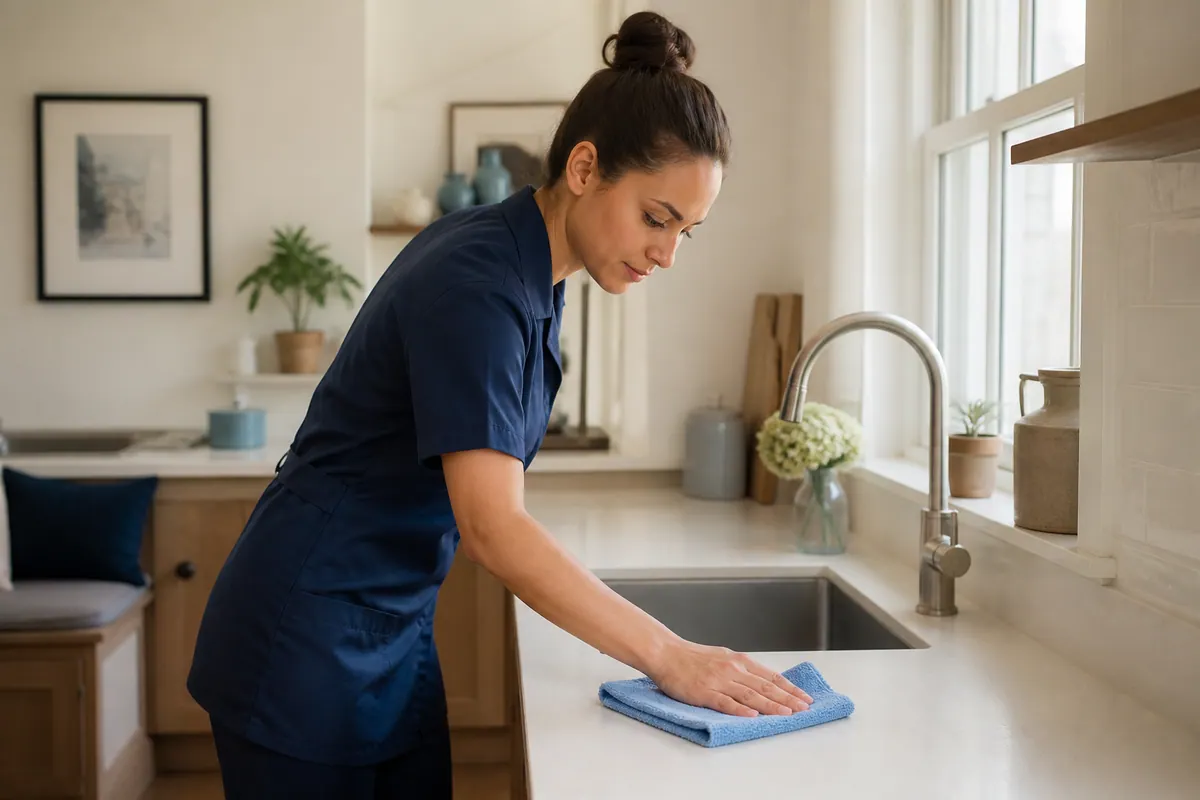
Kitchen
A useful kitchen list identifies worktops, sink and splashback separately from cupboard faces and the outside of appliances.
Leave the listed preparation surfaces reachable, and raise internal oven work separately if you need it.
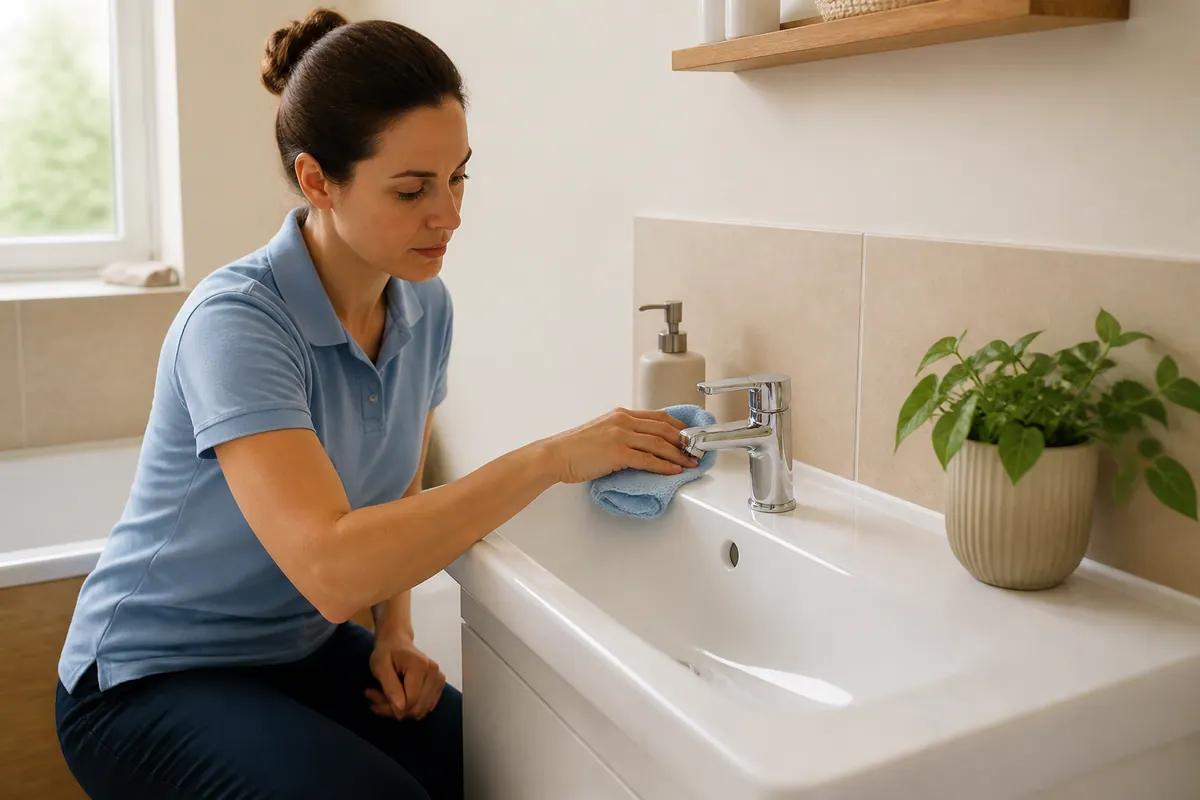
Bathroom
The bathroom list may cover taps, sanitaryware and shower surfaces together with mirrors and tiles that can be reached safely.
Identify vulnerable fittings and existing surface damage. These conditions need to be distinguished from removable dirt.
Living spaces
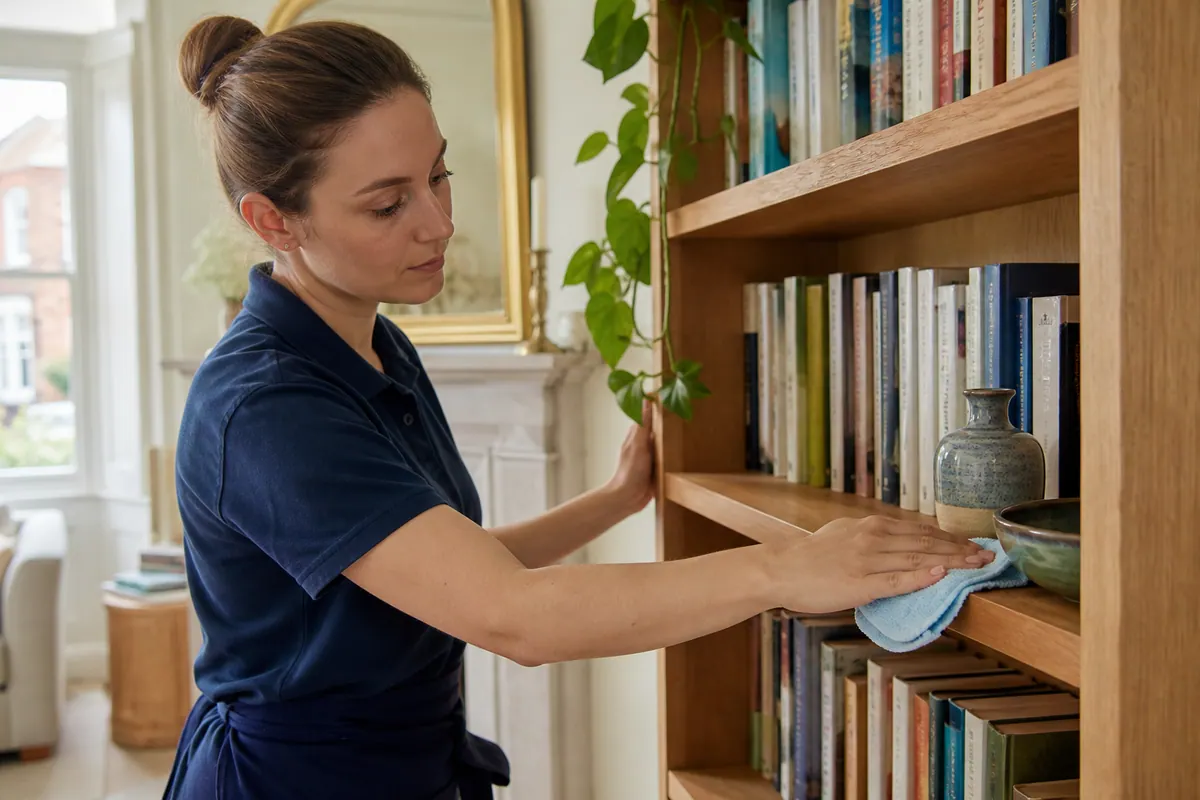
An agreed living room can receive reachable-surface care and dusting, followed by vacuuming and suitable treatment of the floor.
Put personal documents away and make fragile items secure; name anything that should stay untouched.
Sleeping rooms
Keep sleeping-space care specific to reachable surfaces, dusting and the included floor areas; appropriate vacuuming can be part of it.
The household should remove medication from accessible surfaces and explain any no-entry instruction.
Household arrangements
Use the examples to explain practical household needs.
An absent household still needs a clear brief, including the used rooms and agreed way into the property.
A useful family brief identifies the busiest areas and what can be cleared before the cleaner arrives.
Agree the animal’s location before setting the room sequence, with clear instructions about closed doors.
Name the desk or room in use and a quiet period; arrange a different starting area if necessary.
Explain who approves work in the rental and avoid combining regular cleaning with an unconfirmed move-out requirement.
Choose one person to coordinate access and changes, so the cleaner is not given competing instructions.
Routine planner
A short room list is easier to discuss than an open-ended request. Your selections provide context, without reserving a cleaner.
Material guidance
A mixed room can require several cleaning approaches; identify its materials and existing damage at the outset.
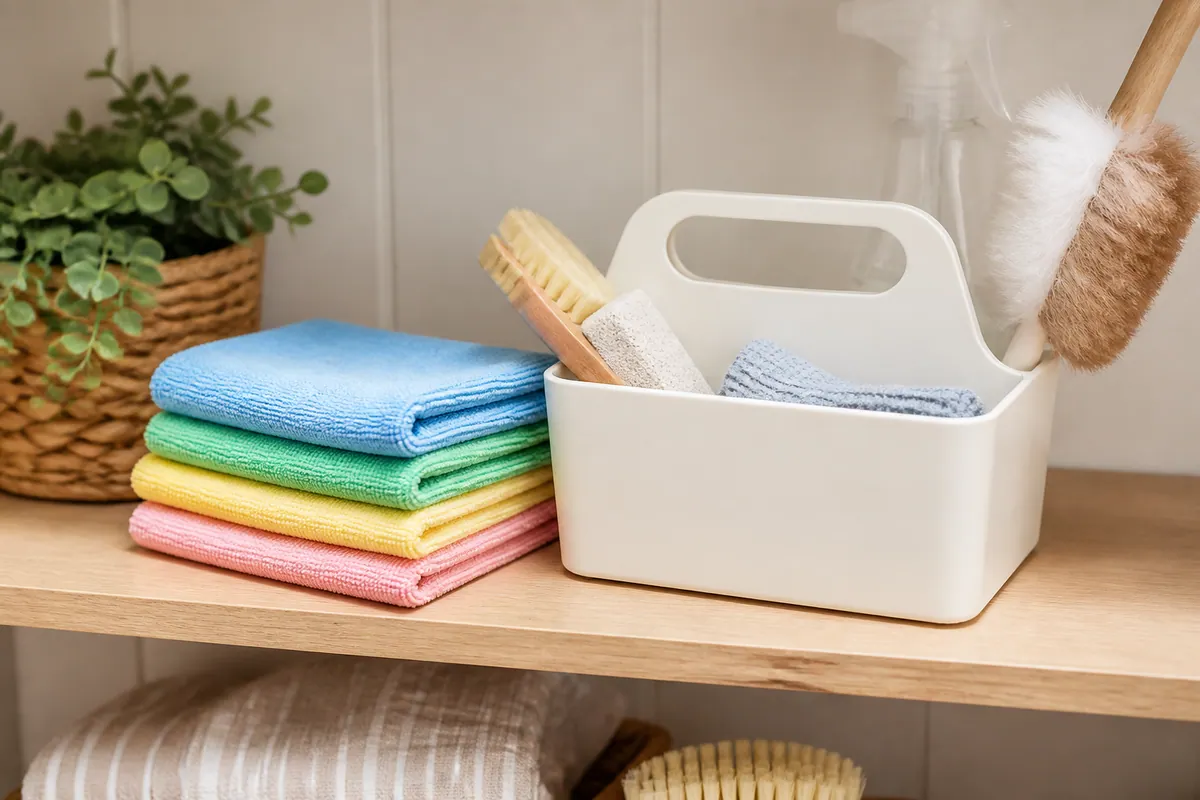
Point out natural stone early so the proposed method can be checked against it.
Point out the wooden areas in the scope and explain any known restrictions on their care.
Give the team the known guidance for lacquered furniture instead of assuming one product suits it.
Check the approach for the stainless surface and specify that the request concerns the agreed outside areas.
Existing paint damage should be recorded in the discussion, not mistaken for removable dirt.
Quick answers
Task order
Arrange the example list into a useful enquiry outline; the team must separately confirm any change to a visit.
Booking process
Start with the actual rooms and explain who or what may affect access to them.
Connect the frequency discussion to the real household workload and the core room list.
Resolve the access route and supply arrangement while sharing relevant material instructions.
Core tasks guide the work in the spaces that were agreed for the appointment.
Check the agreed tasks and distinguish future cleaning needs from specialist work or repairs.
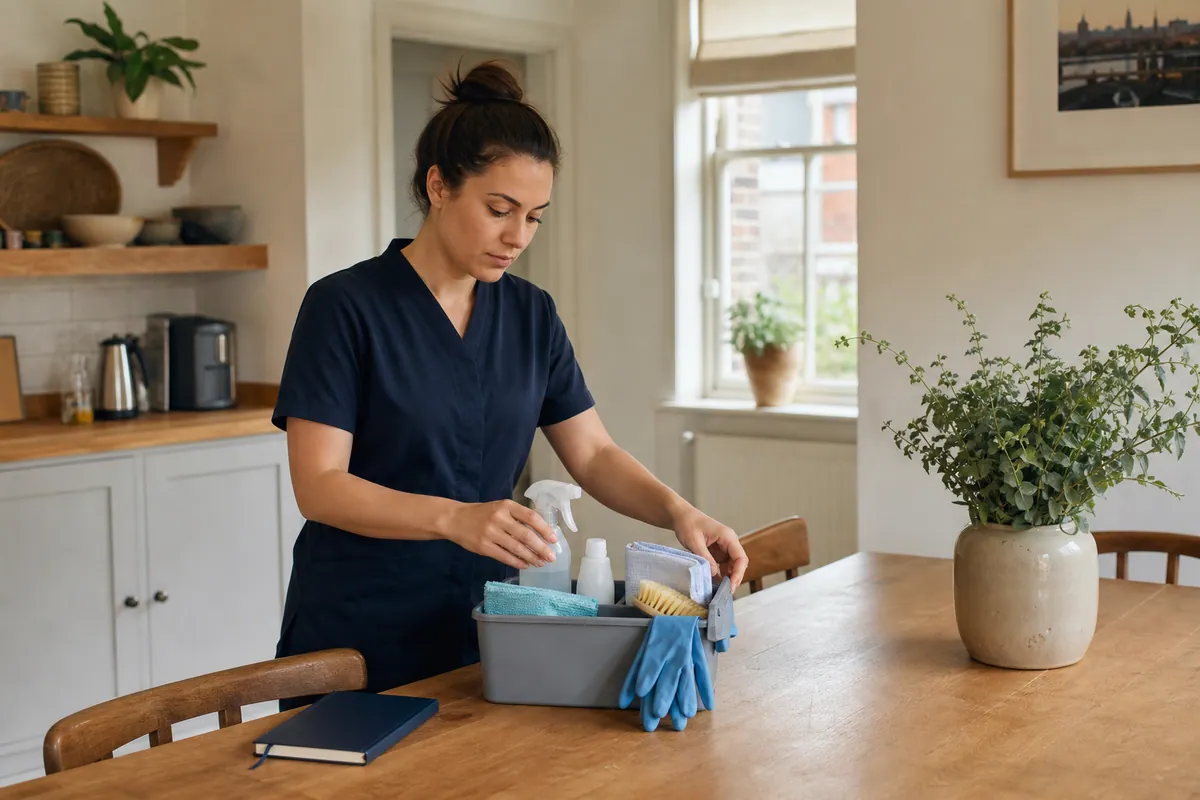
A usable plan for the appointment.
A visit guided by the household list.
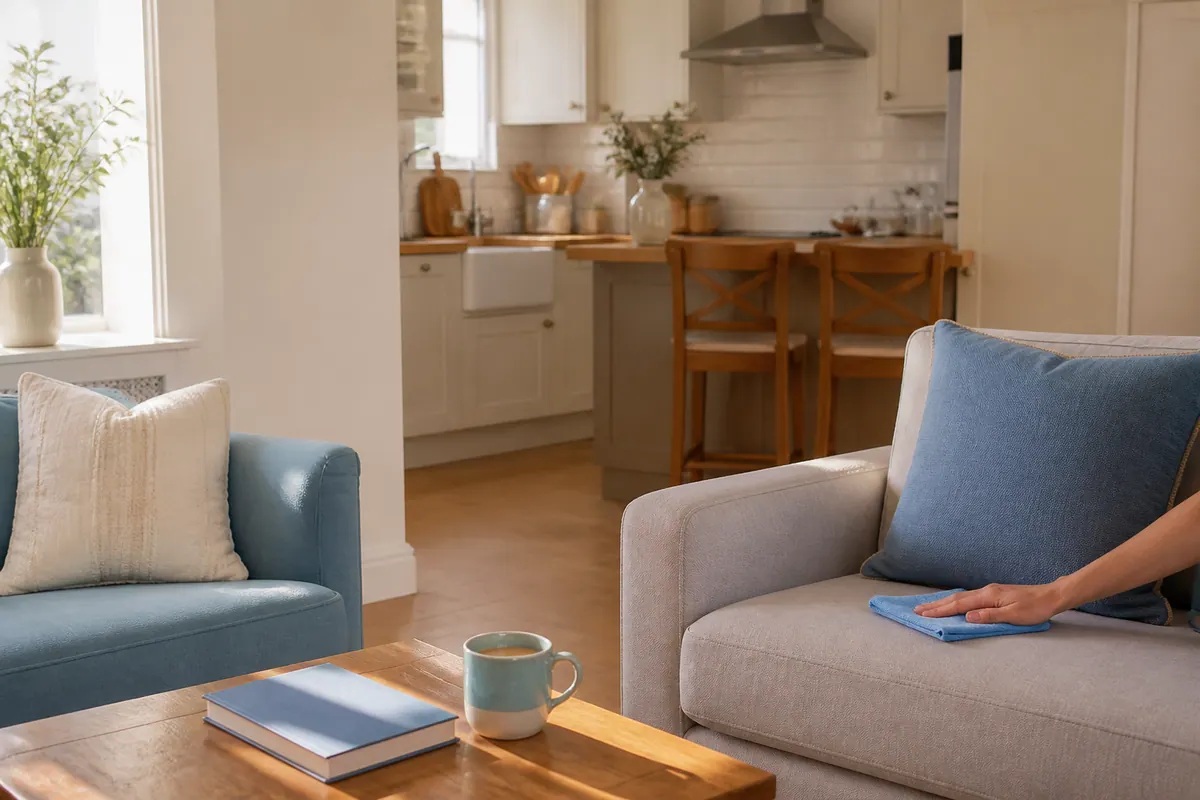
A clearer starting point for later care.
These images show imagined household scenes rather than a recorded cleaning result.
Practical access
Settle who provides and receives the key before the day, using direct communication with the team.
An entrance desk is not an automatic access arrangement; establish the relevant permission first.
Explain the authorised alarm steps through a private conversation with the team.
Agree the animal’s location before setting the room sequence, with clear instructions about closed doors.
Name the desk or room in use and a quiet period; arrange a different starting area if necessary.
Flag practical vehicle-access restrictions early instead of leaving them for arrival.
Record which rooms are excluded and which possessions must remain undisturbed.
Know which tasks, materials and entry arrangements have been agreed before treating the visit as settled.
Booking questions
Settle one list for the shared room and one person authorised to change it. Personal bedrooms still need explicit inclusion rather than being inferred from a communal booking.
Prepare the agreed surfaces and floors yourself, then explain pets, access and any excluded space before the appointment.
For shared-home planning, the published regular guide starts at £20/hour; the first or one-off domestic guide begins at £90. Agree the minimum and actual inclusions with Alesta.
Describe what happens between appointments and the upkeep you can manage yourself. The team can then discuss the interval without assuming every household needs the same one.
Ask for the adjustment directly and check the available time if more work is involved. The on-page board does not amend a booking.
It may differ from later care because the initial tasks have built up. The quoted scope should acknowledge that difference.
Confirm what is supplied for this appointment and share the relevant finish instructions. Do not assume all products in the house are suitable.
Identify the office and its access restriction before the day. The confirmed room list should show whether another time is practical.
No. A routine vacuuming task and an extraction service are different work; request the latter through the carpet-cleaning service.
A selected interval is not a reserved cleaner. Discuss your postcode, rooms and access with the team and confirm the actual appointment.
New Malden / local enquiry
New Malden bookings need the full postcode and the intended rooms. A regular slot requires confirmation of your address and the available schedule, together with supplies and the proposed task list.
For the wider service scope, see Domestic Cleaning, or ask the team about your address.
Map reference
The map gives area context while you discuss the property access.
Open map in a new tabYour next step
Choose the shared kitchen priorities together. Nominate one contact for changes. Let the team check the proposed scope and timing.
